Key takeaways
- ✓A permit is rarely a clean yes — it almost always comes with conditions that control how you build and use the land.
- ✓Endorsed-plan conditions make your approved plans part of the permit, and you must build generally in accordance with them.
- ✓Conditions are grouped by timing — endorsed plans, before-works, before-occupation, ongoing use and expiry.
- ✓You can ask VCAT to review one or more conditions under section 80, within 60 days.
- ✓Breaching a condition is an offence under section 126, and anyone can seek an enforcement order at VCAT under section 114.
Planning Permit Conditions Explained (VIC)
A planning permit is rarely a simple yes. In Victoria almost every permit is granted subject to conditions — the lines of fine print that decide how you build, when you can start, what must happen before you occupy, and how the land may be used afterwards. The conditions are where the real obligations live, and misreading them is one of the most common ways a project stalls. This guide explains what conditions are, the types you will meet, which ones you can challenge, and how they are enforced.
Get a council-ready town planning report in 5 minutes — no town planner, no waiting.
Get your report →- ✓What a planning permit condition is and where the power to impose it comes from
- ✓The common types of condition, grouped by when they apply
- ✓What an endorsed-plan condition really means for your build
- ✓Which conditions you can dispute, and how
- ✓How conditions are enforced if you do not comply
The short answer
Planning permit conditions are requirements the council attaches to your permit under section 62 of the Planning and Environment Act 1987. They control how the use or development proceeds — through endorsed plans, before-works and before-occupation requirements, ongoing use rules and an expiry date. You can ask VCAT to review conditions under section 80, within 60 days.
Conditions are not optional extras; they are part of the permit. The flow below shows how a condition moves from the permit to something you must actually do.
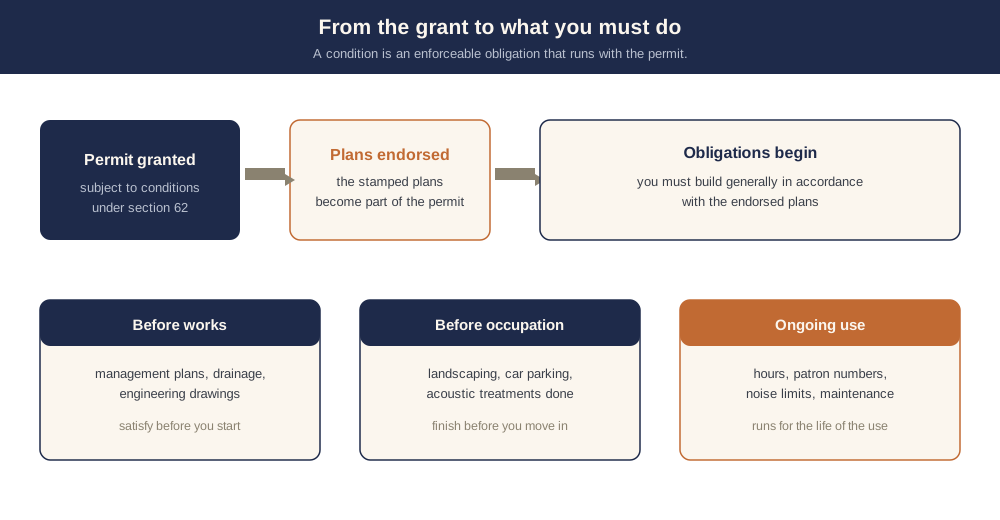
Figure 1: A condition is not advice — it is an enforceable obligation that runs with the permit.
Where conditions come from
When the council grants a permit, it does so under the Planning and Environment Act 1987. The power to attach conditions sits in section 62, which lets the responsible authority grant a permit "subject to conditions it thinks fit," provided the conditions are consistent with the Act, the planning scheme and any referral authority's requirements. Some conditions are mandatory — the planning scheme or a referral authority requires them — and some are discretionary, added because the assessing officer judged them necessary to make the proposal acceptable.
A valid condition has to be relevant to planning, reasonable, and enforceable. It regulates how the approved use or development may proceed; it does not re-open whether the permit exists. That distinction matters when you come to dispute one.
The common types of condition
Spend 5 minutes, not 3 weeks
instantplanning generates a council-ready town planning report for Victorian permits. No town planner. No waiting.
Get your report →Conditions are not formally categorised in the Act, but in practice they fall into clear groups by when they bite. Reading your permit through this lens is the fastest way to build a compliance checklist.
- ✓Endorsed-plan conditions — your plans become part of the permit
- ✓Before-works conditions — things to do before you start
- ✓Before-occupation conditions — things to finish before you move in or open
- ✓Ongoing / use conditions — rules that run for the life of the use
- ✓Expiry conditions — the dates the permit lapses if you do nothing
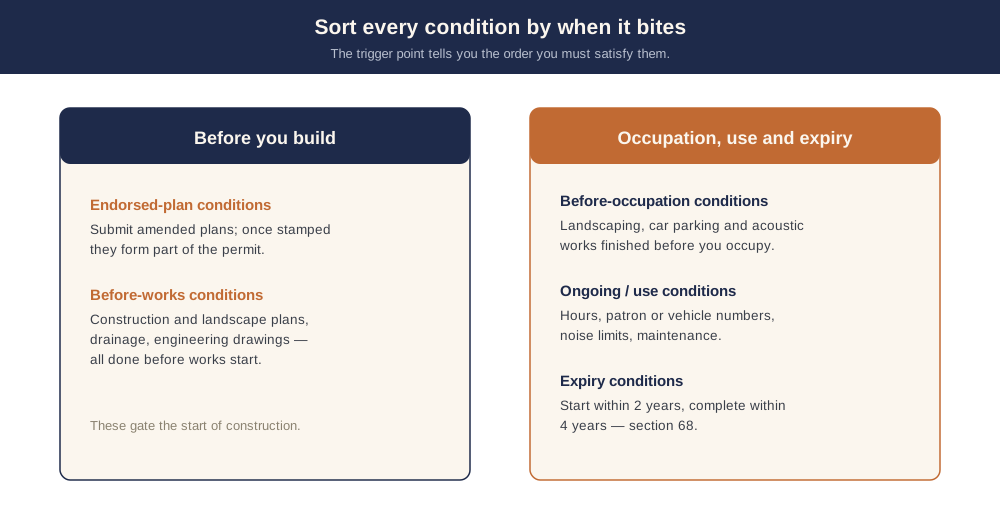
Figure 2: Sort every condition by its trigger point — that tells you the order you must satisfy them.
Endorsed-plan conditions are the backbone of most permits. A typical first condition reads that the development must be "generally in accordance with the endorsed plans." Often the plans you lodged are not yet endorsed; the condition requires you to submit amended plans addressing specified changes, and once the council stamps them they become the endorsed plans that form part of the permit. From that point you must build generally in accordance with them — see endorsed plans explained for how the endorsement step works.
Before-works conditions require action before development starts — a construction management plan, a landscape plan, a drainage design or detailed engineering drawings. Before-occupation conditions require works to be finished before you occupy or open — landscaping planted, car parking constructed, acoustic treatments installed. Ongoing or use conditions run for the life of the use: hours of operation, patron or vehicle numbers, noise limits, or a requirement to maintain landscaping. Expiry conditions set the clock, which we cover next.
The expiry condition — your two-year and four-year clock
Almost every permit carries an expiry condition, and it is the one homeowners most often overlook. The default position is set by section 68 of the Act: if no time is stated in the permit, the permit expires if the development does not start within two years of issue, and if it is not completed within four years of issue. For a use, it expires if the use does not start within two years. Most permits restate these defaults explicitly as a condition.
If you are running out of time, you can apply to extend it under section 69 before the permit expires (or within a short grace period after, depending on the stage). The mechanics are covered in extension of time for a planning permit.
Conditions you can dispute — and how
You do not have to accept every condition. If a condition is unreasonable, unclear, or goes beyond what planning can require, you can challenge it. There are two routes.
The first is informal: raise it with the assessing officer before the decision is finalised, or negotiate the wording. The second is formal review at the Victorian Civil and Administrative Tribunal (VCAT). A permit applicant or permit holder can apply to VCAT for review of one or more conditions under section 80 of the Act. The time limit is 60 days after the council gives a notice of decision under section 64, or — where no such notice was required — within 60 days after the permit is issued.
Note the limit: a section 80 review puts the conditions you nominate before the Tribunal, but VCAT looks at the proposal on its merits and can confirm, vary or delete the conditions. Objectors do not use section 80 — an objector challenges the decision to grant the permit (and all its conditions) under section 82, within 28 days. If your dispute is really about the whole approval, that is a different path; see appealing a planning decision at VCAT and weigh the cost of a VCAT appeal first.
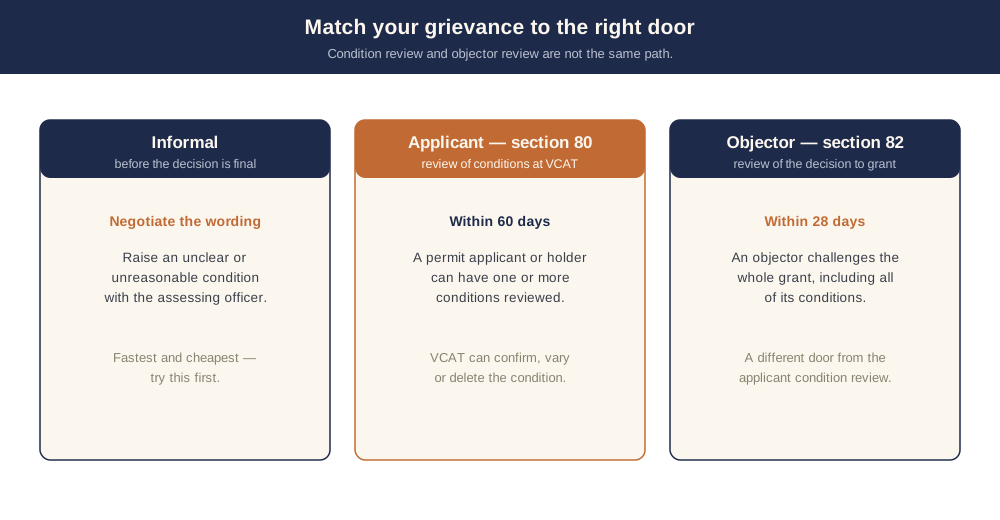
Figure 3: Match your grievance to the right door — applicant condition review and objector review are not the same.
How conditions are enforced
Conditions have teeth. Using or developing land in contravention of a permit — including any valid condition — is an offence under section 126 of the Act. Enforcement is not limited to the council: under section 114, any person can apply to VCAT for an enforcement order, and under section 119 the Tribunal can order you to stop works, carry out works to achieve compliance, or restore the land. Where the matter is urgent, VCAT can make an interim enforcement order under section 120.
Councils also have softer tools — authorised officers can inspect, and a planning infringement notice can be issued for minor breaches rather than a prosecution. The practical lesson is simple: read the conditions before you build, satisfy the before-works ones in order, and keep the endorsed plans on site.
Hiring a town planner can take weeks. Start with what a town planning report is, or generate your report. For a complex or contested application, engage an experienced human planner.
You can read the conditions and review provisions in the Planning and Environment Act 1987, or check the current review process at VCAT.
Frequently asked questions
What are planning permit conditions in Victoria?
What does "generally in accordance with the endorsed plans" mean?
How long before a planning permit expires?
Can I dispute a condition on my permit?
What happens if I breach a planning permit condition?
Can objectors challenge the conditions on my permit?
Ready to generate your report?
Skip the writing. Get a council-ready town planning report in 5 minutes.
Get your report