Key takeaways
- ✓After lodgement the council checks your application is complete before it starts assessing.
- ✓A section 54 request for further information stops the statutory clock until you respond.
- ✓Many applications are advertised so neighbours can lodge an objection.
- ✓The council assesses your proposal against the planning scheme under section 60.
- ✓The standard decision timeframe is 60 days, and you can go to VCAT if the council does not decide in time.
What Happens After You Lodge (VIC)
Lodging your planning permit application is the start, not the finish. Once the council has your form, documents and fee, it works through a defined sequence: it checks the application is complete, may ask for more information, often advertises the proposal to neighbours, weighs any objections, assesses the design against the planning scheme, and then decides. Knowing this sequence tells you what to expect, where the delays hide, and how to keep your application moving.
Get a council-ready town planning report in 5 minutes — no town planner, no waiting.
Get your report →- ✓What the council does first with your application
- ✓How a request for further information stops the clock
- ✓When and why your proposal is advertised
- ✓What the council weighs when it assesses
- ✓The 60-day timeframe and your options if it is missed
The short answer
After you lodge, the council checks your application is complete, may issue a section 54 request for further information that pauses the statutory clock, often advertises the proposal so neighbours can object, then assesses it against the planning scheme under section 60 and decides. The standard decision timeframe is 60 days.
The stages run in order, but the clock can pause. The diagram below shows the full journey from lodgement to decision.
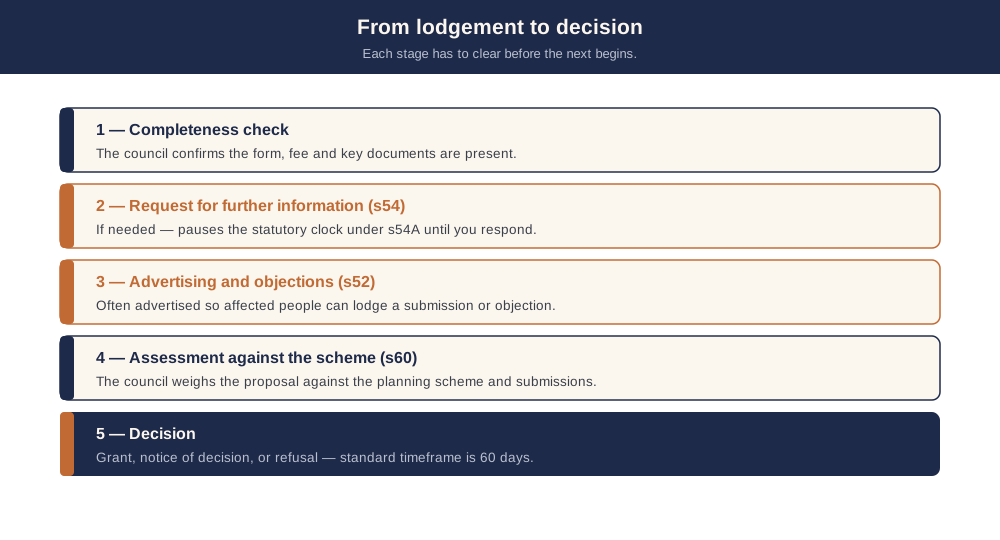
Figure 1: The post-lodgement journey — each stage has to clear before the next begins.
Stage 1 — The completeness check
The first thing the council does is check your application is complete enough to assess. It confirms the form is filled out, the fee is paid, and the documents needed to understand the proposal are present. If something essential is missing, the council can come back to you. A complete lodgement sails through this stage; a thin one gets caught here, before the substantive assessment even begins. This is why a well-documented lodgement — covered in how to lodge a planning permit — pays off immediately.
Stage 2 — Request for further information (and the clock-stop)
Spend 5 minutes, not 3 weeks
instantplanning generates a council-ready town planning report for Victorian permits. No town planner. No waiting.
Get your report →If the council needs more to assess your proposal, it can issue a request for further information under section 54 of the Planning and Environment Act 1987 — usually called an RFI. This is the single most important mechanism to understand, because of what it does to time.
Under section 54A, the statutory clock stops from the day the council requests the information until the day you provide it. The days an RFI is outstanding do not count toward your decision timeframe. Worse, if you do not provide the requested information within the time specified, the council can treat your application as lapsed. This is why the quality of your lodgement matters so much: a complete application that anticipates the council's questions avoids the RFI entirely, and an RFI answered promptly and in full restarts the clock fastest.
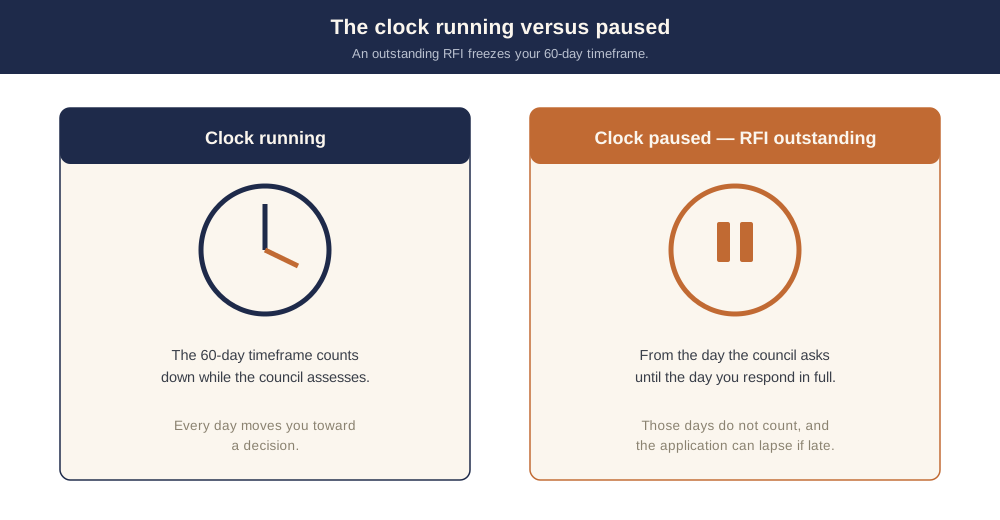
Figure 2: How an RFI pauses the clock — the outstanding days do not count toward your 60-day timeframe.
Stage 3 — Advertising and objections
Many, though not all, applications must be advertised so that people who might be affected can have their say. Under section 52, the council gives notice of the application — commonly by letters to neighbours, a sign on the site, and a notice in the press — where it considers the proposal may cause material detriment. People then have a period to lodge a submission, which for an objection means setting out why they oppose the permit.
Objections do not automatically defeat an application, and the absence of objections does not guarantee approval. The council weighs the planning merit of each objection against the scheme. A VicSmart application, by contrast, is exempt from advertising and third-party appeal, which is part of why it is faster — see VicSmart vs standard permit for which proposals qualify.
Stage 4 — Assessment against the scheme
Once any RFI is resolved and advertising is complete, the council assesses your proposal on its merits. The matters it must consider are set out in section 60: the planning scheme itself, any objections and submissions received, the views of referral authorities, and the significant social, economic and environmental effects of the proposal. This is where your written planning report earns its place — by showing, clause by clause, how the design responds to the zone, the overlays and the relevant policies.
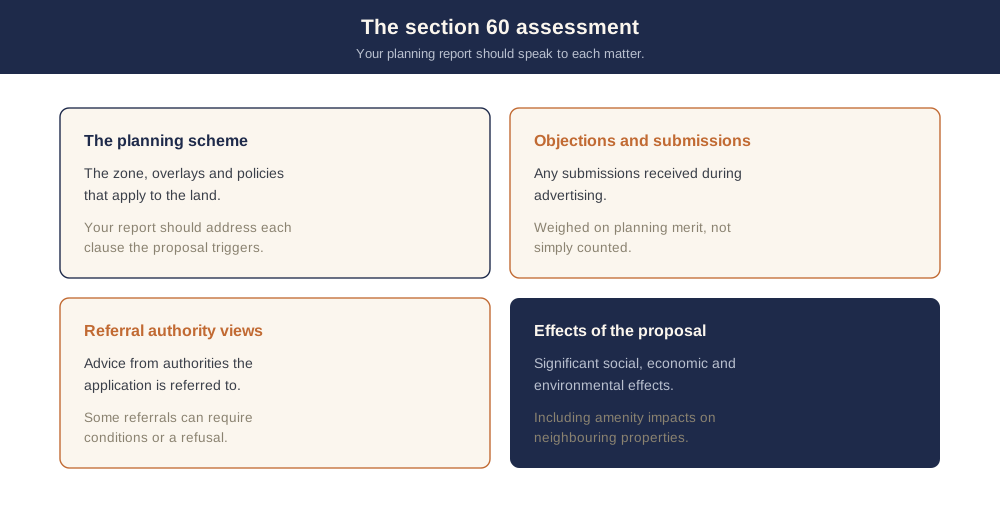
Figure 3: The matters behind a section 60 assessment — your planning report should speak to each one.
The clearer your report addresses these heads, the easier it is for the assessing officer to recommend approval. A report that leaves a triggered overlay or a relevant policy unaddressed forces the officer to fill the gap — or to send you back an RFI. The whole planning permit process hinges on this stage.
Stage 5 — The decision and the 60-day timeframe
The council then decides. It can grant a permit, grant a permit with conditions, issue a notice of decision to grant a permit where there were objectors (giving them a window to seek review), or refuse. Where conditions or a refusal are involved, you have your own right to seek review.
The standard statutory timeframe for a decision is 60 days, measured from a complete lodgement — but remember that the clock pauses for any outstanding RFI and during advertising in the way the regulations provide, so 60 elapsed days on the calendar is rarely the same as 60 statutory days. If the council does not decide within the prescribed time, you can apply to VCAT for review of the failure to decide, under section 79 of the Act. In practice, a complete lodgement that avoids an RFI is the surest way to a decision close to the statutory timeframe.
Hiring a town planner can take weeks. Start with what a town planning report is, or generate your report. For a complex or contested application, engage an experienced human planner.
You can confirm the current section wording in the Planning and Environment Act 1987.
Frequently asked questions
How long does a planning permit decision take in Victoria?
What is a section 54 request for further information?
Does my application get advertised?
Do objections stop my permit?
What does the council consider when assessing?
What if the council does not decide in time?
Ready to generate your report?
Skip the writing. Get a council-ready town planning report in 5 minutes.
Get your report