Key takeaways
- ✓VCAT reviews planning decisions afresh — a refusal, conditions, a failure to decide, or a decision to grant.
- ✓Applicants have 60 days to seek review of a refusal or conditions; objectors have 28 days from the Notice of Decision.
- ✓If the council does not decide within the prescribed time, you can seek review of the failure to decide.
- ✓VCAT charges an application fee plus a per-day hearing fee, both set in fee units and indexed each 1 July.
- ✓The process runs from an initiating order through a compulsory conference or mediation to a hearing and orders.
VCAT Planning Appeal (VIC)
When a council refuses a permit, attaches conditions you cannot live with, sits on an application past the statutory timeframe, or grants a permit an objector opposes, the dispute does not end there. The Victorian Civil and Administrative Tribunal — VCAT — provides an independent review of planning decisions. It is not a court of error; it stands in the council's shoes and decides the application afresh on its planning merits. This guide explains who can apply, the deadlines, how fees are structured, and what the process looks like.
Get a council-ready town planning report in 5 minutes — no town planner, no waiting.
Get your report →- ✓The four review rights and the section that grants each
- ✓The deadlines that apply to applicants and objectors
- ✓How VCAT structures its application and hearing fees
- ✓The steps from lodging a review to a final order
- ✓Where a VCAT appeal fits after a council decision
The short answer
VCAT reviews planning decisions afresh on their merits. An applicant can seek review of a refusal under section 77 or of conditions under section 80 within 60 days, or of a failure to decide within the prescribed time under section 79. An objector can seek review of a decision to grant under section 82 within 28 days of the Notice of Decision. VCAT charges an application fee plus a per-day hearing fee, both set in fee units and indexed each 1 July.
The four review rights run from the four ways a decision can go. The diagram below maps each trigger to its section and deadline.
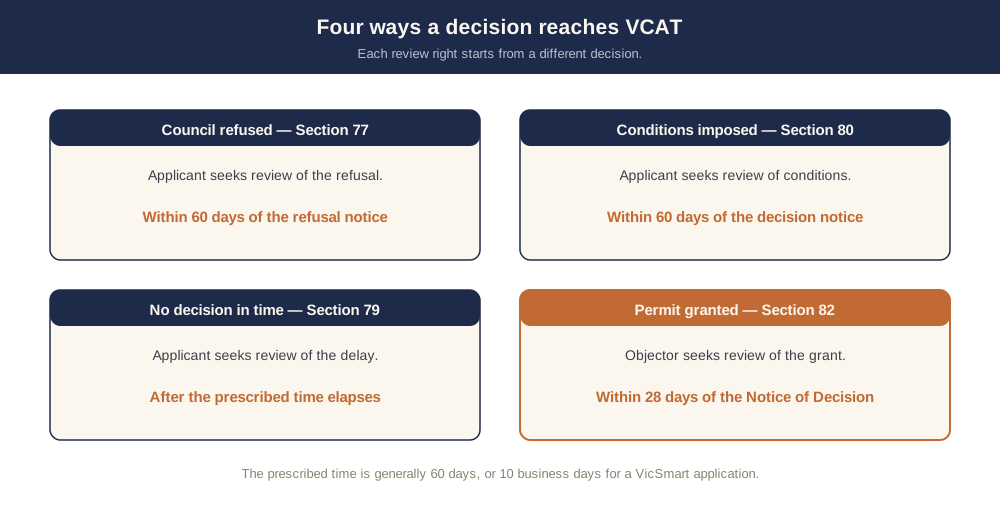
Figure 1: The four review rights — each starts from a different decision and carries its own deadline.
The four review rights
Under the Planning and Environment Act 1987, who can apply to VCAT depends entirely on what the council did.
If the council refused your application, you can apply for review of the refusal under section 77, within 60 days after the council gives notice of the refusal. If the council granted the permit but attached conditions you do not accept, you can apply under section 80, again within 60 days of the council's decision notice. If the council has not decided your application within the prescribed time — generally 60 days from a complete lodgement, or 10 business days for a VicSmart application — you can apply under section 79 for review of the failure to decide, rather than waiting indefinitely.
The fourth right belongs to objectors. Where there were objectors and the council issued a Notice of Decision to Grant a Permit under section 64, an objector who is dissatisfied can apply for review under section 82, within 28 days of the date of that notice. This is the shortest of the deadlines and the easiest to miss, so an objector who wants to keep the option open must act quickly. How objectors get to this point is covered in the planning permit objections guide.
How VCAT fees are structured
Spend 5 minutes, not 3 weeks
instantplanning generates a council-ready town planning report for Victorian permits. No town planner. No waiting.
Get your report →VCAT's fees are set by the Victorian Government and updated on 1 July each year, so the dollar amount of any fee changes annually. Rather than memorise figures that move, it is more useful to understand the structure, which is stable.
There are two main fees in a planning review. The first is the application fee — the fee to commence the proceeding, paid when you lodge. The second is the hearing fee, charged per day or part-day of hearing. Both are expressed in fee units, a standard unit the Government re-values each financial year, which is the mechanism that indexes the fees over time. A compulsory conference, mediation, directions hearing or practice day hearing does not attract the daily hearing fee — that fee applies to the hearing itself.
Because the amounts move, always confirm the current figures on the VCAT fees page before you budget. For a fuller breakdown of what a review tends to cost in practice, see the cost of a VCAT appeal.
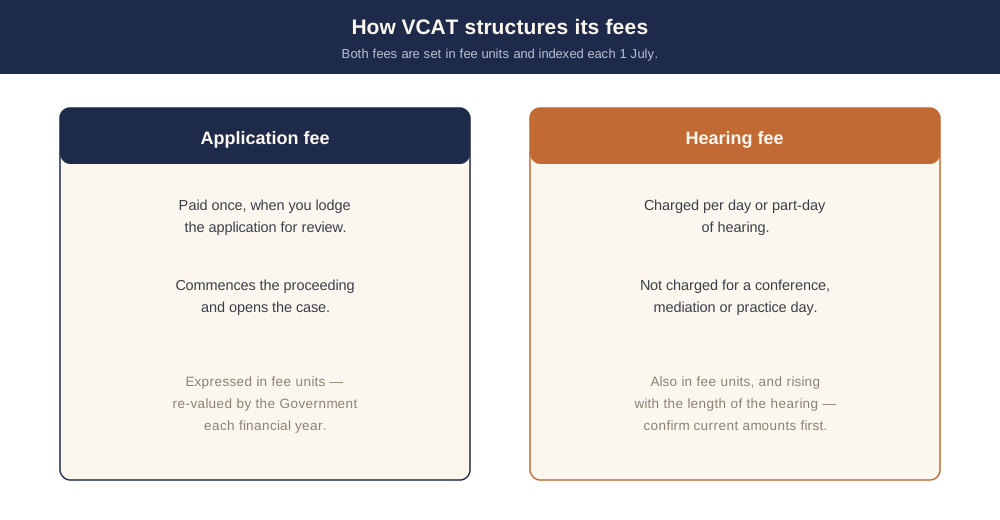
Figure 2: The two fees — an application fee on lodging and a per-day hearing fee, both indexed in fee units.
A town planner can take weeks; instantplanning builds a council-ready town planning report from current Victorian planning scheme data in minutes — you review every line before you lodge. A strong report at lodgement is the best way to avoid a refusal and the appeal that follows. Start with what happens after you lodge, or generate your report. For a contested hearing, engage an experienced human planner or advocate.
The process, step by step
Once you lodge an application for review and pay the application fee, VCAT opens the case and issues an initiating order. This order is the spine of the proceeding: it sets the dates for the hearing and any compulsory conference or practice day hearing, and gives directions about the steps each party must complete and by when. Missing a date in the initiating order can see your application struck out, so the order is read carefully and diarised the moment it arrives.
Before the hearing, the parties are usually directed to a compulsory conference or a mediation — a facilitated session aimed at narrowing the issues or settling the matter entirely. Many planning disputes resolve here, often through amended plans that address the council's or objectors' concerns. Where particular issues need to be sorted out before the hearing, a practice day hearing can deal with them.
If the matter does not settle, it proceeds to the hearing, where each party presents its case and evidence, often including an accompanied site inspection. After the hearing, VCAT issues an order — its decision on the application, which may direct that a permit be granted, granted with different conditions, or refused.
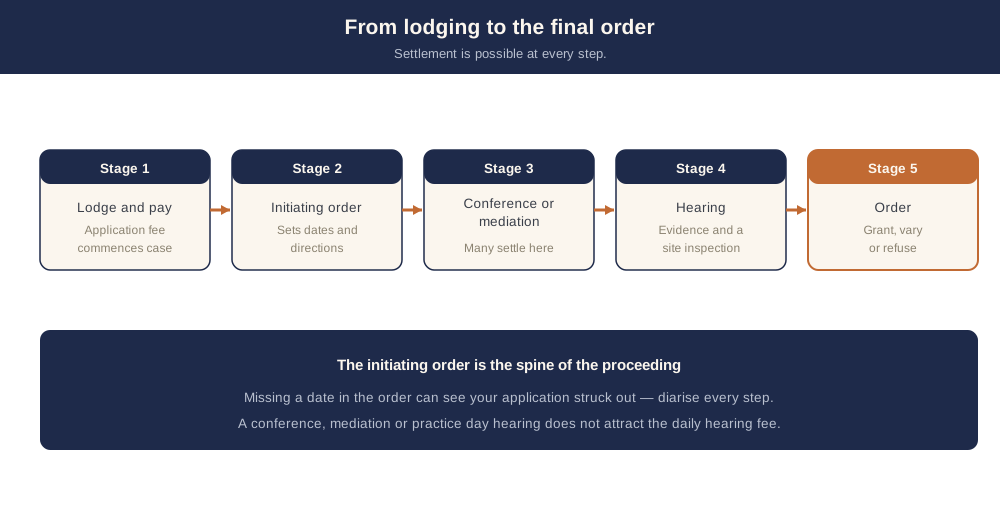
Figure 3: The stages of a review — from lodging to the final order, with settlement possible at every step.
A VCAT review is a real commitment of time and cost, which is why the surest position is the one you reach before any appeal: a complete, compliant, well-documented application that gives the council every reason to approve it, and a strong record to rely on if the matter does go to the tribunal.
You can confirm the current section wording in the Planning and Environment Act 1987, and the current fees and process at VCAT.
Frequently asked questions
What can I appeal to VCAT in a planning matter?
How long do I have to apply to VCAT?
What if the council does not decide in time?
How much does a VCAT planning appeal cost?
Does a VCAT planning case always go to a hearing?
Is VCAT a fresh decision or an appeal of an error?
Ready to generate your report?
Skip the writing. Get a council-ready town planning report in 5 minutes.
Get your report