Key takeaways
- ✓A VCAT planning appeal has two main charges — an application (commencement) fee and per-day hearing fees.
- ✓Fees are set statewide by regulation in fee units and indexed each 1 July, so they are the same wherever you live.
- ✓Three fee tiers apply — standard, corporate and concession — and a higher fee applies if you elect the Major Cases List.
- ✓You are not required to use a planner or lawyer, but most applicants engage one for anything contested.
- ✓Confirm the current dollar figures on the official VCAT fees page before you budget.
How Much Does a VCAT Appeal Cost?
A VCAT planning appeal in Victoria has two main costs you pay the tribunal: an application fee when you lodge, and hearing fees for each day your matter is heard. On top of that sit the optional but common costs of a town planner, an advocate or a lawyer. The good news is that the tribunal's own fees are set statewide and published — they are the same whether your land is in Melbourne or a regional town.
Get a council-ready town planning report in 5 minutes — no town planner, no waiting.
Get your report →- ✓The two fees the tribunal charges — application and hearing
- ✓The three fee tiers (standard, corporate, concession) and the Major Cases List
- ✓Whether you need a town planner or a lawyer
- ✓The other costs that make up a realistic total
- ✓Where to check the current dollar figures before you budget
The short answer
A VCAT planning appeal costs an application (commencement) fee plus per-day hearing fees, both set statewide in fee units and indexed each 1 July. Your fee depends on your tier — standard, corporate or concession — and whether you elect the faster Major Cases List. Professional help (planner, advocate or lawyer) is optional but the largest variable in most budgets.
The figure below shows how the tribunal's charges stack up.
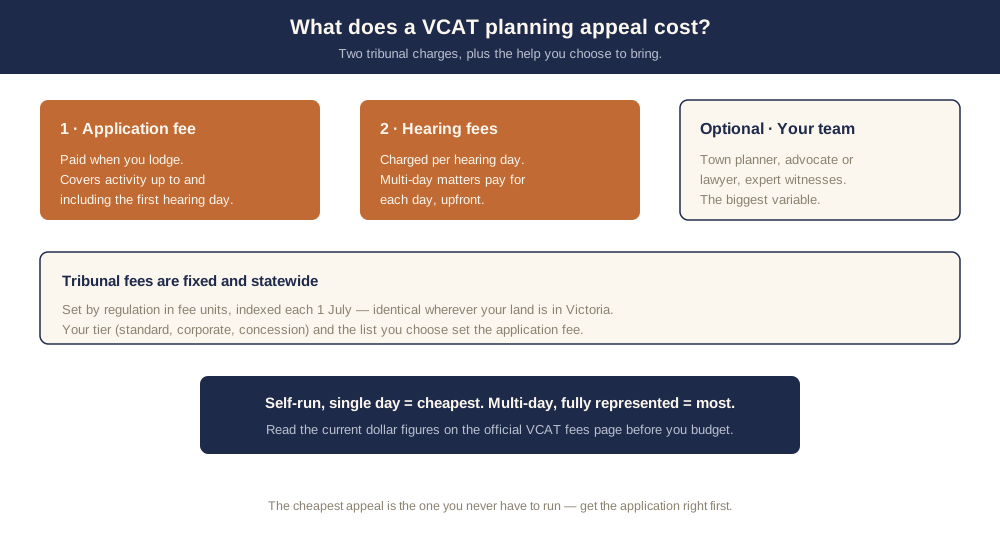
Figure 1: Two tribunal charges — an application fee and hearing fees — sit alongside optional professional costs.
So two appeals can cost very differently: a short, self-run review heard in a day costs little beyond the application fee, while a multi-day contested case with a planner and barrister runs into the thousands.
What VCAT charges: application and hearing fees
The tribunal charges two main fees for a matter in the Planning and Environment List. Both are set by the Victorian Civil and Administrative Tribunal (Fees) Regulations in fee units, and the dollar value of a fee unit is updated by the Victorian Government each 1 July — so the fees rise a little every financial year and are identical statewide.
The first is the application (commencement) fee, payable when you lodge the proceeding. For most planning reviews it covers lodging the application and the tribunal's activity up to and including the first hearing day.
The second is the hearing fee, charged per hearing day. Short matters resolved in a single day attract only that first day; longer matters are charged for each additional day, and the tribunal asks you to pay all hearing-day fees upfront before the hearing.
Because the exact dollar amounts change every year and sit in the tribunal's published schedule, you should read the current figures from the official source rather than rely on any number you see quoted online. The authoritative page is the VCAT fees page.
The three fee tiers — and the Major Cases List
Spend 5 minutes, not 3 weeks
instantplanning generates a council-ready town planning report for Victorian permits. No town planner. No waiting.
Get your report →Your fee depends on which tier you fall into and which list your matter runs in.
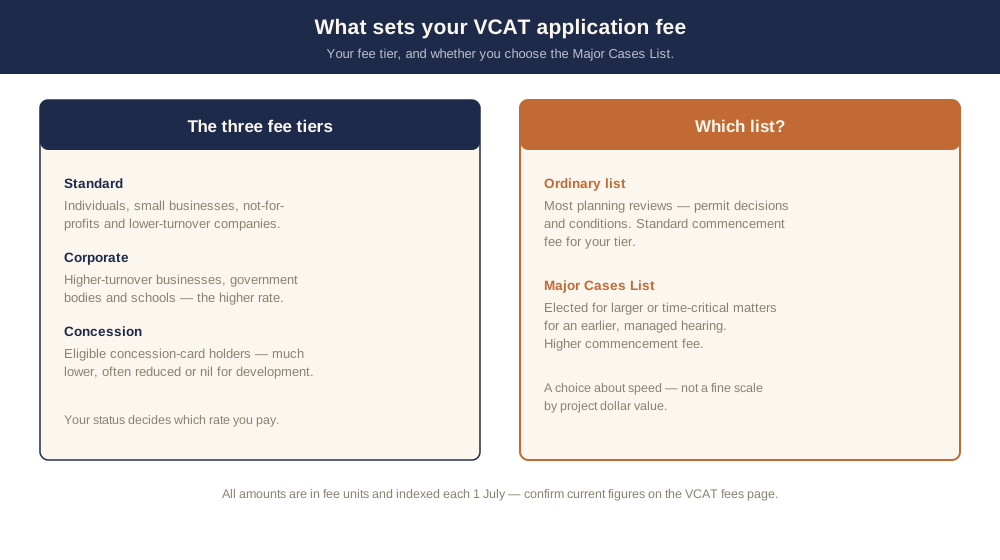
Figure 2: Which tier you fall into and whether you elect the Major Cases List together set the application fee.
The three tiers. The tribunal applies a standard rate (individuals, small businesses, not-for-profits and lower-turnover companies), a higher corporate rate (businesses above a turnover threshold, government bodies and schools), and a much lower concession rate (for eligible concession-card holders). For development-related matters in recent years the concession application fee has been kept very low or nil — confirm the current position on the fees page.
The standard list versus the Major Cases List. Most planning reviews — for example, a review of a permit decision or of conditions — run in the ordinary list and attract the standard commencement fee for your tier. For larger or time-critical developments, an applicant can elect the Major Cases List to get an earlier, more managed hearing, on payment of a higher commencement fee. The Major Cases fee is substantially higher than the ordinary fee for standard and corporate payers, so it is a deliberate choice tied to wanting a faster track, not a charge that scales finely with your project's dollar value.
Do you need a town planner or a lawyer?
No — you can represent yourself at VCAT, and many homeowners do, especially for straightforward reviews. The tribunal is designed to be accessible. But there is a clear pattern: the more contested or complex the matter, the more value professional help adds.
A town planner can prepare or refine the planning material, give expert planning evidence and present the planning merits of your proposal. A planning advocate or lawyer runs the case, examines witnesses and handles the legal framing. For a contested multi-dwelling proposal, objector appeals, or anything turning on expert evidence, most applicants engage at least a planner, and often both.
- ✓Self-represented — application and hearing fees only
- ✓Town planner to prepare evidence and present merits
- ✓Planning advocate or lawyer to run a contested hearing
- ✓Expert witnesses (traffic, arborist, heritage) where the issues require them
If your appeal flows from a refused or conditioned application, the strength of your original town planning report matters: a well-argued report against the planning scheme is the foundation the appeal builds on. We cover the process end to end in the VCAT planning appeal guide.
A realistic total — what to budget
Adding it up depends almost entirely on the choices above.
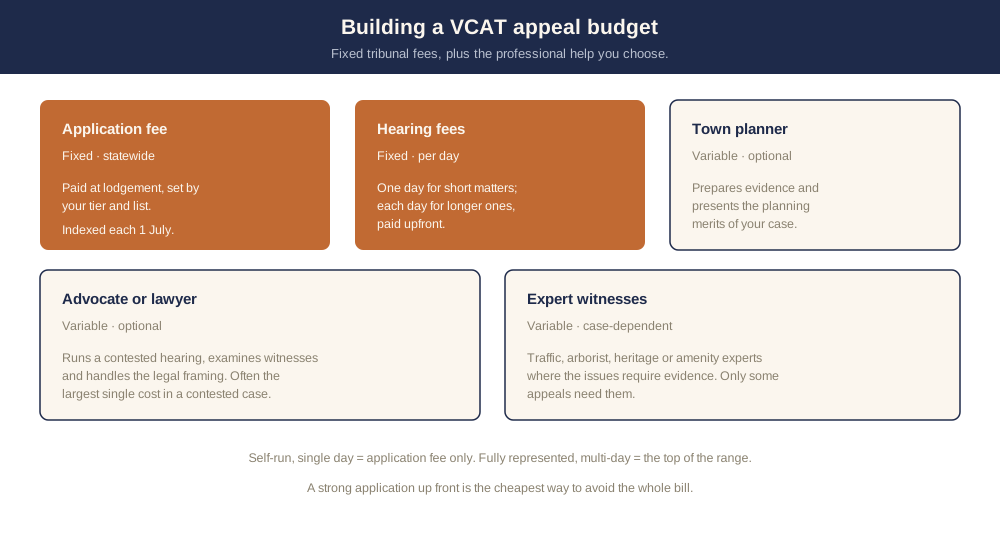
Figure 3: The components of a VCAT appeal budget, from the fixed tribunal fees to the variable professional costs.
A self-run, single-day review is the cheapest path: you pay the application fee for your tier and one hearing day, with no professional fees. A planner-supported review adds the planner's preparation and appearance. A fully represented, multi-day contested case is the most expensive, combining the application fee, several hearing days, a planner and an advocate or lawyer, plus any expert witnesses.
The single biggest lever is whether your application was strong enough not to need an appeal at all. Many appeals trace back to an application that was thin against the planning scheme — refused, heavily conditioned, or stalled. A complete, scheme-aligned report up front is the cheapest insurance against tribunal costs. See how the fees fit the wider picture in planning permit costs in Victoria.
Get the application right before it ever reaches VCAT
The cheapest VCAT appeal is the one you never have to run. Most refusals and conditions that end up at the tribunal start with an application that did not properly address the zone, overlays and the relevant ResCode standards. A strong town planning report gives the responsible authority what it needs to say yes the first time.
Hiring a town planner can take weeks. instantplanning builds the same council-ready report from current Victorian planning scheme data in minutes — you review it before you lodge. Start with planning permit costs in Victoria, read the VCAT appeal process, or just generate your report.
Frequently asked questions
How much does it cost to appeal to VCAT for a planning matter?
Are VCAT fees the same across Victoria?
What is the difference between the standard, corporate and concession fee?
What is the Major Cases List and does it cost more?
Do I need a town planner or a lawyer for VCAT?
How can I avoid VCAT costs altogether?
Ready to generate your report?
Skip the writing. Get a council-ready town planning report in 5 minutes.
Get your report