Key takeaways
- ✓Secondary consent is council approval of minor changes to endorsed plans without a formal section 72 amendment.
- ✓It is not a process in the Act — it flows from a permit condition allowing plans to be amended to the satisfaction of the responsible authority.
- ✓A change qualifies only if it does not transform the proposal, stays consistent with the conditions, needs no further approval, and does not harm amenity.
- ✓Secondary consent cannot change a permit condition — that needs a section 72 amendment.
- ✓There is no public notice and, generally, no third-party review right for a secondary consent decision.
Secondary Consent Explained (VIC)
When your build is underway and you need a small tweak to the approved plans, you do not always have to lodge a formal amendment. Victoria has a lighter-touch pathway called secondary consent — the council's approval of minor changes to your endorsed plans, given without the full section 72 process. It is fast and inexpensive, but it has a firm ceiling: the change cannot transform what was approved. This guide explains what secondary consent is, what qualifies, and where the line sits between a quick consent and a formal amendment.
Get a council-ready town planning report in 5 minutes — no town planner, no waiting.
Get your report →- ✓What secondary consent is and where it comes from
- ✓What kinds of change qualify — and what does not
- ✓The transformation test that sets the ceiling
- ✓How it differs from a section 72 amendment
- ✓The notice and review position for a consent decision
The short answer
Secondary consent is the council's approval of minor changes to your endorsed plans, given under a permit condition that lets plans be amended "to the satisfaction of the responsible authority." It is not a process in the Planning and Environment Act 1987. A change qualifies only if it does not transform the proposal, stays consistent with the conditions, needs no further planning approval, and does not harm a neighbour's amenity.
The decision turns on one question — is the change minor and non-transformative? The flow below works it through.
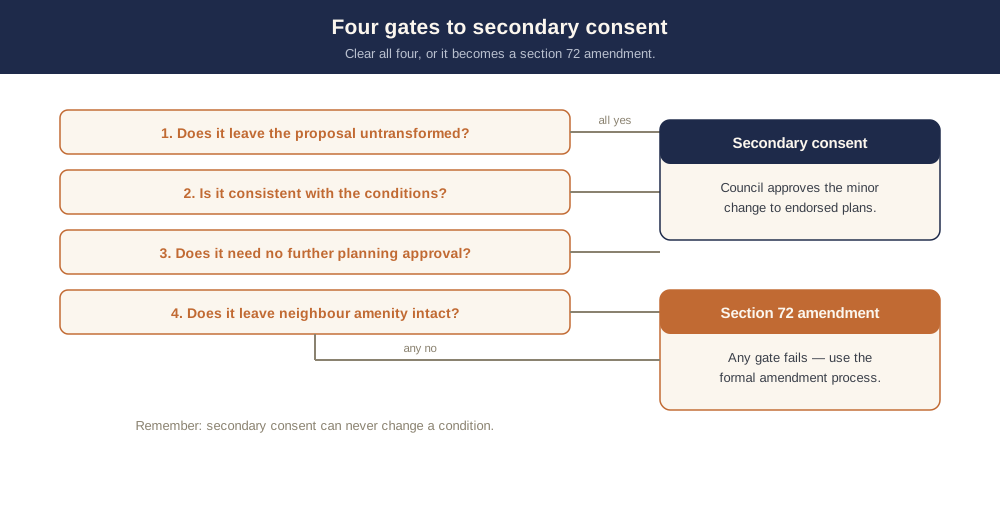
Figure 1: If the change clears all four gates, it can go through secondary consent — otherwise it needs a section 72 amendment.
Where secondary consent comes from
Here is the part that surprises people: secondary consent is not in the Act. There is no section that creates it. Instead, it flows from a condition on the permit itself — typically the endorsed-plan condition, which requires the development to be "generally in accordance with the endorsed plans" and often allows those plans to be amended "to the satisfaction of the responsible authority" or "with the further written consent of the responsible authority."
That wording is the doorway. Because the permit holder is acting under a power the condition gives the council, the council can approve a minor variation to the endorsed plans without re-opening the whole permit. It is an internal council process — no formal application stream under sections 72 and 73, and, importantly, no statutory notice.
What qualifies — the four gates
Spend 5 minutes, not 3 weeks
instantplanning generates a council-ready town planning report for Victorian permits. No town planner. No waiting.
Get your report →The Department's guidance sets clear criteria. A change can be approved by secondary consent only if it clears all four of these gates.
- ✓It does not transform the proposal
- ✓It is consistent with the permit conditions
- ✓It does not require additional planning approval under the scheme
- ✓It does not negatively impact the amenity of adjoining properties
Fail any one and secondary consent is the wrong tool. The single most important limit sits inside that list and on its own line: secondary consent cannot change a permit condition. If your change touches a condition — not just the plans the condition refers to — you are into section 72 territory. For how conditions work, see planning permit conditions explained.
The transformation test
The reason secondary consent has a ceiling is the transformation principle drawn from Victorian case law — the line of authority associated with decisions such as Westpoint Management Ltd v Whitehorse CC and Mornington Inn Pty Ltd. The core question the Tribunal asks is whether the proposed change remains within the scope of the original approval, or whether it has become a materially different proposal.
In practice, a change that alters key parameters — building height, the massing of the built form, traffic generation, the intensity of the use, or the core amenity impacts — transforms the proposal and is beyond secondary consent. A change that simply refines detail within the approved envelope, with no change to amenity outcomes, stays within it. The Department restates the case law as the requirement that a change "does not transform the proposal," is consistent with the permit, and needs no additional planning approval.
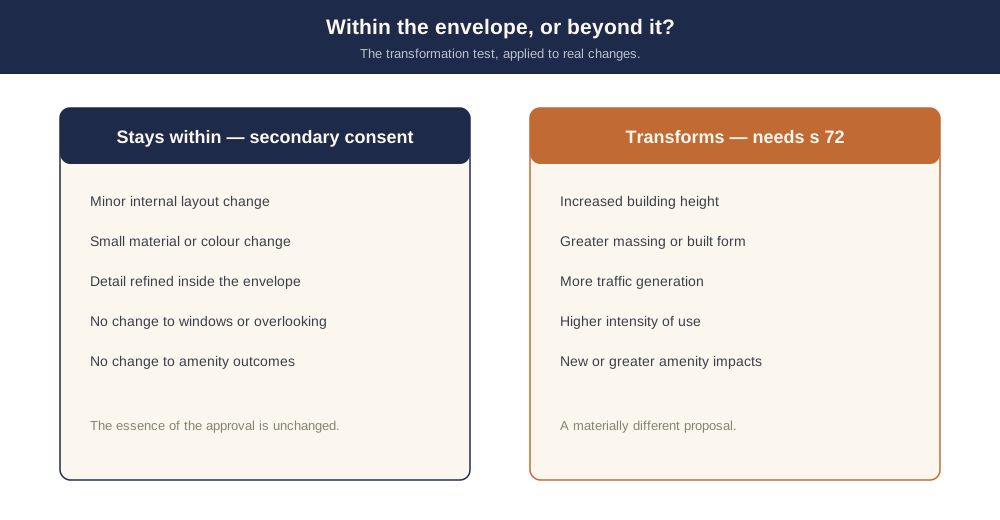
Figure 2: The same test, two outcomes — stay within the envelope and it is secondary consent; cross it and it is an amendment.
Secondary consent vs a section 72 amendment
The two pathways are easy to confuse, so it helps to set them side by side. Secondary consent is for minor plan changes, leaves conditions untouched, carries no public notice, and is the fastest route. A section 72 amendment is a formal process under the Act for more substantial change, can alter conditions and the permit description, may require notice and referral, and re-runs the original assessment machinery. We cover the formal route in how to amend a planning permit.
Choosing wrong costs time: a change pushed through as secondary consent when it should have been an amendment can be challenged and unwound. When in doubt, ask the council which pathway it expects before you build to the new plans.
Practical examples and the review position
Typical changes the council will accept by secondary consent include minor internal layout changes that do not affect window locations or overlooking, and small changes to external materials or colours that do not alter the overall appearance of the building. The common thread is that they sit inside the approved envelope and change no amenity outcome.
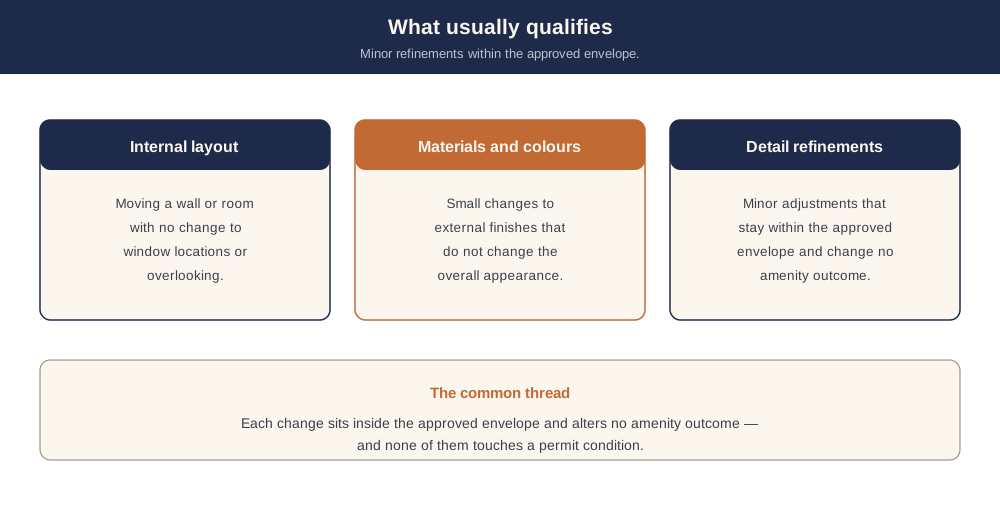
Figure 3: Minor refinements within the approved envelope are the natural home of secondary consent.
On notice and review: because secondary consent is not a statutory process, there is no public notification and, generally, no third-party right of review of a secondary consent decision. That is part of why councils apply the four gates strictly — there is no advertising step to surface concerns, so the gates do the protective work.
Hiring a town planner can take weeks. Start with what a town planning report is, or generate your report. For a complex or contested change, engage an experienced human planner.
You can confirm the permit framework in the Planning and Environment Act 1987 or read current permit guidance at planning.vic.gov.au.
Frequently asked questions
What is secondary consent for a planning permit in Victoria?
What changes qualify for secondary consent?
Can secondary consent change a permit condition?
What is the transformation test?
Does secondary consent get advertised, and can neighbours object?
When should I use a section 72 amendment instead?
Ready to generate your report?
Skip the writing. Get a council-ready town planning report in 5 minutes.
Get your report