Key takeaways
- ✓You lodge a planning permit application with the responsible authority, which is usually your local council.
- ✓A complete lodgement is the application form, the supporting documents, and the prescribed fee.
- ✓Fees are set in fee units under the Planning and Environment (Fees) Regulations 2016 and indexed every 1 July.
- ✓Subdivision and certification are lodged through the online SPEAR system.
- ✓A complete, well-documented lodgement is the single best way to avoid a request for further information.
How to Lodge a Planning Permit (VIC)
Lodging a planning permit application in Victoria is not complicated, but it is exacting. The responsible authority — almost always your local council — will only start assessing once it has three things: the right application form, a complete set of supporting documents, and the correct fee. Get any of them wrong and your application stalls before the clock even starts. This guide walks through each step so your lodgement lands clean the first time.
Get a council-ready town planning report in 5 minutes — no town planner, no waiting.
Get your report →- ✓Who you lodge a planning permit application with
- ✓What a complete lodgement actually contains
- ✓How the application form and documents fit together
- ✓How fees are set and where to confirm the current figure
- ✓When to lodge online through SPEAR instead
The short answer
To lodge a planning permit application in Victoria, submit the council's application form, the supporting documents your proposal needs — plans, a written planning report, and any specialist reports — and the prescribed fee to the responsible authority, usually your local council. Subdivision and certification applications are lodged online through SPEAR.
A lodgement only counts once all three parts arrive together. The diagram below shows the path from preparing to lodging.
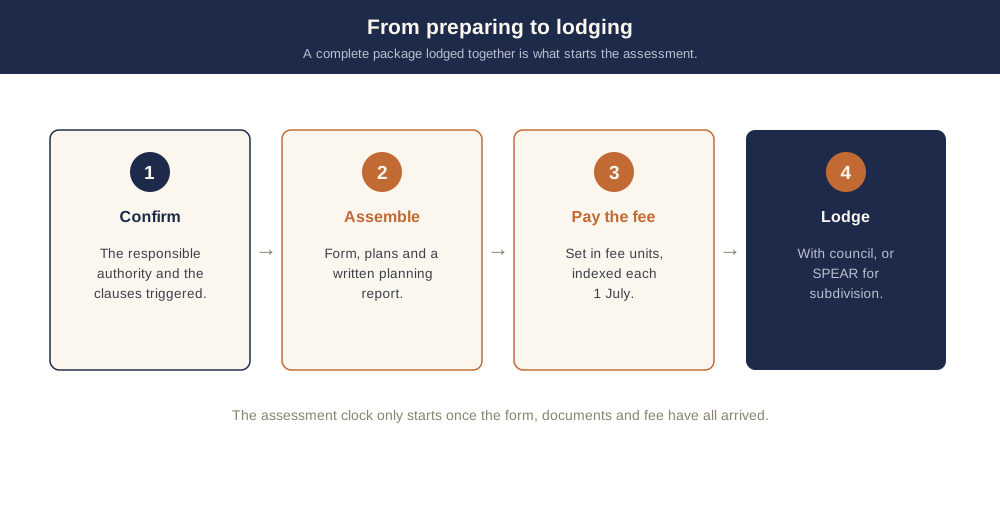
Figure 1: The lodgement path — a complete package lodged together is what starts the assessment.
Your application goes to the responsible authority for your land, which for the vast majority of applications is your local council. A small number of matters sit with the Minister for Planning or another authority, but for a home extension, dual occupancy, change of use or small subdivision, it is your council. If you are unsure which body decides your application, read what is a responsible authority. Confirming this first matters, because the form, the fee and the lodgement channel all follow from it.
Step 2 — Assemble the application form and documents
Spend 5 minutes, not 3 weeks
instantplanning generates a council-ready town planning report for Victorian permits. No town planner. No waiting.
Get your report →Every council uses an application form for a planning permit. It captures the basics: the land address, the existing and proposed use and development, an estimate of the cost of development (which sets your fee), and the owner's details. Alongside the form, you lodge the documents that let the council assess the proposal against the planning scheme.
- ✓A completed application form, signed and with the cost of development stated
- ✓Site and floor plans, elevations and a site analysis drawn to scale
- ✓A written town planning report addressing the relevant scheme provisions
- ✓Title documents, including a current copy of title and any covenants or restrictions
- ✓Any specialist reports the proposal triggers, such as a bushfire, traffic, arborist or land capability report
The written planning report is the document that ties everything together. It tells the council which zone and overlays apply, which clauses are triggered, and how the design responds to each one. A clear report is what lets an assessing officer say "this complies" without sending you a request for more information. Read what's in a town planning report for the full structure.
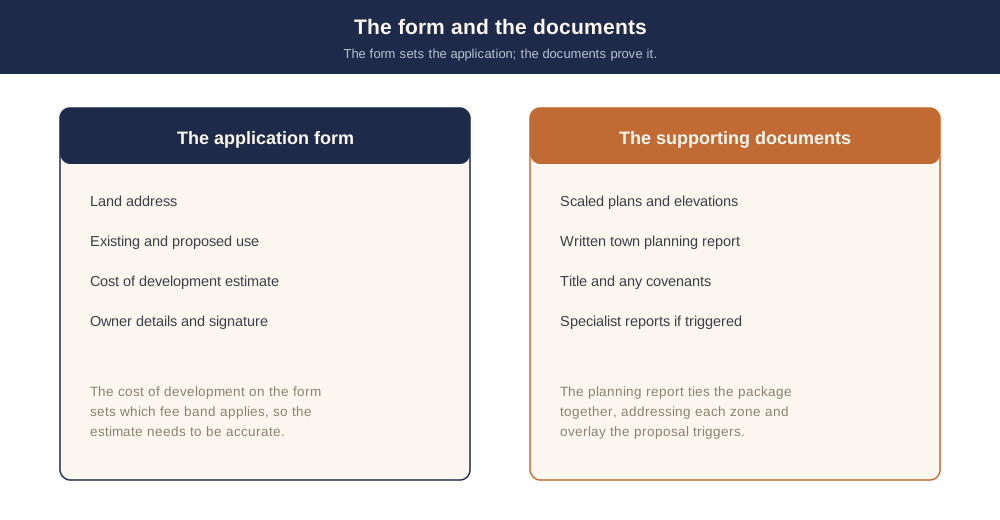
Figure 2: The two halves of a lodgement — the form sets the application, the documents prove it.
Step 3 — Calculate and pay the fee
Planning permit fees in Victoria are not set by each council. They are prescribed statewide under the Planning and Environment (Fees) Regulations 2016, expressed in fee units, and indexed every 1 July. For the 2025–26 financial year the value of a fee unit is set each year, which is why the same application costs slightly more after each July indexation.
The fee you pay depends on what you are applying for. The Regulations group applications into broad classes — a permit to use land only, a permit to develop land for a single dwelling (priced in bands by the cost of development), a permit to develop land more generally, and subdivision. Within the single-dwelling classes the fee steps up with the estimated cost of works, so an accurate cost estimate on your form matters. Because the figures change with each indexation and depend on your exact class, confirm the current dollar amount on the official Victorian planning fees page before you pay rather than relying on an older number.
If your application qualifies for the VicSmart fast-track pathway, it sits in its own fee class and is assessed in 10 business days. Whether your proposal is eligible is worth checking early — see VicSmart vs standard permit.
Step 4 — Lodge through the right channel
How you physically lodge depends on the type of application.
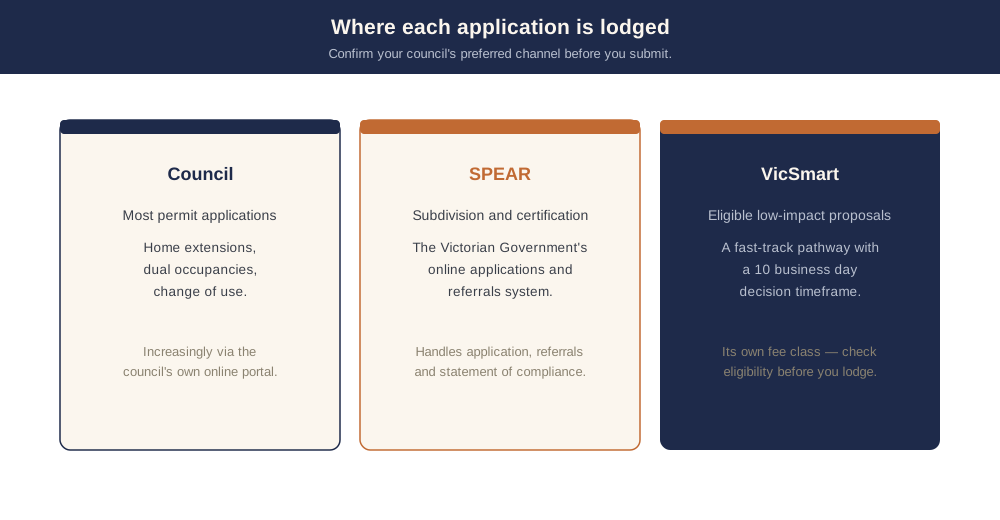
Figure 3: Where each kind of application is lodged — confirm your council's preferred channel before you submit.
Most permit applications are lodged directly with the council, increasingly through the council's own online portal. Subdivision and certification applications, however, run through SPEAR — Surveying and Planning through Electronic Applications and Referrals — the Victorian Government's online system at spear.land.vic.gov.au, which manages the application, referrals and the statement of compliance in one place. If your project is a subdivision, expect to work in SPEAR rather than emailing the council a PDF. Whichever channel applies, the lodgement is only complete when the form, documents and fee have all arrived.
What makes a lodgement land clean
The single biggest cause of delay is an incomplete lodgement. A council that cannot assess what you have given it will issue a request for further information, which stops the statutory clock and pushes your decision out by weeks. The fix is upfront: address every triggered clause, draw every required plan to scale, and include every specialist report the overlays demand. A lodgement that answers the council's questions before they are asked is the one that moves. For the full picture of what follows, read what happens after you lodge and the broader planning permit process.
Hiring a town planner can take weeks. Start with what a town planning report is, or generate your report. For a complex or contested application, engage an experienced human planner.
Frequently asked questions
Who do I lodge a planning permit application with in Victoria?
What documents do I need to lodge a planning permit?
How much is the planning permit fee in Victoria?
How do I lodge a subdivision application?
Can I lodge a planning permit online?
What happens if my lodgement is incomplete?
Ready to generate your report?
Skip the writing. Get a council-ready town planning report in 5 minutes.
Get your report