Key takeaways
- ✓You amend an existing permit under section 72 of the Planning and Environment Act 1987 — and you can do it more than once.
- ✓A section 72 amendment is decided under section 73 and runs through the same notice, referral and assessment steps as the original permit.
- ✓Section 72 can change the description, the conditions, and the endorsed plans — but it cannot authorise something the scheme prohibits.
- ✓For minor plan tweaks, secondary consent is faster; for substantial change, section 72 is the right tool.
- ✓Review rights at VCAT mirror the original application, with a 60-day limit.
How to Amend a Planning Permit (VIC)
Plans change. The kitchen moves, the client wants an extra bedroom, a condition turns out to be unworkable, or the market shifts and the use needs to adjust. In Victoria you do not have to start from scratch — you can amend the existing permit. The main pathway is section 72 of the Planning and Environment Act 1987, and understanding when it applies (versus the lighter-touch secondary consent or a fresh application) saves both time and money. This guide walks through the process, the limits, and how to choose the right route.
Get a council-ready town planning report in 5 minutes — no town planner, no waiting.
Get your report →- ✓What a section 72 amendment is and who can apply
- ✓How the decision is made under section 73, step by step
- ✓What you can and cannot change through an amendment
- ✓When secondary consent is enough instead
- ✓When the change is too big and needs a fresh application
The short answer
You amend a planning permit in Victoria by applying under section 72 of the Planning and Environment Act 1987. The council decides it under section 73, running it through the same notice, referral and assessment steps as the original permit. Section 72 can change the description, the conditions and the endorsed plans — but it cannot authorise something the planning scheme prohibits.
Choosing the right route is the first decision. The flow below sorts a proposed change into secondary consent, a section 72 amendment, or a fresh application.
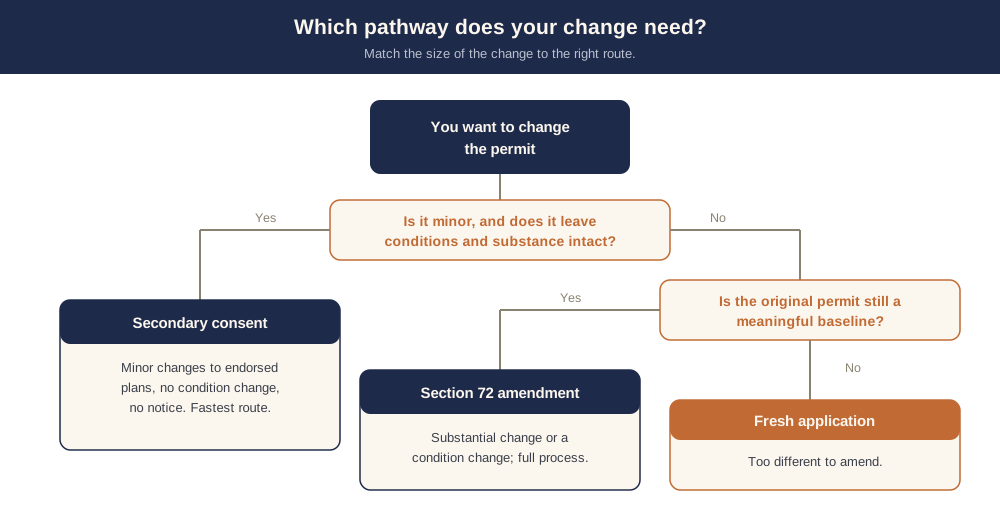
Figure 1: Match the size of the change to the right pathway before you lodge anything.
What a section 72 amendment is
Section 72 lets "a person who is entitled to use or develop land in accordance with a permit" apply to the responsible authority to amend the permit — including any endorsed plans, drawings or other approved documents. In practice a section 72 application can change three things: the description of what the permit allows, the conditions on the permit, and the endorsed plans to which those conditions refer.
There is no cap on how often you can do this — the Department's guidance is explicit that there is no limit to the number of times an applicant can request an amendment. A section 72 amendment is the tool for more substantial changes than secondary consent allows, and it is the only one of the three routes that can actually change permit conditions.
How the decision is made — section 73
Spend 5 minutes, not 3 weeks
instantplanning generates a council-ready town planning report for Victorian permits. No town planner. No waiting.
Get your report →The council decides a section 72 application under section 73, and the key point is this: an amendment is processed in the same way as an application for a permit. The same machinery in sections 47 to 62 applies, so your amendment can move through the full sequence.
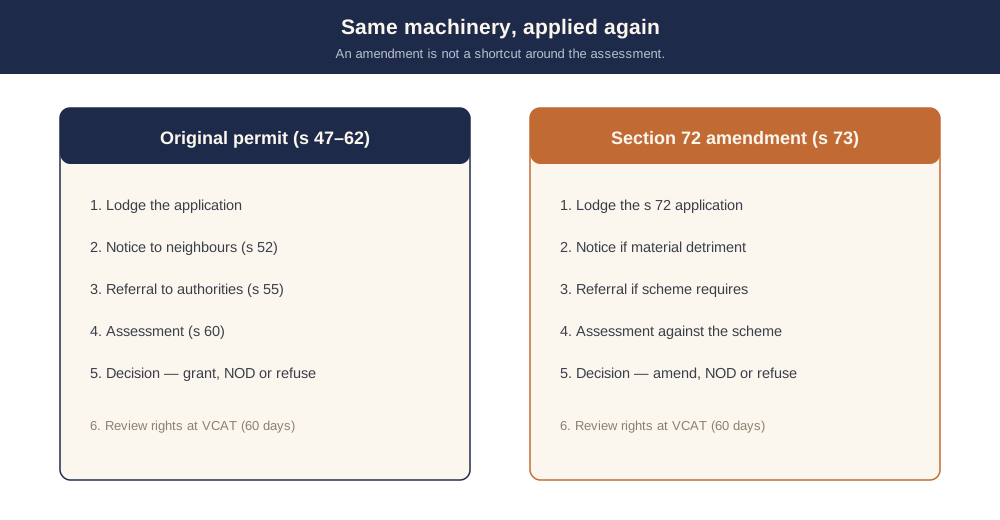
Figure 2: A section 72 amendment is not a shortcut — it re-runs the original assessment machinery.
That means the amendment may require notice under section 52 (letters to neighbours, a site sign, a press notice) where the council considers the change could cause material detriment, referral to referral authorities under section 55 if the scheme requires it, and assessment against the planning scheme under section 60 before the decision. The outcomes mirror an original permit: the council can grant the amended permit, issue a notice of decision to grant the amendment (giving objectors a window), or refuse.
Review rights also mirror the original. An applicant or an eligible objector can apply to VCAT under the Part 4 review provisions, and the standard time limit is 60 days from the date notice of the decision is given. For background on how that assessment runs, see what happens after you lodge.
What you can and can't change
A section 72 amendment is powerful but not unlimited.
- ✓You CAN change the description of the use or development
- ✓You CAN add, amend or delete conditions
- ✓You CAN amend the endorsed plans and documents
- ✓You CANNOT authorise a use or development the scheme prohibits
- ✓You CANNOT bypass mandatory notice, referral or review
- ✓You CANNOT use it where the change is so different it is really a new proposal
The hard limit is the same one that applies to a brand-new permit: section 72 cannot be used to approve something the planning scheme does not allow. And while there is no bright statutory line, VCAT will not let an amendment carry a proposal so fundamentally different that it needs a fresh assessment under different controls — that is treated as needing a new application, not an amendment.
Section 72 vs secondary consent vs a fresh application
Choosing the wrong route wastes time. Here is the practical split.
Secondary consent is the lightest touch. It is not a process in the Act at all — it flows from a permit condition that lets plans be amended "to the satisfaction of the responsible authority." It only works for minor changes to endorsed plans that do not transform the proposal, stay consistent with the conditions, need no further planning approval, and do not harm a neighbour's amenity. Crucially, secondary consent cannot change a permit condition. We cover the test in secondary consent explained.
A section 72 amendment is the middle and most common route. Use it when the change is more than minor, when you need to alter a condition, or when the change might affect neighbours and therefore needs notice. It works within the broad structure of the existing permit.
A fresh application is needed when the change is so substantial that the original permit is no longer a meaningful baseline — a fundamentally different land use, a different development type, or a proposal outside the conceptual scope of what was approved.
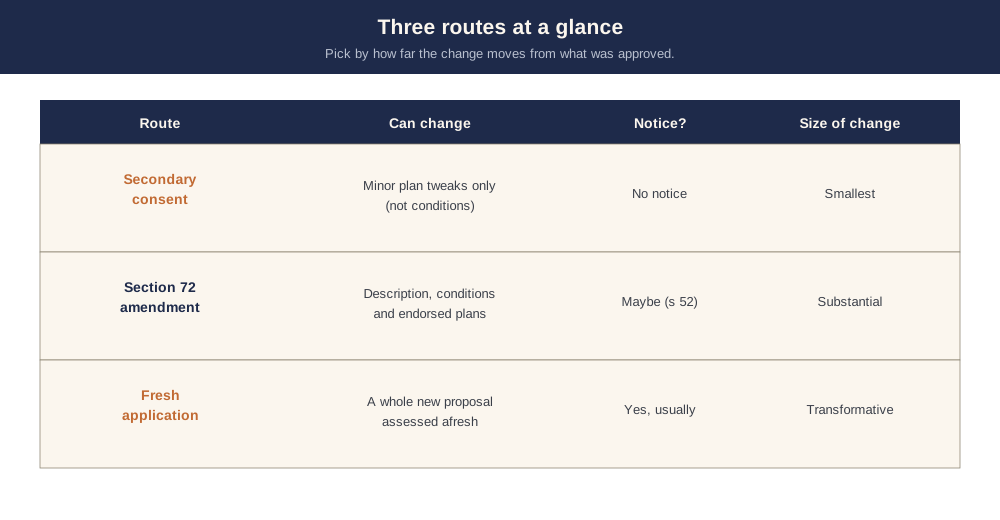
Figure 3: The three routes at a glance — pick by how far the change moves from what was approved.
The transformation idea behind the split
The reason secondary consent has a ceiling is the transformation principle drawn from case law. A change handled outside a formal amendment must not transform the substance of what was approved — the essence of the permitted use or development has to remain recognisably the same. The moment a change alters key parameters — height, massing, traffic generation, intensity of use, or core amenity impacts — it is beyond secondary consent and belongs in a section 72 amendment or a fresh application. The Department restates this as the requirement that a change "does not transform the proposal," is consistent with the permit, and needs no additional planning approval.
Hiring a town planner can take weeks. Start with what a town planning report is, or generate your report. For a complex or contested amendment, engage an experienced human planner.
You can read the amendment provisions in the Planning and Environment Act 1987 or check current guidance at planning.vic.gov.au.
Frequently asked questions
How do I amend a planning permit in Victoria?
Can I change a permit condition through a section 72 amendment?
What is the difference between section 72 and secondary consent?
How many times can I amend a planning permit?
Does a section 72 amendment get advertised?
When do I need a fresh application instead of an amendment?
Ready to generate your report?
Skip the writing. Get a council-ready town planning report in 5 minutes.
Get your report