Key takeaways
- ✓A permit usually expires if development does not start within 2 years and finish within 4.
- ✓You can apply to extend the permit under section 69 of the Planning and Environment Act 1987.
- ✓The window to apply depends on whether you are extending the time to start or to complete.
- ✓Councils and VCAT weigh the Kantor v Murrindindi factors when deciding an extension.
- ✓Holding a permit with no intent to act on it — "warehousing" — counts against you.
Extension of Time for a Permit (VIC)
A planning permit does not last forever. It comes with built-in time limits, and if you do not start and finish your project within them, the permit expires — and you are back to a fresh application under whatever planning rules apply by then. The good news is that Victoria gives you a way to ask for more time, under section 69 of the Planning and Environment Act 1987. But the window to ask is tight, and councils do not grant extensions automatically. Knowing the deadlines and the tests they apply is how you keep a permit alive.
Get a council-ready town planning report in 5 minutes — no town planner, no waiting.
Get your report →- ✓When a planning permit expires and the standard default timeframes
- ✓How a section 69 extension of time works
- ✓The exact windows you have to apply, depending on what you are extending
- ✓The Kantor v Murrindindi factors councils and VCAT weigh
- ✓How and when to apply, and what to put in your request
The short answer
A Victorian planning permit usually expires if development does not start within 2 years and is not completed within 4 years. You can apply to extend it under section 69 of the Planning and Environment Act 1987 — before expiry or within set windows after it. The council, and VCAT on review, weigh the Kantor v Murrindindi factors, including whether you are "warehousing" the permit.
The deadlines turn on what you are extending — the time to start, or the time to complete. The flow below shows which window applies.
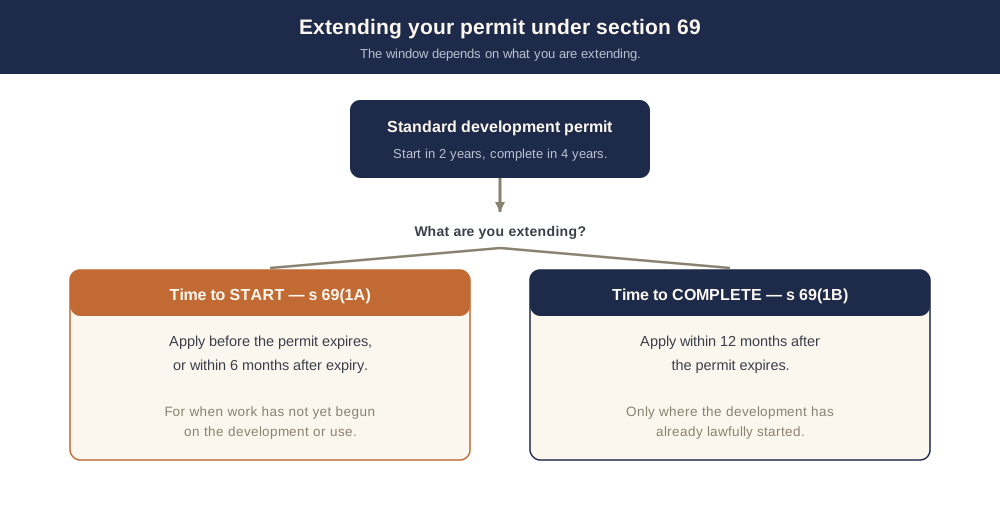
Figure 1: Which section 69 window applies depends on whether you are extending the time to start or to complete.
When a permit expires
The default expiry timeframes are set by section 68 of the Planning and Environment Act 1987, unless the permit itself specifies different times. For the common case of a permit to develop and use land, the standard pattern written into most permit conditions is:
- ✓Development must START within 2 years of the permit date
- ✓Development must be COMPLETED within 4 years of the permit date
- ✓A use must START within 2 years
- ✓A use that is discontinued for 2 years causes the permit to expire
Subdivision permits run on their own clock: where certification of a plan is required, the permit expires if the plan is not certified within 2 years and the subdivision is not completed within 5 years of certification, unless the permit says otherwise.
These periods are the defaults — always read your own permit, because the conditions can set different times. If you miss them and do not have an extension, the permit is gone, and you cannot rely on it to build. That is why the extension mechanism matters so much.
How a section 69 extension works
Spend 5 minutes, not 3 weeks
instantplanning generates a council-ready town planning report for Victorian permits. No town planner. No waiting.
Get your report →Under section 69, the permit holder can apply to the responsible authority — usually the council — to extend the expiry date of the permit. It is a separate process from amending the permit's content (covered in how to amend a planning permit); an extension changes only the deadlines, not the design or conditions.
The council can grant repeated extensions, but each is discretionary and each is subject to the timing windows below. There is no automatic right to one.
The windows to apply
This is where applicants most often come unstuck. The deadline to apply for an extension depends on what you are extending, and the windows in section 69(1A) and 69(1B) are strict.
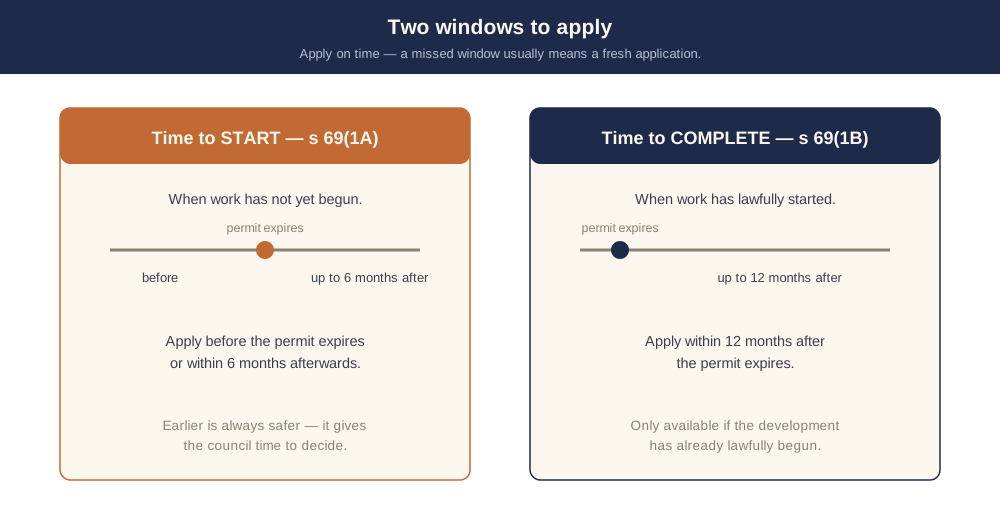
Figure 2: Two different windows — apply on time, because a missed window usually means a fresh application.
Extending the time to START (section 69(1A)): you can apply before the permit expires, or within 6 months after it expires.
Extending the time to COMPLETE, where the development has lawfully started (section 69(1B)): you can apply within 12 months after the permit expires.
The lesson is to act early. An application lodged comfortably before expiry gives the council time to decide and gives you the cleanest position. Once you are into the post-expiry grace periods, you are relying on the council's discretion with the clock against you. Miss the windows entirely and your only path is usually a new application — assessed against today's planning controls, which may have changed.
The Kantor v Murrindindi factors
Councils and VCAT do not decide extensions on a whim. They apply a well-established set of considerations from Kantor v Murrindindi Shire Council (1997), later restated by VCAT in Seven Oaks Development Pty Ltd v Glenelg Shire Council [2008] VCAT 1257. These are discretionary and non-exhaustive — the decision-maker weighs them together.
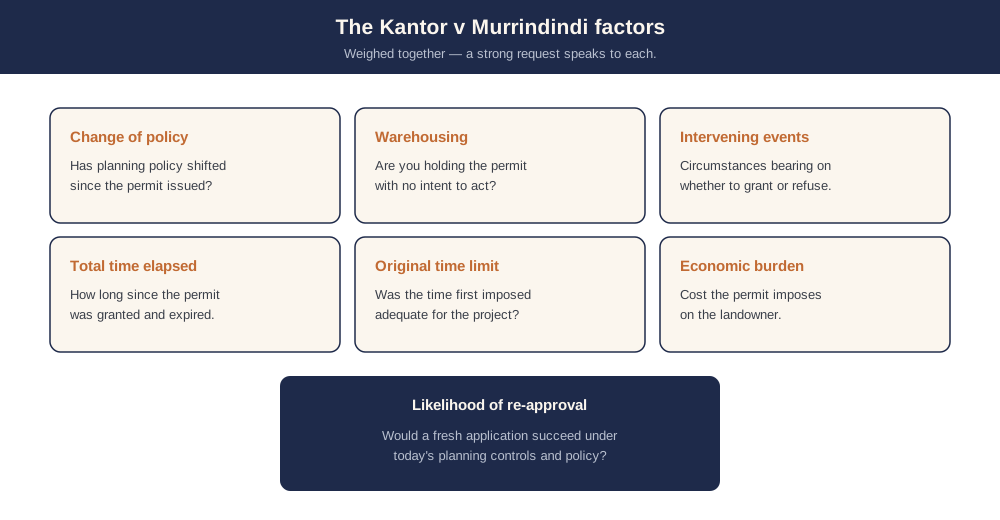
Figure 3: The Kantor factors — a strong extension request speaks to each one.
The factors are:
- ✓Whether there has been a change of planning policy since the permit issued
- ✓Whether the landowner is seeking to "warehouse" the permit — hold it with no genuine intent to act
- ✓Intervening circumstances bearing on whether to grant or refuse
- ✓The total elapse of time since the permit was granted
- ✓Whether the time limit originally imposed was adequate
- ✓The economic burden the permit imposes on the landowner
- ✓The probability of a permit being obtained if a fresh application were made today
In practice, the strongest requests show genuine, ongoing effort toward the project — finance secured, plans progressed, a builder engaged — and explain any delay with real, intervening reasons. The weakest are bare requests for more time with no movement on the ground, especially where planning policy has shifted in a way that makes re-approval doubtful.
How and when to apply
Apply to the responsible authority that issued the permit, in writing, before the permit expires wherever you can. A persuasive request does more than ask: it sets out where the project stands, why the original timeframe was not met, what has been done to advance it, and why an extension fits the Kantor factors. If the council refuses, or does not decide, you can apply to VCAT for review — the same Kantor framework applies there.
Hiring a town planner can take weeks. instantplanning builds a council-ready town planning report from current Victorian planning scheme data in minutes — you review every line before you lodge. Start with what a town planning report is, or generate your report. For a contested extension or one going to VCAT, engage an experienced human planner.
You can confirm the current section wording in the Planning and Environment Act 1987 or read the state's guide to planning permits.
Frequently asked questions
When does a planning permit expire in Victoria?
How do I extend a planning permit?
How long do I have to apply for an extension?
What are the Kantor factors?
What is "warehousing" a permit?
What if the council refuses my extension?
Ready to generate your report?
Skip the writing. Get a council-ready town planning report in 5 minutes.
Get your report