Key takeaways
- ✓The Residential Growth Zone (Clause 32.07) is Victoria's most intensive residential zone, for higher-density housing near activity centres and transport.
- ✓The standard height is a discretionary 13.5 metres and up to four storeys — and a schedule can set it higher.
- ✓The minimum garden area requirement does not apply in the RGZ, unlike the GRZ and NRZ.
- ✓A planning permit is required to construct a dwelling and is always required for two or more dwellings on a lot.
- ✓Depending on height, your design is assessed under Clause 55, Clause 57 (four storeys) or Clause 58 (apartments).
The Residential Growth Zone (RGZ) in Victoria Explained
The Residential Growth Zone (RGZ) is the most intensive of Victoria's residential zones. Councils apply it to well-located areas — near activity centres, jobs and public transport — where they want to encourage higher-density housing, typically up to four storeys. If your property is zoned RGZ, you have more development potential than in any other standard residential zone, but the controls and assessment standards work differently from the GRZ and NRZ.
Get a council-ready town planning report in 5 minutes — no town planner, no waiting.
Get your report →- ✓What the Residential Growth Zone is for and what it allows
- ✓When a planning permit is required in the RGZ
- ✓The discretionary 13.5-metre, four-storey height — and why "discretionary" matters
- ✓Why there's no garden area requirement in the RGZ
- ✓How the RGZ differs from the GRZ
The short answer
The Residential Growth Zone (Clause 32.07) is Victoria's most intensive residential zone, for higher-density housing up to four storeys near activity centres and transport. The standard height is a discretionary 13.5 metres, and the minimum garden area requirement does not apply. A planning permit is required to build dwellings, and is always required for two or more on a lot.
The key contrast with the GRZ is that the RGZ height is discretionary, not mandatory — and there's no garden area requirement to satisfy.
What the Residential Growth Zone is for
The RGZ is set out in Clause 32.07. Its purpose is to provide housing at increased densities in buildings up to and including four storeys, and to encourage a diversity of housing types in locations offering good access to services and public transport. The state planning practice note describes it as the most intense of the residential zones — the zone used to direct growth into the places best able to absorb it.
In practice the RGZ supports townhouses, low-rise apartments and four-storey apartment buildings, where the GRZ and NRZ tap out at three and two storeys respectively.
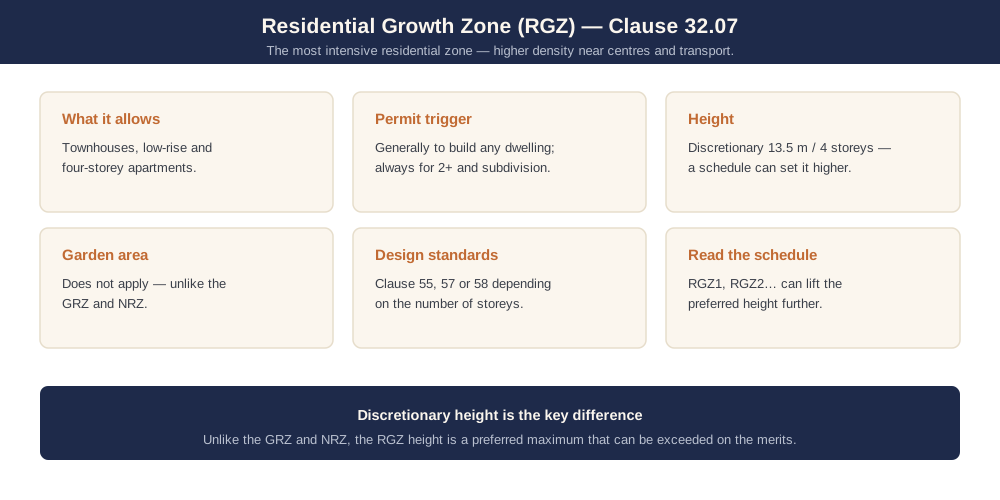
Figure 1: The Residential Growth Zone is the highest-intensity residential zone — a discretionary 13.5-metre height and no garden area requirement.
When do you need a planning permit in the RGZ?
Spend 5 minutes, not 3 weeks
instantplanning generates a council-ready town planning report for Victorian permits. No town planner. No waiting.
Get your report →Because the RGZ is an increased-density zone where built form is actively managed, the permit triggers are broader than in the lower-intensity zones.
- ✓Constructing a dwelling — a planning permit is generally required, even for one dwelling
- ✓Two or more dwellings on a lot — a permit is always required
- ✓Subdividing land — a permit is always required
- ✓Any building or works in an overlay (heritage, bushfire, flood, design and development) — a permit is usually required
Don't assume a single dwelling is exempt in the RGZ the way it often is in the GRZ — the zone's settings mean construction is typically assessed. Always confirm against Clause 32.07 and the schedule. For the broader framework, see do I need a planning permit in Victoria.
The 13.5-metre, four-storey height — and why "discretionary" matters
The RGZ's standard height is 13.5 metres, supporting buildings up to and including four storeys. The crucial difference from the GRZ and NRZ is that this height is discretionary, not mandatory.
A discretionary maximum is a preferred height, not an absolute ceiling. A proposal can exceed it where a permit is granted and the decision guidelines are satisfied — something you simply cannot do under the GRZ's mandatory 11 metres. A schedule to the RGZ can also specify a different preferred maximum, including a figure above 13.5 metres in the right location. Where an overlay imposes its own height, the lowest applicable limit governs. We cover how these controls interact in building height for residential development in Victoria.
Why there's no garden area requirement
This is the point that most surprises people moving from the GRZ or NRZ: the minimum garden area requirement does not apply in the RGZ. The garden area control was introduced for the General Residential and Neighbourhood Residential zones only — the RGZ is deliberately left out, in keeping with its higher-density purpose.
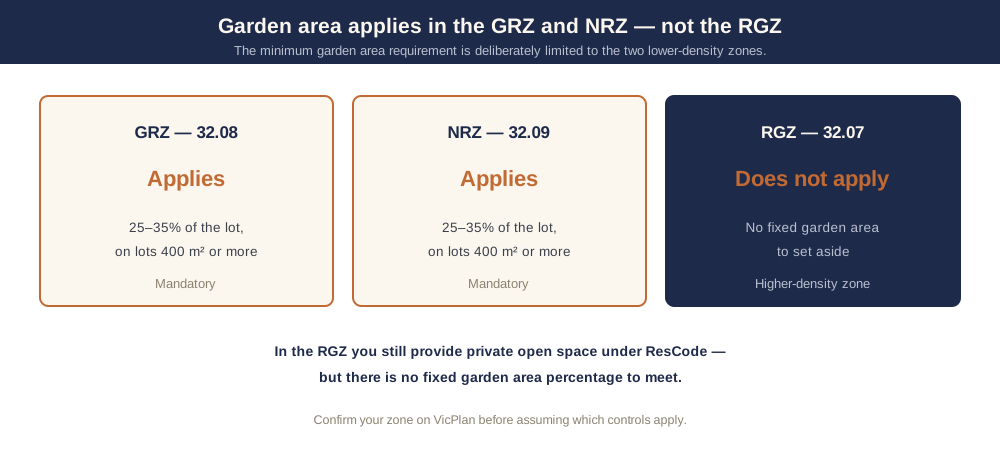
Figure 2: The minimum garden area requirement applies in the GRZ and NRZ but is deliberately not applied in the higher-density RGZ.
That doesn't mean open space is irrelevant — you still have to provide private open space and meet the relevant ResCode standards. But you don't carve out a fixed 25-to-35 per cent garden area as you would in the GRZ. For how that requirement works in the other zones, see the garden area requirement in Victoria.
ResCode: Clause 55, 57 and 58 by height
Which assessment standards apply in the RGZ depends on how tall you build — a structure clarified by Amendment VC267, operational 31 March 2025.
- ✓Two or more dwellings up to three storeys — Clause 55, the Townhouse and Low-Rise Code, with a deemed-to-comply pathway
- ✓Residential buildings of four storeys — Clause 57
- ✓Apartment developments of five or more storeys — Clause 58
Because the RGZ explicitly anticipates four-storey buildings, Clause 57 is far more likely to apply here than in the GRZ. Clause 57 sets apartment-style standards for four-storey development but, unlike Clause 55, has no deemed-to-comply shortcut. Start with what is ResCode in Victoria, then read Clause 55 for townhouses and low-rise for the most common pathway.
RGZ vs the GRZ
The RGZ and GRZ are often confused because both allow multi-dwelling development — but their controls diverge in three important ways.
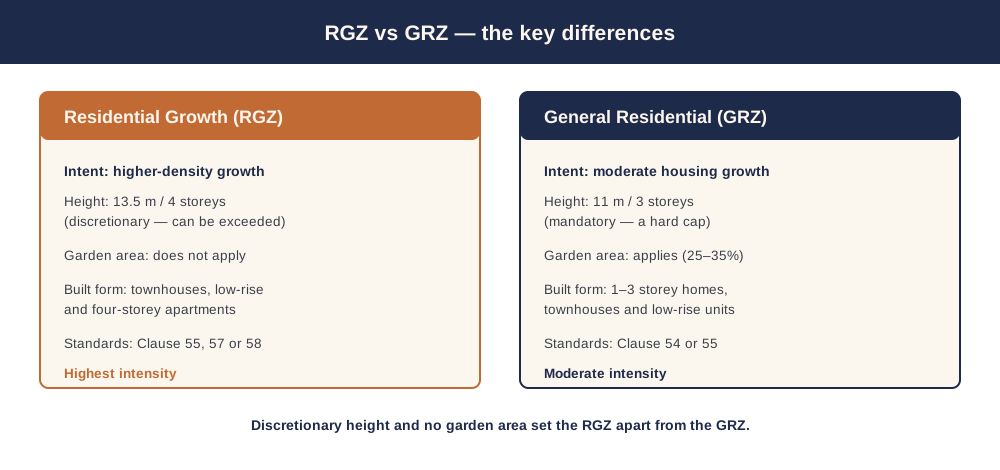
Figure 3: The RGZ allows more height on a discretionary basis and drops the garden area requirement, while the GRZ caps height and applies garden area.
The General Residential Zone (GRZ) is a moderate-growth zone with a mandatory 11-metre height and a garden area requirement; the Neighbourhood Residential Zone (NRZ) is more restrictive again at 9 metres. The RGZ stands apart as the growth zone. Confirm which one applies to your land on VicPlan or via a planning property report — and read the schedule number, because it can lift the RGZ height further.
If your RGZ project needs a permit
RGZ proposals are often the largest residential applications a homeowner or small developer will lodge, and they're assessed closely. Your application is far stronger — and less likely to be returned or hit a Request for Further Information — when it's supported by a town planning report that addresses Clause 32.07, your schedule, any overlays and the right ResCode standards for your building height.
Hiring a town planner can take weeks. instantplanning builds the same council-ready report from current Victorian planning scheme data in minutes — you review it before you lodge. Start with what a town planning report is, or just generate your report.
Frequently asked questions
What does Residential Growth Zone mean in Victoria?
What is the maximum building height in the RGZ?
Does the garden area requirement apply in the RGZ?
Do I need a planning permit in the Residential Growth Zone?
What's the difference between the RGZ and the GRZ?
Which ResCode clause applies in the RGZ?
Ready to generate your report?
Skip the writing. Get a council-ready town planning report in 5 minutes.
Get your report