Key takeaways
- ✓Your zone, overlays and the works decide it
- ✓Many small projects need no planning permit
- ✓Overlays are the most common permit trigger
- ✓Check your controls on VicPlan before you start
Do I Need a Planning Permit in Victoria?
Whether you need a planning permit in Victoria comes down to three things: the zone your land is in, any overlays that apply to it, and exactly what you're proposing to build or do. There's no single yes-or-no answer — but there is a reliable way to work it out, and most homeowners can do it themselves in a few minutes.
Get a council-ready town planning report in 5 minutes — no town planner, no waiting.
Get your report →- ✓When a planning permit is required, and when your project is exempt
- ✓How overlays change the answer
- ✓The difference between a planning permit and a building permit
- ✓What the VicSmart fast-track is
- ✓How to check the controls on your own property
The short answer
You need a planning permit in Victoria when your property's planning scheme requires one — based on the land's zone, any overlays over it, and the specific works or use you're proposing. Many single houses and small structures are exempt; an overlay is the most common reason a permit is triggered.
The plans you draw don't decide it; the planning scheme does. The three inputs work together as shown below.
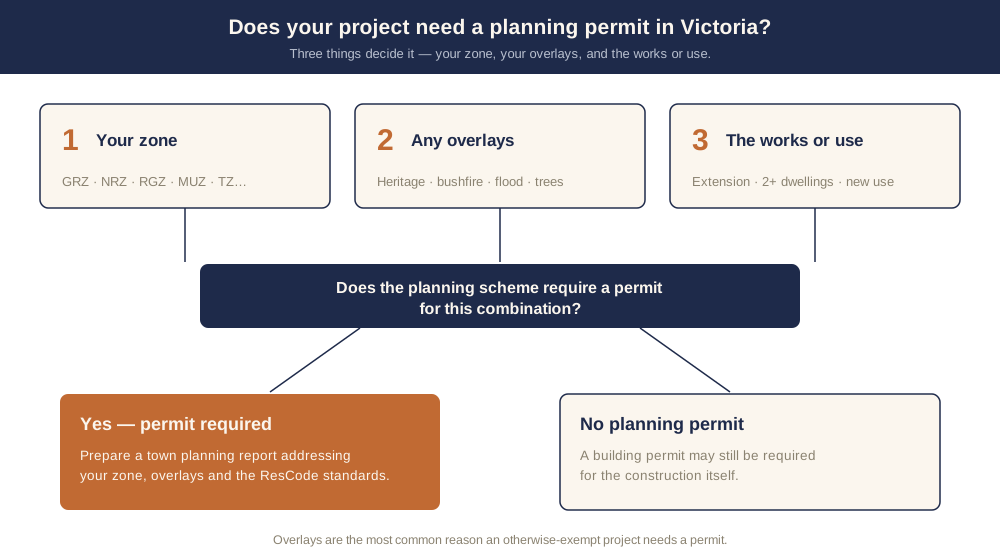
Figure 1: Your zone, your overlays and the proposed works together decide whether the scheme requires a permit.
So two identical houses can have different answers: one in a plain residential zone with no overlays may need no planning permit at all, while the same house next door in a Heritage Overlay or Bushfire Management Overlay will.
What needs a planning permit in Victoria
A planning permit is commonly required in Victoria for:
- ✓Two or more dwellings on a lot (dual occupancy, townhouses, units)
- ✓Subdividing land
- ✓A dependent person's unit or secondary dwelling (in many zones)
- ✓Building or works in an overlay — heritage, bushfire, flood, significant landscape, vegetation
- ✓A change of use (home business above the exempt threshold, food premises, short-stay)
- ✓Most commercial, industrial and mixed-use development
- ✓Removing native vegetation or protected trees
For these, the council — your responsible authority under the Planning and Environment Act 1987 — has to assess the proposal against the scheme, which is where a town planning report comes in.
What's exempt from a planning permit in Victoria
Spend 5 minutes, not 3 weeks
instantplanning generates a council-ready town planning report for Victorian permits. No town planner. No waiting.
Get your report →Plenty of common residential projects don't need a planning permit — provided no overlay applies. A single new house on its own lot in a standard residential zone is often permit-exempt for planning (you'll still need a building permit). Many smaller structures are exempt too, within the size and siting limits set by the scheme.
Projects that frequently need no planning permit (overlay-dependent — always check):
- ✓A single dwelling on a lot in a general residential zone
- ✓A small shed, carport or pergola within size and setback limits
- ✓A deck or verandah below the trigger thresholds
- ✓Re-stumping, re-roofing and like-for-like repairs
- ✓Solar panels and most water tanks
For example, a garden shed under 10 square metres and no taller than about 3 metres, set back from the boundaries, is typically exempt from a planning permit. Put that same shed on a block covered by a Heritage Overlay, and a permit is usually required — the overlay, not the shed, is what triggers it.
Secondary dwellings are a common grey area: a small dependent person's unit or granny flat can be exempt in some zones and require a permit in others. We unpack the rules in do I need a planning permit for a granny flat or DPU in Victoria.
The catch in every line above is "if no overlay applies." That's why checking your overlays is the real test. For the full list of exemptions and the size limits that apply, see what's exempt from a planning permit in Victoria.
Planning permit vs building permit
Because this trips up almost everyone: a planning permit decides whether the use or development is appropriate (amenity, character, overlays, neighbours). A building permit decides whether the construction meets the Building Code. They're issued by different people, for different reasons.
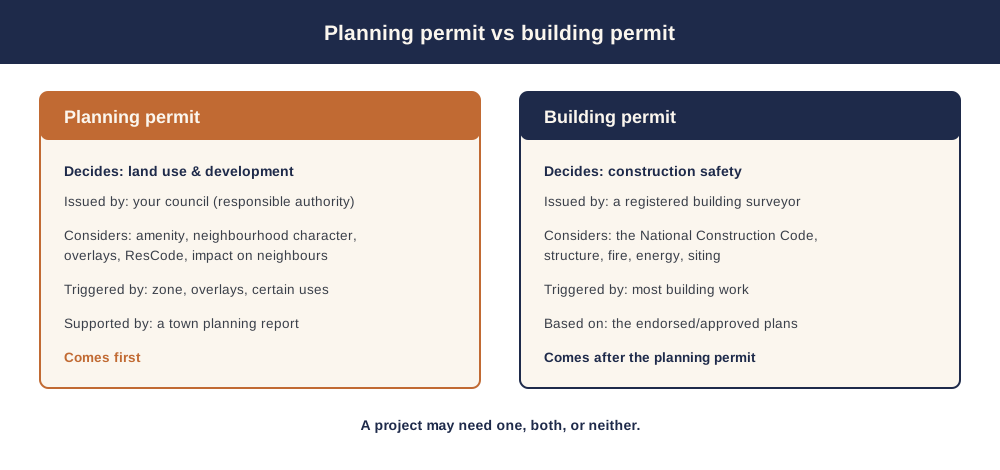
Figure 2: Two different approvals. A typical extension needs the planning permit first, then a building permit.
A typical extension might need both — the planning permit first, then the building permit against the endorsed plans. We cover this in detail in planning permit vs building permit.
How overlays change everything
Overlays sit on top of the zone and add their own permit triggers — and they're the most common reason an otherwise-exempt project suddenly needs a permit. The ones that catch homeowners most often are below.
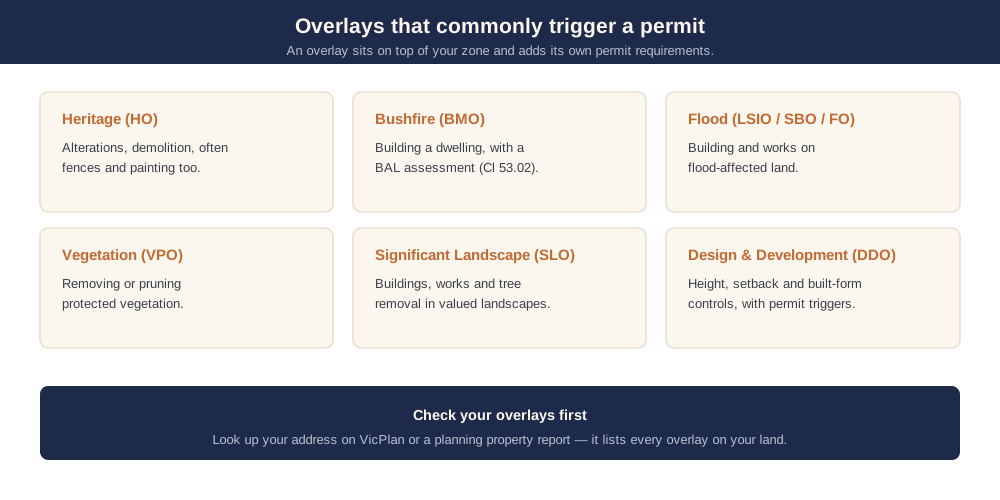
Figure 3: If any of these overlays is on your land, assume a permit is likely and read that overlay's requirements.
VicSmart: the fast track for simple permits
If your project does need a permit but is straightforward, it may qualify for VicSmart — a streamlined assessment with a 10 business-day statutory decision timeframe and set application requirements. VicSmart covers specified classes (some small second dwellings, minor buildings and works, some vegetation removal, certain subdivisions). For example, removing a single tree under a Vegetation Protection Overlay, or a front fence in some overlays, will often run on the VicSmart pathway rather than a full assessment. If you're on the VicSmart track you usually won't need a full town planning report; for everything else, you will. See VicSmart vs a standard planning permit for which pathway applies to your project.
How to check your own property
You can confirm the controls on your land for free:
- ✓Look up your address on VicPlan (the state planning map) or generate a planning property report — it lists your zone and every overlay. You can also use our free planning permit checker to see your zone, overlays, and permit triggers instantly.
- ✓Note the zone code (e.g. GRZ, NRZ) and any overlays (HO, BMO, LSIO, etc.).
- ✓Read what those controls say about your proposed works in the planning scheme — or have it done for you.
If you do need a permit — what's next
If your project needs a planning permit, your application is far stronger — and far less likely to be returned or hit a Request for Further Information — when it's accompanied by a town planning report that addresses your zone, overlays and the relevant ResCode standards (Clause 54 for one dwelling, Clause 55 for two or more).
Hiring a town planner can take weeks. instantplanning builds the same council-ready report from current Victorian planning scheme data in minutes — you review it before you lodge. Start with our guide to what a town planning report is, or just generate your report.
Frequently asked questions
How do I know if I need a planning permit in Victoria?
Do I need a planning permit for a single new house?
Do I need a planning permit for a shed, deck or pergola?
What's the difference between a planning permit and a building permit?
How long does a planning permit take?
Can I prepare and lodge the planning report myself?
Ready to generate your report?
Skip the writing. Get a council-ready town planning report in 5 minutes.
Get your report