Key takeaways
- ✓The ResCode default maximum building height for a dwelling is 9 metres where no other height applies.
- ✓On land sloping 2.5 degrees or more across a wide cross-section, the default rises to 10 metres.
- ✓Many zones and schedules set their own height limit, often mandatory, which overrides the default.
- ✓Height is measured to natural ground level, so cut and fill do not buy extra height.
- ✓Always check your zone, schedule and overlays first, then fall back to the code default only if they are silent.
Residential Building Height Limits in Victoria
Few controls shape a house design as directly as the building height limit. It decides whether you can fit two storeys or three, how a roof form resolves, and how a new dwelling sits against its neighbours. In Victoria the limit comes from two places at once - the residential development standards known as ResCode, and the height controls written into your zone and any overlays - and the two interact in ways that catch people out.
Get a council-ready town planning report in 5 minutes — no town planner, no waiting.
Get your report →- ✓The default maximum building height for a dwelling in Victoria
- ✓When the height allowance rises on sloping land
- ✓How zone and schedule height limits override the default
- ✓How building height is measured, and from where
- ✓How to check the height limit that applies to your own lot
The short answer
The ResCode default maximum building height for a dwelling in Victoria is 9 metres, rising to 10 metres where the land slopes 2.5 degrees or more across a cross-section wider than 8 metres. Many zones and schedules set their own limit - often mandatory - which overrides the default, so always check your zone and overlays first.
The detail below explains how the default works, how the zone controls sit over the top of it, and how the measurement is taken.
The default maximum building height
Where no other height control applies, Victoria's residential development standards set the default. The standard limits a dwelling to a maximum building height of 9 metres. This is the figure that applies on a typical, reasonably flat residential lot when the zone schedule and overlays are silent on height.
The standard sits within ResCode - historically at Clause 54.03-2 for a single dwelling on a lot and Clause 55.03-2 for two or more dwellings. The 2025 residential code reforms moved these provisions into new code numbering, but the underlying 9-metre default for the building-height standard was carried through rather than changed.
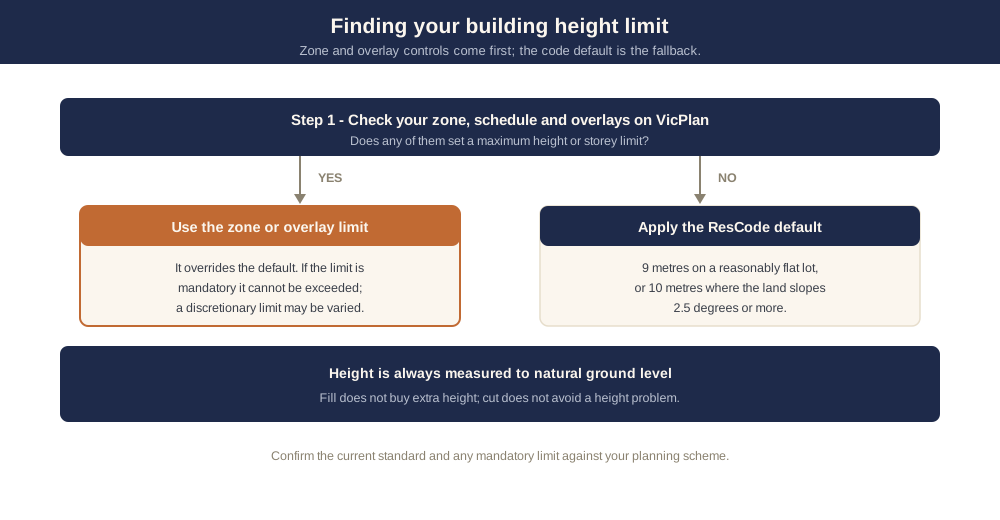
Figure 1: How to find the height limit for your lot - the zone and overlay controls come first, then the code default.
The key thing to understand is that the 9-metre figure is a fallback. It is only the answer when nothing else sets a height, and on a great many lots something else does.
The 10-metre allowance on sloping land
Spend 5 minutes, not 3 weeks
instantplanning generates a council-ready town planning report for Victorian permits. No town planner. No waiting.
Get your report →Sloping sites get a concession. Where the natural ground level slopes by 2.5 degrees or more across any cross-section of the building site wider than 8 metres, the default maximum building height rises from 9 metres to 10 metres.
The logic is fair: on a steep block, a building measured from natural ground level will read as taller on the downhill side simply because the ground falls away, so the extra metre stops the slope from eroding the usable height. The concession is tied to genuine slope across a meaningful width - a small step or a narrow batter does not trigger it.
- ✓Reasonably flat lot - default maximum 9 metres
- ✓Slope of 2.5 degrees or more across a cross-section wider than 8 metres - default maximum 10 metres
- ✓Slope measured to natural ground level - not to cut or filled levels
- ✓Zone or overlay height control - overrides the default in either case
Because the slope test is precise and is measured to natural ground level, you cannot manufacture the 10-metre allowance with fill - and you cannot avoid a height problem by cutting the ground down. We explain how height interacts with shadow controls in overshadowing in Victoria.
Zone and schedule height limits
This is where the default is most often displaced. Many residential zones - and the schedules attached to them - set their own maximum building height, and these are frequently expressed as a height in metres together with a number of storeys. Some are mandatory, meaning they cannot be exceeded even with an otherwise excellent design; others are discretionary, where a responsible authority can consider a variation.
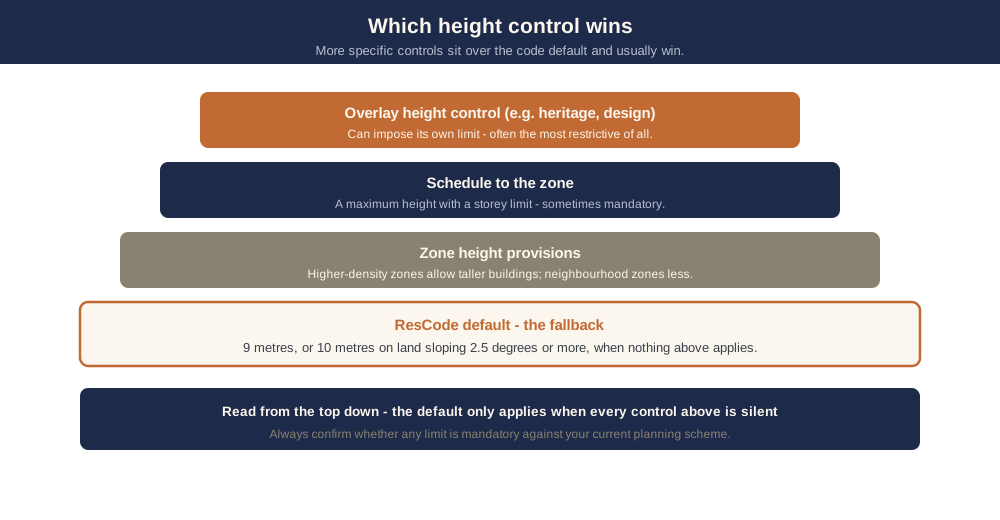
Figure 2: The code default sits at the bottom - zone and schedule controls sit over the top and usually win.
- ✓Neighbourhood-scale residential zones - typically lower height and storey limits
- ✓General residential zones - moderate height and storey limits
- ✓Growth and higher-density zones - higher height limits for taller development
- ✓Mandatory limit in a schedule - cannot be exceeded; a discretionary limit may be varied with justification
The practical sequence is to read the zone, then the schedule to the zone, then any overlay - a Heritage Overlay or a Design and Development Overlay can each impose its own height control. Only if all of them are silent does the ResCode default apply. We set out the wider framework in what is ResCode in Victoria and the single-dwelling provisions in Clause 54 explained.
How building height is measured
Height is measured vertically from natural ground level to the highest point of the building - generally the top of the roof, excluding minor elements like a chimney, flue or antenna in line with the standard. The reference to natural ground level is the critical part: it is the ground as it existed before any works, so importing fill to lift a floor level does not buy you extra height, and a retaining wall does not reset the datum.
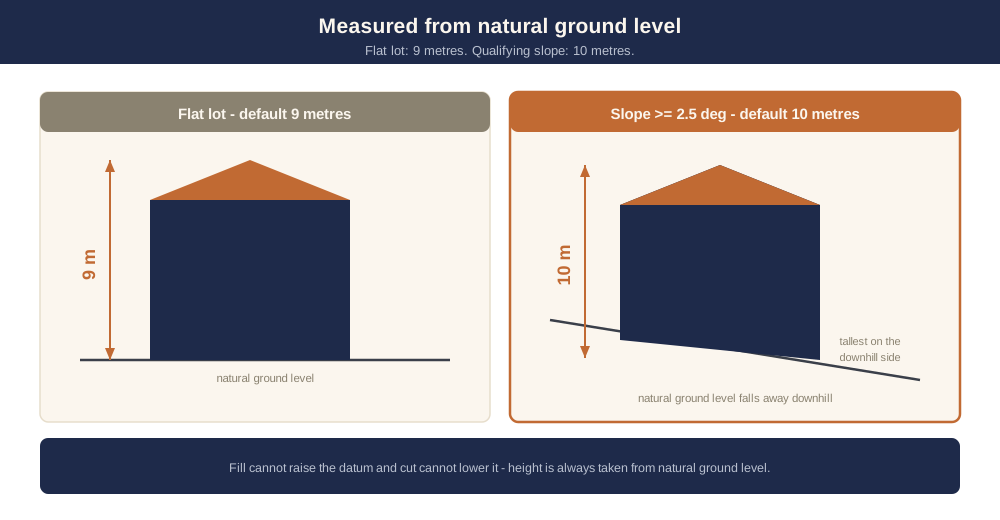
Figure 3: Height is taken from natural ground level - the 10-metre allowance offsets the fall on a sloping lot.
On a sloping lot the highest point is usually on the downhill side, where the ground falls furthest below the roofline. This is exactly why the slope concession exists, and why measuring carefully against natural ground level - rather than the proposed finished surface - is what determines whether a design complies. For the precise definitions and the way the standard treats roof elements, read the current standard in your scheme. The Victorian planning scheme provisions set out the residential development standards in full.
How to check the height limit for your lot
To find the height limit that genuinely applies, work from the most specific control down to the default.
- ✓Confirm your zone and overlays free on VicPlan
- ✓Read the schedule to your zone for a maximum height and storey limit
- ✓Check each overlay - heritage and design overlays can set their own height control
- ✓Note whether any limit is mandatory or discretionary
- ✓If everything is silent, apply the ResCode default of 9 metres, or 10 metres on qualifying sloping land
You can confirm your zone, schedule and overlays free on VicPlan. Read each control in order, note whether a limit is mandatory, and only rely on the 9-metre or 10-metre default once you have confirmed nothing else applies. Doing this before you brief a designer avoids the expensive mistake of drawing a third storey on a lot where the schedule allows two.
Hiring a town planner can take weeks. instantplanning builds a council-ready town planning report from current Victorian planning scheme data in minutes - it identifies your zone, applies the relevant height controls, and you review every line before you lodge. Start with what a town planning report is, or generate your report.
Frequently asked questions
What is the maximum building height for a house in Victoria?
When does the 10-metre height allowance apply?
Can my zone set a lower height limit than the default?
How is building height measured in Victoria?
Did the 2025 residential code reforms change the height limit?
How do I check the height limit for my block?
Ready to generate your report?
Skip the writing. Get a council-ready town planning report in 5 minutes.
Get your report