Key takeaways
- ✓ResCode is the set of residential development standards in the Victorian planning scheme, now spread across Clause 54 (one dwelling), Clause 55 (two or more) and Clause 57 (four-storey apartments).
- ✓Each ResCode provision has the same three-part structure — an objective, a standard, and decision guidelines.
- ✓Meeting a standard means the matching objective is deemed met, so the council does not have to weigh the decision guidelines for it.
- ✓The core elements cover setbacks, height, site coverage, private open space, overlooking, overshadowing and neighbourhood character.
- ✓A town planning report works through these clauses standard by standard — confirm the exact figures with your council.
What Is ResCode? (VIC)
If you are building or extending a home in Victoria, you will keep hearing one word: ResCode. It is the nickname for the residential development standards baked into every Victorian planning scheme — the rules that decide how big, how tall, how close to the boundary, and how neighbourly your project can be. It is not a separate law you can download; it lives inside the planning scheme as a set of clauses.
Get a council-ready town planning report in 5 minutes — no town planner, no waiting.
Get your report →- ✓What ResCode actually is and where it sits in the planning scheme
- ✓Which clauses make up ResCode after the 2025 reforms
- ✓How the objective–standard–decision-guideline structure works
- ✓The core elements ResCode measures
- ✓How it shapes your town planning report
The short answer
ResCode is the common name for the residential development standards in the Victoria Planning Provisions — now spread across Clause 54 (one dwelling on a lot), Clause 55 (two or more dwellings) and Clause 57 (four-storey apartments). Each provision pairs an objective with a numeric or qualitative standard and decision guidelines, covering setbacks, height, site coverage, open space, overlooking and overshadowing.
The clause you are assessed against depends on what you are building. The split is shown below.
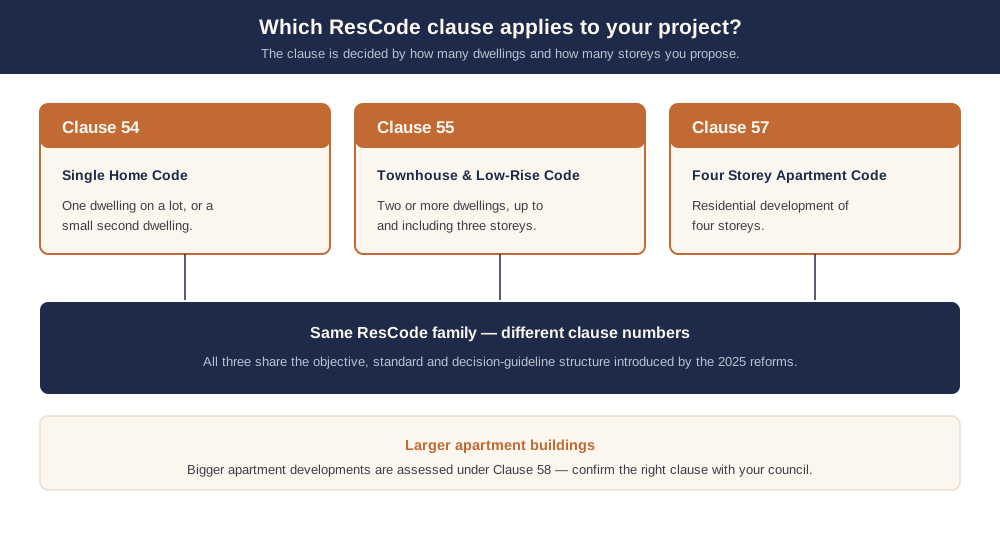
Figure 1: ResCode is not one clause — the number that applies depends on how many dwellings and how many storeys you propose.
Where ResCode comes from
ResCode is not a standalone document. It is a package of residential standards written into the Victoria Planning Provisions and applied through every council's planning scheme under the Planning and Environment Act 1987. The name dates back to the early 2000s, when the state consolidated its residential controls into a single, consistent framework so that a setback rule in one council read the same way as in the next.
Two recent reforms reshaped where ResCode lives. Amendment VC267, gazetted on 31 March 2025, rebuilt Clause 55 into the Townhouse and Low-Rise Code and introduced a new Clause 57, the Four Storey Apartment Code. A separate amendment overhauled Clause 54 into the Single Home Code. The familiar bundle of standards survived the reform — but the clause numbers and the way they are assessed changed.
The clauses that make up ResCode
Spend 5 minutes, not 3 weeks
instantplanning generates a council-ready town planning report for Victorian permits. No town planner. No waiting.
Get your report →- ✓Clause 54 — Single Home Code, for one dwelling on a lot or a small second dwelling
- ✓Clause 55 — Townhouse and Low-Rise Code, for two or more dwellings on a lot and residential buildings up to and including three storeys
- ✓Clause 57 — Four Storey Apartment Code, for residential development of four storeys
- ✓Clause 58 — apartment developments, the standards for larger apartment buildings
Which one applies is decided by your proposal, not by you. A single house on its own lot is assessed against Clause 54; a pair of townhouses against Clause 55; a four-storey apartment block against Clause 57. We cover the two most common pathways in Clause 54 explained and Clause 55: the townhouse and low-rise code.
How a ResCode provision is structured
Every ResCode provision is built the same way, and understanding that structure is the key to reading the scheme. Each one has three parts.
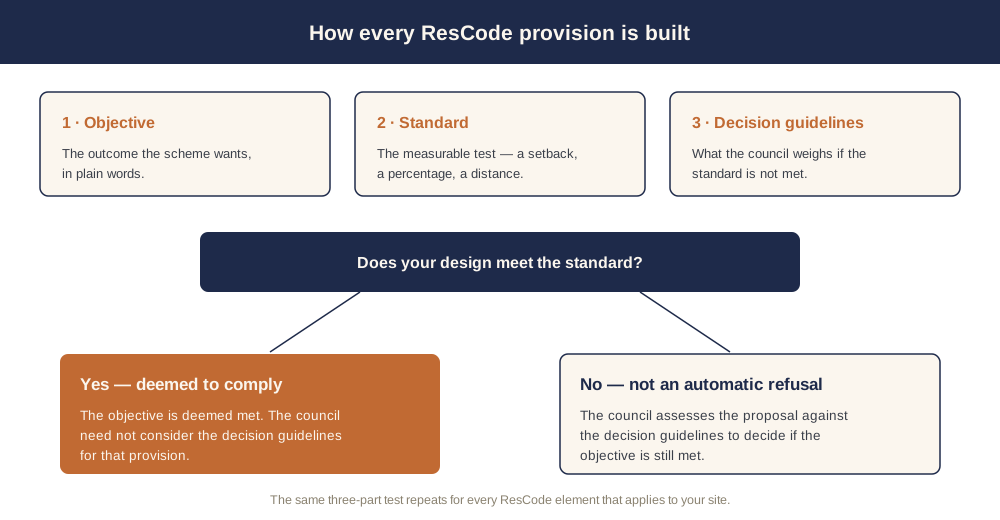
Figure 2: Meet the standard and the objective is deemed met; miss it, and the council weighs the decision guidelines.
First comes the objective — the outcome the scheme wants, written in plain words ("to ensure the setback respects the existing or preferred neighbourhood character"). Then the standard — the measurable test that is presumed to meet that objective, such as a setback distance or a site-coverage percentage. Finally the decision guidelines — the matters the council weighs if you do not meet the standard.
Under the reformed clauses this works as a deemed-to-comply test. If your design meets the standard, the matching objective is deemed satisfied and the council is not required to consider the decision guidelines for it. If you miss the standard, the proposal is not automatically refused — the council instead assesses it against the decision guidelines to decide whether the objective is still met.
The core elements ResCode measures
Whatever the clause, ResCode keeps returning to the same handful of built-form and amenity matters. These are the elements your town planning report has to address one by one.
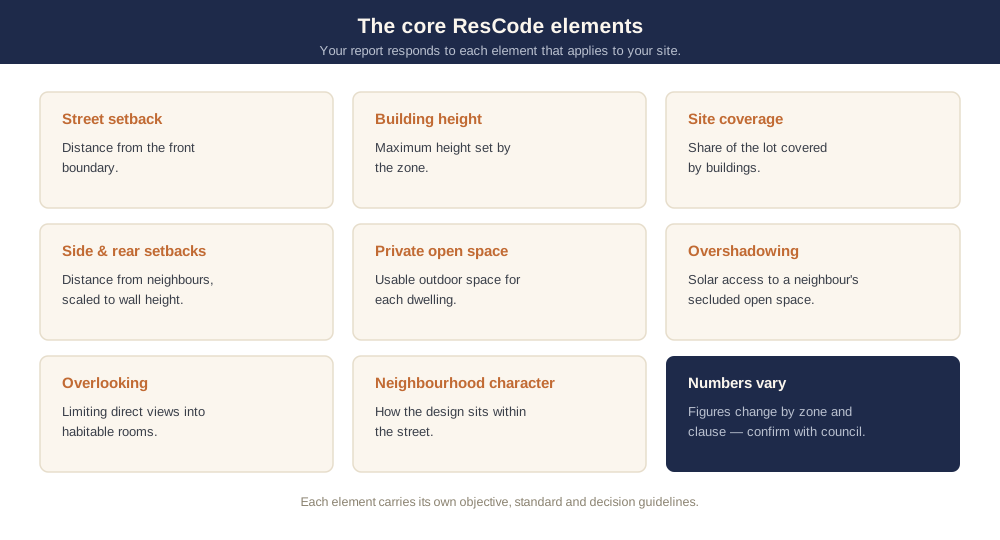
Figure 3: The recurring ResCode elements — your report responds to each that applies to your site.
- ✓Street setback — how far the building sits from the front boundary
- ✓Building height — the maximum height for the zone
- ✓Site coverage — the share of the lot covered by buildings
- ✓Side and rear setbacks — distance from neighbours, scaled to wall height
- ✓Private open space — usable outdoor space for each dwelling
- ✓Solar access and overshadowing — protecting a neighbour's secluded open space from shadow
- ✓Overlooking — limiting direct views into habitable rooms and open space
- ✓Neighbourhood character — how the design sits within the street
The numbers attached to each element differ by zone and, since the 2025 reforms, by clause. For example, the garden area requirement sets aside a minimum share of the lot as garden, and site coverage caps how much of the block your buildings can fill. Because the figures vary, always read your own scheme or confirm with your council before you rely on a number.
Why ResCode matters for your application
ResCode is the spine of almost every residential town planning report in Victoria. When your project needs a planning permit, the council assesses it clause by clause against the relevant ResCode provisions, and your report has to show — standard by standard — how the design responds. A report that skips an element or leaves a standard unaddressed is the most common reason a council issues a request for further information, which stops the statutory clock.
This is exactly the structured, repeatable work a well-built tool does reliably. instantplanning assembles a council-ready report from current Victorian planning scheme data in minutes — working through your zone, overlays and each applicable ResCode standard — where a town planner would take weeks. You review every line before you lodge. Start with what a town planning report is, or generate your report.
Frequently asked questions
What is ResCode in Victoria?
What clauses make up ResCode?
What does ResCode actually control?
What does "deemed to comply" mean under ResCode?
Do I have to meet every ResCode standard exactly?
Where can I check the ResCode figures for my site?
Ready to generate your report?
Skip the writing. Get a council-ready town planning report in 5 minutes.
Get your report