Key takeaways
- ✓Five stages — prepare, lodge, assess, notice, decide
- ✓Standard decision 60 days; VicSmart 10 business days
- ✓An RFI resets the clock, so lodge complete
- ✓Objectors trigger a Notice of Decision, not the permit
The Planning Permit Process in Victoria Explained
The planning permit process in Victoria runs in a defined sequence of stages — from preparing your plans, through lodging with council, assessment, public notice and referrals, to the decision and any VCAT review. Understanding the order up front tells you what's coming, where the delays usually hide, and what you can do to keep your application moving.
Get a council-ready town planning report in 5 minutes — no town planner, no waiting.
Get your report →- ✓The full sequence of stages, from preparation to decision
- ✓What happens before you lodge — and why it matters most
- ✓How a Request for Further Information and public notice affect the timeline
- ✓The three ways council can decide your application
- ✓Your review rights at VCAT if things don't go your way
The short answer
The planning permit process in Victoria has five core stages: prepare your application, lodge it with the responsible authority (usually your council), assessment (often including a Request for Further Information), public notice and referrals, then the decision. Council has a 60-day statutory timeframe to decide a standard application, with VCAT review available afterwards.
The stages are the same statewide because they flow from the Planning and Environment Act 1987, even though each council runs them slightly differently. The end-to-end path looks like this.
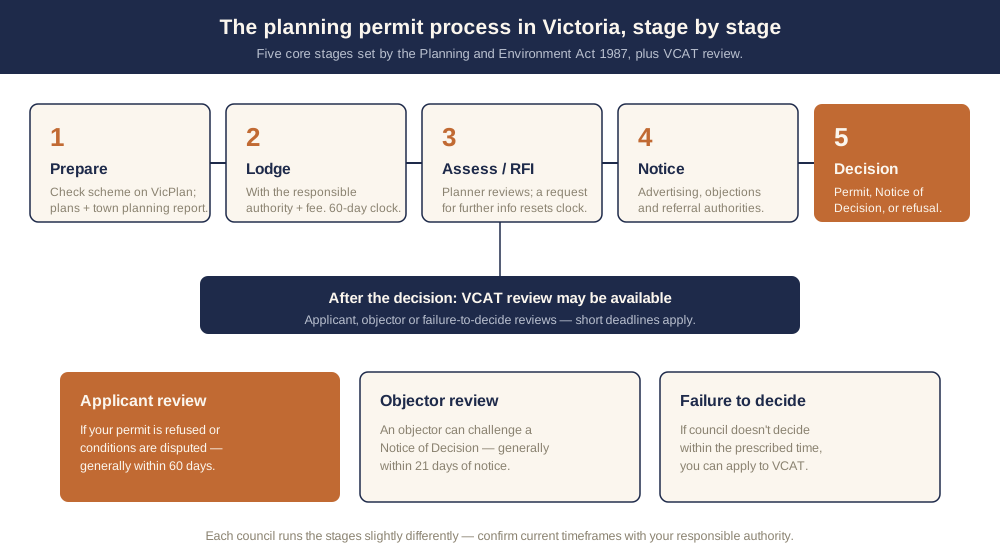
Figure 1: The five core stages every standard application moves through, with VCAT review available at the end.
Stage 1: Prepare your application
The work you do before you lodge largely decides how smoothly everything else runs. Start by confirming the planning controls on your land — your zone and any overlays — using VicPlan or a free planning property report.
Once you know what controls apply, you prepare the documents council needs to assess the proposal: accurate plans, and a town planning report that addresses your zone, your overlays and the relevant ResCode standards (Clause 54 for one dwelling, Clause 55 for two or more). Many councils also offer an optional pre-application meeting, where a planner flags issues before you spend money lodging.
It helps to know what each stage actually asks of you before you start, so you can gather it in advance rather than scrambling mid-process.
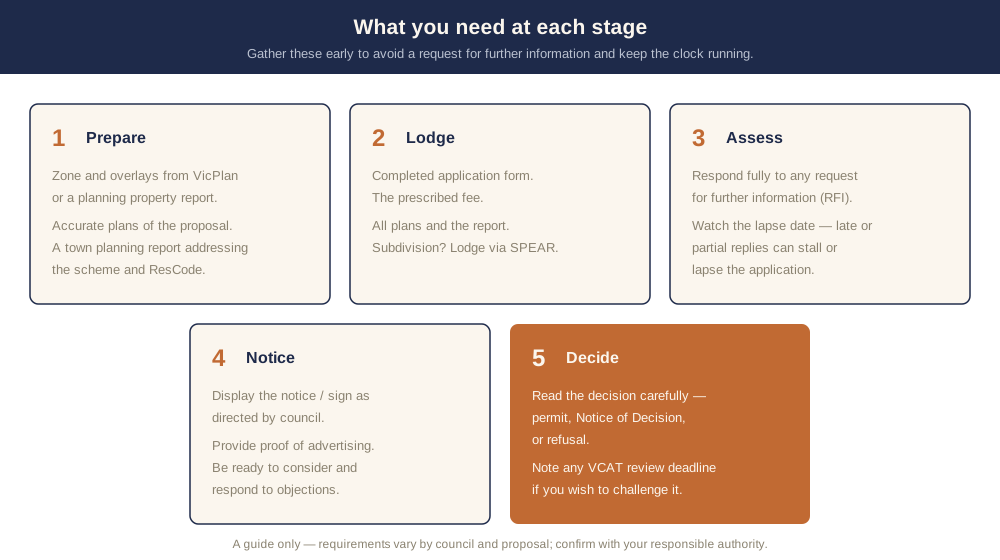
Figure 3: A quick reference for what each stage requires of you — gather it early to keep things moving.
Spend 5 minutes, not 3 weeks
instantplanning generates a council-ready town planning report for Victorian permits. No town planner. No waiting.
Get your report →You lodge your application with your responsible authority — almost always your local council — together with the prescribed fee. The fee depends on the type and value of the proposal; current amounts are set out on the state government's fees page.
Subdivision applications are handled a little differently: they're typically lodged and tracked electronically through SPEAR (Surveying and Planning through Electronic Applications and Referrals), the state system that manages subdivision permits, referrals and plan certification online. For everything else, most councils now accept applications through their own online portals.
The day a complete application and fee are received is the day the 60-day statutory clock starts.
Stage 3: Assessment and Requests for Further Information
Once lodged, a council planner reviews your application against the planning scheme. If something is missing or unclear, council can issue a Request for Further Information (RFI) — and this is where most timelines slip.
The pace of the whole process depends heavily on which pathway your project takes — the standard route or the faster VicSmart route — which differ at almost every stage.
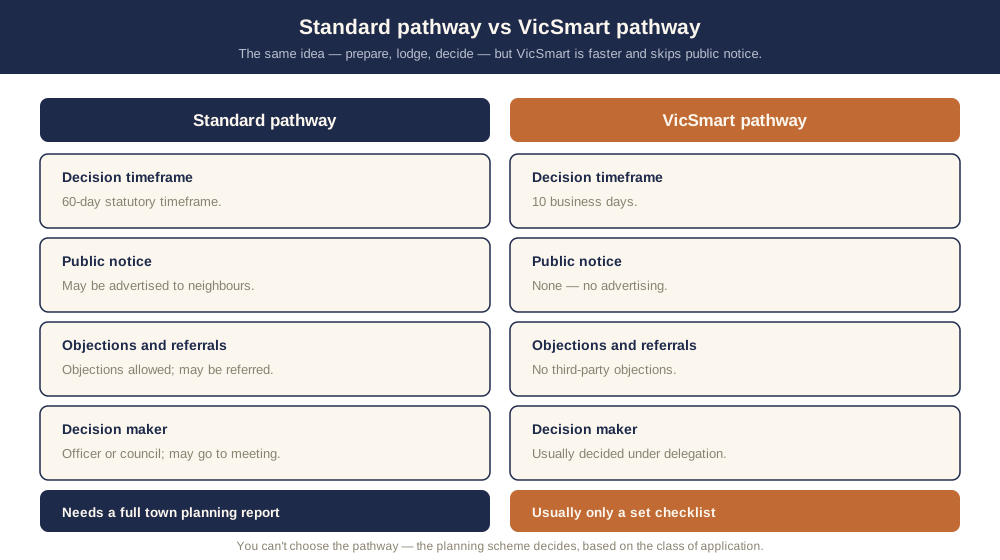
Figure 2: The standard and VicSmart pathways move through the same idea of preparing, lodging and deciding — but VicSmart is far faster and skips public notice.
For a standard application, council must make any RFI within 28 days of receiving the application; for VicSmart, it's within 5 business days. Critically, a valid RFI stops the 60-day clock, which then restarts from day zero once you supply everything requested. That's why the quality of your original application matters so much — a single RFI can add weeks or months. If you don't respond by the lapse date, the application can lapse entirely.
Stage 4: Public notice, objections and referrals
If council considers the proposal may cause material detriment to any person — or the scheme requires it — your application goes through public notice (advertising). This can mean letters to adjoining owners and occupiers, a notice on the land, and sometimes a newspaper notice.
- ✓Who's notified — adjoining owners and occupiers, and others the scheme or council specifies
- ✓How — letters, a sign on the site, and occasionally a newspaper notice
- ✓Objections — any affected person can object in writing before a decision is made
- ✓Referrals — set proposals must go to referral authorities such as the CFA, the transport department or a water corporation
- ✓Outcome — council must consider every objection before deciding
Some applications must also be referred to statutory referral authorities under the Act — bodies like the Country Fire Authority, the transport department or water corporations — who get a say on conditions or, in some cases, can direct a refusal. Referral authorities generally have 28 days to respond. Both notice and referrals can pause the clock, so they add to the real-world timeline even when the statutory days look small.
Stage 5: The decision
After assessment, notice and referrals, council makes one of three decisions:
- ✓Grant a permit — issued directly where there were no objectors
- ✓Notice of Decision to Grant a Permit — issued where there were objectors, giving them a window to seek review before the permit issues
- ✓Refusal — a Notice of Refusal, setting out the grounds
For a standard application, council aims to decide within the 60-day statutory timeframe (excluding any time paused for an RFI, notice or referral). A VicSmart application has a much shorter 10-business-day timeframe and skips public notice altogether. Where there are objectors, the Notice of Decision stage exists precisely so objectors have a chance to challenge a proposed approval at VCAT before the permit is formally issued.
VCAT review: your rights at the end
The Victorian Civil and Administrative Tribunal (VCAT) is the independent review body for planning decisions. The main review rights are:
- ✓Applicant review — if council refuses your permit or imposes conditions you dispute, you can apply to VCAT, generally within 60 days of the decision
- ✓Objector review — an objector can seek review of a Notice of Decision to Grant a Permit, generally within 21 days of being given notice
- ✓Failure to decide — if council doesn't decide within the prescribed time, you can apply to VCAT for review of the failure to determine
VCAT review adds months and, often, cost, which is another reason a strong, complete application — one that pre-empts likely objections and referral concerns — is worth the effort up front. The exact time limits and procedures are set under the Planning and Environment Act 1987, so always confirm the current deadlines with VCAT or your council before relying on them.
Where a strong application makes the difference
Almost every delay in the process above — an RFI, a refusal, an objector at VCAT — traces back to an application that didn't fully address the scheme. The fix is a complete, accurate town planning report that speaks directly to your zone, your overlays and the relevant ResCode standards.
Hiring a town planner can take weeks. instantplanning builds the same council-ready report from current Victorian planning scheme data in minutes — you review it before you lodge. Not sure whether you even need a permit? Start with do I need a planning permit in Victoria, or just generate your report.
Frequently asked questions
What are the stages of the planning permit process in Victoria?
How long does the planning permit process take in Victoria?
What is a Request for Further Information?
Will my neighbours be notified about my planning permit application?
Can I appeal a council planning decision?
Where do I lodge a subdivision application in Victoria?
Ready to generate your report?
Skip the writing. Get a council-ready town planning report in 5 minutes.
Get your report