Key takeaways
- ✓The responsible authority decides and enforces your permit, usually council
- ✓Council is the default unless the scheme names another
- ✓For some land the Minister is the responsible authority
- ✓Referral authorities advise; they do not decide
- ✓A determining referral's objection forces a refusal
What Is a Responsible Authority in Victoria?
In Victorian planning, the responsible authority is the body that administers and enforces the planning scheme for your land — the one that assesses your planning permit application, decides whether to grant or refuse it, issues the permit, and enforces its conditions. For almost every homeowner, that body is your local council.
Get a council-ready town planning report in 5 minutes — no town planner, no waiting.
Get your report →- ✓Who the responsible authority is, and where the law says so
- ✓What the responsible authority actually does, step by step
- ✓When the Minister for Planning is the responsible authority instead of council
- ✓How a responsible authority differs from a referral authority
- ✓Why the difference between a determining and a recommending referral authority can decide your application
The short answer
The responsible authority is the body that administers and enforces your planning scheme — it assesses your planning permit application, gives public notice, decides to grant or refuse, issues the permit and enforces its conditions. Under the Planning and Environment Act 1987, it is your local council unless the scheme names someone else.
That last clause matters. The default is council, but the planning scheme itself — through its Clause 72.01 schedule — can name a different responsible authority for particular land or types of project.
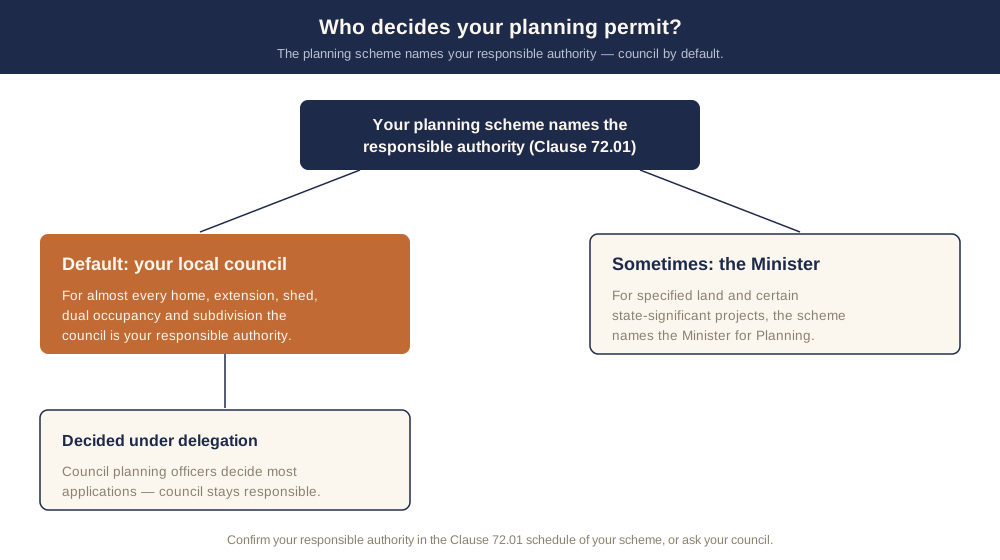
Figure 1: The council is the responsible authority by default; the scheme can name the Minister, and councils decide most applications under delegation.
Section 13 of the Planning and Environment Act 1987 sets the rule. The responsible authority for administering and enforcing a planning scheme is the council of the municipal district in which the land sits — unless the planning scheme specifies another person as the responsible authority for that purpose.
So three things are true at once. First, the starting point is always your local council. Second, the planning scheme can override that for specified land or classes of application. Third, you confirm which applies by reading the scheme — the responsible authority is named in the Clause 72.01 schedule of each scheme, not left to guesswork.
In day-to-day practice, councils rarely decide applications in a full council meeting. Most decisions are made by council planning officers acting under delegation, which is why your permit can be signed by an officer rather than by the elected council. The legal responsible authority is still the council; the delegate simply exercises its powers.
Spend 5 minutes, not 3 weeks
instantplanning generates a council-ready town planning report for Victorian permits. No town planner. No waiting.
Get your report →For some land and some kinds of project, the planning scheme names the Minister for Planning as the responsible authority instead of council. This is set out in the scheme's Clause 72.01 schedule, so it is location- and project-specific rather than something you choose.
Well-known examples come from the Melbourne Planning Scheme, where the Minister is the responsible authority for areas such as the Melbourne Docklands and Flemington Racecourse. The Minister is also the responsible authority for certain state-significant projects — for instance, larger energy generation facilities — under the relevant scheme provisions. For the overwhelming majority of houses, extensions, sheds, dual occupancies and subdivisions, none of this applies and council remains your responsible authority.
The responsible authority carries your application from lodgement to decision and beyond. Its core functions under the Act and the scheme are to receive and check the application, decide whether more information is needed, give any required public notice, refer the application to other bodies where the scheme requires it, assess it against the scheme, and then decide.
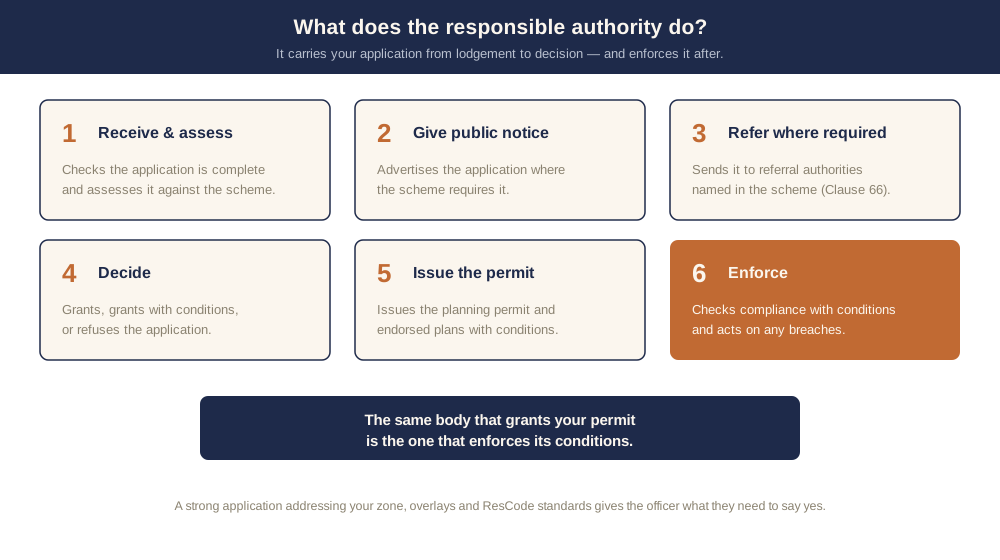
Figure 2: The responsible authority handles your application end to end — from assessment and notice through to the decision and ongoing enforcement.
When it decides, the responsible authority can grant a permit, grant it with conditions, or refuse it. If there are objections, it issues a notice of decision before the permit so objectors can seek review at VCAT. After a permit is granted, the responsible authority is also the body that enforces it — checking compliance with permit conditions, endorsed plans and any Section 173 agreement, and acting on breaches. The same body that says yes is the one that holds you to the conditions.
This is why a well-prepared application matters: the responsible authority assesses what you lodge against the scheme, and a town planning report that addresses your zone, overlays and the relevant ResCode standards gives the assessing officer what they need to say yes.
The responsible authority decides. A referral authority only advises — but on some matters that advice is binding. Where the scheme (at Clause 66) requires it, the responsible authority must send a copy of your application to a named referral authority, which then has a set time to respond.
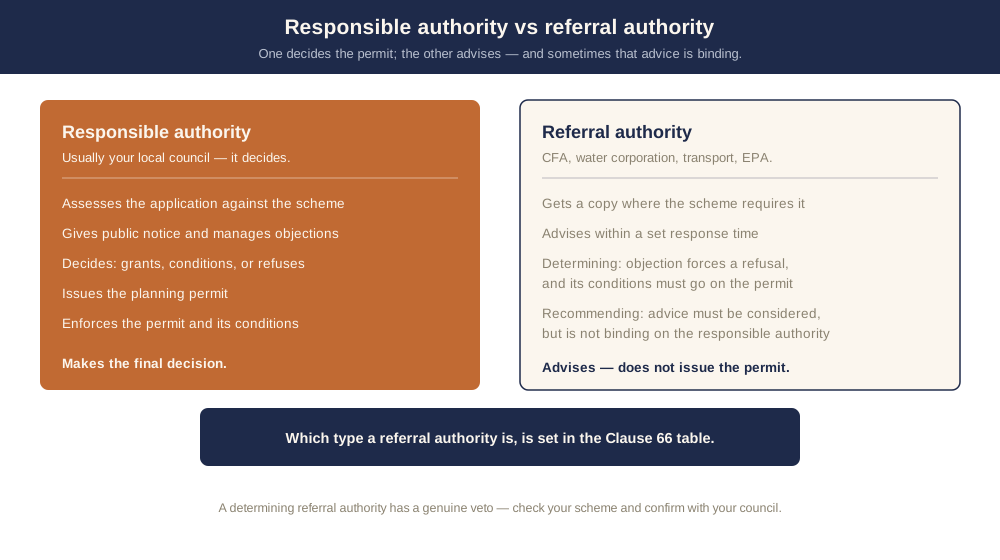
Figure 3: The responsible authority makes the decision; referral authorities advise, and a determining referral authority's advice is binding.
Common referral authorities include the CFA (for land in a Bushfire Management Overlay), water corporations such as Melbourne Water (for flood, drainage and subdivision matters), the Department of Transport and Planning (for access to declared roads), and the EPA (for certain uses). None of them issues your permit — but what they say can shape or even decide it.
The crucial distinction is between two kinds of referral authority:
- ✓Determining referral authority — if it objects, the responsible authority must refuse the permit; if it sets conditions, those conditions must go on the permit
- ✓Recommending referral authority — the responsible authority must consider its advice but is not bound to refuse or to include its conditions
In other words, a determining referral authority has a genuine veto. If the CFA, as a determining referral authority, objects to a proposal in a Bushfire Management Overlay, the responsible authority cannot grant the permit. A recommending referral authority's objection has to be weighed, but the responsible authority can still decide the other way. Which type applies to your project is written into the Clause 66 table for that trigger, so check the scheme — and confirm with your council.
How this affects your application
Knowing your responsible authority tells you who to lodge with, who assesses your proposal, and whose standards you have to meet. For nearly everyone that is the local council, deciding under delegation against your planning scheme — and the stronger your application addresses that scheme, the smoother the assessment. A planner takes weeks to prepare that report. instantplanning builds a council-ready town planning report from current Victorian planning scheme data in minutes so you can review it before you lodge.
Start with do I need a planning permit in Victoria to confirm whether you need one at all, then read the planning permit process in Victoria and how to lodge a planning permit in Victoria — or just generate your report.
Frequently asked questions
Who is the responsible authority for a planning permit in Victoria?
Is the responsible authority always the council?
What is the difference between a responsible authority and a referral authority?
Can a referral authority refuse my permit?
How do I find out who my responsible authority is?
Does the responsible authority enforce the permit after it's granted?
Ready to generate your report?
Skip the writing. Get a council-ready town planning report in 5 minutes.
Get your report