Key takeaways
- ✓VicSmart is a 10-business-day fast-track permit
- ✓You can't choose it — the scheme decides
- ✓VicSmart usually needs a checklist, not a report
- ✓A standard permit is where a report matters most
VicSmart vs a Standard Planning Permit in Victoria
If your project needs a planning permit in Victoria, it will take one of two paths: the VicSmart fast track or a standard assessment. Which one applies isn't your choice — it's set by your planning scheme, based on the class of application and whether your proposal meets the VicSmart eligibility criteria. Getting this right up front tells you how long you'll wait, whether neighbours are notified, and how much work your application actually needs.
Get a council-ready town planning report in 5 minutes — no town planner, no waiting.
Get your report →- ✓What VicSmart is and how the fast track works
- ✓How VicSmart differs from a standard planning permit
- ✓Which projects qualify for VicSmart
- ✓Whether you still need a town planning report
- ✓How to check which pathway your project takes
The short answer
VicSmart is a streamlined planning permit process with a 10-business-day decision timeframe, no public notice, and no third-party appeal rights. A standard permit is assessed against the whole scheme, can be advertised to neighbours, and runs to a 60-day statutory timeframe. Your project takes the VicSmart path only when the scheme lists it as a VicSmart class.
Both are still planning permits — VicSmart isn't a lighter form of approval, just a faster assessment for proposals the scheme treats as low-impact. The pathway is decided by a few simple tests.
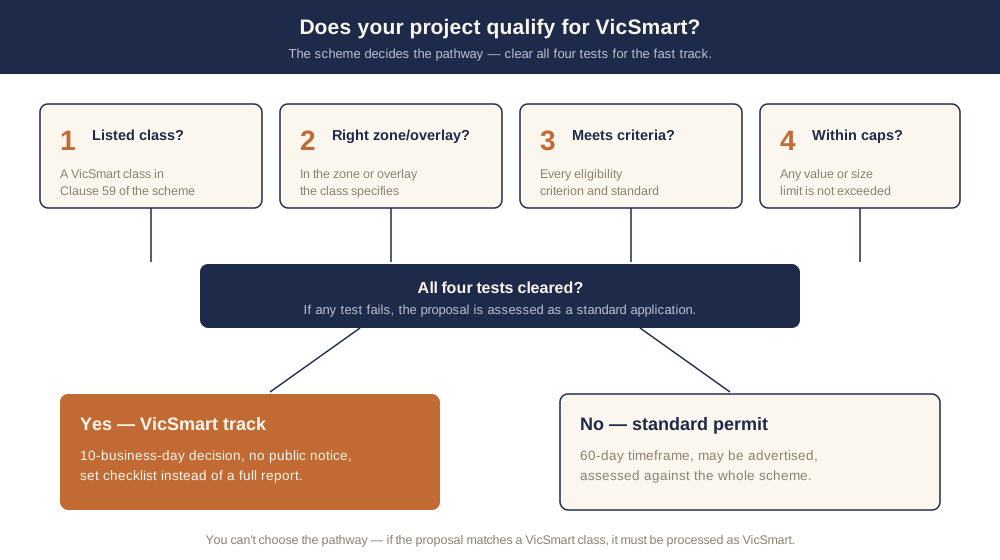
Figure 1: A project runs on the VicSmart track only when it clears all four tests; otherwise it's a standard application.
What is VicSmart?
VicSmart is a fast, simple permit pathway for straightforward, low-impact proposals. It was introduced to take routine applications — a single tree removal, a front fence in a heritage area, minor buildings and works — out of the full assessment queue and decide them quickly against pre-set criteria.
The defining features are speed and certainty. A VicSmart application has a 10-business-day statutory decision timeframe (against 60 days for a standard permit), is assessed against fixed decision guidelines in the scheme, and is usually decided under delegation by a council officer rather than going to a council meeting. Because the classes and information requirements are pre-set, you know exactly what to submit before you start.
The VicSmart classes, application requirements and decision guidelines are all contained in Clause 59 of every Victorian planning scheme.
VicSmart vs a standard planning permit: the key differences
Spend 5 minutes, not 3 weeks
instantplanning generates a council-ready town planning report for Victorian permits. No town planner. No waiting.
Get your report →The two pathways differ in timeframe, public notice, appeal rights and how much supporting work your application needs.
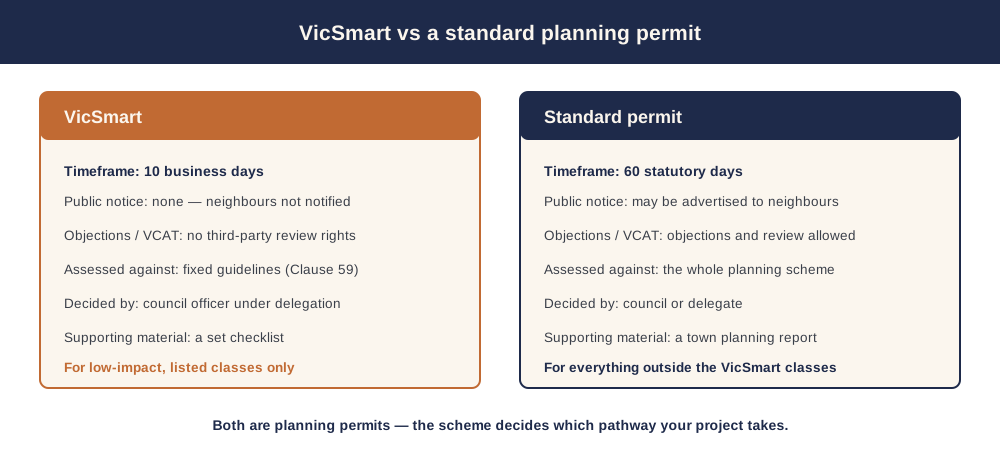
Figure 2: The same proposal is far quicker and simpler on the VicSmart track — but only specified classes qualify.
The differences that matter most in practice:
- ✓Timeframe — 10 business days for VicSmart vs 60 statutory days for a standard permit
- ✓Public notice — none for VicSmart; a standard permit may be advertised to neighbours
- ✓Objections — no third-party objections or VCAT review rights under VicSmart
- ✓Assessment — fixed decision guidelines (Clause 59) vs the full planning scheme
- ✓Supporting material — a set checklist vs a full town planning report
One thing that doesn't change: VicSmart is not optional. If your proposal matches a VicSmart class and meets the criteria, the council must process it as VicSmart — you can't elect a standard assessment, and you can't opt into VicSmart for a project that falls outside the classes.
What qualifies for VicSmart?
VicSmart covers specified classes of application set out in the scheme. They're deliberately narrow — small, well-understood proposals where the outcome is predictable.
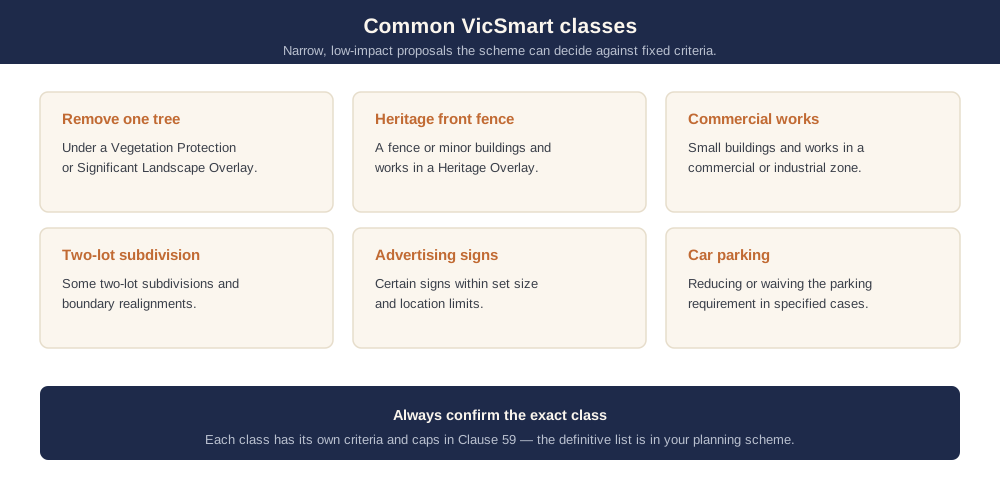
Figure 3: Common VicSmart classes — always confirm the exact class and criteria for your land in the scheme.
Common examples include:
- ✓Removing, destroying or lopping one tree under a Vegetation Protection or Significant Landscape Overlay
- ✓A front fence or minor buildings and works in a Heritage Overlay
- ✓Small buildings and works in a commercial or industrial zone up to a set cost
- ✓Some two-lot subdivisions and boundary realignments
- ✓Certain advertising signs within set size and location limits
- ✓Reducing or waiving car parking in specified cases
Eligibility always has conditions attached — a value cap, a size limit, or a requirement to meet every relevant standard. Miss one and the proposal drops back to a standard assessment. The state government's VicSmart page sets out the current classes, and the definitive list for your land is in your own planning scheme.
Do you need a town planning report for VicSmart?
Usually not. Because a VicSmart application is judged against a fixed checklist rather than the whole scheme, it typically needs only the set application requirements for that class — plans, a description and the prescribed information — rather than a full town planning report.
A standard permit is different. There, the council weighs your proposal against the zone, every overlay and the relevant ResCode standards (Clause 54 for one dwelling, Clause 55 for two or more), so a town planning report addressing those controls makes the application far stronger and less likely to attract a Request for Further Information.
How to check which pathway applies
You can work it out for free in a few minutes:
- ✓Look up your address on VicPlan or generate a planning property report to confirm your zone and overlays.
- ✓Match your proposed works to the VicSmart classes in Clause 59 of your scheme — check the class exists for your zone or overlay, and that you meet every criterion.
- ✓If it fits, you're on the 10-day track; if not, it's a standard application. When you're unsure, your council's planning team can confirm.
For the bigger picture of how an application moves through council, read the planning permit process explained and how long a planning permit takes.
If you need a permit — what's next
Whether you're on the VicSmart track or a standard one, a complete, accurate application is what keeps it moving. For standard permits especially, that means a town planning report addressing your zone, overlays and ResCode standards.
Hiring a town planner can take weeks. instantplanning builds the same council-ready report from current Victorian planning scheme data in minutes — you review it before you lodge. Not sure whether you even need a permit? Start with do I need a planning permit in Victoria, or just generate your report.
Frequently asked questions
Is VicSmart faster than a standard planning permit?
Can I choose VicSmart instead of a standard permit?
Does a VicSmart application get advertised to neighbours?
Do I need a town planning report for a VicSmart application?
What kinds of projects qualify for VicSmart?
How long does a standard planning permit take?
Ready to generate your report?
Skip the writing. Get a council-ready town planning report in 5 minutes.
Get your report