Key takeaways
- ✓A council-ready report follows a set structure - site, proposal, controls, assessment and conclusion.
- ✓The heart of it is the ResCode assessment against Clause 54, 55 or 58, clause by clause.
- ✓It also responds to overlays, particular provisions, policy and neighbourhood character.
- ✓A planning property report from VicPlan supplies the zone and overlay facts the report assesses.
- ✓Missing a section is what triggers a request for further information - completeness is what protects your timeline.
What's in a Town Planning Report?
A town planning report in Victoria follows a structure your council planner expects to read: a description of the site, the proposal, the planning controls that apply, a clause-by-clause assessment against the planning scheme and ResCode, and a reasoned conclusion. The headings vary between authors, but a complete report always covers the same ground.
Get a council-ready town planning report in 5 minutes — no town planner, no waiting.
Get your report →- ✓The standard sections of a Victorian town planning report
- ✓Why the ResCode assessment is the heart of the document
- ✓How overlays, particular provisions and policy are handled
- ✓Where the zone and overlay facts come from
- ✓Which sections, if missed, cause a request for further information
The short answer
A Victorian town planning report contains a subject site and locality description, the proposal, the planning controls (zone and overlays), an assessment against the planning scheme and ResCode (Clause 54, 55 or 58), an overlay and particular-provisions assessment, a neighbourhood character response, and a conclusion that the proposal warrants a permit.
Each section builds on the one before it. The figure below sets out the order an assessor expects.
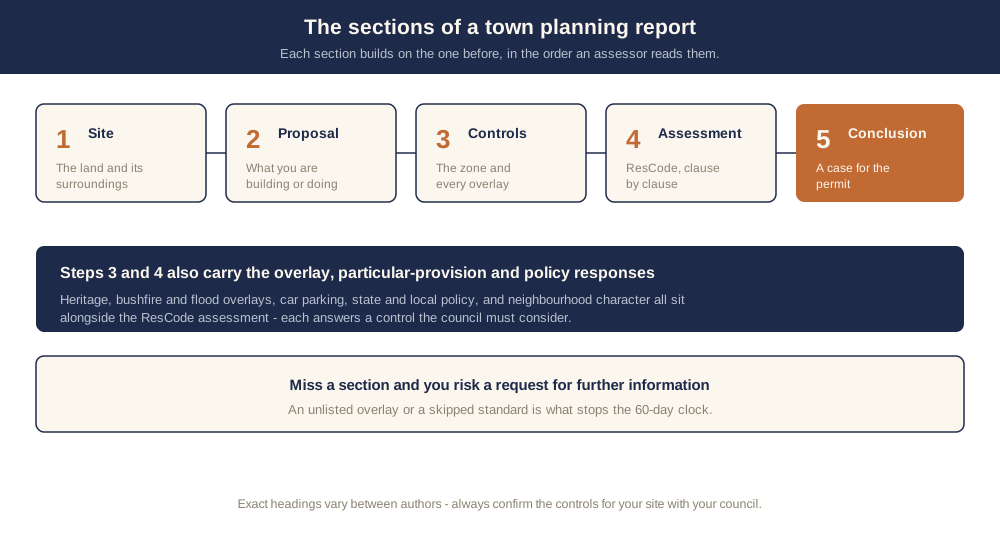
Figure 1: The standard sections of a town planning report, in the order an assessor reads them.
The standard sections
A council-ready report follows the structure an assessor expects. While the exact headings differ, a complete report covers the following.
- ✓Subject site and locality - the land and its surroundings
- ✓The proposal - what you are building or doing
- ✓Planning controls - the zone and every overlay
- ✓Assessment against the scheme - clause by clause
- ✓Overlay assessment - heritage, bushfire, flood
- ✓Particular provisions and policy - car parking, state and local policy
- ✓Conclusion - a reasoned case for the permit
The first sections set the scene. The subject site and locality description covers the land's dimensions, existing buildings, slope, vegetation and the character of surrounding development, often with site photographs so the assessor can picture the context. The proposal section is a plain description of what you intend to build or do, cross-referenced to your architectural or site plans - heights, setbacks, dwelling numbers, car parking and landscaping. The planning controls section then identifies the zone and any overlays affecting the land, drawn from the planning scheme, and confirms exactly which permit triggers and decision guidelines apply. Together, these opening sections frame every assessment that follows.
The ResCode assessment - the heart of the report
Spend 5 minutes, not 3 weeks
instantplanning generates a council-ready town planning report for Victorian permits. No town planner. No waiting.
Get your report →The core of the document is the assessment against the scheme, and for residential proposals that means ResCode. Which clause applies depends on what you are building.
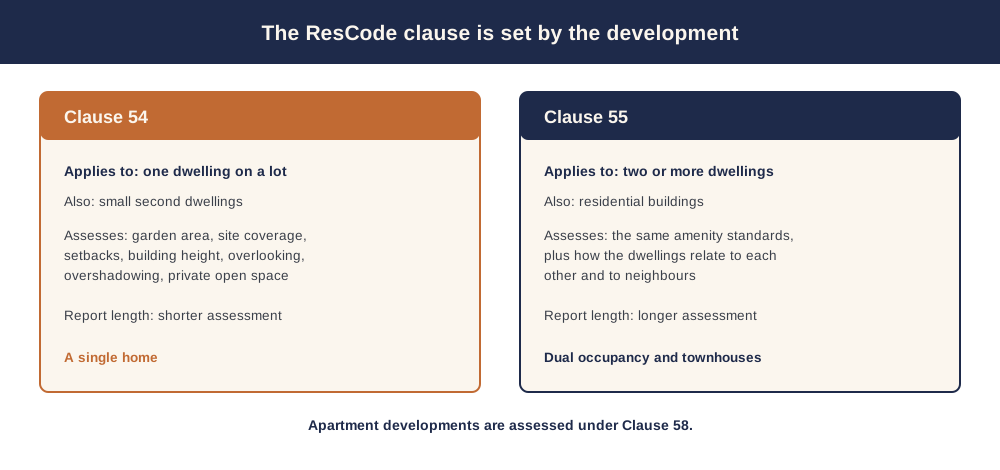
Figure 2: The ResCode clause is set by the development - Clause 54 for one dwelling, Clause 55 for two or more.
The applicable clause is fixed by the development type:
- ✓Clause 54 - one dwelling on a lot, and small second dwellings
- ✓Clause 55 - two or more dwellings on a lot, or residential buildings
- ✓Clause 58 - apartment developments
Within the relevant clause, each applicable standard is addressed in turn - garden area, site coverage, setbacks, building height, overlooking, overshadowing, private open space and more. For each, the report shows compliance or, where the proposal varies the standard, explains why the variation still meets the objective. This is usually set out as a standard-by-standard table so the assessor can follow each one. We explain the framework in what is ResCode.
Overlays, particular provisions and policy
Beyond ResCode, the report addresses every other control on your land. Where an overlay applies, the report responds to the specific requirements it adds - a Heritage Overlay assessment of impacts on significance, a Bushfire Management Overlay response including a BAL assessment under Clause 53.02, or a flood overlay response on floor levels and siting.
The report also covers relevant particular provisions - most commonly car parking under Clause 52.06 - and explains how the proposal advances the relevant state and local planning policy. Where the zone or local policy calls for it, a neighbourhood character response describes the existing character and how the proposal respects it.
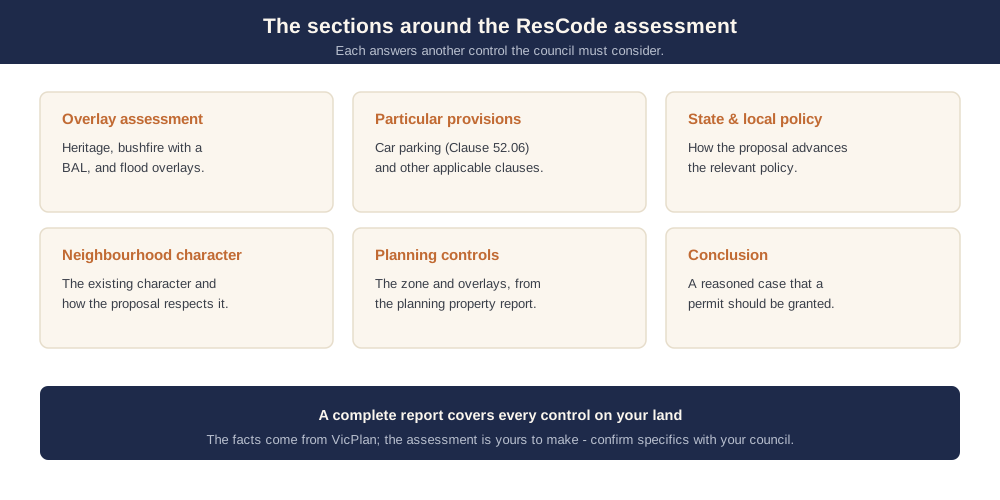
Figure 3: The sections that surround the ResCode assessment in a complete report.
Where the facts come from
The zone and overlay facts the report assesses come straight from your planning property report, the free, address-based summary you can generate on VicPlan at mapshare.vic.gov.au/vicplan. That report states the controls; the town planning report is where you assess your proposal against them. If you want the difference explained in full, see what is a town planning report.
A report that misses a section - an unlisted overlay, a skipped ResCode standard, an unaddressed particular provision - is exactly what prompts a section 54 request for further information, which can stop the council's 60-day decision clock until you respond. Completeness is what protects your timeline.
Build a complete report
Every section above has to be present, accurate to your planning scheme, and organised the way the assessor reads it. Hiring a town planner can take weeks. instantplanning builds the same council-ready structure - site, controls, clause-by-clause ResCode and conclusion - from current Victorian planning scheme data in minutes, and you review every section before you lodge. See how the town planning report works, or start your report now. For complex or contested matters, an experienced human planner is still the better call. If you would rather build it yourself, read doing a DIY town planning report.
Frequently asked questions
What sections does a town planning report include in Victoria?
What is the most important part of a town planning report?
Which ResCode clause goes in my report?
Does the report cover overlays and car parking?
Where do the zone and overlay details come from?
What happens if a section is missing?
Ready to generate your report?
Skip the writing. Get a council-ready town planning report in 5 minutes.
Get your report