Key takeaways
- ✓The Farming Zone (Clause 35.07) exists to protect productive agricultural land and keep non-farming uses from compromising it.
- ✓A dwelling needs a planning permit unless the lot meets the minimum area in the schedule — a 40-hectare default applies where the schedule is silent.
- ✓Subdivision always needs a planning permit, with the minimum area set by the schedule (40 hectares by default).
- ✓Councils often secure rural dwelling approvals with conditions and a Section 173 agreement, so a complete application matters.
Farming Zone (FZ) in Victoria Explained
The Farming Zone (FZ) is Victoria's primary rural zone for protecting productive agricultural land. Set out at Clause 35.07 of every Victorian planning scheme, it treats farming as the priority and treats houses and other non-agricultural uses as something to be controlled so they do not undermine agriculture. If your land is in the Farming Zone, building a dwelling is rarely a simple matter of just lodging plans.
Get a council-ready town planning report in 5 minutes — no town planner, no waiting.
Get your report →- ✓What the Farming Zone is for and why it is so protective
- ✓When you need a planning permit to build a dwelling
- ✓The 40-hectare default lot size and how the schedule changes it
- ✓The rules for subdividing Farming Zone land
- ✓How the Farming Zone differs from the Rural Living Zone
The short answer
The Farming Zone (Clause 35.07) protects productive agricultural land and provides for farming, while limiting non-agricultural uses. A dwelling needs a planning permit unless the lot meets the minimum area in the schedule to the zone — and where no area is specified, the default minimum is 40 hectares. Subdivision always requires a permit.
The Farming Zone is one of the most consequential zones to find on a property report, because it can be a genuine barrier to building a home. The state's policy intent is to keep farming land in farming, so the permit triggers are deliberately strict.
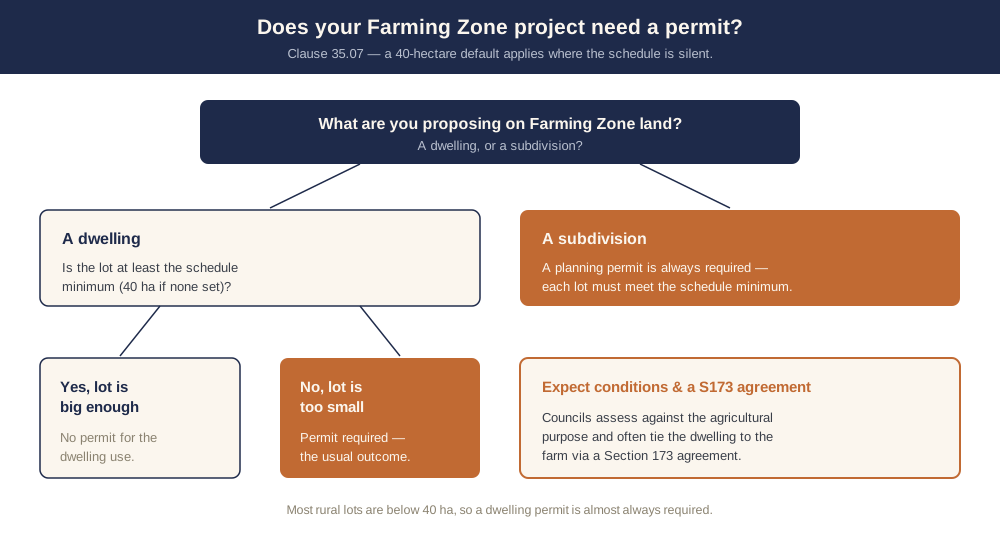
Figure 1: In the Farming Zone, a dwelling needs a permit unless the lot meets the schedule minimum (40 ha default); subdivision always needs one.
What is the Farming Zone for?
Clause 35.07 sets out the purpose of the zone. In substance, the Farming Zone is intended to:
- ✓Provide for the use of land for agriculture
- ✓Encourage the retention of productive agricultural land
- ✓Ensure that non-agricultural uses do not adversely affect the use of land for agriculture
- ✓Provide for land use and development consistent with the schedule to the zone
- ✓Protect and enhance natural resources and the biodiversity of the area
That second and third point are the heart of it: the planning system actively encourages retention of farming land and guards against uses — especially scattered dwellings — that could fragment it or create conflict with normal farm activity such as spraying, noise and dust.
Do I need a planning permit to build a house in the Farming Zone?
Spend 5 minutes, not 3 weeks
instantplanning generates a council-ready town planning report for Victorian permits. No town planner. No waiting.
Get your report →For most people this is the decisive question, and the default answer is yes. Under Clause 35.07, using land for a dwelling requires a planning permit unless the lot is at least the minimum area specified in the schedule to the zone. Where the schedule does not specify an area, the statewide default applies:
Most ordinary rural lots are well below 40 hectares, so in practice a planning permit is almost always required to build a dwelling in the Farming Zone. Councils assess these applications carefully against the zone's purpose, looking at whether the dwelling genuinely supports an agricultural use, its effect on surrounding farming, access, effluent and bushfire risk. Many approvals come with conditions, and councils frequently require a Section 173 agreement — a legal agreement on the title — to tie the dwelling to the farm or prevent further fragmentation.
Because the threshold is set by the schedule, always confirm the figure for your municipality through your planning scheme rather than assuming the 40-hectare default applies.
Subdividing land in the Farming Zone
Subdivision in the Farming Zone always requires a planning permit, and the minimum lot size you can create is, again, schedule-driven:
- ✓A planning permit is required to subdivide Farming Zone land
- ✓Each new lot must be at least the area specified in the schedule to the zone
- ✓Where the schedule specifies no area, the default minimum is 40 hectares
- ✓Boundary realignments and small excisions are tightly controlled and need careful justification
The strong default of 40 hectares means casual subdivision of farming land is rarely possible — the zone is built to resist fragmentation. If you are exploring a rural subdivision, our guide to a two-lot subdivision in Victoria sets out the process and the material councils expect to see.
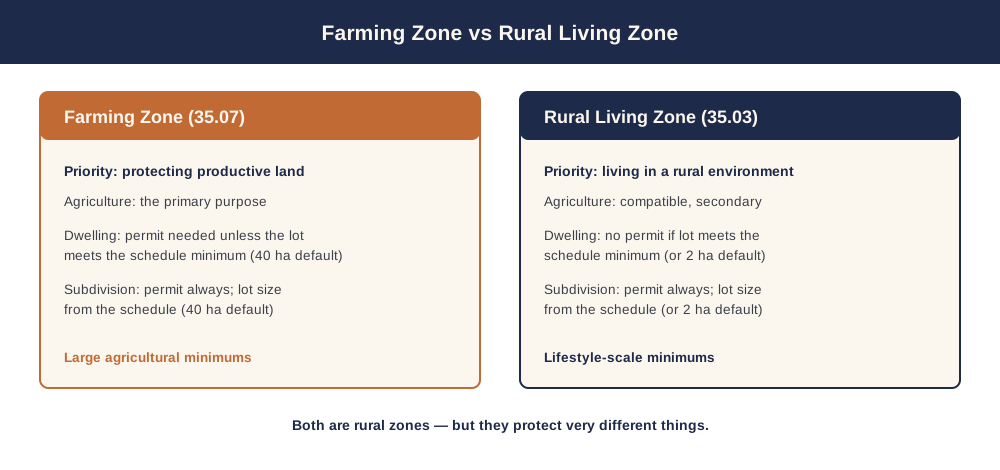
Figure 2: The Farming Zone protects agriculture with large lot minimums; the Rural Living Zone is built for rural living at a smaller scale.
Buildings, works and other permit triggers
Beyond the dwelling use, Clause 35.07 also controls buildings and works, with several exemptions and thresholds set by the schedule.
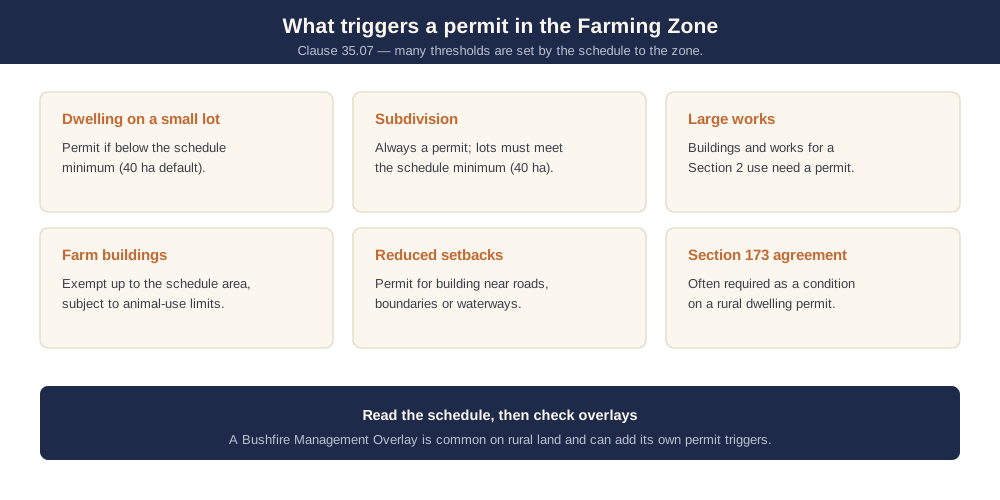
Figure 3: The zone sets the framework and the schedule fills in the numbers — these are the triggers to check on Farming Zone land.
As a general guide:
- ✓Buildings and works for a Section 2 use generally need a permit
- ✓Extensions to an existing dwelling and certain outbuildings have schedule-set floor-area exemptions
- ✓Agricultural building works can be exempt up to the schedule area, subject to animal-use limits
- ✓Reduced setbacks from roads, boundaries and waterways can trigger a permit
As with all Victorian rural zones, the zone sets the framework and the schedule fills in the numbers. Before assuming a shed, farm building or extension is exempt, check the zone provisions, the schedule, and your planning property report for any overlay that adds its own trigger — a Bushfire Management Overlay is common on rural land. Our overview of whether you need a planning permit in Victoria explains how zone, overlay and works combine.
Farming Zone versus Rural Living Zone
The two rural zones are easily confused but serve opposite priorities. The Farming Zone protects productive agriculture, so dwellings are controlled and lot minimums are large (a 40-hectare default). The Rural Living Zone is built around rural living, with agriculture as a compatible secondary use and much smaller, lifestyle-scale lot minimums set by its schedule. If your goal is simply to live on acreage, RLZ-zoned land is usually far more straightforward than Farming Zone land.
Building a planning-permit-ready report
Farming Zone applications are among the more demanding in Victoria — a dwelling on an undersized lot, a subdivision, or works the schedule catches all need a well-argued case. A town planning report that addresses Clause 35.07, the schedule to the zone, the agricultural context and any overlays gives your application its best chance.
Hiring a town planner can take weeks. instantplanning builds the same council-ready report from current Victorian planning scheme data in minutes — and you review it before you lodge. When you are ready, generate your report.
Frequently asked questions
What is the Farming Zone in Victoria?
Can I build a house on Farming Zone land?
What is the minimum lot size in the Farming Zone?
Can I subdivide Farming Zone land?
What is a Section 173 agreement and why might I need one?
What is the difference between the Farming Zone and the Rural Living Zone?
Ready to generate your report?
Skip the writing. Get a council-ready town planning report in 5 minutes.
Get your report