Key takeaways
- ✓A two-lot subdivision almost always needs a permit
- ✓Many simple ones qualify for the 10-day VicSmart track
- ✓The permit is only the first step to new titles
- ✓The whole workflow runs through SPEAR
Do I Need a Permit for a 2-Lot Subdivision? VIC
If you want to split one title into two, the short version is yes — a two-lot subdivision almost always needs a planning permit in Victoria, no matter which zone your land is in. The good news is that many simple two-lot subdivisions qualify for a faster assessment track, and the rest of the process is well-worn and predictable once the permit is in hand.
Get a council-ready town planning report in 5 minutes — no town planner, no waiting.
Get your report →- ✓Why subdividing land virtually always triggers a planning permit
- ✓When a two-lot subdivision qualifies for the VicSmart fast track
- ✓The full process from permit to new titles
- ✓What a Plan of Subdivision (PS), certification and a Statement of Compliance are
- ✓What it costs and which referral authorities get involved
The short answer
Yes — subdividing land into two lots requires a planning permit in Victoria in almost every case. The state's planning guidance is blunt: all residential subdivision needs a planning permit. Many simple two-lot splits qualify for the VicSmart fast track, with a 10 business-day decision timeframe, but a permit is still required either way.
Unlike a shed or a deck, where being inside the size limits can make a project permit-exempt, subdivision has no equivalent "small enough to skip it" threshold. Creating a new lot changes the legal boundaries of land, so the planning scheme wants it assessed.
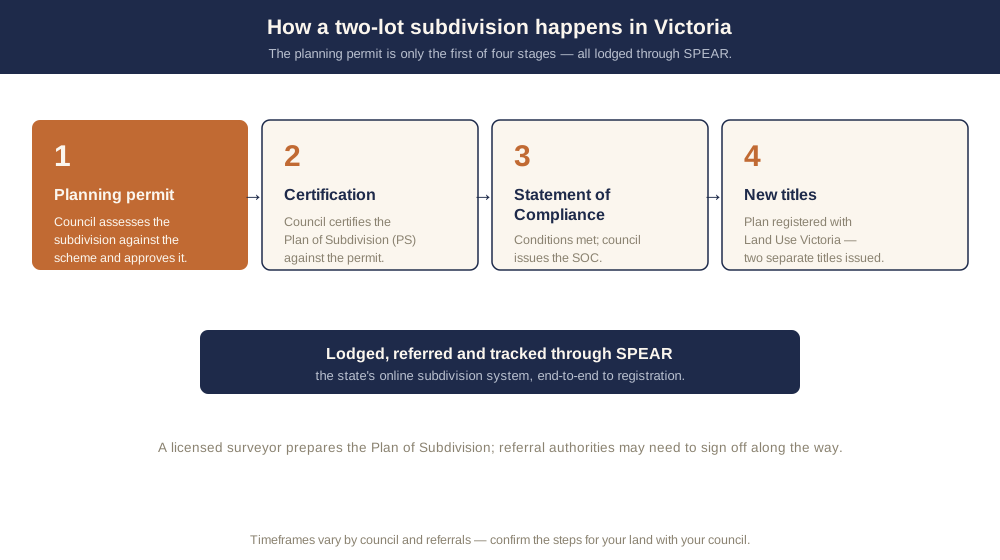
Figure 1: A two-lot subdivision runs in four stages — the planning permit is only the first.
Why subdivision almost always needs a permit
Every Victorian zone in the planning scheme sets out when a permit is required to subdivide, and in practice the answer is "you need one." Whether your land is in a General Residential Zone, a Neighbourhood Residential Zone, a Township Zone or a rural zone, the zone provisions require a permit to subdivide, and the council — your responsible authority under the Planning and Environment Act 1987 — assesses it.
On top of the zone, overlays can add their own requirements and pull in referral authorities — a flood overlay brings in the relevant water authority, for example. Minimum lot sizes set in the zone or a schedule also matter: if your two proposed lots would each fall below the minimum, the subdivision may not be supportable at all. This is why it is worth checking your controls before you commit. As always with subdivision, confirm the specifics with your council before lodging.
Does a two-lot subdivision qualify for VicSmart?
Spend 5 minutes, not 3 weeks
instantplanning generates a council-ready town planning report for Victorian permits. No town planner. No waiting.
Get your report →Often, yes. VicSmart is the streamlined assessment pathway for straightforward applications, with a statutory 10 business-day decision timeframe, no public notice, and a set checklist instead of an open-ended assessment. Following 2025 changes to the provisions, the VicSmart subdivision classes in Clause 59 of the scheme include a subdivision of land into two lots, as well as a subdivision that creates one lot for each dwelling already built or approved (and, similarly, for car parking spaces).
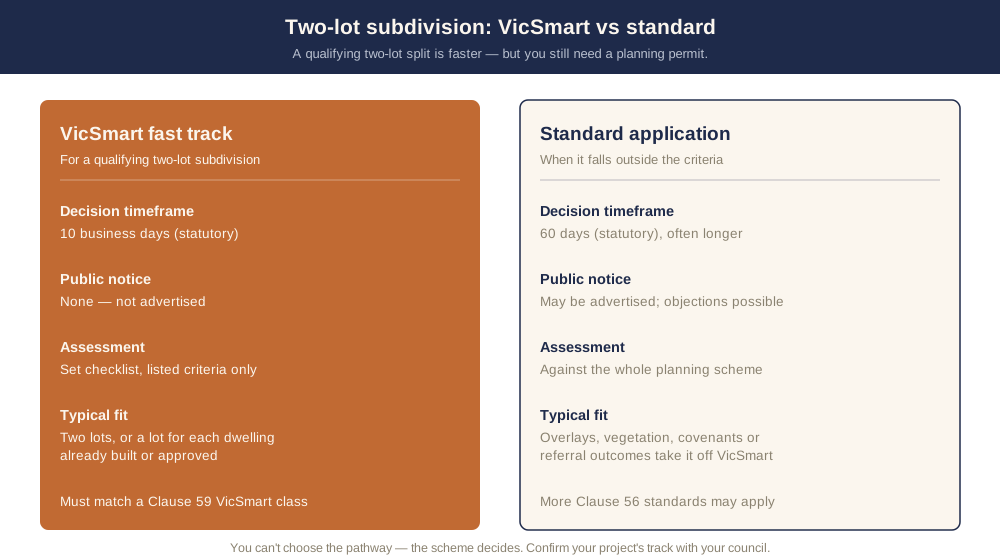
Figure 2: A qualifying two-lot subdivision on VicSmart is faster and simpler than a standard application — but you still need the permit.
You do not get to choose the pathway. If your proposal matches a VicSmart class and meets every eligibility criterion, it must be processed as VicSmart; if it does not — because an overlay, native vegetation, bushfire risk, a restrictive covenant or a referral outcome takes it outside the criteria — it is assessed as a standard application instead. The split between a lot-for-each-existing-dwelling subdivision and a fresh "vacant land" subdivision matters here, because it can change which class and which standards apply. For a side-by-side on the two tracks, see VicSmart vs a standard planning permit.
Does ResCode (Clause 56) apply to a two-lot subdivision?
Clause 56 is the residential subdivision part of ResCode — the set of objectives and standards for laying out new residential lots, streets, drainage and open space. It applies to residential subdivision in zones such as the General Residential Zone, Neighbourhood Residential Zone, Residential Growth Zone, Housing Choice and Transport Zone, Mixed Use Zone and Township Zone.
For a simple two-lot split the picture is lighter than for a large estate. Where a subdivision merely creates one lot for each dwelling already built or approved, it generally sits outside Clause 56 and is handled through the Clause 59 VicSmart framework instead. Where you are creating genuinely vacant residential land, more of the Clause 56 standards come into play — but a two-lot proposal is still assessed against far fewer of them than a multi-lot subdivision. If your plans run to many more lots, read do I need a planning permit for a multi-lot subdivision, where ResCode does most of the heavy lifting.
What you actually need to lodge
A subdivision application is more than a form. At a minimum you will need a Plan of Subdivision (PS) prepared by a licensed surveyor, supporting plans and information for your zone and any overlays, the council fee, and — once the permit issues — engagement with any referral authorities.
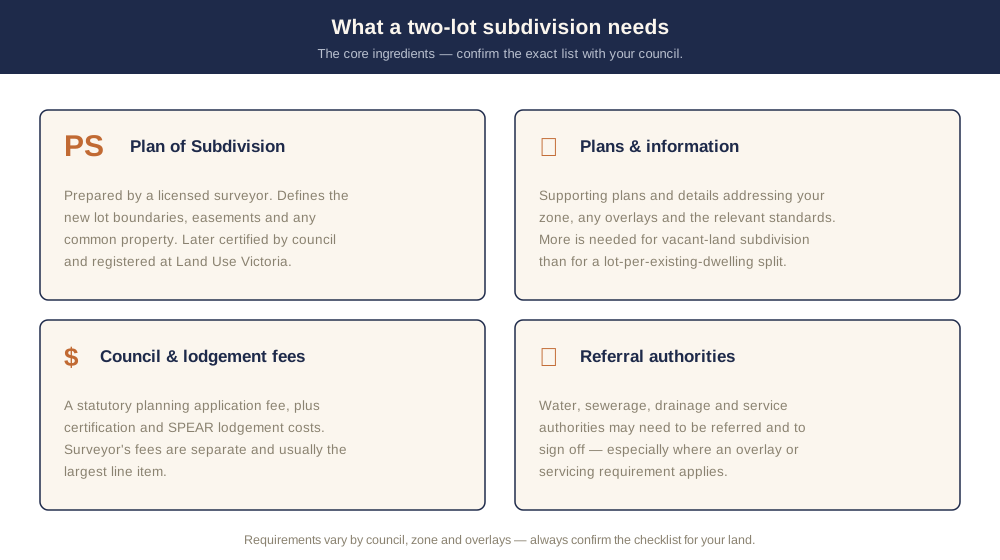
Figure 3: The core ingredients of a two-lot subdivision application — confirm the exact list with your council.
- ✓A Plan of Subdivision (PS) from a licensed surveyor
- ✓Plans and information addressing your zone and overlays
- ✓The council application and lodgement fees
- ✓Sign-off from referral authorities (water, drainage, services)
From permit to new titles: the SPEAR process
The permit is the start, not the finish. The whole subdivision workflow is lodged, referred, certified and tracked through SPEAR — Surveying and Planning through Electronic Applications and Referrals — the state's online system, used end-to-end through to registration. After the permit, the typical sequence is: the council certifies the Plan of Subdivision (PS) against the permit and the scheme; you satisfy the permit conditions and obtain a Statement of Compliance (council's confirmation that the conditions are met); then the certified plan and Statement of Compliance are lodged with Land Use Victoria for registration, which is what creates the separate titles.
If you need a planning permit — what's next
Because a two-lot subdivision almost always needs a permit, the question is rarely "if" and usually "how to get it cleanly." A complete, scheme-specific application is far less likely to be returned or to attract a Request for Further Information. Hiring a town planner can take weeks. instantplanning builds a council-ready town planning report from current Victorian planning scheme data in minutes — you review it before you lodge. Start by checking whether your project needs a permit at all with do I need a planning permit in Victoria, or just generate your report.
Frequently asked questions
Do I need a planning permit to subdivide my land into two lots in Victoria?
Can a two-lot subdivision use the VicSmart fast track?
What is a Plan of Subdivision (PS)?
What is a Statement of Compliance?
How is a subdivision lodged in Victoria?
Does ResCode apply to a two-lot subdivision?
Ready to generate your report?
Skip the writing. Get a council-ready town planning report in 5 minutes.
Get your report