Key takeaways
- ✓The Bushfire Management Overlay (Clause 44.06) is a planning control over land at higher bushfire risk.
- ✓A planning permit is required to build a dwelling or subdivide land in the BMO, with bushfire protection measures applied through Clause 53.02.
- ✓Protection measures include defendable space, a Bushfire Attack Level (BAL) rating, a water supply for firefighting and suitable access.
- ✓The BMO is a planning overlay; the Bushfire Prone Area is a separate building-control designation that triggers AS 3959 construction at building permit stage.
Bushfire Management Overlay (BMO) in Victoria Explained
The Bushfire Management Overlay (BMO) is the Victorian planning control applied to land at higher risk of bushfire. Set out at Clause 44.06 of every Victorian planning scheme, it sits on top of your zone and requires a planning permit for development such as a new dwelling — with bushfire protection built into the design from the start. If your property is in a BMO, bushfire is not an afterthought; it shapes the whole application.
Get a council-ready town planning report in 5 minutes — no town planner, no waiting.
Get your report →- ✓What the Bushfire Management Overlay is and why it applies
- ✓When you need a planning permit in the BMO
- ✓The bushfire protection measures you must address
- ✓What a Bushfire Attack Level (BAL) rating is
- ✓How the BMO differs from a Bushfire Prone Area
The short answer
The Bushfire Management Overlay (Clause 44.06) is a planning control that requires a planning permit to construct a dwelling or subdivide land on bushfire-risk land. The application must address bushfire protection measures under Clause 53.02 — defendable space, a Bushfire Attack Level rating, a static water supply for firefighting, and suitable access.
The overlay is administered by your council, with the CFA as a referral authority on most applications. Its purpose is to ensure that development gives priority to the protection of human life and manages bushfire risk to an acceptable level.
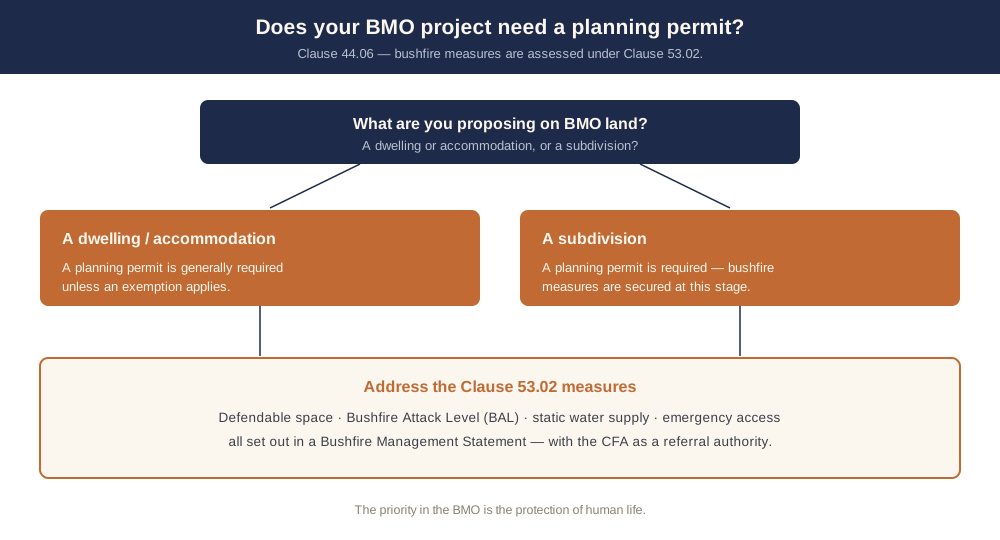
Figure 1: In the BMO, a dwelling or subdivision needs a permit, and the application must address the Clause 53.02 protection measures.
What is the Bushfire Management Overlay for?
The BMO is applied to land where the bushfire hazard warrants a higher level of planning scrutiny — typically rural, peri-urban and bush-fringe areas with significant nearby vegetation. The overlay's purpose is to identify that land and ensure development is sited, designed and managed so that bushfire risk to life and property is reduced to an acceptable level. It works hand in hand with the bushfire planning provisions, which set out exactly what an application must demonstrate.
When do I need a planning permit in the BMO?
Spend 5 minutes, not 3 weeks
instantplanning generates a council-ready town planning report for Victorian permits. No town planner. No waiting.
Get your report →Where the BMO applies, a planning permit is generally required for development associated with accommodation, including a dwelling, and for subdivision:
- ✓Constructing a dwelling or buildings associated with accommodation
- ✓Subdividing land
- ✓Some extensions and minor buildings, unless an exemption in Clause 44.06 or the schedule applies
- ✓Other development the overlay or its schedule specifies
The overlay contains exemptions — for example certain small extensions or minor buildings — so the precise trigger depends on Clause 44.06 and any schedule to the overlay. Where a permit is required, the bushfire response is assessed through Clause 53.02, and the CFA is usually a referral authority. Our guide to whether you need a permit in the Bushfire Management Overlay walks through the common scenarios.
The bushfire protection measures (Clause 53.02)
Bushfire protection for development in the BMO is applied through Clause 53.02 — Bushfire Planning. An application is supported by a Bushfire Management Statement that analyses the hazard and sets out how the proposal meets the required measures. The core measures are:
- ✓Defendable space — a managed separation between the building and hazardous vegetation
- ✓A Bushfire Attack Level (BAL) rating that informs both siting and construction
- ✓A static water supply for firefighting, such as a dedicated tank
- ✓Access and egress suitable for emergency vehicles and safe evacuation
These measures work together: more defendable space and careful siting can lower the BAL, which in turn affects the construction standard. Local conditions can change the detail — a schedule to the BMO can specify locally specific measures that supplement Clause 44.06 and Clause 53.02. Authoritative guidance is published by Planning Victoria and the CFA.
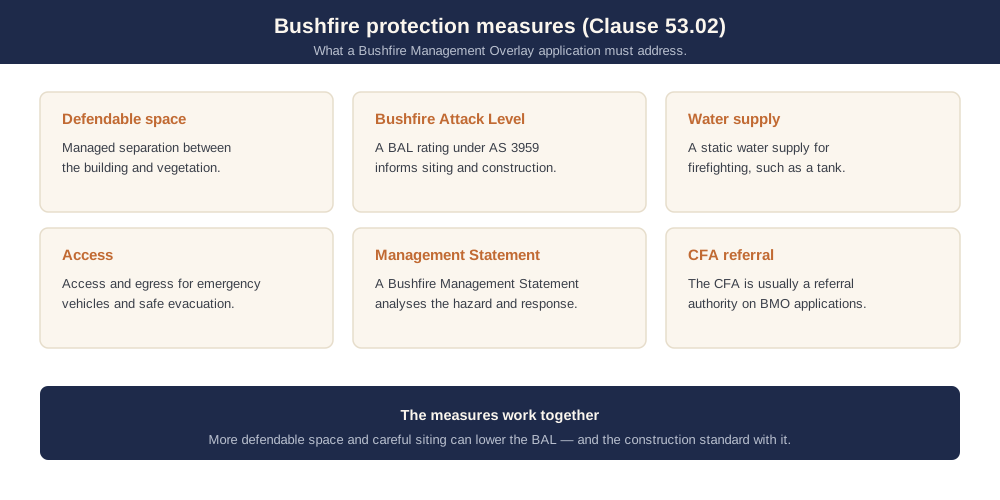
Figure 2: A BMO application addresses defendable space, BAL, water supply and access — set out in a Bushfire Management Statement.
What is a Bushfire Attack Level (BAL)?
A Bushfire Attack Level (BAL) is a measure of the severity of bushfire exposure a building could face — from radiant heat through to direct flame contact. It is assessed under AS 3959 — Construction of buildings in bushfire-prone areas, taking account of the surrounding vegetation, slope and separation distances. The BAL rating drives the construction requirements for the building: the higher the BAL, the more robust the materials and detailing must be. In the planning system, the BAL feeds into how you site the dwelling and how much defendable space you provide; in the building system, it sets the construction standard. Our guide to building in a bushfire-prone area and BAL ratings explains the categories and what they mean for construction.
BMO versus a Bushfire Prone Area
This distinction trips up many owners, because the two operate in different systems:
- ✓Bushfire Management Overlay (Clause 44.06) — a planning control that decides whether you need a planning permit and what bushfire planning measures you must meet
- ✓Bushfire Prone Area (BPA) — a building-control designation that triggers AS 3959 construction requirements at the building permit stage
The key point is that a property can be in a Bushfire Prone Area without being in a BMO. In a BPA, a BAL assessment and AS 3959 construction requirements apply at the building permit stage even where no planning permit is triggered by an overlay. Conversely, BMO land is almost always also within a BPA, so both the planning and building requirements apply. Always check both: VicPlan shows the BMO, while the building designation is confirmed at building permit stage.
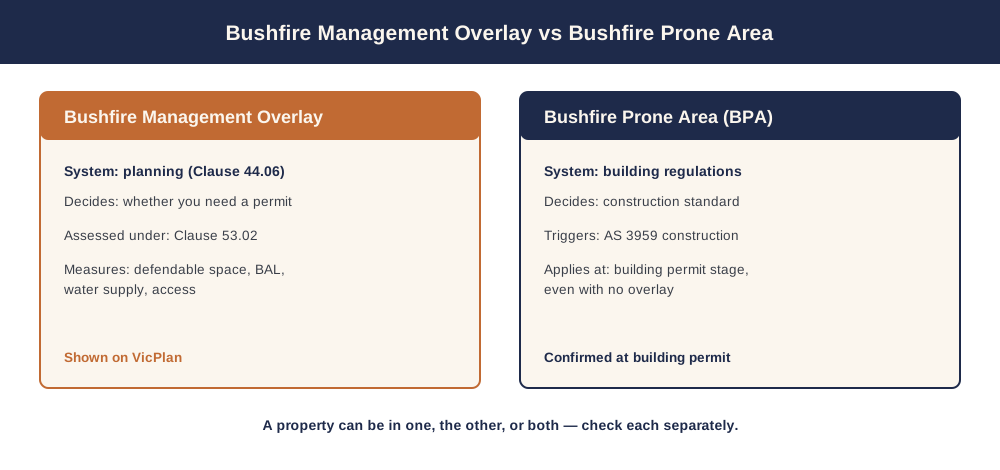
Figure 3: The BMO is a planning overlay; the Bushfire Prone Area is a separate building-control designation — a property can be in one, the other, or both.
How to check whether your property is affected
You can confirm a BMO on your land for free by looking up your address on VicPlan or generating a planning property report, which lists every overlay including the BMO. Note that the building-control Bushfire Prone Area is a separate designation confirmed when you apply for a building permit, so a clear BMO result does not always mean bushfire construction requirements will not apply.
Building a planning-permit-ready report
BMO applications turn on a credible bushfire response — siting, defendable space, BAL, water and access, all set out clearly. A town planning report that addresses Clause 44.06, the Clause 53.02 measures and any schedule to the overlay gives your application its best chance, alongside the supporting bushfire material the CFA expects.
Hiring a town planner can take weeks. instantplanning builds the same council-ready report from current Victorian planning scheme data in minutes — and you review it before you lodge. When you are ready, generate your report.
Frequently asked questions
What is the Bushfire Management Overlay in Victoria?
Do I need a planning permit in the Bushfire Management Overlay?
What is a Bushfire Attack Level (BAL)?
What protection measures does a BMO application need?
What is the difference between a BMO and a Bushfire Prone Area?
How do I find out if my property is in a Bushfire Management Overlay?
Ready to generate your report?
Skip the writing. Get a council-ready town planning report in 5 minutes.
Get your report