Key takeaways
- ✓The Rural Living Zone (Clause 35.03) is for residential use in a rural setting, with agriculture compatible alongside it.
- ✓A dwelling is allowed without a planning permit only if the lot meets the minimum area in the schedule — otherwise a permit is required.
- ✓Subdivision always needs a planning permit, and the minimum lot size is set by the schedule (or a 2-hectare default if the schedule is silent).
- ✓The figures that decide your answer live in the schedule to the zone for your council, so always check the schedule for your land.
Rural Living Zone (RLZ) in Victoria Explained
The Rural Living Zone (RLZ) is the Victorian planning zone for living on larger, semi-rural blocks — a lifestyle setting where homes and low-key agriculture sit side by side. It is set out at Clause 35.03 of every Victorian planning scheme, and what you can build or do on RLZ land depends heavily on the schedule your council has attached to the zone.
Get a council-ready town planning report in 5 minutes — no town planner, no waiting.
Get your report →- ✓What the Rural Living Zone is for and where it applies
- ✓When you need a planning permit for a dwelling in the RLZ
- ✓The rules for subdividing RLZ land, and the minimum lot sizes
- ✓What buildings and works trigger a permit
- ✓How the RLZ differs from the Farming Zone
The short answer
The Rural Living Zone (Clause 35.03) provides for residential use in a rural environment, with compatible agriculture, while protecting rural character and natural resources. A dwelling is allowed without a planning permit only if the lot meets the minimum area in the schedule; otherwise — and always for subdivision — a planning permit is required.
The RLZ is one of Victoria's rural zones, designed for people who want acreage and a rural outlook without committing the land to full-scale farming. The schedule to the zone, written by each council, sets the numbers that matter most — minimum lot sizes and several permit thresholds.
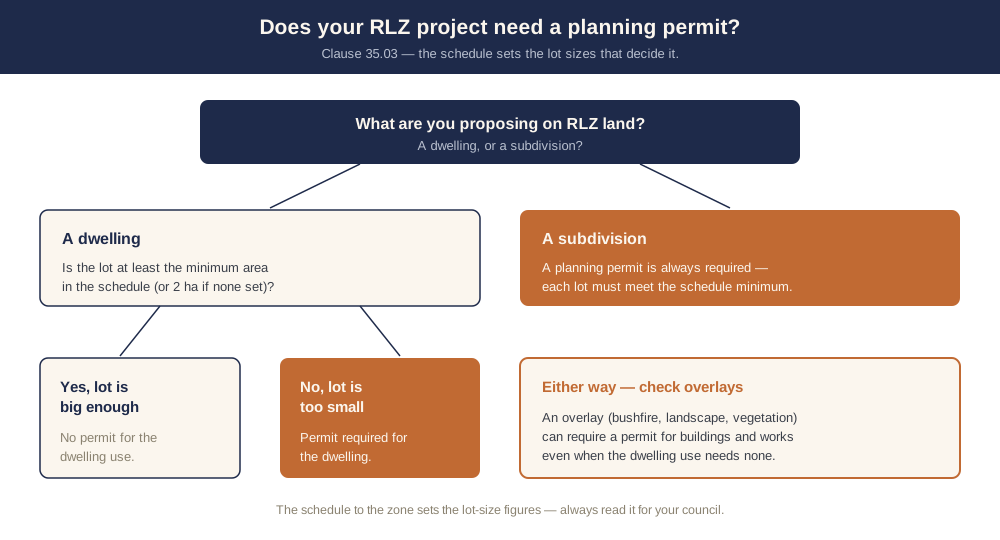
Figure 1: In the RLZ, the lot's area against the schedule minimum decides whether a dwelling needs a permit; subdivision always does.
What is the Rural Living Zone for?
Clause 35.03 sets out the zone's purpose. In plain terms, the RLZ is intended to:
- ✓Provide for residential use in a rural environment
- ✓Allow agricultural use that is compatible with living on the land
- ✓Protect and enhance natural resources, biodiversity and the landscape
- ✓Ensure development respects the rural character of the area
That balance — homes first, farming alongside — is what distinguishes the RLZ from the Farming Zone, where productive agriculture is the priority and dwellings are tightly controlled. If your land is zoned RLZ, the planning scheme expects it to look and feel rural, so built form, vegetation and landscape all get weighed in any assessment.
Do I need a planning permit for a dwelling in the RLZ?
Spend 5 minutes, not 3 weeks
instantplanning generates a council-ready town planning report for Victorian permits. No town planner. No waiting.
Get your report →This is the question most RLZ landowners ask. Under Clause 35.03, a single dwelling can be a Section 1 use — meaning no planning permit is needed — but only if the lot meets the conditions in the schedule. The key condition is lot size:
If the lot is at least the area specified in the schedule to the zone (and, where no area is specified, at least 2 hectares), and it is the only dwelling on the lot, a dwelling is generally allowed without a planning permit. If the lot is smaller than that minimum, the dwelling becomes a Section 2 use and a planning permit is required for the use of the land for a dwelling.
Because the figure is set by the schedule, two RLZ blocks in different municipalities can have different answers. Always read the schedule to the zone for your council — you can find it through your planning scheme. Note too that even where a dwelling needs no permit for its use, an overlay (such as a Bushfire Management Overlay or Significant Landscape Overlay) can independently require a permit for the buildings and works.
Subdividing land in the Rural Living Zone
Subdivision in the RLZ always requires a planning permit — there is no permit-free pathway. The minimum size of the lots you create is, again, schedule-driven:
- ✓A planning permit is required to subdivide RLZ land
- ✓Each new lot must be at least the area specified in the schedule to the zone
- ✓Where the schedule specifies no area, each lot must be at least 2 hectares
- ✓Smaller "excision" lots are only possible where the schedule expressly allows them
So a schedule that specifies, say, a 6-hectare minimum will not allow you to carve a 2-hectare lot out of a larger holding. The schedule controls the outcome. If you are weighing up a rural subdivision, our guide to a two-lot subdivision in Victoria walks through the process and the supporting material councils expect.
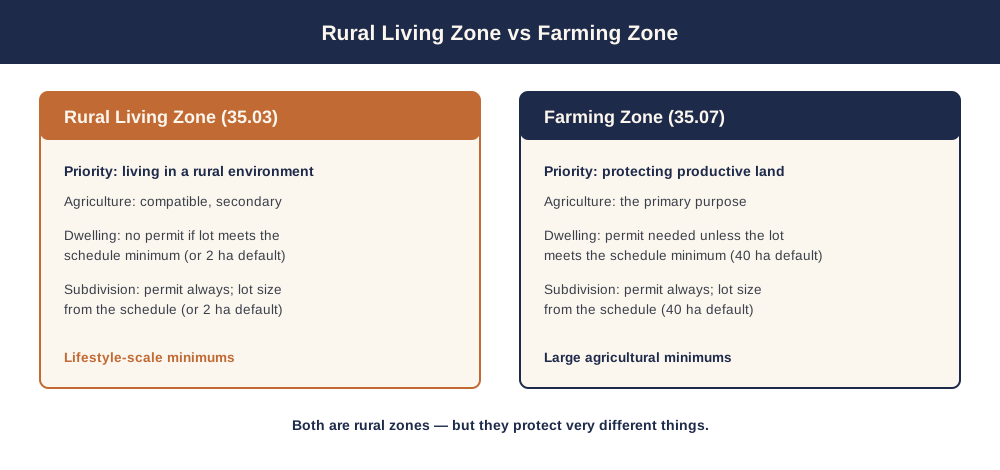
Figure 2: The RLZ centres on rural living; the Farming Zone centres on agriculture — and that changes the dwelling and lot-size rules.
Buildings, works and other permit triggers
Beyond the dwelling use itself, Clause 35.03 requires a planning permit to construct a building or carry out works, unless an exemption applies. Several of those exemptions are themselves schedule-dependent.
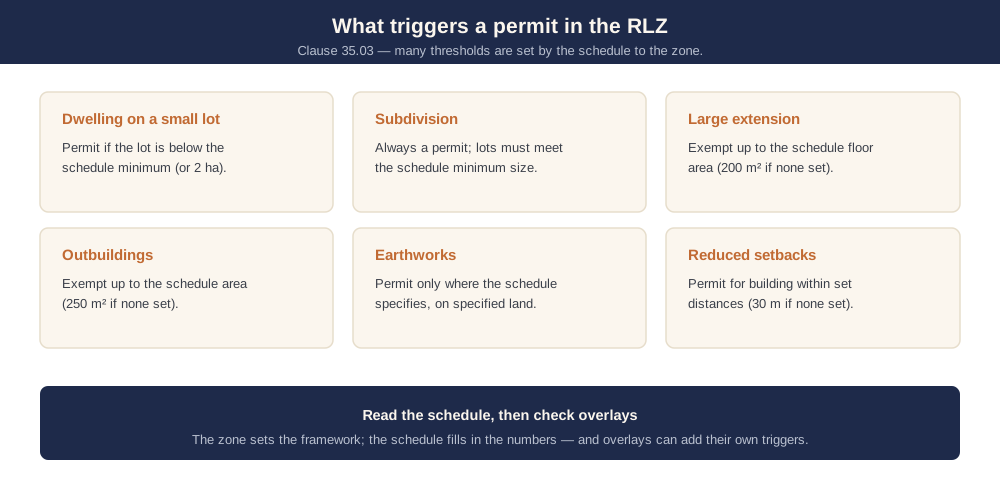
Figure 3: The zone sets the framework and the schedule fills in the numbers — these are the triggers to check on RLZ land.
As a guide:
- ✓Extending an existing dwelling is often exempt up to the floor area in the schedule (or 200 m² if none is specified)
- ✓An outbuilding linked to an existing dwelling is often exempt up to the schedule area (or 250 m² if none is specified)
- ✓Earthworks need a permit only where the schedule specifies them on specified land
- ✓Buildings within certain setbacks of a road or boundary can need a permit, with distances set by the schedule
The pattern is consistent: the zone sets the framework, and the schedule fills in the numbers. Before you assume a shed, extension or earthworks is exempt, check both the zone provisions and the schedule, and pull your planning property report to confirm no overlay adds its own trigger. Our overview of whether you need a planning permit in Victoria explains how zone, overlay and works combine to decide the answer.
RLZ versus the Farming Zone
People often confuse the two rural zones. The simplest distinction: the Rural Living Zone is about living rurally with agriculture as a secondary, compatible activity; the Farming Zone is about protecting productive agricultural land, with dwellings treated as a use that could compromise farming if not controlled. That is why a dwelling in the Farming Zone typically needs a permit unless the lot is very large (a 40-hectare default), while the RLZ uses much smaller, lifestyle-scale minimums set by its schedule.
Building a planning-permit-ready report
If your RLZ project does need a permit — a dwelling on an undersized lot, a subdivision, or buildings and works the schedule catches — your application is far stronger when it is supported by a town planning report that addresses Clause 35.03, the schedule to the zone, any overlays, and the relevant standards.
Hiring a town planner can take weeks. instantplanning builds the same council-ready report from current Victorian planning scheme data in minutes — and you review it before you lodge. When you are ready, generate your report.
Frequently asked questions
What is the Rural Living Zone in Victoria?
Do I need a planning permit to build a house in the Rural Living Zone?
What is the minimum lot size in the Rural Living Zone?
Can I subdivide land in the Rural Living Zone?
What is the difference between the Rural Living Zone and the Farming Zone?
Where do I check the rules for my Rural Living Zone land?
Ready to generate your report?
Skip the writing. Get a council-ready town planning report in 5 minutes.
Get your report