Key takeaways
- ✓Extending a dwelling on 300 m² or more usually needs no permit
- ✓Under 300 m² a permit is generally required under Clause 54
- ✓Overlays are the most common reason an extension needs a permit
- ✓Siting standards are still checked via the building permit
Do I Need a Permit for a Single-Storey Extension? VIC
Whether you need a planning permit for a single-storey extension in Victoria comes down to your lot size, the overlays on your land, and your zone. The good news: extending one existing house on a normal-sized block in a standard residential zone is often exempt from a planning permit — though a building permit is almost always required either way.
Get a council-ready town planning report in 5 minutes — no town planner, no waiting.
Get your report →- ✓When a single-storey extension is exempt from a planning permit
- ✓Why a lot under 300 square metres usually needs a permit
- ✓How overlays turn an exempt extension into one that needs a permit
- ✓What a building permit covers, and why you still need one
- ✓How to check the controls on your own property
The short answer
Extending one existing dwelling on a lot of 300 square metres or more, in a General Residential or Neighbourhood Residential Zone with no overlay, generally needs no planning permit — the siting is checked through the building permit instead. A lot under 300 square metres, or any overlay, usually triggers a planning permit. Always confirm with your council.
Your plans don't decide it — the planning scheme does. The flow below shows the order to work through.
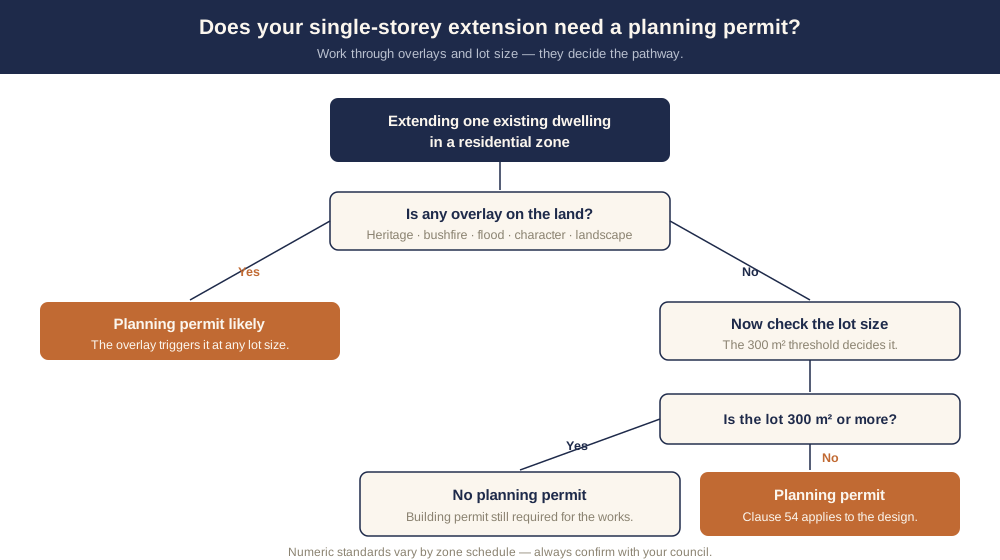
Figure 1: Work through lot size and overlays in order — they decide whether you need a planning permit or only a building permit.
When is a single-storey extension exempt from a planning permit?
For most homeowners adding a room, a larger living area or a rear extension to an existing house, the key number is 300 square metres. Under the streamlined single-dwelling provisions, constructing or extending one dwelling on a lot greater than 300 square metres in a residential zone generally does not require a planning permit, and the residential design code (Clause 54) does not apply. Instead, the siting matters — setbacks, site coverage, overshadowing — are assessed through the building permit process.
So the typical scenario looks like this: a single existing house on a 500-square-metre block in the General Residential Zone, with no overlay over the land, having a single-storey extension built at the rear. In that case a planning permit is usually not needed for the works — but you still need a building permit before construction starts.
The exemption is generous, but it has firm edges. The moment your lot drops below 300 square metres, or an overlay appears on your planning property report, the answer changes — and those two triggers are covered next.
When does an extension need a planning permit?
Spend 5 minutes, not 3 weeks
instantplanning generates a council-ready town planning report for Victorian permits. No town planner. No waiting.
Get your report →Two situations most commonly push a single-storey extension into needing a planning permit: a small lot, and an overlay.
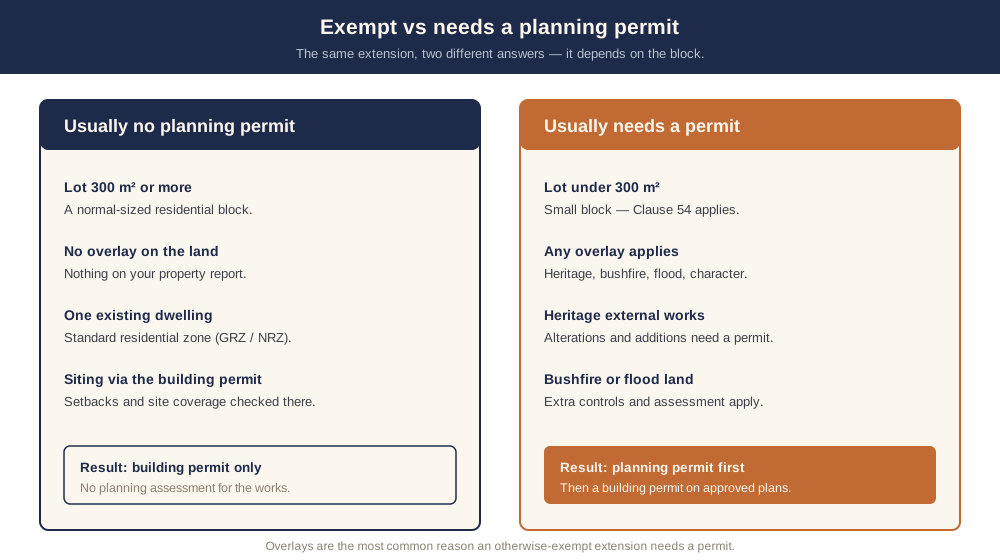
Figure 2: The same extension can be exempt on one block and require a permit on another — lot size and overlays are the deciding factors.
Small lots under 300 square metres. In the General Residential, Neighbourhood Residential, Residential Growth, Mixed Use, Township and Housing Choice and Transport Zones, developing or extending one dwelling on a lot of less than 300 square metres generally requires a planning permit, and Clause 54 standards form part of that assessment. The reason is amenity: smaller lots sit closer together, so the scheme checks the design more carefully.
Overlays. An overlay sits on top of your zone and adds its own permit trigger, regardless of lot size. The overlays that most often catch an extension are a Heritage Overlay (external alterations and additions need a permit), a Bushfire Management Overlay (BMO), flood overlays such as the Land Subject to Inundation Overlay (LSIO) and Special Building Overlay (SBO), the Neighbourhood Character Overlay (NCO), and the Significant Landscape Overlay. If any of these is on your land, assume a permit is likely. We unpack the heritage rules in do I need a permit in a Heritage Overlay.
What about ResCode and Clause 54?
ResCode is the set of residential amenity standards in the planning scheme. For a single dwelling and its extension, the relevant code is Clause 54. Where it applies — on lots under 300 square metres — it tests your design against standards for street setback, side and rear setbacks, walls on boundaries, daylight to existing windows, overshadowing, overlooking, site coverage and permeability.
Here's the part that surprises people: even when no planning permit is needed, the same siting concepts don't simply vanish. On a lot of 300 square metres or more, setbacks, site coverage and overshadowing are still assessed — just through the building permit and the Building Regulations rather than a planning assessment. So a well-sited extension matters either way.
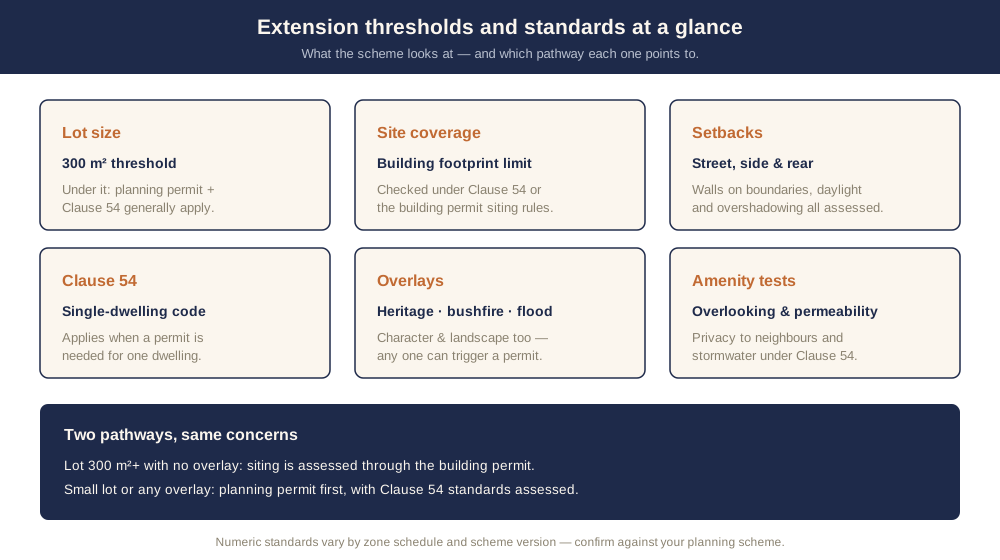
Figure 3: The thresholds and standards that decide which pathway your extension follows. Numeric standards vary by zone schedule — confirm against your scheme.
If you want the full picture of how these standards work, see what ResCode is and how it applies.
Why you still need a building permit
A planning permit and a building permit are different approvals. A planning permit decides whether the development is appropriate — amenity, character, overlays, neighbours. A building permit decides whether the construction is safe and compliant with the National Construction Code, and it covers structure, siting and energy.
For a single-storey extension, a building permit is required in almost every case, even when no planning permit is. Where both apply — for example, an extension on a small lot or in a Heritage Overlay — the planning permit comes first, then the building permit is issued against the approved plans. Skipping the planning step can mean re-doing drawings and losing weeks.
How to check your own property
You can confirm the controls on your land for free. Look up your address on VicPlan (the state planning map) or generate a planning property report, which lists your zone and every overlay. Note your zone code (such as GRZ or NRZ) and any overlays (HO, BMO, LSIO, SBO). Then check your lot size against the 300-square-metre threshold, and read what those controls say about your proposed works in the planning scheme — or have it done for you. For the general rules behind all of this, start with do I need a planning permit in Victoria.
If you do need a permit — what's next
If your extension needs a planning permit, your application is far stronger — and far less likely to be returned or hit a Request for Further Information — when it's accompanied by a town planning report that addresses your zone, any overlays and the relevant Clause 54 standards.
A town planner can take weeks. instantplanning builds the same council-ready report from current Victorian planning scheme data in minutes — you review it before you lodge. If you're weighing up costs first, see what an extension planning permit costs, or just generate your report.
Frequently asked questions
Do I need a planning permit for a single-storey extension in Victoria?
Does my extension need a permit if my block is under 300 square metres?
Do I still need a building permit if no planning permit is required?
Which overlays trigger a permit for an extension?
What is Clause 54 and does it apply to my extension?
How do I find out which rules apply to my property?
Ready to generate your report?
Skip the writing. Get a council-ready town planning report in 5 minutes.
Get your report