Key takeaways
- ✓The Heritage Overlay is Clause 43.01, and it requires a planning permit for most external buildings, works and demolition.
- ✓Internal alterations are generally exempt — unless your overlay schedule says internal controls apply.
- ✓Demolition, external alterations, new buildings, fences and signs are the usual permit triggers.
- ✓Minor heritage works can often run on the faster VicSmart pathway, but check your schedule first.
Do I Need a Permit in a Heritage Overlay?
If your land is in a Heritage Overlay, the short version is: most of what you do to the outside of the building needs a planning permit, and demolition almost always does. The Heritage Overlay — Clause 43.01 of the Victoria Planning Provisions — is one of the most common overlays to catch homeowners, because it can require a permit for work that would be completely exempt anywhere else, including repainting, fences and even minor external changes.
Get a council-ready town planning report in 5 minutes — no town planner, no waiting.
Get your report →- ✓What the Heritage Overlay is and how to check if it applies
- ✓Which works trigger a planning permit under Clause 43.01
- ✓What is exempt — and why internal work usually is
- ✓When demolition needs a permit
- ✓When minor works can use the faster VicSmart pathway
The short answer
In a Heritage Overlay you need a planning permit for most external work — demolishing or altering a building, constructing a new building or fence, and erecting a sign — under Clause 43.01. Internal alterations are generally exempt unless your overlay schedule says otherwise. Always read the schedule for your specific heritage place.
The overlay protects the heritage significance of a place, so it focuses on anything that changes how the building or precinct looks and reads. The diagram below sorts the common jobs into "permit" and "usually exempt."
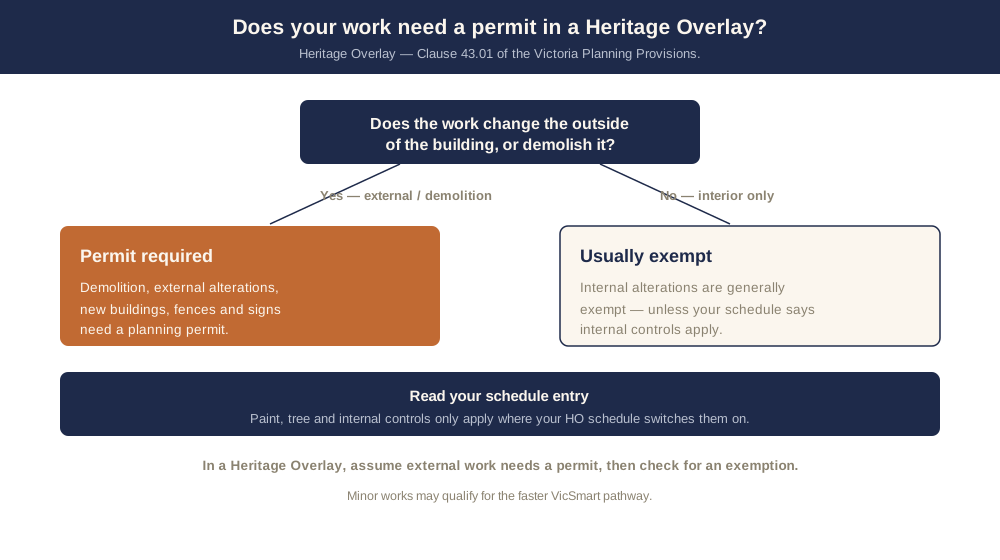
Figure 1: External change and demolition usually need a permit under Clause 43.01; internal work usually does not.
How do I know if I'm in a Heritage Overlay?
Look it up. Enter your address on VicPlan or generate a planning property report. If a Heritage Overlay applies, the report shows it as HO followed by a number — that number points to a specific entry in the schedule to Clause 43.01 in your council's planning scheme.
That schedule is the part that actually matters. It tells you, for your heritage place, whether extra controls apply — such as external paint controls, internal alteration controls, tree controls, or outbuilding and fence controls. Two properties can both be "in a Heritage Overlay" and have very different requirements depending on what their schedule entries switch on.
What works trigger a planning permit under Clause 43.01?
Spend 5 minutes, not 3 weeks
instantplanning generates a council-ready town planning report for Victorian permits. No town planner. No waiting.
Get your report →Under Clause 43.01, a planning permit is generally required to:
- ✓Demolish or remove a building or fence
- ✓Construct a building or construct or carry out works
- ✓Externally alter a building
- ✓Construct or display a sign
- ✓Subdivide the land
- ✓Externally paint a surface not already painted — where paint controls apply
- ✓Remove, destroy or lop a tree — where tree controls apply
- ✓Alter the interior — only where internal alteration controls apply
The first few apply to virtually every Heritage Overlay. The last three — painting, trees and internal work — only apply if the schedule for your place specifically switches them on. That is why "do I need a permit?" in a Heritage Overlay is always answered by reading the schedule, not by guessing from the building.
The responsible authority for this is your council, under the Planning and Environment Act 1987. It assesses whether the work respects the heritage significance of the place — its form, scale, materials and setting.
What's exempt in a Heritage Overlay?
The clearest exemption is internal work. Renovating a kitchen or bathroom, replastering, rewiring or any change that does not affect the outside of the building is generally exempt — unless your schedule says internal alteration controls apply (which is uncommon, and usually reserved for places with significant interiors).
Some genuinely minor or like-for-like external maintenance can also fall outside the permit net, and a schedule can list its own specific exemptions. But the default assumption for external work in a Heritage Overlay should be the opposite of everywhere else: assume you need a permit, then check the schedule for an exemption — not the other way around.
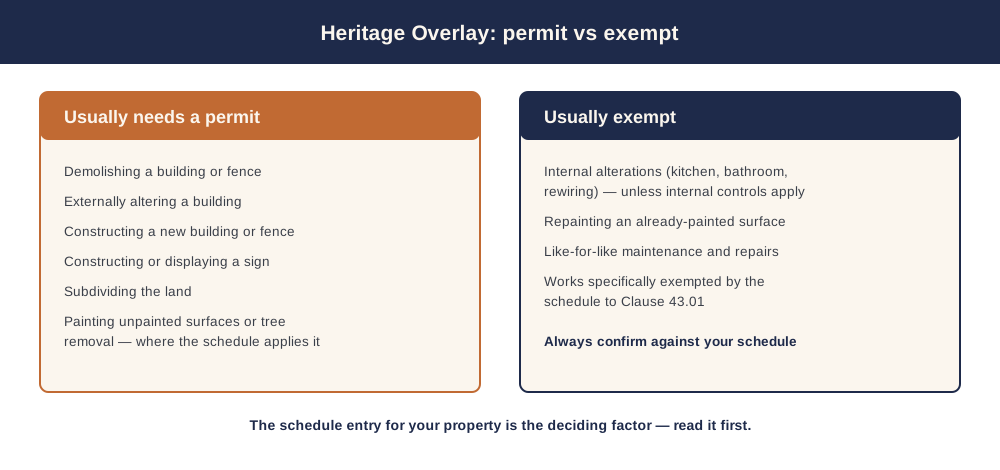
Figure 2: External change and demolition need a permit; internal work and like-for-like maintenance usually do not.
Does demolition always need a permit in a Heritage Overlay?
Demolition is the work the Heritage Overlay exists to control, so demolishing or removing a building or fence in a Heritage Overlay almost always needs a planning permit — including partial demolition and removing a contributory fence. There can be narrow exemptions written into a schedule, but you should never assume demolition is exempt. This applies to outbuildings and rear additions too, not just the main facade.
If you are planning demolition as part of a larger project, read it alongside do I need a planning permit for demolition in Victoria, because the Heritage Overlay trigger sits on top of any other demolition controls.
Can I use VicSmart for minor heritage works?
Often, yes. VicSmart is a streamlined assessment pathway with a 10 business-day statutory decision timeframe and set application requirements, and certain minor heritage works are eligible. Typical candidates include small alterations, minor buildings and works, fences, and some signs in a Heritage Overlay — provided they meet the VicSmart class and the requirements in your scheme.
Whether your job qualifies depends on the specific VicSmart classes and your overlay schedule, so confirm before you assume the fast track applies. You can read more about the pathway at VicSmart and in our guide to VicSmart vs a standard planning permit. On a VicSmart application you usually will not need a full town planning report; for a standard heritage assessment, a report that addresses the heritage significance makes a real difference.
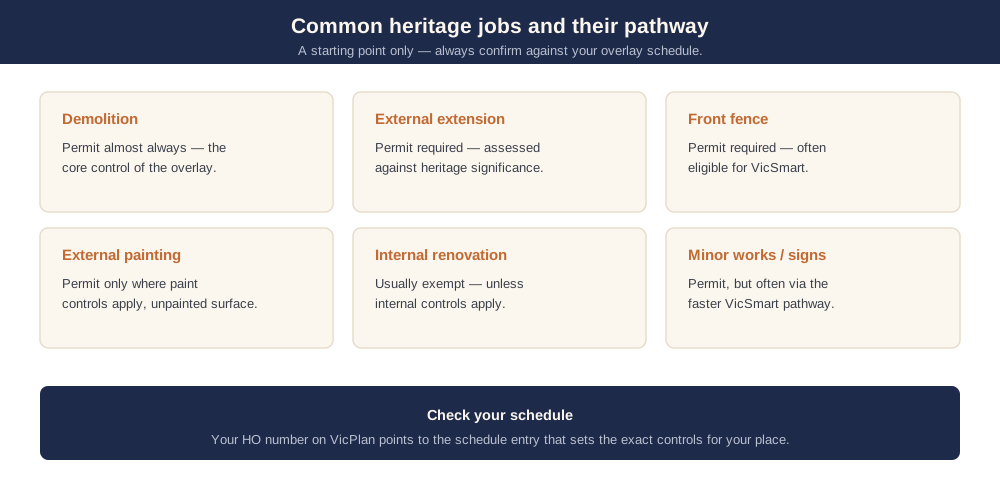
Figure 3: Common heritage jobs and the pathway each usually follows — always confirmed against your schedule.
Working in a Heritage Overlay? Make the application count
A Heritage Overlay application lives or dies on how well it addresses the heritage significance of the place. A town planning report that explains how your design respects the form, scale and materials of the heritage place — and addresses your overlay schedule directly — is far more likely to get through without a Request for Further Information. Hiring a town planner can take weeks. instantplanning builds the same council-ready report from current Victorian planning scheme data in minutes — you review it before you lodge. Start with the Heritage Overlay explained, read building in a Heritage Overlay, or just generate your report.
Frequently asked questions
Do I need a planning permit in a Heritage Overlay in Victoria?
Can I renovate the inside of a heritage-listed house without a permit?
Do I need a permit to demolish in a Heritage Overlay?
Do I need a permit to paint my heritage house?
Can minor heritage works be fast-tracked?
Ready to generate your report?
Skip the writing. Get a council-ready town planning report in 5 minutes.
Get your report