Key takeaways
- ✓Many single-dwelling extensions need no planning permit at all — an overlay is the most common reason one is triggered.
- ✓When a permit is needed, the council application fee is charged as a single dwelling and steps up by the cost of works.
- ✓The town planning report is a separate cost — a professional fee from a planner, or through instantplanning.
- ✓Total cost depends on whether a permit is even required, which turns on your overlays.
Permit Cost for a House Extension in Victoria
The permit cost for a house extension in Victoria depends first on whether you need a planning permit at all — many extensions don't, and an overlay is the most common reason one is triggered. When a permit is required, the cost is the council application fee (charged as a single dwelling, stepping up by the cost of works) plus the town planning report. Get the overlay question answered first, because it decides everything else.
Get a council-ready town planning report in 5 minutes — no town planner, no waiting.
Get your report →- ✓When an extension needs a planning permit, and when it doesn't
- ✓The council application fee tier for a single-dwelling extension
- ✓What the town planning report adds
- ✓A realistic total ballpark, hedged for your site
- ✓How to check your overlays before you spend a cent
The short answer
A house extension in Victoria often needs no planning permit — an overlay (heritage, bushfire, flood, neighbourhood character) is the usual trigger. When one is required, the council application fee is charged as a single dwelling and steps up by the cost of works, plus a town planning report.
The figure below shows what decides whether you pay anything at all.
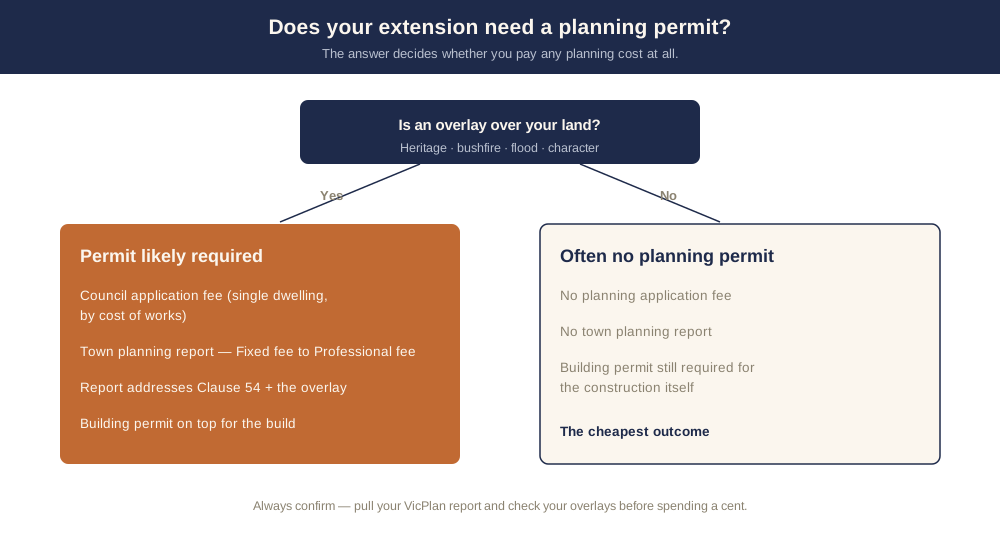
Figure 1: An overlay is the usual trigger. No overlay often means no planning permit — and no planning cost beyond a building permit.
So two identical extensions can cost very differently: one on a plain residential block may need no planning permit, while the same extension under a Heritage Overlay needs a permit, a fee and a report.
When an extension needs a planning permit
A single-dwelling extension in a standard residential zone is frequently permit-exempt for planning — you will still need a building permit for the construction, but the planning scheme often doesn't require its own approval. What changes the answer is almost always an overlay.
- ✓Heritage Overlay — works to a building in a heritage area usually need a permit
- ✓Bushfire Management Overlay — building and works are typically caught
- ✓Special Building Overlay or flood overlay — extensions can be captured
- ✓Neighbourhood Character or Design and Development Overlay — may require a permit for the addition
- ✓Significant Landscape Overlay — buildings and works can be triggered
If none of those applies, your extension may need no planning permit at all — meaning no application fee and no town planning report, just the building permit. That is why the overlay check is the first and most valuable thing you do. We go deeper in do I need a planning permit for a single-storey extension.
The council application fee tier
Spend 5 minutes, not 3 weeks
instantplanning generates a council-ready town planning report for Victorian permits. No town planner. No waiting.
Get your report →When a permit is required, an extension to a single house is charged in the single dwelling class under the Planning and Environment (Fees) Regulations 2016, and the fee steps up by the estimated cost of development (the cost of the works).
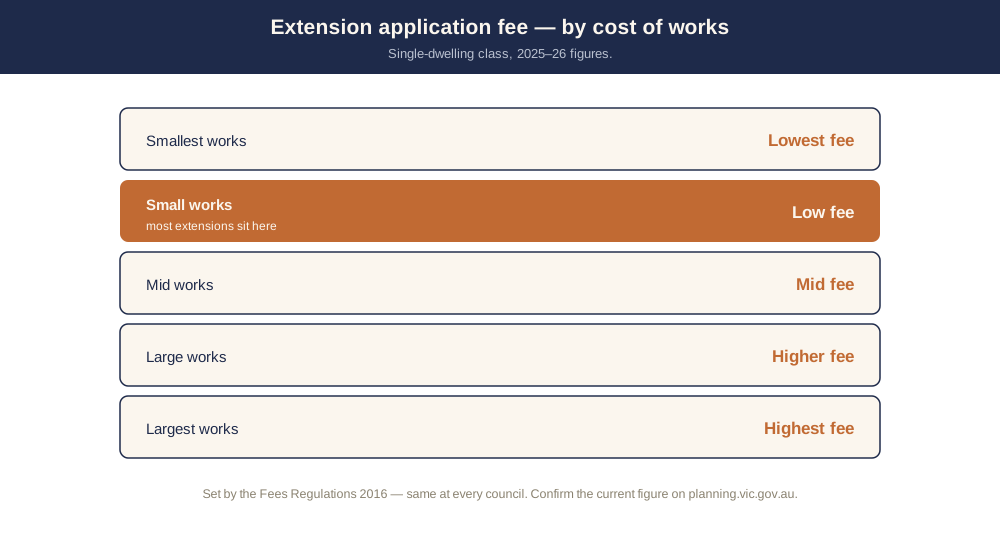
Figure 2: The single-dwelling fee steps up by the cost of works. Most extensions sit in the lower bands.
It rises in bands by the cost of works — most extensions sit in a modest band, climbing for higher-value works. Use the permit cost calculator for the current figure. This is a statutory fee, the same at every council, and separate from your report — we set out all the classes in council planning application fees in Victoria. Confirm the current figure on the official fees page, as fee units change each July.
The town planning report cost
The application fee gets the council to assess your extension; the town planning report makes the case for it. A single-dwelling extension is assessed against Clause 54 (ResCode for one dwelling), and where an overlay applies the report also addresses that overlay's requirements. A clean single-dwelling report is simpler than a dual occupancy, which is why extensions usually sit at the lower end of planner pricing.
Hiring a town planner can take weeks. instantplanning produces the same council-ready report from current scheme data — you review it before you lodge. We break the report side down in the town planning report cost guide.
A realistic total — hedged
There is no single figure, because the biggest variable is whether you need a permit at all. If your extension is exempt, the planning cost is effectively zero — just the building permit. If a permit is required, a typical mid-range extension combines a council fee (a mid-range single-dwelling band) and a report, landing most homeowners around the low-to-mid hundreds-to-thousands for the planning side, before plans and construction. An overlay that needs specialist input — a bushfire assessment, an arborist, a heritage response — adds to that.
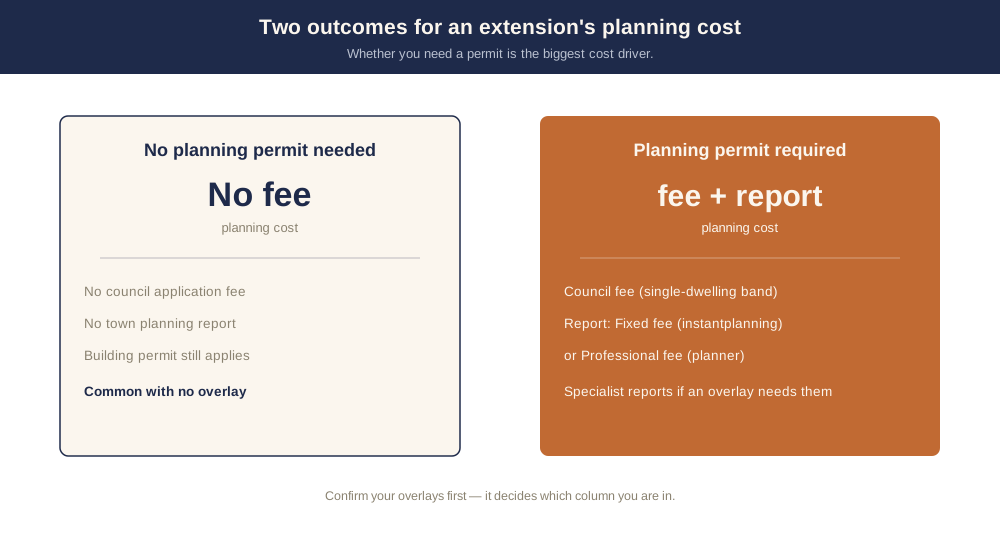
Figure 3: Two outcomes. No permit means no planning cost beyond a building permit; a permit means a fee plus a report.
The cheapest path is genuine: confirm your overlays first, and if a permit is needed, design to Clause 54 so the report has fewer variations to justify. We cover the broader picture in the planning permit cost guide.
Check your overlays first — then get the report right
The single most valuable thing you can do is pull your VicPlan report and check your overlays, because that decides whether you pay anything at all. If a permit is required, a complete town planning report keeps your extension off the Request for Further Information pile and the permit moving.
A town planner prepares your report for that report. instantplanning builds the same council-ready report from current Victorian planning scheme data in minutes — you review it before you lodge. Start by checking whether your extension needs a permit, read council planning application fees, or generate your report.
Frequently asked questions
How much does a planning permit cost for a house extension in Victoria?
Do I need a planning permit to extend my house?
How is the council application fee for an extension calculated?
How much is the town planning report for an extension?
What makes an extension permit cost more?
How do I find out if my extension needs a permit before spending money?
Ready to generate your report?
Skip the writing. Get a council-ready town planning report in 5 minutes.
Get your report