Key takeaways
- ✓A dwelling on 300 m² or more with no overlay may need no permit
- ✓A second storey triggers permits far more often
- ✓Common Clause 54 issues are overlooking, overshadowing and setbacks
- ✓A building permit is always required
- ✓Check overlays and zone height before designing
Do I Need a Permit for a Second-Storey Addition? VIC
Whether you need a planning permit for a second-storey addition in Victoria depends on your zone, any overlays over your land, and exactly how the new upper level sits against your boundaries and your neighbours. For many homes the dwelling itself is permit-exempt — but a second storey is far more likely to trip a trigger than a single-storey extension, so the answer is rarely a simple no.
Get a council-ready town planning report in 5 minutes — no town planner, no waiting.
Get your report →- ✓When a second-storey addition needs no planning permit
- ✓Why upstairs triggers a permit far more often than a ground-floor extension
- ✓The ResCode Clause 54 standards a second storey most commonly breaches
- ✓How the zone's maximum building height limits your design
- ✓Why a building permit is always required either way
The short answer
For a single dwelling on a lot of 300 square metres or more in a General Residential or Neighbourhood Residential Zone with no overlay, you usually need no planning permit for the dwelling itself — but a second storey commonly triggers one anyway through an overlay, a height limit, or a ResCode Clause 54 amenity breach. Always confirm with your council.
The plans you draw don't decide it; the planning scheme does. The flow below shows the three checks that turn a "no permit" answer into a "yes."
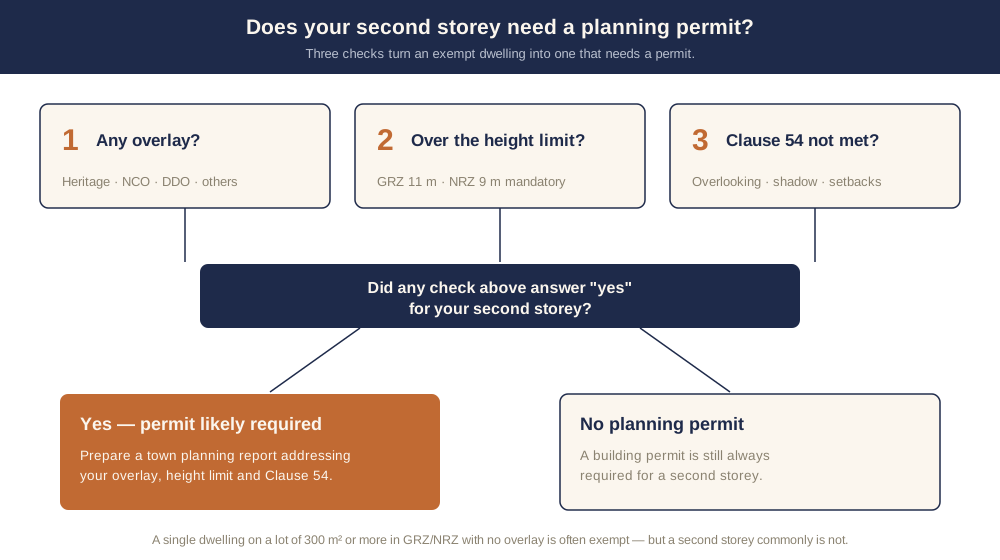
Figure 1: Three checks decide a second storey — any overlay, the zone's height limit, and whether ResCode Clause 54 is met.
When a second storey needs no planning permit
In the standard residential zones, the base rule is generous. For one dwelling on a lot of 300 square metres or more in a General Residential Zone (GRZ) or Neighbourhood Residential Zone (NRZ), with no overlay and no special schedule that changes the trigger, the Victoria Planning Provisions do not require a planning permit to construct or extend that single dwelling.
That means a straightforward second-storey addition on a typical block can, in principle, proceed without a planning permit — provided you still build within the standards through the building system. The catch is in the words "no overlay" and "no schedule trigger," and in the fact that going up tends to bump straight into the controls a single-storey addition never reaches.
- ✓One dwelling on the lot
- ✓Lot 300 square metres or more
- ✓A standard residential zone (GRZ or NRZ)
- ✓No overlay on the land
- ✓No schedule that lowers the trigger or changes the height
Every one of those lines has to hold. Miss one — most often the overlay line — and a permit is back on the table. Compare the rules for going out versus going up in do I need a planning permit for a single-storey extension in Victoria.
Why a second storey triggers a permit more often
Spend 5 minutes, not 3 weeks
instantplanning generates a council-ready town planning report for Victorian permits. No town planner. No waiting.
Get your report →A single-storey extension stays low, sits close to the existing footprint, and rarely casts new shadows or sees over a fence. A second storey does the opposite. The same project, taken upward, suddenly engages height limits, sightlines into neighbours' yards, and afternoon shadows — which is why the upper level is where permits, conditions and redesigns cluster.
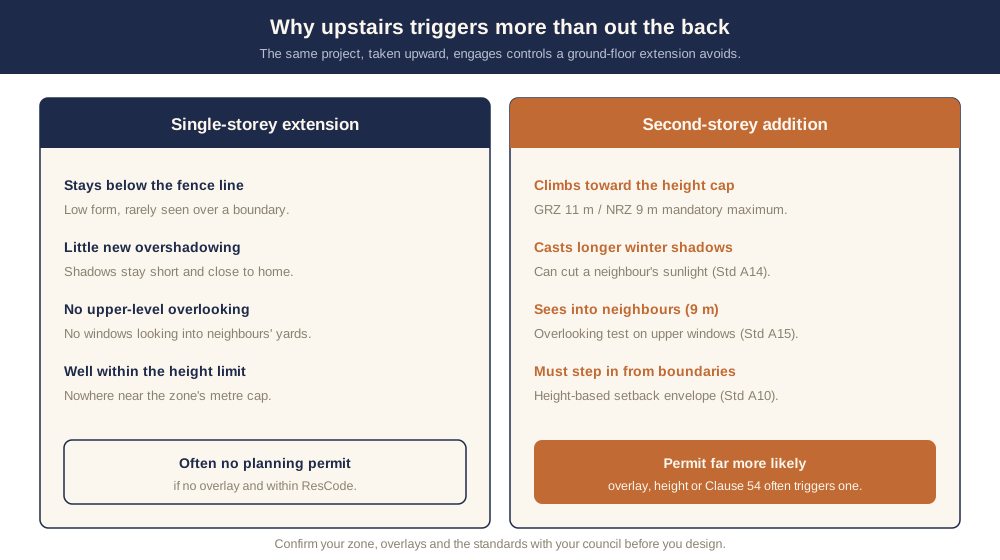
Figure 2: Going up engages height limits, overlooking and overshadowing that a ground-floor extension usually avoids.
The zone's maximum building height
Both standard zones cap how tall you can go. In the GRZ, a dwelling is limited to a mandatory maximum of 11 metres and 3 storeys. In the NRZ, the cap is tighter — a mandatory maximum of 9 metres and 2 storeys. On a genuinely sloping site (where the natural ground slopes more than 2.5 degrees across a cross-section wider than 8 metres), the height may rise by up to 1 metre — so 12 metres in the GRZ and 10 metres in the NRZ — but the storey count still applies. A second storey that needs a steeper roof or a raised floor can run up against these caps, and exceeding them needs a permit.
ResCode Clause 54 amenity
Even where the dwelling is permit-exempt, your design still has to meet the ResCode Clause 54 standards for one dwelling on a lot. A second storey is where these standards bite hardest, because the new windows and walls are now high enough to see and shade beyond your boundary. The standards that most commonly drive a redesign — or a permit, where a schedule makes Clause 54 a trigger — are set out below.
The Clause 54 standards a second storey breaches
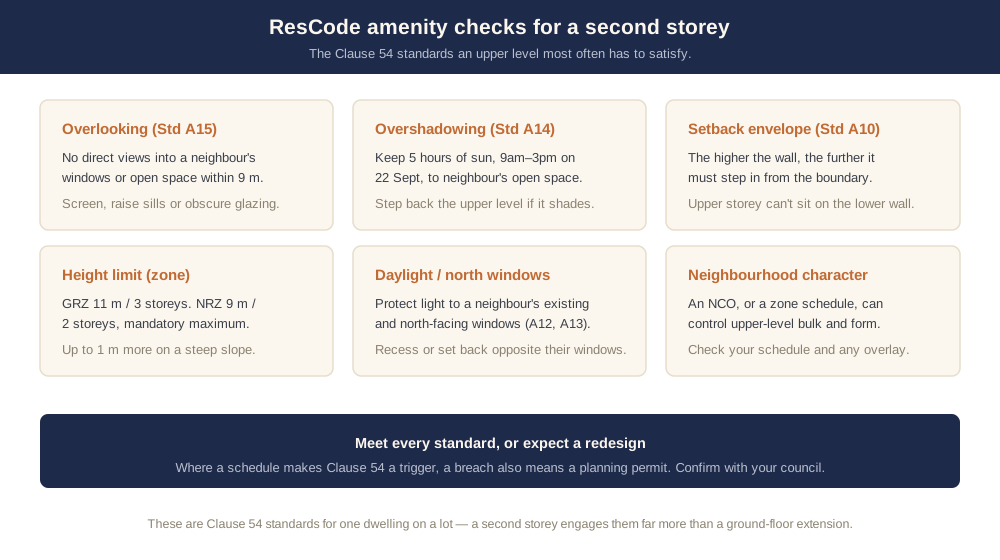
Figure 3: The Clause 54 amenity checks an upper level must satisfy — overlooking, overshadowing, the setback envelope, height, and character.
Overlooking (Standard A15). New upper-level habitable room windows, balconies or decks must avoid direct views into a neighbour's habitable room windows or secluded private open space within 9 metres, measured within a 45-degree angle at 1.7 metres above the floor. Upstairs windows are exactly the ones that catch this, so designers add sill heights, obscure glazing or fixed screens. We unpack the fixes in overlooking in Victoria.
Overshadowing (Standard A14). A neighbour's secluded private open space must keep at least 5 hours of sunlight between 9am and 3pm on 22 September (over at least 75 per cent of the space, or 40 square metres, whichever is less). A taller form to the north of a back yard can cut that, especially in winter.
Side and rear setbacks (Standard A10). Setbacks are measured from a height-based building envelope: the higher a wall climbs, the further it must step back from the boundary. Many additions simply stack the upper storey on the ground-floor wall line — which sits inside the envelope and fails the standard. The upper level usually has to step in.
A second storey can also affect daylight to existing windows (Standard A12) and existing north-facing windows (Standard A13) on the adjoining lot. The fuller picture is in do I need a planning permit in Victoria.
Overlays — the most common trigger of all
If any overlay sits on your land, assume the second storey needs a permit and read that overlay's rules. The ones that most often catch upper-level work are the Heritage Overlay (HO), where alterations and extensions to a heritage place need a permit; the Neighbourhood Character Overlay (NCO), which captures buildings and works including new storeys; and the Design and Development Overlay (DDO), which sets height and built-form controls and requires a permit to construct a building or carry out works. Each overlay's schedule sets the exact trigger, so check yours.
Don't forget the building permit
Separately from any planning permit, a building permit is always required for a second-storey addition. The Building Act treats all building work as needing a permit unless a narrow exemption applies, and that exemption is only available where the work does not increase the building's floor area or height — which a second storey always does. Where a planning permit is also required, the building permit can't be issued until the planning permit is in hand.
If you need a permit — what's next
If your second storey triggers a permit, your application is far stronger — and far less likely to be returned or hit a Request for Further Information — when it comes with a town planning report that addresses your zone, your overlays, the height limit and the relevant ResCode Clause 54 standards.
Hiring a town planner can take weeks. instantplanning builds the same council-ready report from current Victorian planning scheme data in minutes — you review it before you lodge. Or just generate your report.
Frequently asked questions
Do I need a planning permit for a second-storey addition in Victoria?
Why does a second storey need a permit more often than a single-storey extension?
How tall can a second storey be in Victoria?
What is the overlooking rule for an upper-storey window?
Do I still need a building permit for a second storey?
Does a Heritage Overlay affect a second storey?
Ready to generate your report?
Skip the writing. Get a council-ready town planning report in 5 minutes.
Get your report