Key takeaways
- ✓Two dwellings on one lot almost always needs a permit
- ✓Assessed against ResCode Clause 55, including garden area
- ✓Subdividing the dwellings is a separate permit via SPEAR
- ✓Some simple proposals can now use VicSmart
Do I Need a Permit for a Dual Occupancy? (VIC)
Whether you need a planning permit for a dual occupancy in Victoria is one of the easier planning questions to answer: in almost every case, yes. Building two dwellings on one lot in a residential zone is a development the planning scheme wants assessed, so a planning permit is required and the proposal is measured against ResCode standards under Clause 55.
Get a council-ready town planning report in 5 minutes — no town planner, no waiting.
Get your report →- ✓Why two dwellings on a lot almost always needs a planning permit
- ✓How Clause 55 and the minimum garden area requirement apply
- ✓How a dual occupancy differs from a small second dwelling (granny flat)
- ✓Whether subdivision is a separate approval
- ✓When the faster VicSmart pathway can apply
The short answer
In Victoria you almost always need a planning permit to build a dual occupancy — two dwellings on a single lot — in the residential zones. The development is assessed against the ResCode standards in Clause 55, including the minimum garden area requirement. Subdividing the dwellings onto separate titles is a separate planning permit. Always confirm with your council.
Unlike a single house, which can be permit-exempt in a standard residential zone, putting a second dwelling alongside the first is exactly the kind of development the scheme reserves for assessment. The diagram below shows the typical path.
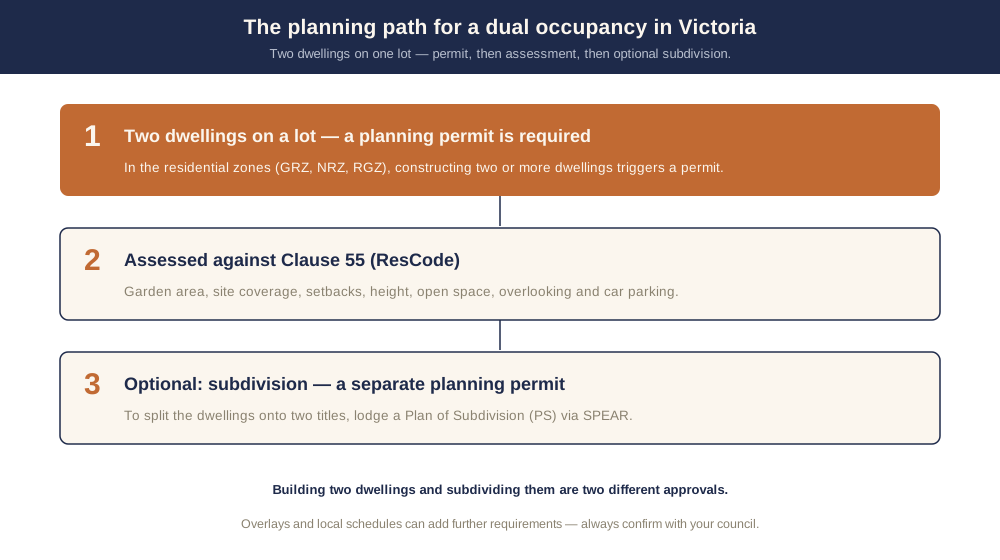
Figure 1: A dual occupancy needs a planning permit assessed against Clause 55 — with subdivision a separate step that follows.
Why a dual occupancy almost always needs a permit
The residential zones — the General Residential Zone (GRZ), Neighbourhood Residential Zone (NRZ) and Residential Growth Zone (RGZ) — all require a planning permit to construct two or more dwellings on a lot. That is the defining trigger for a dual occupancy. A single dwelling on a lot over 300 square metres in these zones is generally assessed under Clause 54 (and is often permit-exempt), but the moment you propose a second dwelling, you cross into Clause 55 territory and a permit is needed.
This is a development assessment, not a tick-box exercise. The council — your responsible authority under the Planning and Environment Act 1987 — weighs the design against neighbourhood character, amenity for neighbours, and the relevant standards. That is why a well-prepared town planning report matters so much for a dual occupancy.
How Clause 55 (ResCode) applies
Spend 5 minutes, not 3 weeks
instantplanning generates a council-ready town planning report for Victorian permits. No town planner. No waiting.
Get your report →A dual occupancy is assessed against Clause 55 of the planning scheme — the part of ResCode that covers two or more dwellings on a lot and residential buildings up to a few storeys. From early 2025, Clause 55 was reshaped into what the scheme calls the Townhouse and Low-Rise Code, with a set of deemed-to-comply standards commencing on 31 March 2025. The reforms aim to make compliant two-dwelling proposals quicker to assess, but the substance — the objectives and standards your design must address — remains.
Clause 55 covers a wide range of standards your two dwellings must respond to.

Figure 2: A snapshot of the Clause 55 standards a dual occupancy is assessed against — your scheme sets the exact figures.
One standard catches almost every dual occupancy: the minimum garden area requirement. In the NRZ and GRZ, a set percentage of the lot must be set aside as garden area — broadly 25% for lots over 400 up to 500 square metres, 30% for lots over 500 up to 650 square metres, and 35% for lots over 650 square metres. Lots of 400 square metres or less are generally not caught by the building-stage requirement. Because the garden area eats into the footprint available for two dwellings, it is one of the first things to test on your site.
Is there a minimum lot size for a dual occupancy?
There is no single statewide minimum lot size for a dual occupancy in Victoria. Site suitability depends on your zone, any overlays, the Clause 55 standards (especially garden area) and any local schedule to the zone. A smaller lot is not automatically ruled out, but the garden area, setback and private open space standards effectively set a practical floor on what two dwellings can fit. The honest answer is that it is site-specific — your planning scheme and a check of the standards decide it, so confirm the detail with your council.
Dual occupancy vs a granny flat (small second dwelling)
People often confuse a dual occupancy with a small second dwelling (what most call a granny flat). They are different planning animals, and the difference decides whether you need a permit at all.
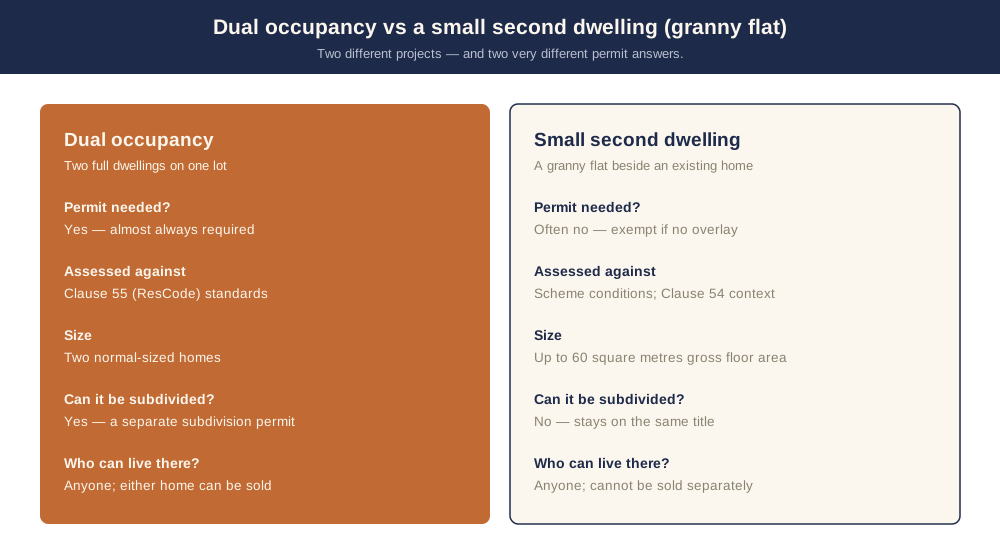
Figure 3: A dual occupancy is two full dwellings needing a permit; a small second dwelling up to 60 square metres can be exempt.
A small second dwelling of up to 60 square metres can now be built in most residential and rural zones without a planning permit, provided no overlay applies. A dual occupancy is two stand-alone or attached dwellings of normal size — it needs a permit, is assessed under Clause 55, and can later be subdivided onto separate titles. If your second home is small, secondary and won't be sold separately, read do I need a planning permit for a granny flat or DPU in Victoria first. If you are building two genuine dwellings — or want to sell one — you are in dual occupancy territory, which sits right alongside townhouse development.
Is subdivision a separate approval?
Yes. The permit to build two dwellings and the permit to subdivide them onto separate titles are two different applications. Many people get the development permit first, build, then apply to subdivide — though the two can be combined. A subdivision is assessed against its own standards and the resulting Plan of Subdivision (PS) is processed through SPEAR, the state's online subdivision system. So budget for two approvals if your goal is to end up with two separately saleable titles. For the subdivision step itself, see do I need a planning permit for a two-lot subdivision in Victoria.
Can a dual occupancy use VicSmart?
It now can, in some cases. From 16 October 2025, the scheme allows certain straightforward two-dwelling proposals to be assessed under VicSmart — the fast-track pathway with a 10 business-day statutory decision timeframe — in residential zones other than the Low Density Residential Zone. Eligibility is strict: the proposal must meet the nominated Clause 55 standards, avoid certain overlays and constraints, and every permit trigger must fall within a VicSmart class. Many dual occupancies will still go through a standard assessment, but a clean, compliant proposal may qualify for the faster track. Check whether your project fits in VicSmart vs a standard planning permit, and confirm eligibility with your council.
If you do need a permit — what's next
Because a dual occupancy is a full Clause 55 assessment, your application is far stronger — and far less likely to be returned or hit a Request for Further Information — when it's accompanied by a town planning report that addresses your zone, any overlays, the garden area requirement and the relevant Clause 55 standards.
Hiring a town planner can take weeks. instantplanning builds the same council-ready report from current Victorian planning scheme data in minutes — you review it before you lodge. Compare your options against a single planning permit, or just generate your report.
Frequently asked questions
Do I need a planning permit for a dual occupancy in Victoria?
What standards is a dual occupancy assessed against?
Is there a minimum lot size for a dual occupancy in Victoria?
Do I need a separate permit to subdivide a dual occupancy?
How is a dual occupancy different from a granny flat?
Can a dual occupancy use the VicSmart fast track?
Ready to generate your report?
Skip the writing. Get a council-ready town planning report in 5 minutes.
Get your report