Key takeaways
- ✓A second dwelling up to 60 m² can now be permit-exempt
- ✓The reform replaced the old dependent person's unit
- ✓An overlay can still trigger a permit
- ✓Building permit required; cannot be subdivided or sold
Do I Need a Permit for a Granny Flat or DPU? VIC
Whether you need a planning permit for a granny flat in Victoria has changed dramatically. A reform to the Victoria Planning Provisions means a small second dwelling of up to 60 square metres can now be built in most residential and rural zones without a planning permit — provided no overlay or other control applies. The old dependent person's unit (DPU) rules that used to govern these structures have been replaced.
Get a council-ready town planning report in 5 minutes — no town planner, no waiting.
Get your report →- ✓What the small second dwelling reform changed, and when
- ✓The 60-square-metre cap and the conditions you must meet
- ✓When an overlay still forces you back into a planning permit
- ✓How a small second dwelling differs from the old dependent person's unit
- ✓How to check your own property before you build
The short answer
In Victoria, a small second dwelling of up to 60 square metres no longer needs a planning permit in most residential and rural zones — as long as no overlay or special control applies and it meets the scheme's conditions. A building permit is always required. Overlays such as heritage, bushfire or flood can still trigger a planning permit.
The change came through Amendment VC253, which took effect on 14 December 2023. It is what most people mean when they ask about a "granny flat" today. Always confirm the controls on your specific lot before you rely on the exemption.
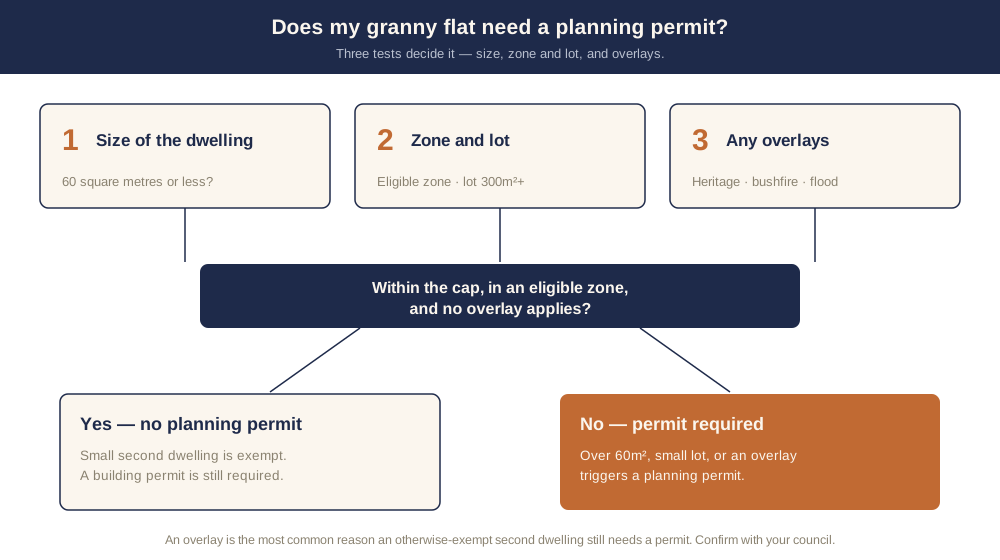
Figure 1: Size, zone and overlays together decide whether your small second dwelling is exempt or needs a planning permit.
What changed: the small second dwelling reform
For years, a granny flat in Victoria was usually approved as a dependent person's unit — a movable building for someone dependent on a resident of the main home. That concept has now been retired. Following the Victorian Government's Housing Statement, Amendment VC253 introduced a new land use called a small second dwelling and removed the dependent person's unit definition from the planning scheme.
The headline effect is that a self-contained second home can be built on the same lot as an existing dwelling without a planning permit in most cases. It can be lived in by anyone — a family member, a tenant, or an unrelated person — rather than being limited to a dependent.
The 60-square-metre cap and the conditions
Spend 5 minutes, not 3 weeks
instantplanning generates a council-ready town planning report for Victorian permits. No town planner. No waiting.
Get your report →To rely on the no-permit pathway, your second dwelling has to meet the definition and the conditions in the scheme. A small second dwelling is a building with a gross floor area of 60 square metres or less, on the same lot as an existing dwelling, used as a self-contained residence — meaning it must include a kitchen sink and food preparation facilities, a bath or shower, and a toilet and wash basin.
- ✓60 square metres gross floor area or less
- ✓On the same lot as an existing dwelling
- ✓Self-contained — kitchen, bathroom and toilet
- ✓Not connected to reticulated natural gas
- ✓No car parking space is required
- ✓Cannot be subdivided or sold separately from the main home
- ✓Meets the scheme's siting, design and amenity requirements
There is also a lot-size threshold: on a lot of less than 300 square metres in a residential zone, a small second dwelling generally still requires a planning permit, often on the streamlined VicSmart pathway. On larger lots in the eligible zones, the exemption typically applies. The 60-square-metre figure is measured as gross floor area — from the outside of external walls — so plan your design with the wall thickness counted in, not just the internal living space.
Because the exact siting and amenity standards (and the lot-size and zone detail) are set out in your planning scheme, you should always confirm the specifics with your council before committing.
Small second dwelling vs needs-a-permit
The reform widened the no-permit pathway, but it did not remove planning controls entirely. Whether your project lands in the exempt column or the permit column comes down to size, zone and — most often — overlays.
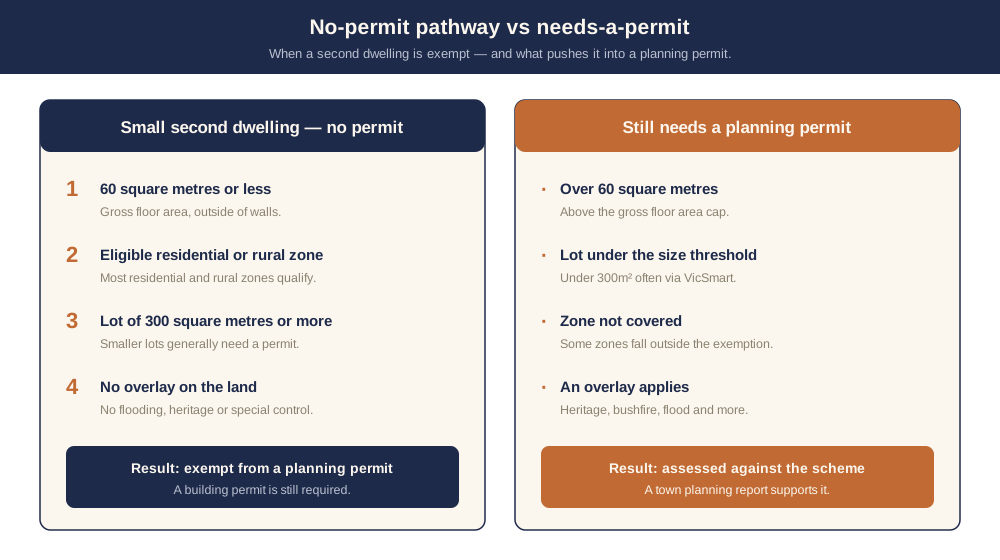
Figure 2: The exempt pathway on the left; the triggers that push a second dwelling into a planning permit on the right.
A second dwelling typically still needs a planning permit when it exceeds 60 square metres, sits on a lot below the size threshold, is in a zone the exemption doesn't cover, or — most commonly — when an overlay applies to the land. In those cases you are back to a standard assessment against the scheme, where a town planning report addressing your zone, overlays and the relevant ResCode standards (Clause 54 and Clause 55) makes a real difference.
When an overlay still requires a permit
This is the part that catches people out. The small second dwelling exemption only applies "where there are no flooding, environmental or other special planning controls." An overlay sits on top of your zone and adds its own permit triggers — and an overlay can require a planning permit even for a perfectly sized 60-square-metre second dwelling.
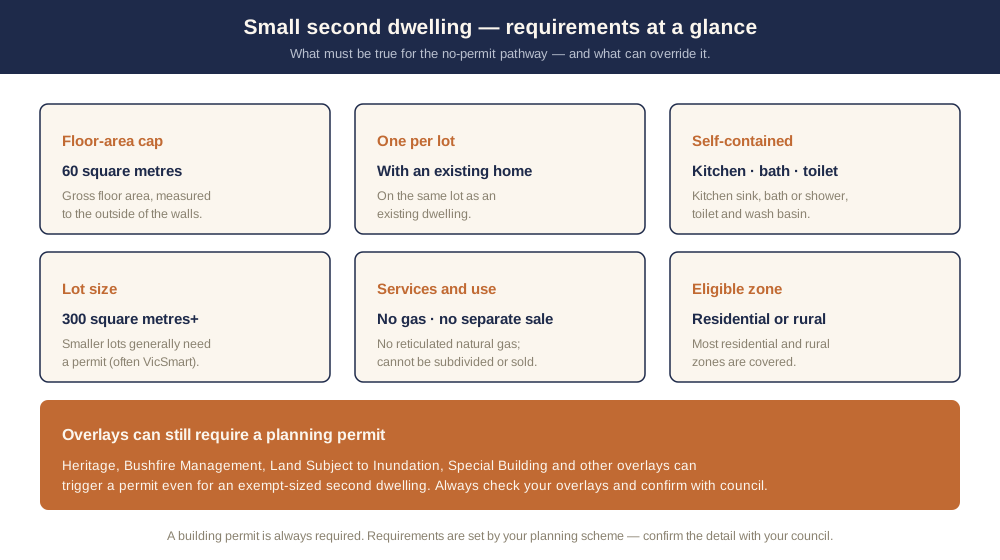
Figure 3: The requirements at a glance — and the controls that can override the no-permit pathway.
The overlays that most often re-trigger a permit are the Heritage Overlay, the Bushfire Management Overlay, and flood-related overlays such as the Land Subject to Inundation Overlay and the Special Building Overlay. Vegetation and significant landscape overlays can also apply. If any of these is on your land, assume a planning permit is likely and read that overlay's requirements — or get it checked. We cover the overlay triggers more broadly in what triggers a planning permit in Victoria.
What happened to the dependent person's unit
The dependent person's unit land-use term was removed from the Victoria Planning Provisions by Amendment VC253, with transitional arrangements that have now ended. Existing, lawful dependent person's units remain lawful — you don't have to change anything about a unit already in place. But for new projects, the small second dwelling is the pathway you'll use. If you have an older dependent person's unit, it may be possible to convert it to a small second dwelling where it meets all the requirements; confirm that with your council.
A small second dwelling differs from the old dependent person's unit in two key ways: it is a fixed building (not necessarily movable), and it is not limited to a dependent person — anyone can live in it or rent it.
How to check your own property
You can confirm the controls on your land for free:
- ✓Look up your address on VicPlan or generate a planning property report — it lists your zone and every overlay.
- ✓Note your zone and check it is one where the small second dwelling exemption applies, and confirm your lot size.
- ✓Check for any overlays. If one applies, assume a planning permit may be required and read that overlay.
If you do need a permit — what's next
If an overlay or other trigger means your granny flat needs a planning permit, your application is far stronger — and far less likely to hit a Request for Further Information — when it's accompanied by a town planning report that addresses your zone, overlays and the relevant ResCode standards.
Hiring a town planner can take weeks. instantplanning builds the same council-ready report from current Victorian planning scheme data in minutes — you review it before you lodge. You can also compare this project with a dual occupancy, or just generate your report.
Frequently asked questions
Do I need a planning permit for a granny flat in Victoria?
How big can a granny flat be without a planning permit in Victoria?
Is a dependent person's unit still allowed in Victoria?
Do I still need a building permit for a small second dwelling?
Can I rent out or sell a small second dwelling?
What if my lot is in a heritage or bushfire overlay?
Ready to generate your report?
Skip the writing. Get a council-ready town planning report in 5 minutes.
Get your report