Key takeaways
- ✓The Township Zone (Clause 32.05) is the all-in-one zone for small towns, mixing homes with shops, light industry and community uses on the same streets.
- ✓Using land for a single dwelling needs no permit for use, but building two or more dwellings, or most commercial uses, requires a planning permit.
- ✓There is no mandatory garden area and no fixed default height — built form is shaped by the zone schedule, overlays and neighbourhood character policy.
- ✓Always confirm your exact controls on VicPlan, because each council's Township Zone schedule can vary the rules.
Township Zone (TZ) Explained — Victoria
The Township Zone is the Victorian planning zone built for small towns — the kind of place where the main street has houses, a general store, a cafe, a mechanic and a community hall all within a block of one another. Sitting at Clause 32.05 of the Victoria Planning Provisions, it deliberately rolls residential, commercial, light-industrial and community uses into a single, flexible zone.
Get a council-ready town planning report in 5 minutes — no town planner, no waiting.
Get your report →- ✓What the Township Zone is for and where it applies
- ✓What you can do without a planning permit, and what triggers one
- ✓Which uses are prohibited
- ✓How height, density and garden-area rules work in the TZ
- ✓How to confirm the exact controls on your own property
The short answer
The Township Zone (Clause 32.05) provides for residential development plus a range of commercial, industrial and community uses in small towns, usually outside metropolitan Melbourne. Using land for a single dwelling needs no permit for use, but building two or more dwellings — or running most businesses — requires a planning permit, shaped by the zone schedule and local character policy.
It is essentially the small-town counterpart to having separate residential, commercial and industrial zones. Because everything shares one zone, the controls work as a layered table, shown below.
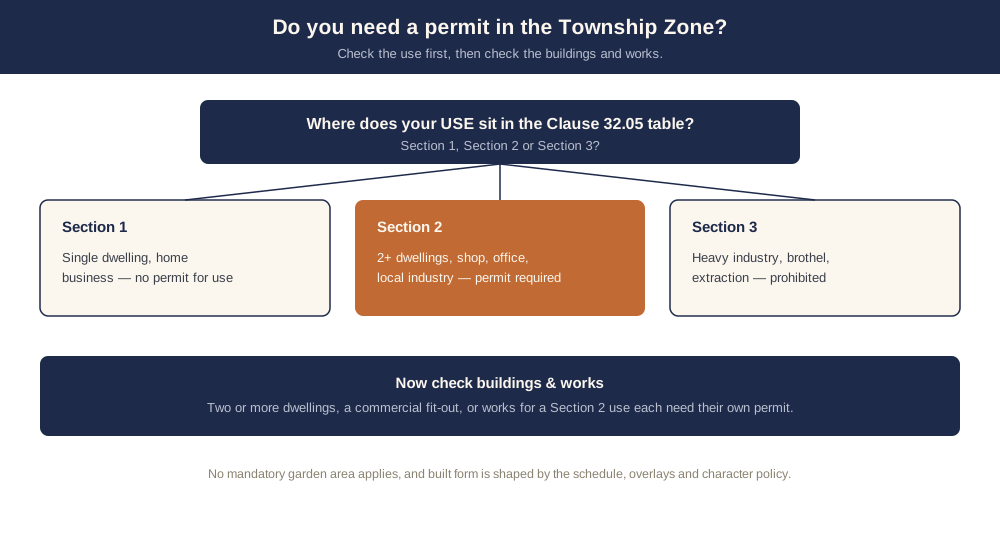
Figure 1: In the TZ, the use sits in one of three sections, and most buildings and works need their own permit on top.
What the Township Zone is for
The purpose of Clause 32.05 is to provide for residential development and a range of commercial, industrial and other uses in small towns, to encourage development that respects neighbourhood character, and to allow educational, recreational, religious, community and other non-residential uses to serve local needs. It is applied to towns that lack a formal split between separate residential, commercial and industrial precincts — so one zone has to do the work of several.
What you can do without a planning permit
Spend 5 minutes, not 3 weeks
instantplanning generates a council-ready town planning report for Victorian permits. No town planner. No waiting.
Get your report →Some uses sit in Section 1 of the zone table, meaning no permit is required for the use itself, provided the conditions are met.
- ✓Using land for a single dwelling (a house)
- ✓A home-based business within the statewide limits
- ✓A dependent person's unit, where it is the only one on the lot
- ✓Minor utility installation and informal outdoor recreation
As always in Victoria, "no permit for the use" does not mean "no permit at all." You can live in a single dwelling without a use permit, but building works can still need one — and you may also need a building permit for the construction itself. See do I need a planning permit in Victoria for how the two approvals differ.
What needs a planning permit in the TZ
Most things beyond living in one existing house fall into Section 2 — permit required. This is what gives a township its shops, services and extra homes.
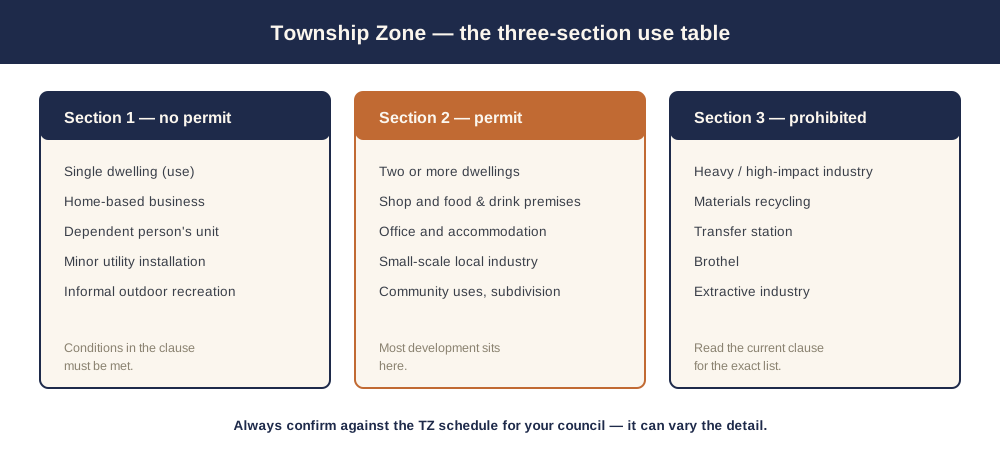
Figure 2: The three-section use table — Section 1 (no permit), Section 2 (permit required) and Section 3 (prohibited).
A planning permit is commonly required to:
- ✓Build two or more dwellings on a lot, or extend a dwelling where two or more already exist
- ✓Construct a dwelling where at least one dwelling already exists on the lot
- ✓Use land for a shop, food and drink premises, office or other commercial use
- ✓Run a small-scale local industry that is not prohibited
- ✓Build or fit out a community, educational or recreational facility
- ✓Subdivide land
A development of two or more dwellings must meet the ResCode standards at Clause 55. If you are thinking about units or a second dwelling on a township block, read what is ResCode in Victoria alongside this guide.
What's prohibited in the Township Zone
The Township Zone follows the standard pattern of excluding higher-impact and incompatible uses through Section 3. Consistent with Victoria's other residential-family zones, the prohibited list typically captures uses such as a brothel, materials recycling and a transfer station, along with heavy industry and extractive uses that would overwhelm a small town. Because the exact list is set in the clause, always read the current ordinance rather than assuming.
Height, density and garden area
Two features catch people out in the Township Zone.
Unlike the General Residential and Neighbourhood Residential zones, the Township Zone has no mandatory minimum garden area. And the parent clause sets no fixed height number. Built form is instead guided by any schedule to the zone (which can set local setbacks and character objectives), any overlays over your land, and the council's neighbourhood character policy. Where a town wants genuinely higher-scale housing, the state guidance points councils toward other zones rather than the TZ.
That makes the schedule, overlays and local policy the real story. Two township blocks in different towns can have very different expectations. Never assume; check.
How the TZ compares to nearby zones
It helps to see where the Township Zone sits relative to the suburban residential and mixed-use zones.
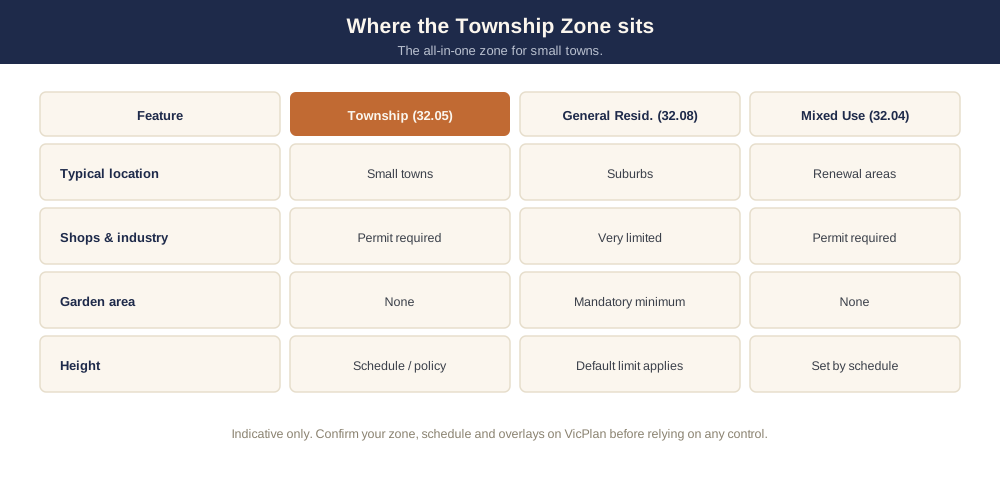
Figure 3: Where the Township Zone sits between a suburban residential zone and a mixed-use zone.
If your land is in a larger town centre geared to shops and apartments, you may instead be in the Mixed Use Zone or Commercial 1 Zone. If you are unsure which scheme even applies to your town, start with how to find your planning scheme in Victoria.
How to check the controls on your own property
You can confirm your zone and its schedule for free:
- ✓Look up your address on VicPlan or generate a planning property report — it lists your zone (e.g. TZ) and every overlay.
- ✓Note the TZ schedule number (for example TZ1) and any overlays.
- ✓Read what the schedule and the planning scheme say about setbacks, character and your proposed use — or have it done for you.
If your project needs a permit — what's next
Because most township development needs a permit, a well-prepared application matters. A proposal lodged with a town planning report that addresses Clause 32.05, the relevant schedule, your overlays and the ResCode standards is far less likely to be returned or hit a Request for Further Information.
Hiring a town planner can take weeks. instantplanning builds the same council-ready report from current Victorian planning scheme data in minutes — you review it before you lodge. When you are ready, generate your report.
Frequently asked questions
What is the Township Zone in Victoria?
Can you build a house in a Township Zone?
Can you run a business in a Township Zone?
What is the height limit in the Township Zone?
Is there a garden-area requirement in the Township Zone?
How is the Township Zone different from a residential zone?
Ready to generate your report?
Skip the writing. Get a council-ready town planning report in 5 minutes.
Get your report