Key takeaways
- ✓The Commercial 1 Zone (Clause 34.01) is Victoria's main zone for shopping strips and activity centres, combining the former Business 1, 2 and 5 zones.
- ✓Many retail, office and hospitality uses are allowed without a permit if they meet conditions such as a floor-area cap in the schedule.
- ✓Residential use is supported — apartments and dwellings are contemplated at densities that suit the centre — but the buildings and works need a permit.
- ✓Always confirm the C1Z schedule and overlays on VicPlan, because shop and office floor-area limits and heights vary by site.
Commercial 1 Zone (C1Z) Explained — Victoria
The Commercial 1 Zone is the workhorse of Victorian retail and commercial planning — the zone behind almost every shopping strip, suburban activity centre and town high street in the state. Sitting at Clause 34.01 of the Victoria Planning Provisions, it brings together the former Business 1, 2 and 5 zones and is designed for vibrant, mixed commercial centres that can also include homes.
Get a council-ready town planning report in 5 minutes — no town planner, no waiting.
Get your report →- ✓What the Commercial 1 Zone is for and where it applies
- ✓What you can do without a planning permit, and what triggers one
- ✓Whether you can live in the C1Z
- ✓How floor-area caps and height controls work
- ✓How to confirm the exact controls on your own property
The short answer
The Commercial 1 Zone (Clause 34.01) is Victoria's main retail and commercial zone, created to deliver vibrant mixed-use centres for retail, office, business, entertainment and community uses, plus residential at densities suited to the centre. Many shop, office and hospitality uses are allowed without a permit if they meet conditions; larger development and most buildings and works need one.
Because the zone bundles together so many uses, the controls turn on conditions — frontage limits, floor-area caps and the zone schedule — rather than a simple yes or no. The structure is shown below.
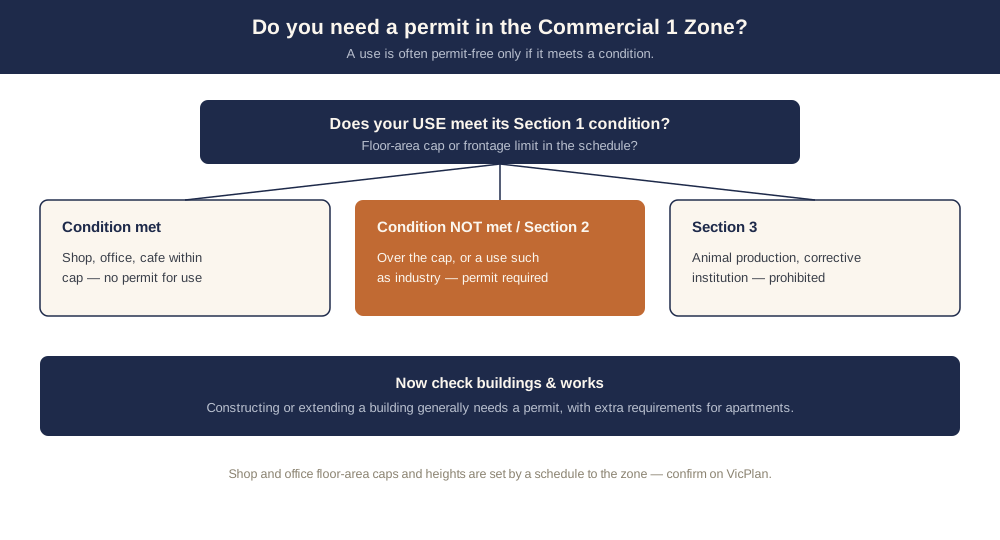
Figure 1: In the C1Z, a use is often permit-free only if it meets a condition such as a floor-area cap; buildings and works generally need their own permit.
What the Commercial 1 Zone is for
The purpose of Clause 34.01 is to create vibrant mixed-use commercial centres for retail, office, business, entertainment and community uses, and to provide for residential uses at densities complementary to the role and scale of the commercial centre. On the planning scheme map it may still appear as B1Z, B2Z or B5Z in older mapping, because the C1Z consolidated those former Business zones into one.
What you can do without a planning permit
Spend 5 minutes, not 3 weeks
instantplanning generates a council-ready town planning report for Victorian permits. No town planner. No waiting.
Get your report →A notable feature of the C1Z is how many uses sit in Section 1 — no permit required — provided the stated conditions are met.
- ✓A shop, where the leasable floor area stays within any cap in the zone schedule
- ✓An office, within any floor-area cap in the schedule
- ✓Food and drink premises such as a cafe or restaurant, within the conditions
- ✓Many community and service uses — child care, education centre, place of worship within a floor limit
- ✓Accommodation, where any ground-floor frontage stays within the stated limit
The key word is conditions. A shop is permit-free only up to the floor-area cap in the schedule; go beyond it, and a permit is required. This is why a change of use into an existing shopfront can sometimes proceed without a planning permit — and sometimes cannot.
What needs a planning permit in the C1Z
Anything that fails a Section 1 condition, sits in Section 2, or involves building work generally needs a permit.
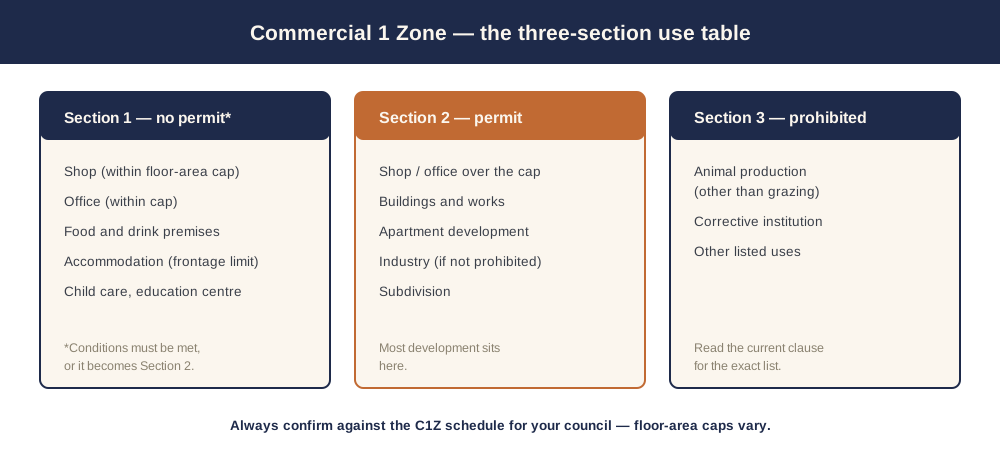
Figure 2: The three-section use table — Section 1 (no permit, with conditions), Section 2 (permit required) and Section 3 (prohibited).
A planning permit is commonly required to:
- ✓Build or extend a building, or carry out works (with limited exemptions)
- ✓Run a shop or office above the floor-area cap in the schedule
- ✓Develop apartments or dwellings — the use can be permit-free but the buildings and works need a permit
- ✓Operate an industry that is not prohibited and not otherwise in Section 1
- ✓Subdivide land
Apartment developments carry extra requirements: an application to construct or extend an apartment development must be accompanied by an urban context report and design response under the apartment standards. If your project is a hospitality fit-out, also read do I need a planning permit for food premises in Victoria.
What's prohibited in the Commercial 1 Zone
A short Section 3 list cannot be approved at all:
- ✓Animal production (other than grazing animal production)
- ✓Corrective institution
- ✓Other uses expressly listed as prohibited in the clause
Heavy and rural-style uses sit outside the zone's purpose, so the prohibited list is short but firm. As always, read the current ordinance for the exact list.
Can you live in the Commercial 1 Zone?
Yes — and this surprises people. Residential use is built into the zone's purpose.
Using land for accommodation (including dwellings and apartments) can even be permit-free as a use, provided conditions such as a ground-floor frontage limit are met — the idea being that the ground floor stays active for shops while homes sit above. The buildings and works for that housing, however, will need a permit and must meet the relevant apartment or dwelling design standards. If your site is more housing-led than retail-led, compare it with the Mixed Use Zone, which is geared more toward living.
Floor-area caps, height and the schedule
Outside metropolitan Melbourne, a schedule to the C1Z can set the maximum leasable floor area for shops and the maximum leasable floor area for offices — the very caps that decide whether a use is permit-free. Heights and built form are then shaped by the schedule and by any overlays, such as a Design and Development Overlay, rather than a single statewide figure.
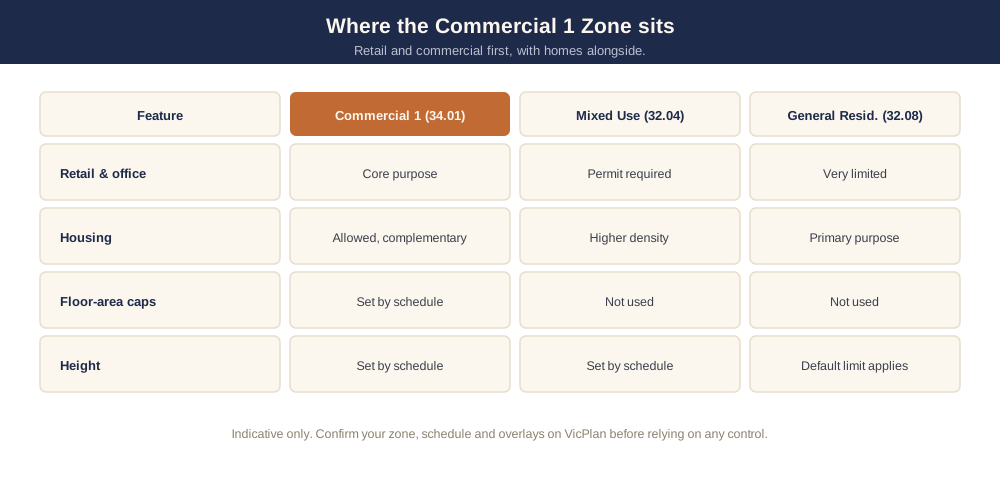
Figure 3: Where the Commercial 1 Zone sits relative to the mixed-use and residential zones.
That makes the schedule and overlays the real story in the C1Z. Two C1Z sites in different councils can carry very different floor-area caps and heights. Never assume; check.
How to check the controls on your own property
You can confirm your zone and its schedule for free:
- ✓Look up your address on VicPlan or generate a planning property report — it lists your zone (e.g. C1Z) and every overlay.
- ✓Note the C1Z schedule number and any floor-area caps, plus overlays such as a Design and Development Overlay.
- ✓Read what the schedule and the planning scheme say about your proposed use, floor area and height — or have it done for you.
If your project needs a permit — what's next
Because most C1Z development and many uses need a permit, a well-prepared application matters. A proposal lodged with a town planning report that addresses Clause 34.01, the relevant schedule, floor-area caps, your overlays and any apartment standards is far less likely to be returned or hit a Request for Further Information.
Hiring a town planner can take weeks. instantplanning builds the same council-ready report from current Victorian planning scheme data in minutes — you review it before you lodge. When you are ready, generate your report.
Frequently asked questions
What is the Commercial 1 Zone in Victoria?
Can you build apartments in a Commercial 1 Zone?
Do you need a permit for a shop in the Commercial 1 Zone?
What is prohibited in the Commercial 1 Zone?
What is the difference between the Commercial 1 Zone and the Mixed Use Zone?
Does the Commercial 1 Zone have a height limit?
Ready to generate your report?
Skip the writing. Get a council-ready town planning report in 5 minutes.
Get your report