Key takeaways
- ✓Side and rear setbacks scale with wall height — the taller the wall, the further it must sit from the boundary.
- ✓The base setback is 1 metre for walls up to 3.6 metres high.
- ✓Above 3.6 metres, add 0.3 metres of setback for every metre of wall height, then 1 metre per metre above 6.9 metres.
- ✓The standard sits in Clause 54.04-1 for one dwelling and Clause 55.04-1 for two or more.
- ✓A zone schedule can vary these figures, so confirm the current numbers against your planning scheme.
Side and Rear Setbacks (VIC): ResCode Rules
When you build or extend a home in Victoria and your project needs a planning permit, the distance your walls keep from the side and rear boundaries is set by ResCode. The rule is not a single fixed number — it scales with the height of the wall, so a tall two-storey wall has to sit further back than a low single-storey one. Getting this right is one of the most common reasons a design passes or fails.
Get a council-ready town planning report in 5 minutes — no town planner, no waiting.
Get your report →- ✓Where the side and rear setback rule lives in the planning scheme
- ✓How the wall-height-to-setback formula actually works
- ✓The base setback and the increments above it
- ✓How walls on a boundary differ from setback walls
- ✓How to show the setback working in your application
The short answer
ResCode requires a new wall to be set back at least 1 metre from a side or rear boundary for walls up to 3.6 metres high. Above 3.6 metres you add 0.3 metres of setback for every additional metre of wall height up to 6.9 metres, then 1 metre for every metre above 6.9 metres. A zone schedule can change these figures.
The setback is measured from the wall to the boundary, and it steps up with height. The diagram below shows the bands.
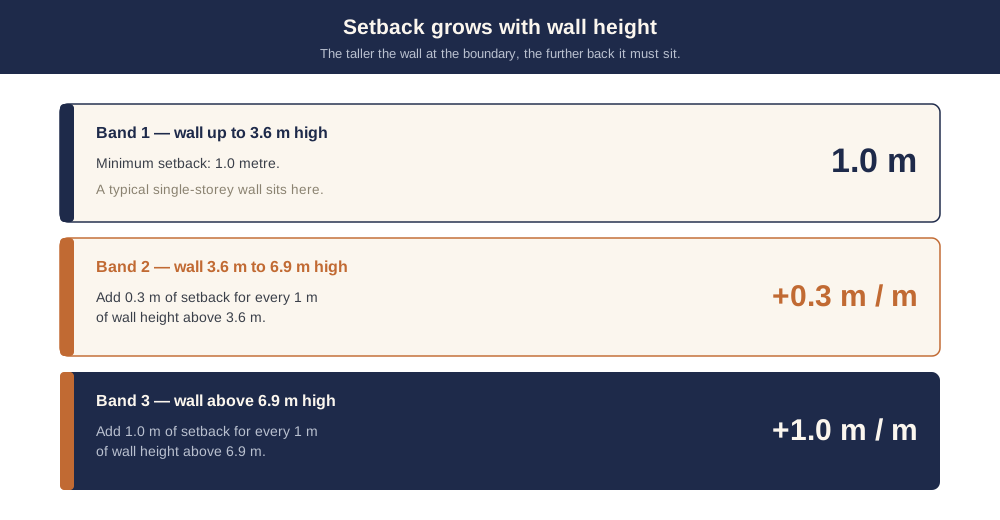
Figure 1: The setback grows in bands as the wall gets taller — confirm the exact figures for your zone with your council.
Where the rule lives
The side and rear setback standard appears twice in the Victorian planning scheme, once for each ResCode pathway. For one dwelling on a lot — the Single Home Code — it is Clause 54.04-1, Standard A10. For two or more dwellings — the Townhouse and Low-Rise Code — it is Clause 55.04-1, Standard B17. The objective and the numbers are the same in both, because the amenity concern is identical: keeping bulk away from the boundary so a neighbour is not crowded.
Like every ResCode provision, it runs on a deemed-to-comply logic. Meet the standard and the objective is deemed satisfied; miss it and the council weighs your design against the decision guidelines instead. You can read the foundations in what is ResCode.
How the formula works
Spend 5 minutes, not 3 weeks
instantplanning generates a council-ready town planning report for Victorian permits. No town planner. No waiting.
Get your report →The setback is tied to the height of the wall measured at the boundary. There are three bands.
- ✓Walls up to 3.6 metres high — a minimum setback of 1 metre
- ✓Walls above 3.6 metres and up to 6.9 metres — add 0.3 metres of setback for each 1 metre of wall height above 3.6 metres
- ✓Walls above 6.9 metres — add 1 metre of setback for each 1 metre of wall height above 6.9 metres, on top of the amount already reached at 6.9 metres
So a single-storey wall at 3 metres needs 1 metre. A wall at 6 metres — a typical two-storey wall — sits in the middle band: it is 2.4 metres above 3.6, so it adds 0.3 multiplied by 2.4, giving roughly 1.72 metres of total setback. A wall pushing past 6.9 metres climbs much faster, because each extra metre of height then adds a full metre of setback rather than 0.3.
This is why so many two-storey extensions are redrawn at the boundary: a designer either pulls the upper wall in, lowers it, or articulates it so the tallest part is not closest to the neighbour. Confirm the exact increments against your own scheme, because a schedule to the zone can set different figures, and recent reform of the residential provisions means you should check the current wording rather than relying on a remembered number.
Setback walls versus walls on a boundary
There is an important alternative the setback rule sits alongside. ResCode also lets you build directly on a side or rear boundary in defined circumstances, rather than setting the wall back at all. That is a separate standard with its own limits on the length and height of the boundary wall, and it is often how a carport, garage or single-storey extension is handled on a tight lot.
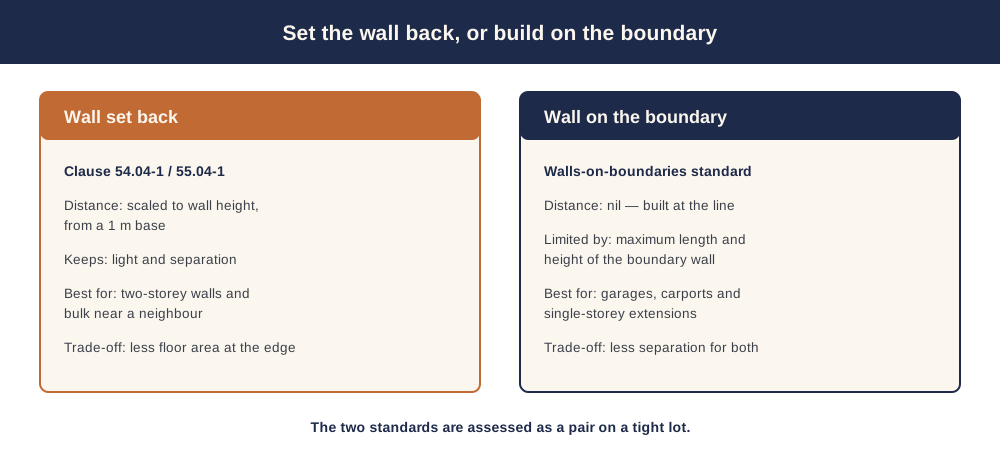
Figure 2: Two ways to treat a boundary wall — set it back to the formula, or build on the boundary within the separate limits.
The two paths answer different design problems. A setback wall keeps separation and light between buildings; a boundary wall trades that separation for usable floor area but is capped in length and height so it does not wall a neighbour in. If your design leans on a boundary wall, read walls on boundaries for the limits that then apply, because the setback formula and the boundary-wall rule are assessed as a pair.
What the assessment looks at
Beyond the headline distance, the setback standard carries decision guidelines and a few practical points that decide a marginal case. These are the things a reviewer checks.
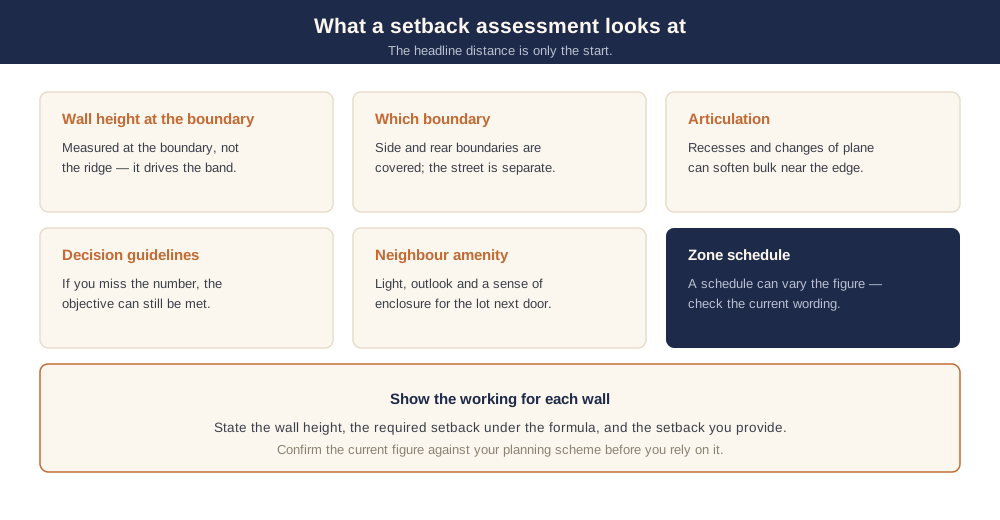
Figure 3: The factors behind a side and rear setback assessment — read your scheme and confirm the numbers with your council.
The height is measured at the boundary, not at the ridge, so a wall that steps down toward the neighbour can sometimes sit closer than its tallest point suggests. Articulation — recesses, balconies, changes of plane — can soften bulk and help satisfy the decision guidelines where the raw number is missed. And a schedule to the residential zone can override the standard figures entirely, which is why the same wall can comply in one street and fail two suburbs away. Always confirm the current figure against your planning scheme before you rely on it.
Showing the setback in your application
If your project needs a permit, your town planning report has to set out the side and rear setback for each relevant wall — stating the wall height, the required setback under the formula, and the setback you have provided, or, where you fall short, how the design meets the decision guidelines. A missing or hand-waved setback line is a common trigger for a request for further information, which stops the clock on your application.
Hiring a town planner can take weeks. Start with what a town planning report is, or generate your report. For a complex or contested boundary, engage an experienced human planner.
You can confirm the current standard wording on the Victorian planning provisions guidance.
Frequently asked questions
What is the minimum side setback in Victoria?
How does the setback formula work for a two-storey wall?
What happens to setbacks above 6.9 metres?
Can I build on the side boundary instead?
Which clause covers side and rear setbacks?
Do these figures ever change?
Ready to generate your report?
Skip the writing. Get a council-ready town planning report in 5 minutes.
Get your report