Key takeaways
- ✓The street setback is the distance a building must sit back from the front boundary facing the street.
- ✓Under ResCode the setback was traditionally tied to the setbacks of the adjoining dwellings, subject to a minimum.
- ✓The 2025 residential code reforms changed both the numbering and the rule, reducing minimums and removing the matching requirement in places.
- ✓A corner lot has two street frontages, each with its own setback to resolve.
- ✓Always confirm the current standard and minimum against your own planning scheme, because the rule changed in 2025.
Street Setback Rules in Victoria
The street setback is the space between your building and the front boundary - and it does more design work than almost any other dimension on the plan. It sets where the house starts, how the streetscape reads, and how much room is left for a front garden, a crossover and car parking. In Victoria the rule has long been tied to your neighbours' setbacks, but the 2025 residential code reforms reshaped it, so the figure you rely on matters more than ever.
Get a council-ready town planning report in 5 minutes — no town planner, no waiting.
Get your report →- ✓What a street setback is and why it matters
- ✓How the setback has traditionally been tied to adjoining dwellings
- ✓The minimum setback and how it varies by zone
- ✓What the 2025 residential code reforms changed
- ✓How corner lots and second frontages are treated
The short answer
A street setback is the distance a building must sit back from the front boundary facing the street. Under ResCode it was traditionally matched to the setbacks of the adjoining dwellings, subject to a minimum that varied by zone. The 2025 residential code reforms changed both the numbering and the rule, so confirm the current standard against your planning scheme.
The detail below explains the traditional approach, what changed, and how to work out the setback for your own frontage.
What a street setback is
A street setback is measured from the front title boundary - the boundary that faces the street - to the nearest part of the building. It is the front equivalent of the side and rear setbacks that govern the other boundaries, and it works alongside them to position the dwelling on the lot.
The control exists to keep the front of a street consistent. If one house jumps forward of its neighbours it breaks the rhythm of the streetscape, crowds the footpath and can overshadow the adjoining front gardens. By keeping new buildings broadly in line, the setback protects the established character of the street - which is why it sits close to the neighbourhood character provisions.
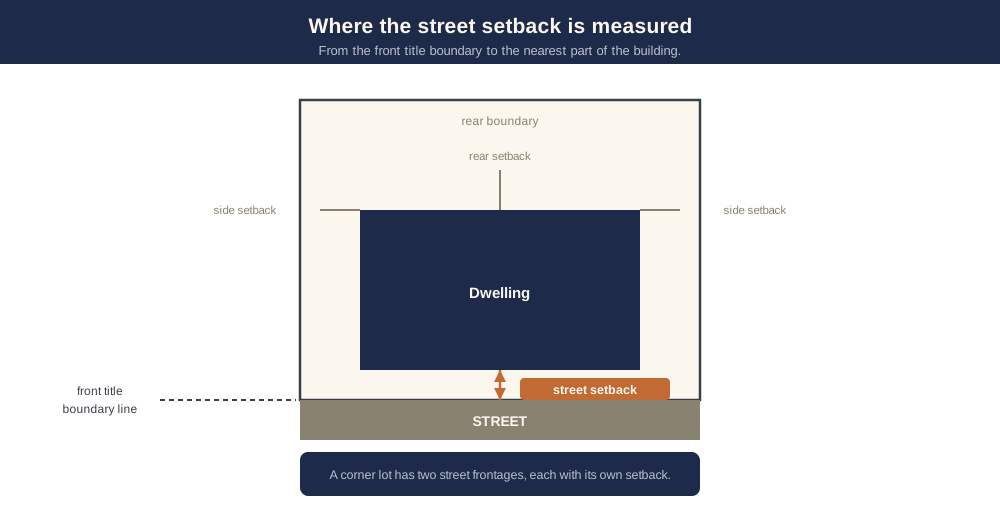
Figure 1: The street setback is measured from the front boundary - it works alongside the side and rear setbacks.
On a standard lot there is one front boundary and one street setback to resolve. On a corner lot there are two street frontages, and each is treated as a street setback in its own right.
Matching the adjoining dwellings
Spend 5 minutes, not 3 weeks
instantplanning generates a council-ready town planning report for Victorian permits. No town planner. No waiting.
Get your report →The defining feature of Victoria's traditional street setback rule was that it was not a fixed number - it was relative to your neighbours. Under ResCode the standard, historically at Clause 54.03-1 for a single dwelling and Clause 55.03-1 for two or more dwellings, asked you to set the new building back in line with the dwellings on either side.
In broad terms, where both adjoining lots were already built on, the setback was taken from the average of the two adjoining front setbacks, or from the setback of one adjoining dwelling where only one side was built. Where neither neighbour was built on, a minimum setback from a zone-based table applied instead. The effect was to knit each new building into the existing front line of the street rather than letting it sit forward or behind.
- ✓Both neighbours built on - setback based on the average of the two adjoining front setbacks
- ✓One neighbour built on - setback based on that adjoining dwelling
- ✓Neither neighbour built on - the minimum setback from the zone table applies
- ✓Corner lot - a separate setback applies to the second street frontage
This "match the neighbours" approach is the rule most homeowners and designers learned, and it still describes how a great many established streets came to look the way they do.
The minimum setback by zone
Where the matching rule did not produce a figure - typically a vacant or newly created lot with no built neighbours - a minimum street setback from a table applied, and that minimum varied by zone. More established, lower-density residential zones carried a larger minimum to preserve generous front gardens, while higher-density and mixed-use settings allowed buildings closer to the street.
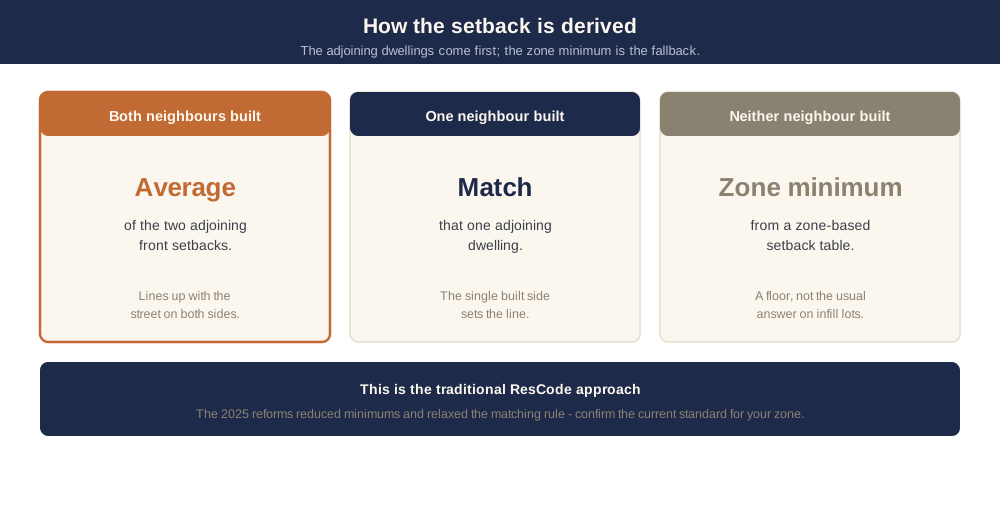
Figure 2: How the setback is derived - from the adjoining dwellings first, then the zone minimum as a fallback.
The important point is that the minimum was a floor, not the standard answer. On a typical infill lot with built neighbours, the matching rule usually governed and the table minimum never came into play. We set the wider standards out in what is ResCode in Victoria.
What the 2025 reforms changed
This is where current advice diverges from older guidance, and where you have to be careful. The 2025 residential code reforms changed both the clause numbering and the street setback rule itself. The provisions historically known as Clause 54.03-1 and Clause 55.03-1 were moved into the reworked code structure, so those clause references are no longer the operative labels.
More significantly, the reforms reshaped the rule for townhouse and low-rise development: reporting on the changes indicates the minimum street setback was reduced, and that the long-standing requirement to match or average the adjoining setbacks was relaxed or removed in favour of a simpler minimum-based test. The single-dwelling provisions were being brought into line with this reworked approach.
- ✓Clause numbering - the old 54.03-1 and 55.03-1 references no longer apply after the reforms
- ✓Minimum setback - reduced for townhouse and low-rise development
- ✓Matching rule - the requirement to average adjoining setbacks was relaxed or removed in places
- ✓Single dwellings - the standard was being aligned with the reworked code approach
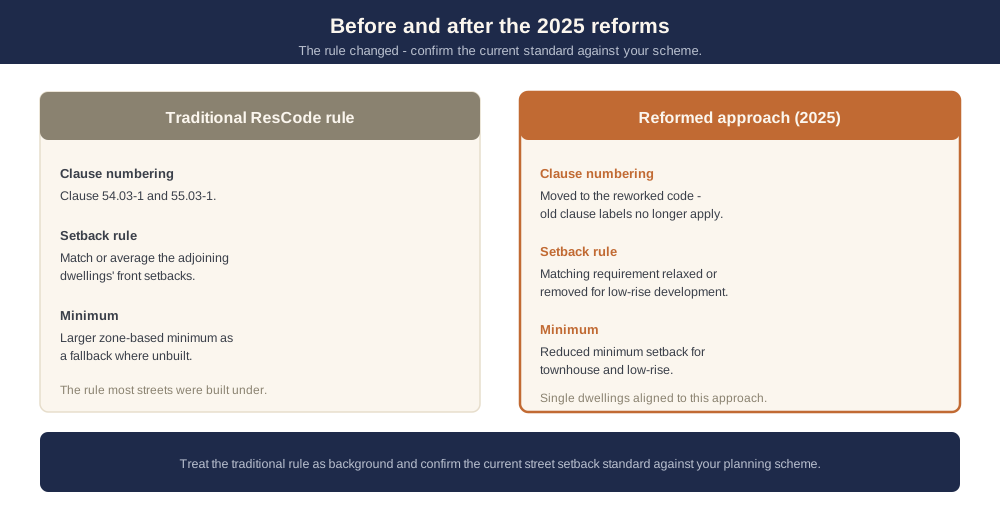
Figure 3: The traditional matching rule on the left, the reformed minimum-based approach on the right - confirm the current rule against your scheme.
Because this is an area of active change, treat the traditional "match the neighbours" description as background and confirm the current street setback standard, and the current minimum, against your own planning scheme before you design to it. A figure that was correct a few years ago may no longer apply to your frontage. You can read the residential development provisions directly at the Victorian planning scheme provisions.
Corner lots and second frontages
A corner lot is the case people most often get wrong, because it has two street frontages and each is assessed as a street setback. The primary frontage is usually the one the dwelling addresses, while the secondary frontage - the side street - carries its own setback, which is generally smaller but still has to be resolved.
The secondary street setback interacts with car parking, the crossover location and sightlines at the corner, so it is worth pinning down early. On a corner lot, working out both setbacks before you fix the footprint avoids discovering late that the garage cannot meet the side-street setback. Confirm both frontages, and any relevant overlay, when you check your controls.
Hiring a town planner can take weeks. instantplanning builds a council-ready town planning report from current Victorian planning scheme data in minutes - it identifies your zone, applies the relevant setback standard, and you review every line before you lodge. Start with what a town planning report is, or generate your report.
Frequently asked questions
What is a street setback in Victoria?
How is the street setback worked out?
What is the minimum front setback?
Did the 2025 residential code reforms change the street setback rule?
How does the setback work on a corner lot?
How do I check the street setback for my block?
Ready to generate your report?
Skip the writing. Get a council-ready town planning report in 5 minutes.
Get your report