Key takeaways
- ✓Many applications must be advertised under section 52 so affected people can have their say.
- ✓Any person who may be affected can object in writing under section 57.
- ✓An objection must state the reasons and how the person would be affected.
- ✓The council weighs the planning merit of each objection under section 60, not the number of objectors.
- ✓Where there are objectors, the council issues a Notice of Decision and objectors can seek VCAT review.
Planning Permit Objections (VIC)
Objections are one of the most misunderstood parts of the Victorian planning system. Applicants fear them; neighbours rely on them; and both sides often assume a count of objectors decides the outcome. It does not. An objection is a chance to put a planning concern in front of the council, and the council weighs the merit of each concern against the planning scheme — not the size of the petition. This guide explains how notice works, how to object, what the council actually considers, and what each side can do.
Get a council-ready town planning report in 5 minutes — no town planner, no waiting.
Get your report →- ✓When and how an application is advertised under section 52
- ✓How a neighbour lodges an objection under section 57
- ✓What an objection needs to contain to carry weight
- ✓How the council weighs objections under section 60
- ✓What objectors and applicants can do after the decision
The short answer
Many applications must be advertised under section 52 of the Planning and Environment Act 1987 so affected people can have their say. Any person who may be affected can object in writing under section 57, stating their reasons and how they would be affected. The council weighs the planning merit of each objection under section 60 — not the number of objectors — and where there are objectors it issues a Notice of Decision, which objectors can ask VCAT to review.
The sequence runs from notice to objection to decision. The diagram below shows the path an objection takes through the process.
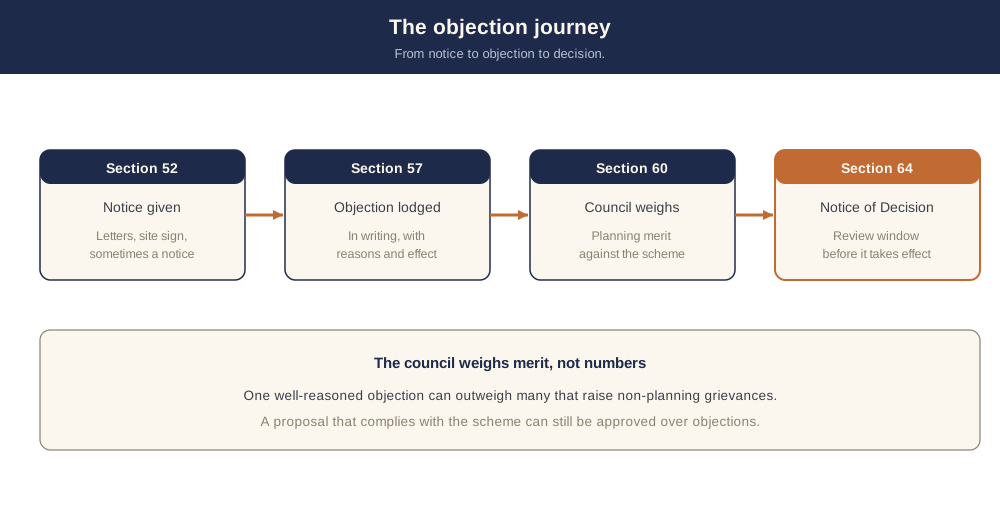
Figure 1: The objection journey — notice, objection, assessment and decision.
How an application is advertised
Before the council decides many applications, it must give notice under section 52 of the Planning and Environment Act 1987, so that people who might be affected can comment. Notice is given where the council considers the proposal may cause material detriment to any person. In practice this usually means a combination of letters to the owners and occupiers of adjoining land, a notice displayed on the site, and sometimes a notice in a local newspaper.
Not every application is advertised. Some are exempt — most notably VicSmart applications, which are fast-tracked precisely because they skip advertising and third-party review. If your proposal is straightforward and qualifies, that exemption is a real time saving; see VicSmart versus a standard permit for what falls into each track.
How to object
Spend 5 minutes, not 3 weeks
instantplanning generates a council-ready town planning report for Victorian permits. No town planner. No waiting.
Get your report →Once an application is advertised, any person who may be affected by the grant of the permit can object. Under section 57 of the Act, an objection must be made in writing to the responsible authority — your council — and it must state the reasons for the objection and how the objector would be affected if the permit were granted. The notice the council sends out tells recipients the date by which objections must be lodged.
A strong objection is grounded in planning, not personalities. Concerns the council can act on are things like overlooking, overshadowing, building bulk, traffic and parking, noise, loss of neighbourhood character, and impacts the planning scheme actually protects. Matters such as competition between businesses, devaluation of a property, or a dispute over a boundary fence are generally not planning grounds, and carry little weight however strongly felt.
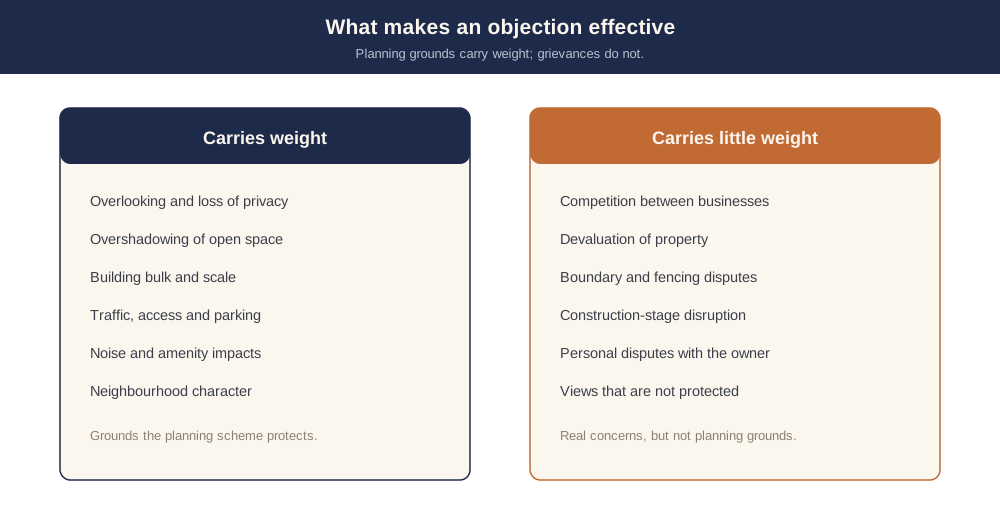
Figure 2: What makes an objection effective — planning grounds carry weight; non-planning grievances do not.
What the council weighs
This is where the misconception about numbers falls away. When the council decides the application, section 60 of the Act sets out what it must consider: the planning scheme itself, all objections and submissions received, the views of any referral authorities, and the significant social, economic and environmental effects of the proposal. The council assesses the planning merit of each objection against the scheme.
That cuts both ways. Twenty objections that all raise non-planning grievances may change nothing, while a single, well-reasoned objection identifying a genuine breach of a standard can lead to conditions or a refusal. Equally, a proposal that complies with the scheme can be approved over many objections. For the applicant, the lesson is the same as for any application: a proposal that demonstrably meets the controls is the best defence against objections. A clause-by-clause town planning report is what shows the council that compliance, and it is the document an objector's claims are ultimately tested against. For the wider sequence, see what happens after you lodge.
A town planner can take weeks; instantplanning builds a council-ready town planning report from current Victorian planning scheme data in minutes — you review every line before you lodge. Start with the planning permit process, or generate your report. For a complex or contested application, engage an experienced human planner.
The decision, and what each side can do next
Once assessment is complete, the council decides. Where there were objectors, it does not simply issue or refuse the permit — under section 64 it issues a Notice of Decision to Grant a Permit (or a notice of refusal), giving the parties a window before anything takes effect. This matters because it preserves everyone's review rights.
If the council decides to grant the permit, an objector who is dissatisfied can apply to VCAT for review under section 82, within 28 days of the date of the Notice of Decision. If the council refuses, or grants with conditions the applicant does not accept, the applicant has their own review rights. Either way, the dispute can move from the council to an independent tribunal — the mechanics of which are covered in the VCAT planning appeal guide.
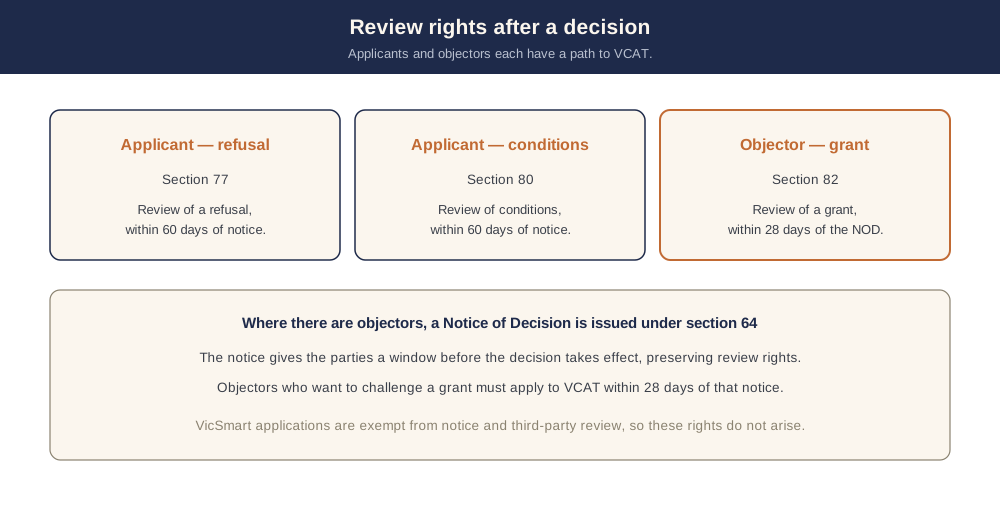
Figure 3: The review rights after a decision — applicants and objectors each have a path to VCAT.
The practical takeaway is balance. Objecting is a legitimate, structured way to raise genuine planning concerns, and a well-grounded objection can shape an outcome. But it is the merit, not the volume, that counts — and the same is true on the applicant's side, where a compliant, well-documented proposal is the strongest answer to any objection.
You can confirm the current section wording in the Planning and Environment Act 1987.
Frequently asked questions
How do I object to a planning permit in Victoria?
Who can object to a planning permit?
Does the number of objections decide the outcome?
What objections does a council take seriously?
Is every application advertised?
Can an objector appeal a decision to grant a permit?
Ready to generate your report?
Skip the writing. Get a council-ready town planning report in 5 minutes.
Get your report