Key takeaways
- ✓Overlooking limits direct views into a neighbour's habitable room window or secluded private open space.
- ✓The test is a 9 metre horizontal distance, measured within a 45-degree angle from the window or space.
- ✓It applies to views from a height of more than 1.7 metres above floor level.
- ✓You can solve overlooking with a 1.7 metre sill, obscure glazing, an offset, or a fixed screen no more than 25% transparent.
- ✓The standard sits in Clause 54.04-6 for one dwelling and Clause 55.04-6 for two or more.
Overlooking (VIC): ResCode Privacy Rules
When your new window, balcony or deck can see straight into a neighbour's living room or backyard, ResCode steps in. The overlooking standard protects privacy by limiting direct views into a neighbour's habitable room window or secluded private open space — and it does so with a precise geometric test rather than a judgement call. Understanding that geometry is what lets you keep your view, your light and your neighbour's privacy at the same time.
Get a council-ready town planning report in 5 minutes — no town planner, no waiting.
Get your report →- ✓What overlooking means and who it protects
- ✓The 9 metre, 45-degree, 1.7 metre test in plain terms
- ✓The ways you can resolve an overlooking problem
- ✓Where the standard sits in the planning scheme
- ✓How to show privacy working in your application
The short answer
ResCode limits direct views into a neighbour's habitable room window or secluded private open space within a horizontal distance of 9 metres, measured within a 45-degree angle from the plane of the window or the perimeter of the open space, at a height of more than 1.7 metres above floor level. You resolve overlooking with an offset, a 1.7 metre sill, obscure glazing, or a fixed screen no more than 25% transparent.
The test has three numbers working together — distance, angle and height. The diagram below sets them out.
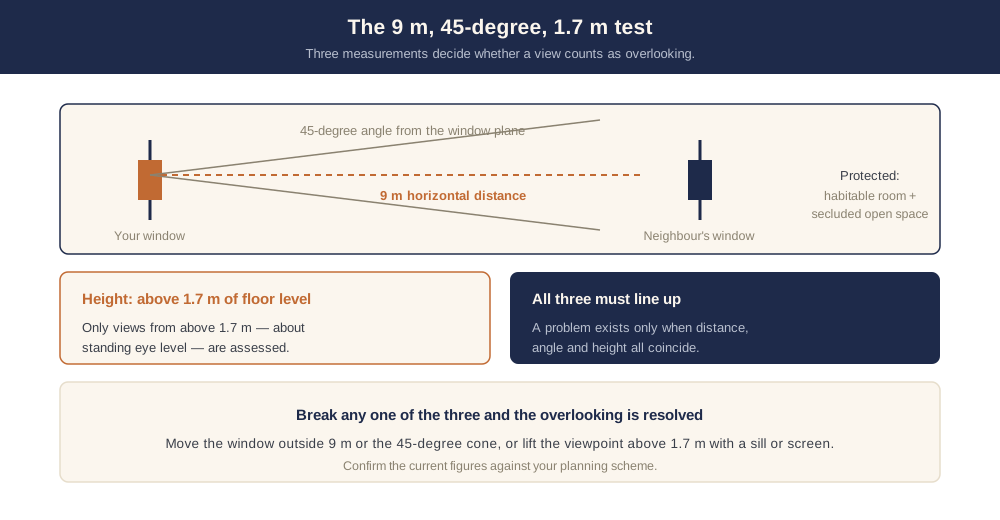
Figure 1: The 9 metre, 45-degree, 1.7 metre overlooking test. Confirm the current figures for your zone with your council.
What overlooking protects
The standard protects two things on a neighbouring lot: a habitable room window — a living room, bedroom, kitchen or study window, not a bathroom or laundry — and secluded private open space, the usable private part of a backyard or courtyard. It does not protect every glimpse; it targets direct views from your habitable windows, balconies, terraces, decks and patios into those sensitive spaces.
It also runs in both directions in practice: as you design to avoid looking into a neighbour, you are following the same rule that protects your own habitable rooms and secluded open space from the next development along the street.
The 9 metre, 45-degree, 1.7 metre test
Spend 5 minutes, not 3 weeks
instantplanning generates a council-ready town planning report for Victorian permits. No town planner. No waiting.
Get your report →The test combines three measurements, and a design only has a problem when all three line up.
- ✓Distance — a direct view within a horizontal distance of 9 metres from the window or open space
- ✓Angle — the view is measured within a 45-degree angle from the plane of the window or the perimeter of the open space
- ✓Height — the view is assessed from a point more than 1.7 metres above the finished floor level
- ✓Target — the view reaches a neighbour's habitable room window or secluded private open space, not a bathroom or a driveway
In plain terms: stand at the window, look out within a 45-degree fan; if the line of sight reaches a neighbour's habitable window or secluded open space within 9 metres, and the viewpoint is above 1.7 metres of floor level, you have overlooking to resolve. The 1.7 metre height is roughly standing eye level, which is why a high sill removes the problem — you cannot see down over it. Because the residential provisions have been under reform, confirm the current figures against your planning scheme rather than relying on a remembered number.
How to resolve overlooking
The standard gives you several accepted ways to break the line of sight, and you can mix them across a facade.
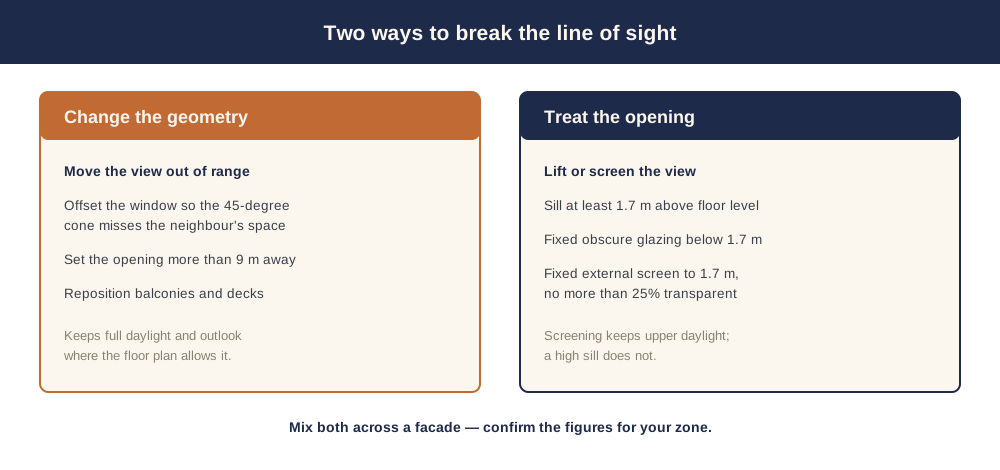
Figure 2: Two families of fix — change the geometry, or treat the opening. Confirm the figures for your zone with your council.
The first family changes the geometry: offset the window so the 45-degree cone no longer catches the neighbour's space, or set the opening more than 9 metres away. The second family treats the opening itself: a sill at least 1.7 metres above floor level, fixed obscure glazing below 1.7 metres, or a permanently fixed external screen to a height of 1.7 metres that is no more than 25 per cent transparent — perforated panels, trellis or translucent screens all qualify if they meet that transparency limit. The right choice usually depends on whether you want to keep daylight and outlook from the upper part of the window, which screening preserves and a high sill does not.
Where the rule lives
Overlooking appears once in each ResCode pathway. For one dwelling on a lot — the Single Home Code — it is Clause 54.04-6, Standard A15. For two or more dwellings — the Townhouse and Low-Rise Code — it is Clause 55.04-6, Standard B22. Both share the same 9 metre, 45-degree, 1.7 metre geometry, and both run on the deemed-to-comply logic explained in what is ResCode: meet the standard and the objective is deemed satisfied; miss it and the council weighs the decision guidelines.
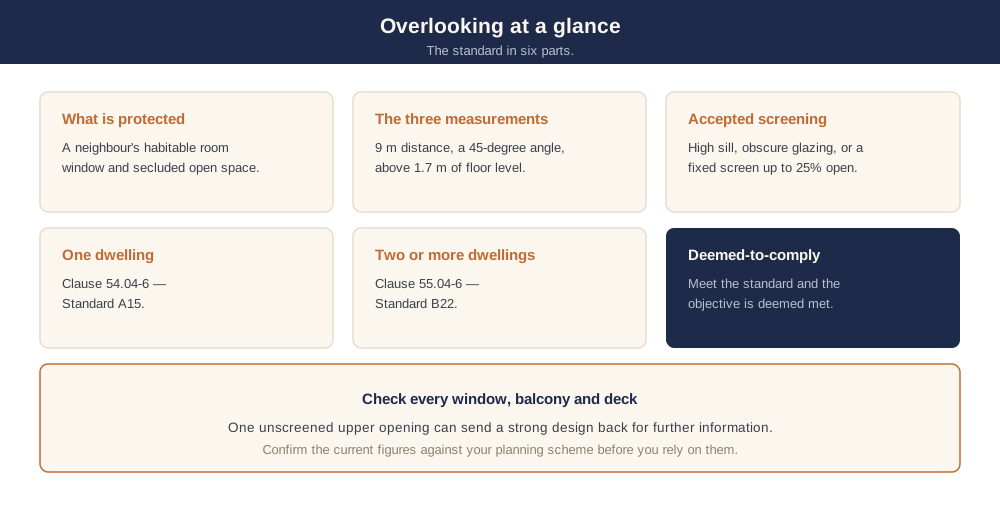
Figure 3: The overlooking standard at a glance — read your scheme and confirm the figures with your council.
Overlooking sits alongside the private open space standard it protects, and is often assessed in the same breath as overshadowing, since both are about a neighbour's amenity. A design that scores well on open space can still be sent back purely on an unscreened upper window, so privacy is checked window by window.
Showing privacy in your application
If your project needs a permit, your town planning report has to identify every window, balcony or deck that could overlook a neighbour, and state how each is resolved — by offset, sill height, glazing or screen — or how the design meets the decision guidelines. An unaddressed overlooking risk is a common trigger for a request for further information, which stops the clock on your application and can prompt an objection from the affected neighbour.
Hiring a town planner can take weeks. Start with what a town planning report is, or generate your report. For a complex or contested boundary, engage an experienced human planner.
You can confirm the current standard wording on the Victorian planning provisions guidance.
Frequently asked questions
What is the overlooking rule in Victoria?
What does the 45-degree angle mean?
Why is 1.7 metres the magic number?
How do I fix an overlooking problem?
Which clause covers overlooking?
Does overlooking apply to bathroom windows?
Ready to generate your report?
Skip the writing. Get a council-ready town planning report in 5 minutes.
Get your report