Key takeaways
- ✓The overshadowing standard protects sunlight to a neighbour's secluded private open space, measured at 9am to 3pm on 22 September.
- ✓It sits in Clause 54 for a single dwelling and Clause 55 for two or more dwellings, with parallel objectives and standards.
- ✓The long-standing test protected 75 per cent or 40 square metres of the neighbour's open space; the 2025 code reforms moved new applications to a 50 per cent or 25 square metre test.
- ✓You usually demonstrate compliance with a shadow diagram for the September equinox.
- ✓Always confirm the current figure and clause reference against your own planning scheme, because the standard changed in 2025.
Overshadowing Rules in Victoria
Overshadowing is one of the amenity controls that decides whether a new home, extension or townhouse gets a planning permit in Victoria. The principle is simple: your building should not cast so much shadow that it strips the sunlight from a neighbour's main outdoor living space. The detail is where applications stall - the test is tied to a single date, a fixed window of hours, and a percentage of the neighbour's open space that has changed under recent reforms.
Get a council-ready town planning report in 5 minutes — no town planner, no waiting.
Get your report →- ✓What the overshadowing standard is and which space it protects
- ✓The exact sunlight test - the date, the hours and the area
- ✓Where the standard sits in Clause 54 and Clause 55
- ✓What changed when the residential codes were reformed in 2025
- ✓How you demonstrate compliance, and how to check your own site
The short answer
Victoria's ResCode overshadowing standard protects sunlight to a neighbour's secluded private open space, tested between 9am and 3pm on 22 September. The long-standing standard required that at least 75 per cent, or 40 square metres, of that space keep five hours of sun. The 2025 code reforms moved new applications to a 50 per cent or 25 square metre test.
Because the figure changed in 2025, confirm the current standard against your own planning scheme before you design to it.
What the overshadowing standard protects
The standard is not about shadow on the footpath or over a driveway. It protects secluded private open space - the main, usable outdoor living area of an existing neighbouring dwelling, typically the back yard or a private courtyard. That is the space the planning scheme treats as worth keeping in sun.
The control sits inside the residential development provisions: Clause 54 for a single dwelling on a lot, and Clause 55 for two or more dwellings on a lot or a residential building. Both clauses carry an overshadowing objective and a matching standard, so the same idea applies whether you are building one house or a row of townhouses.
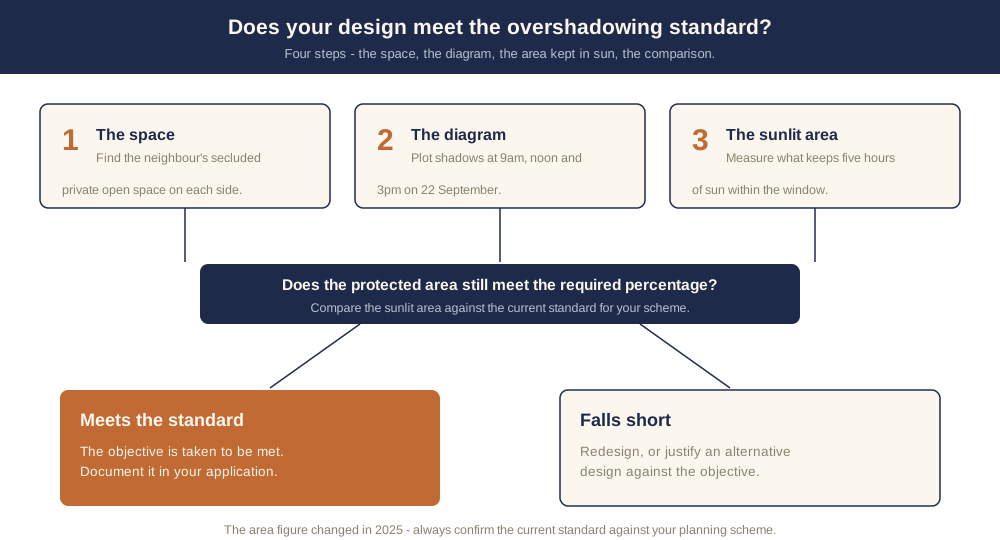
Figure 1: How the overshadowing test is worked through, step by step.
The objective is to ensure that new buildings do not unreasonably reduce the sunlight reaching a neighbour's main outdoor space. The standard puts numbers around that objective so it can be measured rather than argued.
The sunlight test - date, hours and area
Spend 5 minutes, not 3 weeks
instantplanning generates a council-ready town planning report for Victorian permits. No town planner. No waiting.
Get your report →The overshadowing test fixes three things so that every proposal is judged the same way.
- ✓The date - 22 September, the spring equinox, when the sun sits at a middling height
- ✓The hours - between 9am and 3pm, the core of the usable day
- ✓The duration - at least five hours of sunlight to the protected area within that window
The 22 September date matters because it is a deliberately average condition: the sun is neither at its high summer angle nor its low winter angle, so a building that passes on that date performs reasonably across the year. You prove it with a shadow diagram that plots the shadow your building throws across the neighbour's land at set times on that date.
The area part of the test is the figure that has changed. Read it carefully against your scheme.
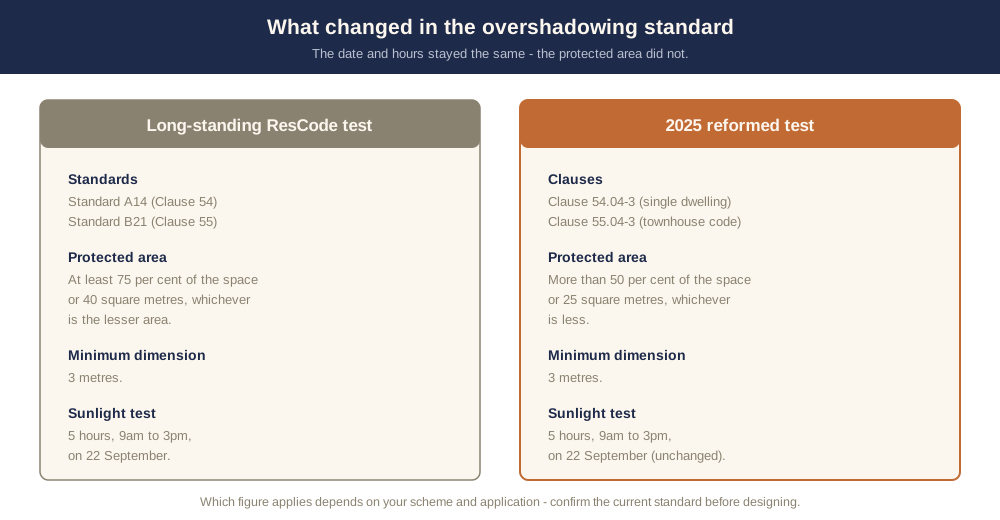
Figure 2: The pre-reform figures compared with the figures introduced in 2025.
Under the long-standing ResCode standard - Standard A14 in Clause 54 and Standard B21 in Clause 55 - at least 75 per cent, or 40 square metres with a minimum dimension of three metres (whichever is the lesser area), of the neighbour's secluded private open space had to keep five hours of sun between 9am and 3pm on 22 September. If the space already received less than that, the standard said it should not be reduced further.
The 2025 residential code reforms recast these clauses. For Clause 55, Amendment VC267 (operative 31 March 2025) restructured the clause into the Townhouse and Low-Rise Code and moved overshadowing to Clause 55.04-3. For Clause 54, a later amendment aligned the single-dwelling provisions and moved overshadowing to Clause 54.04-3. The recast standard reduced the protected area to more than 50 per cent, or 25 square metres with a minimum dimension of three metres, whichever is less - still tested for five hours between 9am and 3pm on 22 September, and still with the "no further reduction" rule where sunlight is already below the benchmark.
Which figure applies depends on when and under which version of the clause your application is assessed, so this is exactly the kind of detail to confirm against the current text of your planning scheme rather than a remembered number.
Where the standard sits in Clause 54 and Clause 55
The two clauses mirror each other, which is why the same shadow diagram logic works for a single house and for townhouses.
- ✓Clause 54 - one dwelling on a lot, with the overshadowing standard now at Clause 54.04-3 (formerly Standard A14)
- ✓Clause 55 - two or more dwellings or a residential building, with overshadowing now at Clause 55.04-3 (formerly Standard B21)
- ✓Both clauses - same date, same hours, same five-hour duration, with the area figure set by the current version of the standard
Like the rest of ResCode, the overshadowing standard works alongside an objective. If your design meets the standard it is taken to meet the objective; if it does not, the responsible authority can still consider whether an alternative design meets the objective, using the decision guidelines and any local policy. We explain that objective-and-standard structure in what is ResCode in Victoria, and the closely related amenity control in overlooking in Victoria.
How you demonstrate compliance
In practice, overshadowing is demonstrated with a set of shadow diagrams prepared for 22 September. You can read the full standard in the Victorian planning scheme provisions.
- ✓Identify the neighbour's secluded private open space on each affected side
- ✓Prepare shadow diagrams at 9am, noon and 3pm on 22 September showing existing and proposed shadows
- ✓Calculate the area that keeps five hours of sun and compare it to the standard
- ✓If the standard is not met, document the alternative design response against the objective
The space the test protects is the neighbour's existing open space, so a design can pass on one boundary and fail on another. Single-storey extensions to the south of a neighbour and tall walls on the north of their yard are the usual culprits.
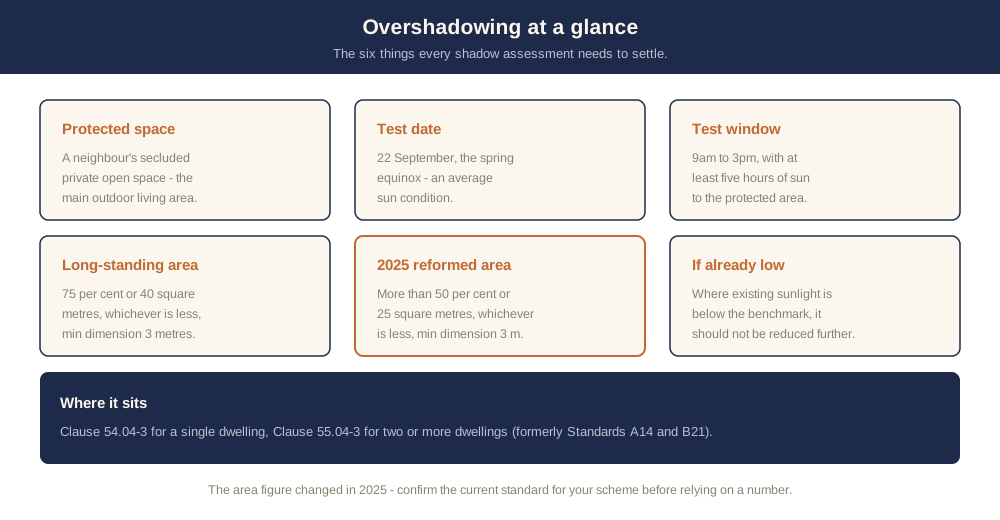
Figure 3: The overshadowing standard at a glance.
To check your own site, confirm your zone and overlays free on VicPlan, identify where each neighbour's secluded private open space sits relative to your build, and have shadow diagrams prepared for 22 September. Then read the current overshadowing standard in Clause 54 or Clause 55 of your scheme and confirm whether the 75 per cent or the 50 per cent area figure applies to your application.
Hiring a town planner can take weeks. instantplanning builds a council-ready town planning report from current Victorian planning scheme data in minutes - it identifies the clauses that apply to your site and the standards you must address, and you review every line before you lodge. Start with what a town planning report is, or generate your report.
Frequently asked questions
What date is the overshadowing test in Victoria measured on?
How much of a neighbour's open space has to stay in sunlight?
What is secluded private open space?
Which clause covers overshadowing in Victoria?
Do I need a shadow diagram for my application?
What happens if a neighbour's yard already gets little sun?
Ready to generate your report?
Skip the writing. Get a council-ready town planning report in 5 minutes.
Get your report