Key takeaways
- ✓Private open space is the usable outdoor area a dwelling has for recreation and service.
- ✓Part of it must be secluded private open space — a private, useful outdoor area at the side or rear.
- ✓For two or more dwellings, the typical standard is 40 sq m total with 25 sq m of secluded space at a 3 metre minimum dimension.
- ✓Secluded private open space needs convenient access from a living room and a usable shape, not a thin strip.
- ✓A zone schedule can change the area and dimensions, so confirm the current figures against your planning scheme.
Private Open Space (VIC): ResCode Rules
Every home assessed under ResCode in Victoria has to provide usable outdoor space — somewhere to sit, dry washing, let children play, and breathe. The planning scheme calls this private open space, and it sets both a total area and a more demanding inner requirement for secluded private open space that is genuinely private and usable. A backyard that looks generous on a plan can still fail if its useful part is the wrong shape.
Get a council-ready town planning report in 5 minutes — no town planner, no waiting.
Get your report →- ✓What private open space and secluded private open space mean
- ✓The typical area and dimension figures ResCode uses
- ✓Where the standard sits in the planning scheme
- ✓Why the minimum dimension matters as much as the area
- ✓How to show open space working in your application
The short answer
ResCode requires each dwelling to have private open space, part of which must be secluded private open space at the side or rear. For two or more dwellings, the typical standard is 40 square metres total, including a secluded part of at least 25 square metres with a minimum dimension of 3 metres and convenient access from a living room. A zone schedule can vary these figures.
The total area and the secluded part are two different tests, and a design has to pass both. The diagram below separates them.
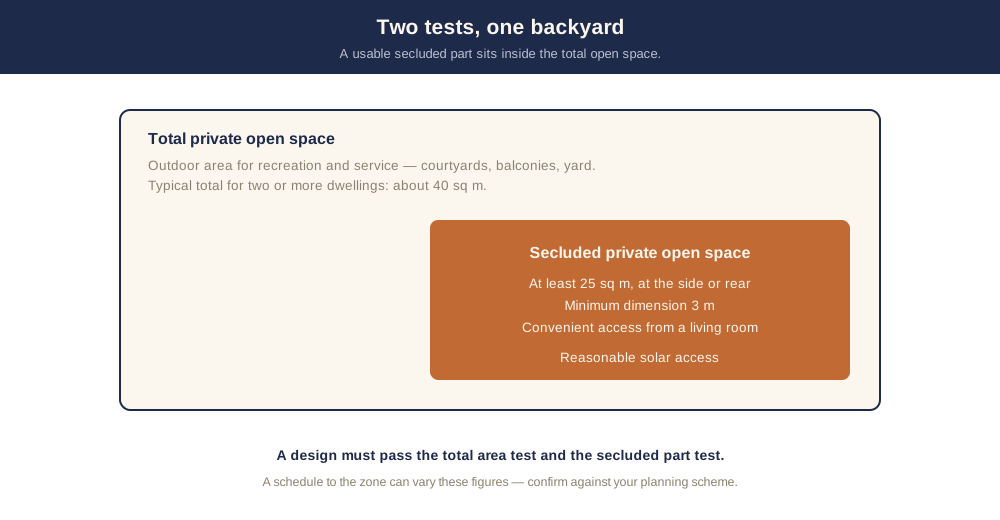
Figure 1: Total private open space contains a secluded part — both have their own minimums. Confirm the figures for your zone with your council.
What the two terms mean
Private open space is the outdoor area set aside for a dwelling's private use — recreation and service such as drying and bins. It can be spread across courtyards, balconies and a backyard.
Secluded private open space is the part of that area which is private, useful and well located: a real outdoor room at the side or rear, with reasonable solar access and direct, convenient access from a living room. This is the part that actually gets used, which is why ResCode protects its size, shape and position rather than just the headline total.
The distinction matters because a design can have plenty of total open space scattered around the lot yet still fail to deliver one usable secluded area. The secluded test is where most marginal designs are decided.
The typical figures
Spend 5 minutes, not 3 weeks
instantplanning generates a council-ready town planning report for Victorian permits. No town planner. No waiting.
Get your report →The numbers depend on whether you are building one dwelling or several, and on any schedule to your zone. The common figures are below.
- ✓Two or more dwellings — a typical total of 40 square metres of private open space per dwelling
- ✓Secluded part — at least 25 square metres of secluded private open space
- ✓Minimum dimension — at least 3 metres, so the space is a usable shape not a thin strip
- ✓Location — at the side or rear of the dwelling
- ✓Access — convenient access directly from a living room
- ✓One dwelling — the schedule to the zone often sets a larger total, with the same kind of secluded minimum
For a single dwelling under the Single Home Code, the standard sets the total and the secluded part, and a schedule to the residential zone commonly lifts the total above the townhouse figure. For two or more dwellings under the Townhouse and Low-Rise Code, the typical figure is the 40 square metres total with a 25 square metre secluded part. Because the residential provisions have been under reform and a schedule can override the standard, confirm the current area and dimension against your own planning scheme before you rely on them.
Where the rule lives
Private open space appears once in each ResCode pathway. For one dwelling on a lot it is Clause 54.05, with the secluded requirement in Standard A17. For two or more dwellings it is Clause 55.05, with the requirement in Standard B28. Both run on the same deemed-to-comply logic as the rest of ResCode: meet the standard and the objective is deemed satisfied; miss it and the council weighs the decision guidelines. The fundamentals are in what is ResCode.
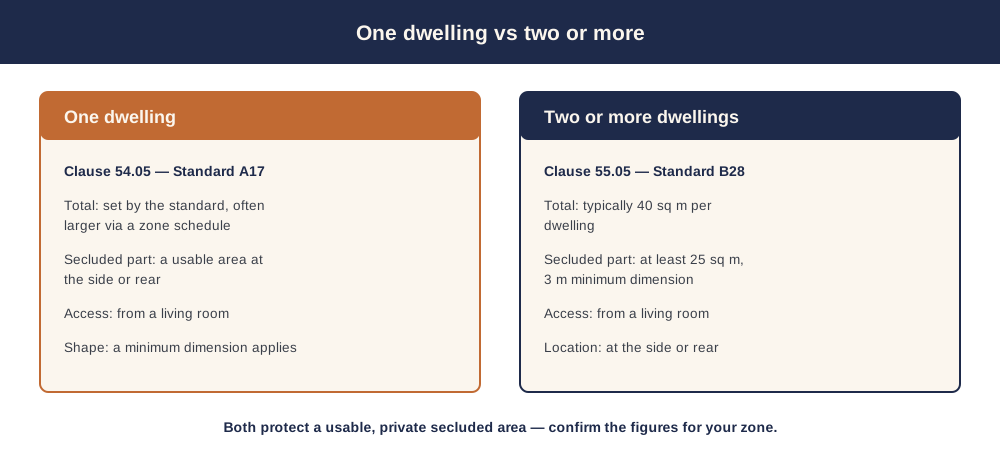
Figure 2: The open space standard for a single home and for a multi-dwelling site — both protect a usable secluded area.
It is worth keeping private open space distinct from the garden area requirement, which is a separate, mandatory percentage of the lot tied to lot size. A design can satisfy garden area and still miss the secluded private open space minimum, because they measure different things.
Why the minimum dimension matters
The most overlooked figure is the minimum dimension, typically 3 metres. Area alone does not make a yard usable: 25 square metres laid out as a 1-metre strip 25 metres long is useless for sitting or play. The minimum dimension forces the secluded area into a workable shape — wide enough for a table, a clothesline or a small lawn.
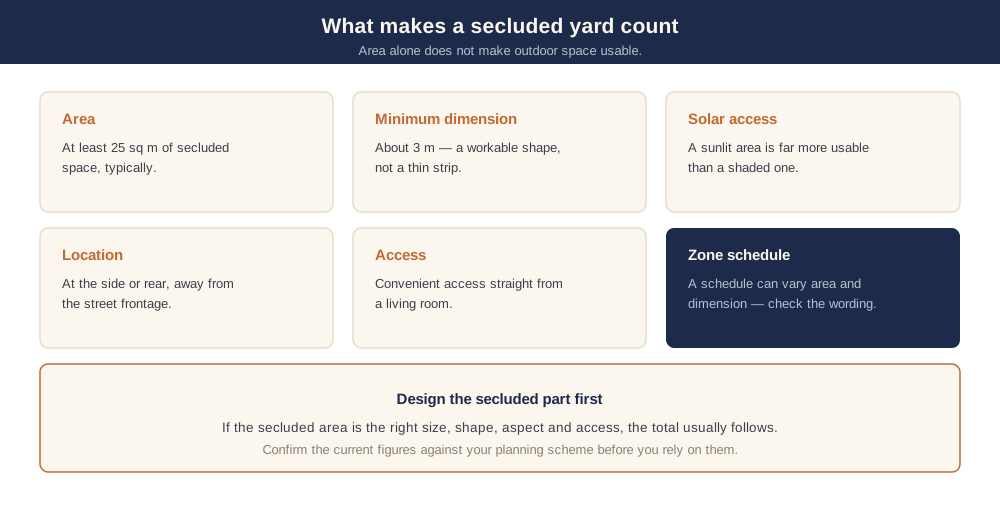
Figure 3: The qualities that make secluded private open space count — read your scheme and confirm the figures with your council.
Reviewers also look at solar access — a north-facing secluded area is far more usable than a permanently shaded one — and at whether the space is reachable straight from a living room rather than through a bedroom or down a side path. Overshadowing of a neighbour's secluded open space is a separate standard; see overshadowing. Together these make the secluded area genuinely private and usable, which is the whole point of the standard. Confirm the current figures against your planning scheme.
Showing open space in your application
If your project needs a permit, your town planning report has to state the total private open space and the secluded part for each dwelling — the area, the minimum dimension, its location and the access from a living room — or, where you fall short, how the design meets the decision guidelines. Open space that is undersized or the wrong shape is a frequent trigger for a request for further information, which stops the clock on your application.
Hiring a town planner can take weeks. Start with what a town planning report is, or generate your report. For a complex or contested site, engage an experienced human planner.
You can confirm the current standard wording on the Victorian planning provisions guidance.
Frequently asked questions
What is private open space in Victoria?
How much secluded private open space do I need?
What is the minimum dimension and why does it matter?
Does private open space have to connect to a living room?
Which clause covers private open space?
Is private open space the same as the garden area requirement?
Ready to generate your report?
Skip the writing. Get a council-ready town planning report in 5 minutes.
Get your report