Key takeaways
- ✓The Low Density Residential Zone (Clause 32.03) is for large-lot, semi-rural housing, often on land without reticulated sewerage.
- ✓The default minimum lot size for subdivision is 0.4 hectare without sewerage, or 0.2 hectare with sewerage — a schedule can only set larger minimums.
- ✓Where there is no sewer, all wastewater must be treated and retained on the lot.
- ✓The minimum garden area requirement does not apply in the LDRZ.
- ✓A planning permit is always required to subdivide; permit triggers for buildings and works are set largely by the schedule.
The Low Density Residential Zone (LDRZ) in Victoria Explained
The Low Density Residential Zone (LDRZ) is Victoria's zone for large-lot, semi-rural living — the leafy fringe blocks and acreage-style lots that sit between suburban housing and genuinely rural land. Its defining feature isn't height or density in the usual sense; it's lot size, driven largely by the need to manage wastewater on-site where there's no sewer. If your property is zoned LDRZ, the rules around subdivision and servicing matter far more than the controls that dominate the suburban residential zones.
Get a council-ready town planning report in 5 minutes — no town planner, no waiting.
Get your report →- ✓What the Low Density Residential Zone is for and what it allows
- ✓The minimum lot sizes for subdivision — sewered and unsewered
- ✓Why on-site wastewater is central to the zone
- ✓When a planning permit is required in the LDRZ
- ✓How the LDRZ differs from the standard residential zones
The short answer
The Low Density Residential Zone (Clause 32.03) is for low-density, large-lot housing, typically on land without reticulated sewerage. The default minimum lot size for subdivision is 0.4 hectare where there's no sewer, or 0.2 hectare where sewer is connected. Where there's no sewer, all wastewater must be treated and retained on the lot. The garden area requirement does not apply.
A planning permit is always required to subdivide in the LDRZ; the triggers for buildings and works are set mostly by the schedule.
What the Low Density Residential Zone is for
The LDRZ is set out in Clause 32.03. Its purpose is to provide for low-density residential development on lots which, in the absence of reticulated sewerage, can treat and retain all wastewater on-site. That single idea — large enough lots to handle their own wastewater — explains almost everything about how the zone works.
The result is a semi-rural character: generous blocks, one dwelling per lot in most cases, and a feel that's closer to country living than suburbia, while still being a residential (not rural) zone.
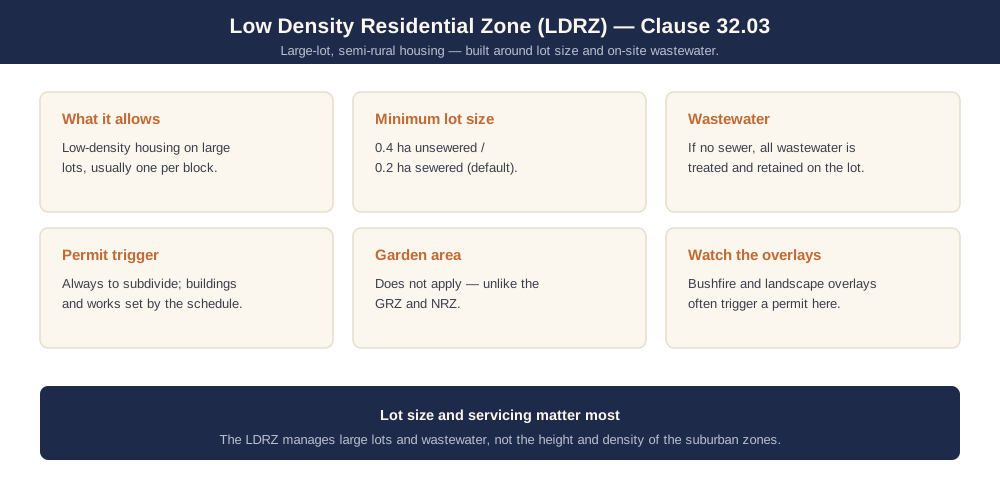
Figure 1: The Low Density Residential Zone is built around large lots and on-site wastewater, with subdivision the main permit trigger.
Minimum lot sizes: sewered vs unsewered
Spend 5 minutes, not 3 weeks
instantplanning generates a council-ready town planning report for Victorian permits. No town planner. No waiting.
Get your report →The control that defines the LDRZ is its minimum subdivision lot size, which depends on whether reticulated sewerage is connected.
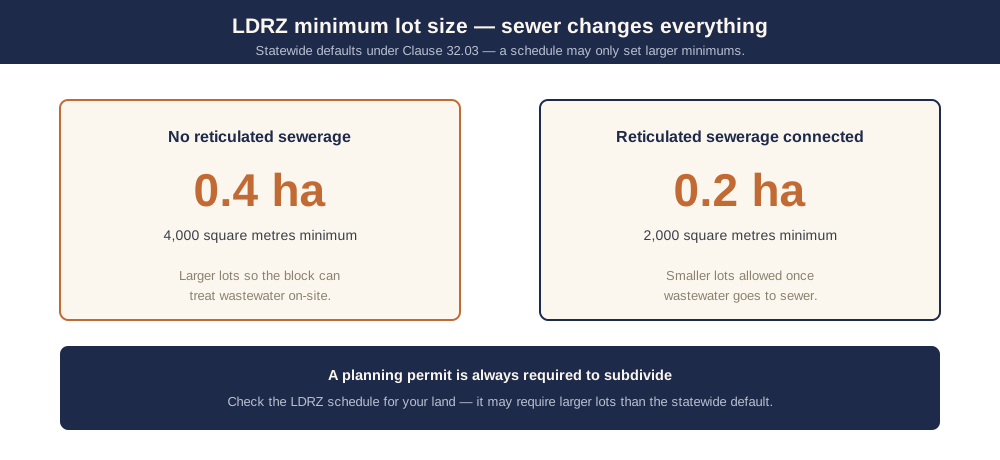
Figure 2: The default minimum lot size halves when reticulated sewerage is available.
- ✓No reticulated sewerage connected — each lot must be at least 0.4 hectare (4,000 square metres)
- ✓Reticulated sewerage connected — each lot must be at least 0.2 hectare (2,000 square metres)
- ✓A schedule can specify a larger minimum, but never smaller than these defaults
These are the statewide defaults in Clause 32.03. A schedule to the zone can set a larger minimum — and many do, to reflect local wastewater capacity, slope or landscape — but it can't go below 0.4 hectare unsewered or 0.2 hectare sewered. A planning permit is always required to subdivide, with no exemption. For more on the process, see do I need a planning permit in Victoria.
Why on-site wastewater is central
In the LDRZ, each dwelling must connect to reticulated sewerage where it's available. Where sewer is not available, all wastewater must be treated and retained within the lot, in accordance with the Environment Protection Regulations under the Environment Protection Act 2017.
This is why the minimum lot size is bigger where there's no sewer: a 0.4-hectare block gives enough room for an on-site wastewater system to work without affecting neighbours, waterways or groundwater. If you're considering an LDRZ block without sewer, the capacity of the land to manage wastewater is one of the first things to assess.
When do you need a planning permit in the LDRZ?
Unlike the suburban residential zones, the LDRZ relies heavily on its schedule to set the permit triggers for buildings and works.
- ✓Subdividing land — a permit is always required
- ✓Constructing a dwelling, or buildings and works — permit triggers are set largely by the LDRZ schedule, so check it
- ✓Any building or works in an overlay (bushfire, significant landscape, environmental significance) — a permit is usually required
- ✓Removing native vegetation — often a permit, depending on overlays and exemptions
Because LDRZ land often sits in bushfire-prone or environmentally sensitive areas, overlays are a particularly common reason a permit is triggered here — frequently more so than the zone itself. Always pull your overlays, not just your zone.
Garden area, height and ResCode in the LDRZ
Two things commonly assumed from the suburban zones don't carry over to the LDRZ:
- ✓The minimum garden area requirement does not apply. It's reserved for the General Residential and Neighbourhood Residential zones. On large LDRZ lots it would be redundant anyway.
- ✓There's no statewide mandatory height like the GRZ's 11 metres or the NRZ's 9 metres. Height in the LDRZ is controlled by any figure in the schedule, any overlays, and the relevant ResCode standards.
Where a planning permit is required, the residential development standards still apply: Clause 54 for a single dwelling, and Clause 55 — the Townhouse and Low-Rise Code since Amendment VC267 (operational 31 March 2025) — for two or more dwellings, in the rare cases where multi-dwelling development is contemplated. For background, see what is ResCode in Victoria and Clause 54 explained.
LDRZ vs the standard residential zones
The LDRZ is a different animal from the GRZ, NRZ and RGZ. Where those zones manage density and built form, the LDRZ manages lot size and servicing.
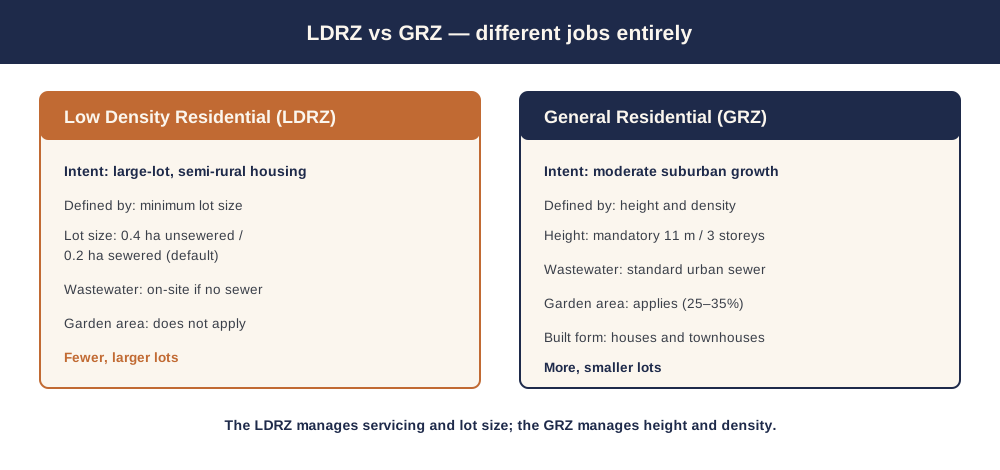
Figure 3: The LDRZ is defined by large-lot minimums and on-site wastewater, where the GRZ is defined by height and garden area.
The General Residential Zone (GRZ) and Neighbourhood Residential Zone (NRZ) are about suburban density, height and garden area; the Residential Growth Zone (RGZ) pushes density higher still. The LDRZ goes the other way — fewer, larger lots. Confirm which zone applies to your land on VicPlan or via a planning property report, and check the schedule for the local minimum lot size.
If your LDRZ project needs a permit
Subdivision and dwelling proposals in the LDRZ turn on servicing, lot size and often bushfire or landscape constraints — detail a council will scrutinise. Your application is far stronger — and less likely to be returned or hit a Request for Further Information — when it's supported by a town planning report that addresses Clause 32.03, your schedule, the wastewater position and any overlays.
Hiring a town planner can take weeks. instantplanning builds the same council-ready report from current Victorian planning scheme data in minutes — you review it before you lodge. Start with what a town planning report is, or just generate your report.
Frequently asked questions
What does Low Density Residential Zone mean in Victoria?
What is the minimum lot size in the LDRZ?
Do I need a planning permit to subdivide in the LDRZ?
Does the garden area requirement apply in the LDRZ?
Can I build a house in the LDRZ without a planning permit?
What's the difference between the LDRZ and the General Residential Zone?
Ready to generate your report?
Skip the writing. Get a council-ready town planning report in 5 minutes.
Get your report