Key takeaways
- ✓Planning permit covers land use; building permit, safety
- ✓Council issues one; a building surveyor the other
- ✓If both apply, the planning permit comes first
- ✓Many projects need only one of the two
Planning Permit vs Building Permit in Victoria
A planning permit and a building permit in Victoria are two completely separate approvals, granted under different laws by different people. A planning permit decides whether your use or development of the land is appropriate; a building permit decides whether the construction itself is safe and compliant. Many projects need only one — and some need both.
Get a council-ready town planning report in 5 minutes — no town planner, no waiting.
Get your report →- ✓What a planning permit covers versus what a building permit covers
- ✓Who issues each, and what law each one sits under
- ✓When you need one, both, or neither
- ✓The order they happen in, and why the planning permit comes first
- ✓How endorsed plans connect the two approvals
The short answer
A planning permit covers the use and development of your land — amenity, neighbourhood character and overlays — and is issued by your council. A building permit covers the safety and code-compliance of the construction and is issued by a registered building surveyor. Where both are needed, the planning permit comes first.
The two systems run on separate Acts and ask different questions, so approval in one never implies approval in the other. The decision tree below shows how to work out which applies to you.
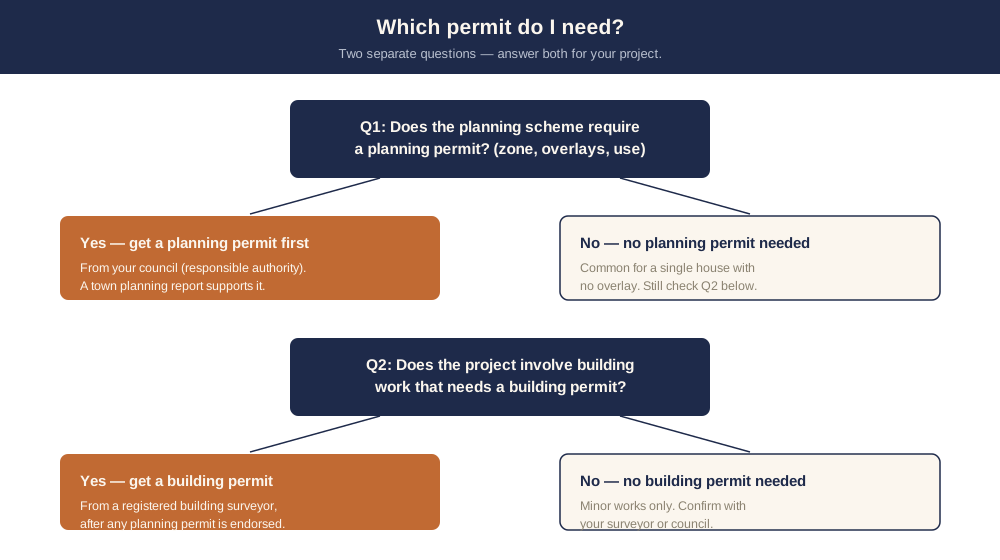
Figure 1: Two separate questions — answer both. A project can land in any combination of the two.
So a compliant extension to a single house with no overlay might need a building permit but no planning permit, while converting a shop to a cafe with no building work might need a planning permit but no building permit.
What each permit actually covers
The cleanest way to keep them straight is to remember that a planning permit asks whether something should happen on the land, and a building permit asks how it is built. A planning permit, granted under the Planning and Environment Act 1987, assesses your proposal against the planning scheme — your zone, any overlays, and policies on amenity, neighbourhood character, overlooking, overshadowing and the impact on neighbours. A building permit, granted under the Building Act 1993, assesses the technical detail of the construction: structure, fire safety, energy efficiency, health and compliance with the National Construction Code.
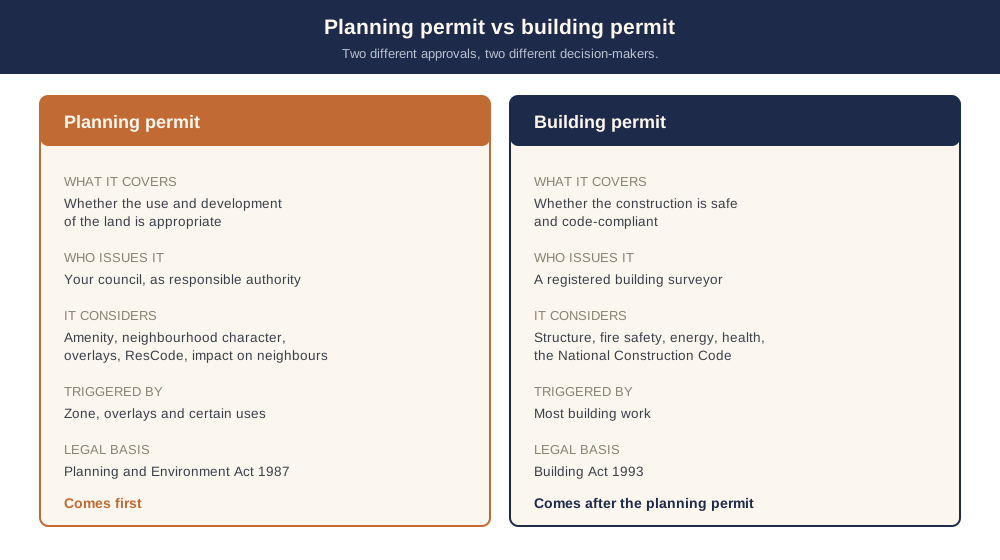
Figure 2: Two different approvals, two different decision-makers, two different Acts.
Because they test different things, it is entirely normal for a council to approve a planning permit only for the building surveyor to later require design changes to meet the construction code — or the reverse. Each approval stands on its own.
Who issues each one
Spend 5 minutes, not 3 weeks
instantplanning generates a council-ready town planning report for Victorian permits. No town planner. No waiting.
Get your report →This is the part that confuses most homeowners, because both can involve the council. A planning permit is decided by your council acting as the responsible authority under the planning scheme — the same body that wrote the local controls is the one that assesses your proposal against them.
A building permit is issued by a registered building surveyor, who may be a private surveyor you engage or a municipal surveyor employed by the council. Either way, the building permit is a separate technical certification, not a planning decision. The Victorian Building Authority registers and regulates building surveyors.
When you need one, both, or neither
Whether you need a planning permit depends entirely on your property's planning scheme — your zone, any overlays over the land, and the specific use or works you are proposing. Many single dwellings and minor works on appropriately zoned residential land need no planning permit at all, unless an overlay applies. You can read more on the triggers in what triggers a planning permit in Victoria.
Whether you need a building permit depends on the Building Act 1993 and the Building Regulations, which require a permit for most building work — construction, alteration, demolition or removal of a building. Only limited, minor works are exempt, so the safe assumption is that any substantive construction needs one.
- ✓Building permit, no planning permit — a compliant single-dwelling extension in a residential zone with no overlay
- ✓Planning permit, no building permit — a change of use with no physical building work
- ✓Both permits — two dwellings on a lot, or works in a heritage or bushfire overlay
- ✓Neither — very minor works that meet the exemptions in both systems
Always confirm both questions for your own property. The first step is to pull your zone and overlays from your council's planning property report, then check what the scheme says about your works — or confirm with your council, since schedules and local policies vary across municipalities. If you are still unsure whether a planning permit applies, our guide on do I need a planning permit in Victoria walks through it step by step.
The order they happen in — and why planning comes first
When a project needs both, the planning permit is obtained first, then the building permit. This is not just custom: a planning permit can change your design — reducing height, adjusting setbacks, cutting the number of dwellings, adding screening or requiring different materials. Those requirements are captured in the endorsed plans, the stamped final drawings the council approves once it is satisfied your plans meet the permit conditions.
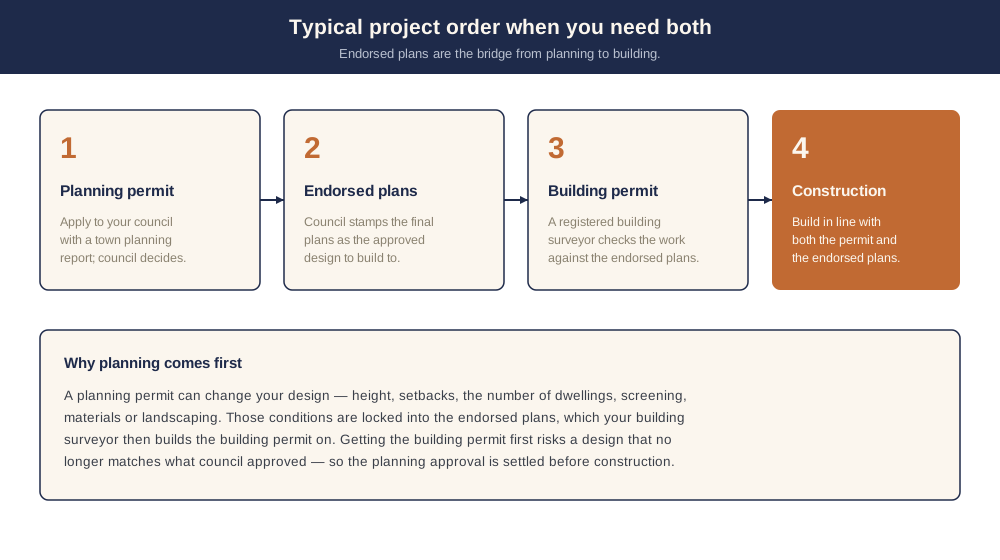
Figure 3: Endorsed plans are the bridge — they carry the planning conditions into the building permit.
Your building surveyor then issues the building permit against those endorsed plans, checking that the construction documentation is consistent with what the council approved. If you obtained the building permit first, the design might no longer match the endorsed planning plans, leaving you to redo work or amend approvals. Getting the planning approval settled before construction avoids exactly that.
A typical extension that needs both, then, runs: planning permit, endorsed plans, building permit, construction. How long the planning stage takes is covered in how long does a planning permit take in Victoria.
Getting the planning side right
The building permit is a technical certification handled by your surveyor. The planning permit is where most applications stall — through incomplete information, unaddressed overlays or a Request for Further Information. An application is far stronger when it is accompanied by a town planning report that addresses your zone, overlays and the relevant ResCode standards (Clause 54 for one dwelling, Clause 55 for two or more).
Hiring a town planner can take weeks. instantplanning builds the same council-ready report from current Victorian planning scheme data in minutes — you review it before you lodge. When you are ready, generate your report.
Frequently asked questions
What is the difference between a planning permit and a building permit in Victoria?
Do I need a planning permit or a building permit?
Which comes first, the planning permit or the building permit?
Who issues a building permit in Victoria?
Can I have a planning permit but still need a building permit?
What are endorsed plans?
Ready to generate your report?
Skip the writing. Get a council-ready town planning report in 5 minutes.
Get your report