Key takeaways
- ✓Many residential projects are exempt if no overlay applies
- ✓One dwelling on 300 m² or more is usually exempt
- ✓Sheds, solar, tanks and most fences are exempt
- ✓An overlay is the top reason exemption disappears
- ✓Planning exemption is not building exemption
What's Exempt From a Planning Permit in Victoria?
Plenty of everyday residential projects are exempt from a planning permit in Victoria — a single house on a normal-sized lot, a small shed, solar panels, a water tank, most boundary fences. The exemptions live in your planning scheme, chiefly the zone and the state-wide exemptions at Clause 62, and they nearly all carry one condition: no overlay applies.
Get a council-ready town planning report in 5 minutes — no town planner, no waiting.
Get your report →- ✓Which residential projects are commonly exempt from a planning permit
- ✓The size, height and setback limits that keep small structures exempt
- ✓Why "works normal to a dwelling" is the phrase that does the heavy lifting
- ✓How overlays remove an exemption that would otherwise apply
- ✓Why a planning exemption is not the same as a building exemption
The short answer
A project is exempt from a planning permit in Victoria when the planning scheme doesn't require one for your zone, the works, and the use — and no overlay imposes its own trigger. In the standard residential zones, one dwelling on a lot of 300 square metres or more, plus small "works normal to a dwelling", are typically exempt.
The exemption is granted by the scheme, not by the size of your plans. The most common exempt projects are grouped below.
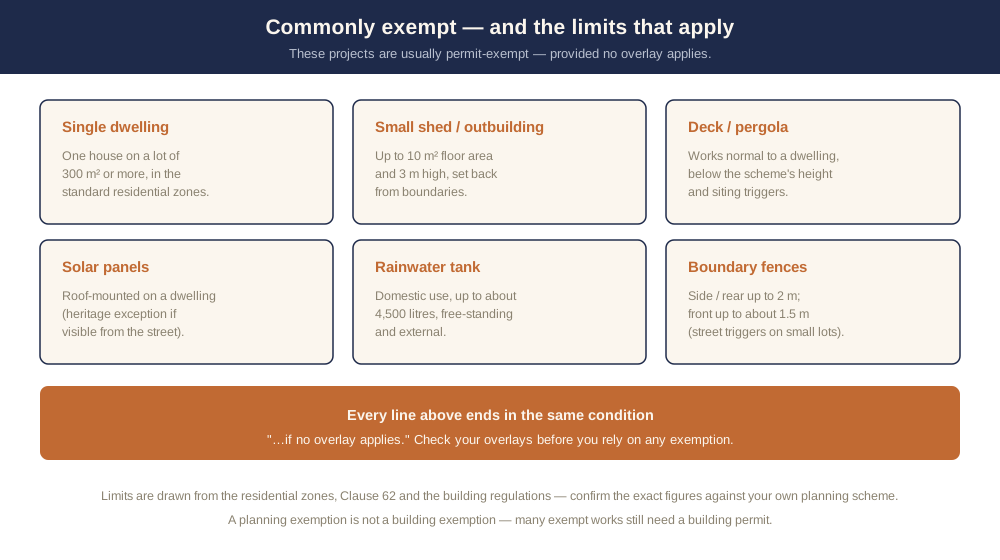
Figure 1: The everyday projects that are usually permit-exempt — each subject to the limits shown, and to no overlay applying.
Is one dwelling exempt from a planning permit?
In the General Residential Zone, Neighbourhood Residential Zone and Township Zone, constructing or extending one dwelling on a lot of 300 square metres or more generally does not require a planning permit. The permit trigger only bites on smaller lots — under 300 square metres — where the zone requires a permit to construct or extend a single dwelling.
So the single most common residential project in the state — one house on one block — is frequently permit-exempt for planning, provided the lot clears 300 square metres and nothing else (an overlay, a second dwelling, a subdivision) pulls it back in. You will still need a building permit for the construction itself; that is a separate approval, covered further down.
What counts as "works normal to a dwelling"?
Spend 5 minutes, not 3 weeks
instantplanning generates a council-ready town planning report for Victorian permits. No town planner. No waiting.
Get your report →The phrase that quietly exempts most small domestic projects is works normal to a dwelling. Under the residential zones and Clause 62 of the Victoria Planning Provisions, ordinary buildings and works associated with an existing house are exempt from a planning permit unless another control says otherwise.
In the General Residential Zone, the zone goes further and spells out a specific outbuilding exemption: no planning permit is needed to construct or extend an outbuilding (other than a garage or carport) where its gross floor area is no more than 10 square metres and its height is no more than 3 metres above ground level. That is the explicit threshold a small garden shed relies on.
- ✓A single dwelling on a lot of 300 m² or more
- ✓A small shed or outbuilding up to 10 m² and 3 m high
- ✓A deck or pergola below the trigger thresholds
- ✓Re-stumping, re-roofing and like-for-like repairs
- ✓Roof-mounted solar panels on a dwelling
- ✓A domestic rainwater tank up to about 4,500 litres
- ✓Most side and rear boundary fences
The decision a homeowner actually has to make is shown below: is the project genuinely exempt, or does something tip it into needing a permit?
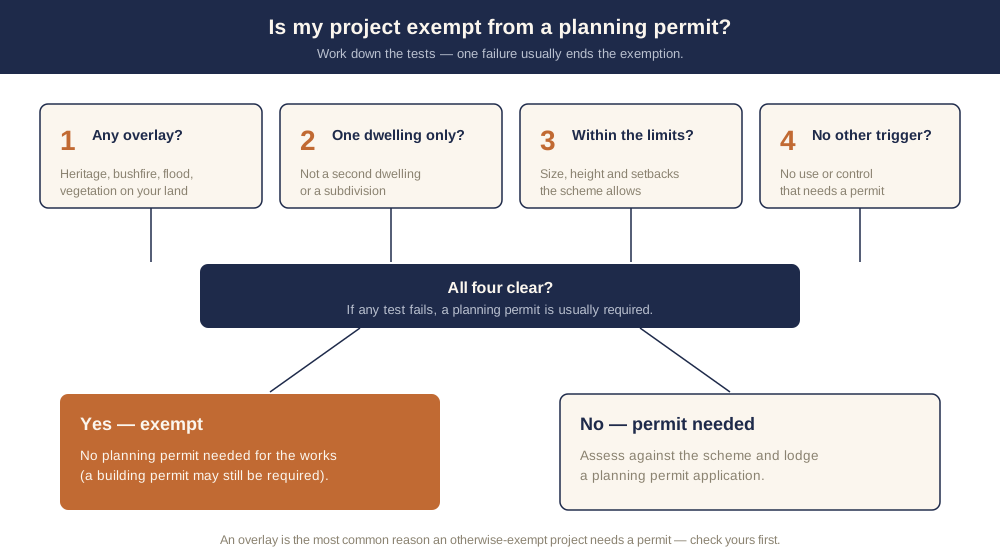
Figure 2: Work down the tests — the moment an overlay or a second dwelling appears, the exemption usually falls away.
What size shed, deck or fence is exempt?
For the structures that prompt the most questions, the practical limits sit across the planning scheme and the building regulations together. The headline figures Victorians rely on are:
A garden shed or small outbuilding is typically exempt from a planning permit up to 10 square metres in area and 3 metres in height, set back from boundaries. A rainwater tank for domestic use is generally exempt up to about 4,500 litres. Side and rear boundary fences up to 2 metres high, and front fences up to about 1.5 metres, are usually exempt — though a front fence within 3 metres of a street can trigger a planning permit on a lot under 300 square metres.
A deck, pergola or verandah is usually exempt where it stays below the scheme's trigger thresholds and counts as works normal to the dwelling — but decks raised above a certain height, or those close to boundaries, can need a building permit even when no planning permit is required. For the project-specific detail, see do I need a planning permit for a shed in Victoria.
How overlays remove an exemption
This is the part that catches people. Every exemption above carries the same silent condition: no overlay applies. An overlay sits on top of your zone and adds its own permit triggers, and it overrides the "works normal to a dwelling" and zone exemptions.
The same 10-square-metre shed that needs no permit on a plain residential block usually does need one inside a Heritage Overlay. Roof-mounted solar panels, exempt almost everywhere, can require a permit in a Heritage Overlay if they are visible from a street (other than a lane) or a public park. In a Bushfire Management Overlay, building a dwelling triggers a permit and a bushfire assessment — although the overlay does carry its own limited exemptions, such as some non-habitable outbuildings under 100 square metres that are ancillary to a dwelling.
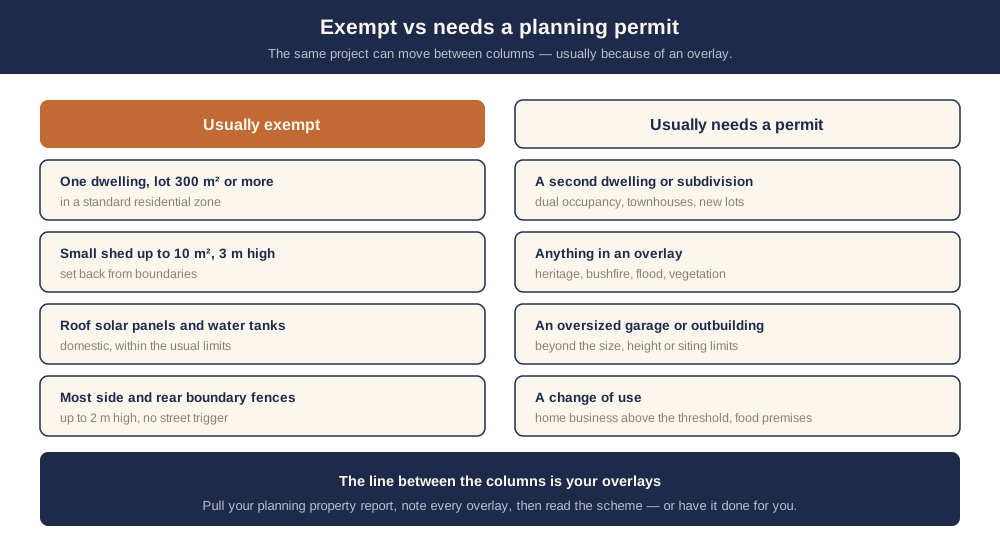
Figure 3: The same project can sit on either side of this line — the deciding factor is usually whether an overlay is on your land.
This is why the only reliable test is to check your overlays before you trust any exemption. Pull your property's planning controls, note every overlay, then read what each one requires. We walk through that in do I need a planning permit in Victoria, and the full list of triggers in what triggers a planning permit in Victoria.
Exempt from planning is not exempt from building
A common trap: being exempt from a planning permit does not mean being exempt from a building permit. A single new house on a 600-square-metre block can be permit-exempt for planning yet still need a building permit for the construction. Likewise re-stumping and re-roofing rarely need a planning permit, but re-stumping does need a building permit. The two approvals answer different questions and are issued by different people.
How to confirm you're actually exempt
You can check the controls on your land for free, then read the scheme against your project. If you clear it — no overlay, within the limits — you may have nothing to lodge at all. If you don't, your application is far stronger when it's backed by a town planning report that addresses your zone, overlays and the relevant ResCode standards (Clause 54 for one dwelling, Clause 55 for two or more).
Hiring a town planner can take weeks. instantplanning builds the same council-ready report from current Victorian planning scheme data in minutes — you review it before you lodge. When you've confirmed a permit is needed, generate your report.
Frequently asked questions
What's exempt from a planning permit in Victoria?
Do I need a planning permit for a single house in Victoria?
Is a garden shed exempt from a planning permit?
Do solar panels need a planning permit in Victoria?
Do overlays remove planning permit exemptions?
Does being exempt from a planning permit mean I don't need a building permit?
Ready to generate your report?
Skip the writing. Get a council-ready town planning report in 5 minutes.
Get your report