Key takeaways
- ✓A modest deck with no overlay usually needs no permit
- ✓A building permit is often still required
- ✓Overlays are the most common deck permit trigger
- ✓Raised decks can trigger overlooking and overshadowing rules
Do I Need a Planning Permit for a Deck in Victoria?
For most homeowners building a deck in Victoria, the answer is reassuring: a modest deck in the backyard of a normal residential lot, with no overlay on the land, usually needs no planning permit at all. What you will almost always need instead is a building permit for the construction. The picture changes, though, the moment an overlay applies or the deck starts affecting a neighbour.
Get a council-ready town planning report in 5 minutes — no town planner, no waiting.
Get your report →- ✓When a deck needs a planning permit and when it doesn't
- ✓Why a building permit is a separate question — and the 800 mm rule
- ✓How overlays turn an exempt deck into one that needs a permit
- ✓How a raised deck can trip ResCode amenity rules
- ✓How to check the controls on your own property
The short answer
A modest, ground-level or low deck on a standard residential lot with no overlay usually does not need a planning permit in Victoria — it is treated as part of your dwelling. You will normally still need a building permit, particularly if the deck is attached to the house or sits more than 800 mm above the ground. Overlays are the main reason a deck needs a planning permit.
The plans you draw don't decide it; your property's planning scheme does. The flow below shows the order to check things in.
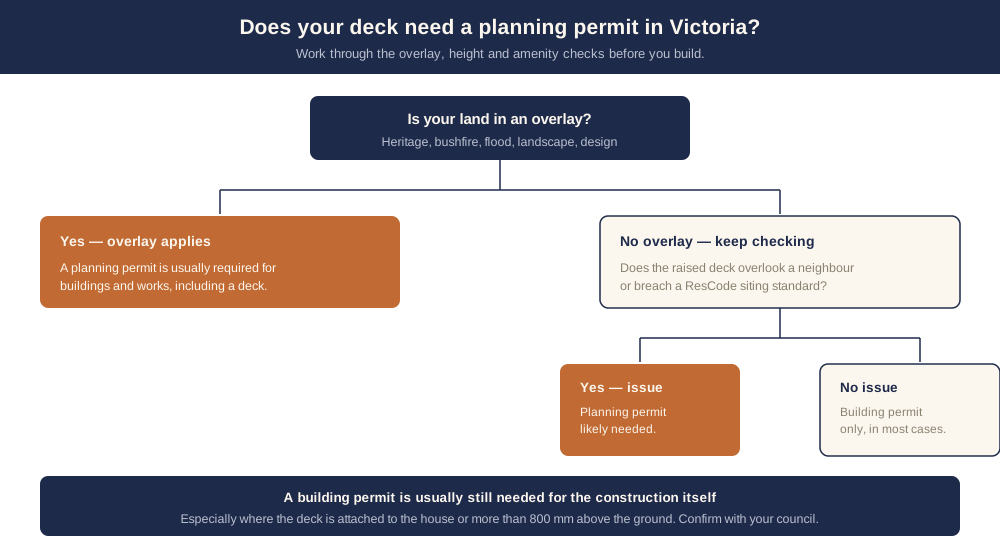
Figure 1: Check overlays first, then height and amenity — the answer is often a building permit only.
Does a deck need a planning permit in Victoria?
For a single dwelling in a standard residential zone — General Residential, Neighbourhood Residential or Residential Growth — on a normal-sized lot with no overlay, a backyard deck that meets the siting and amenity rules is generally treated as part of the dwelling and does not separately trigger a planning permit. In that situation, councils typically deal with the deck through the building permit alone.
That "no overlay" condition is doing a lot of work. The state's residential provisions are about the appropriateness of development — its bulk, its setbacks, its effect on neighbours. A small, compliant deck rarely raises any of those concerns, so the planning scheme doesn't ask you to apply. A deck that pushes into a required setback, that overlooks a neighbour, or that sits on a small lot below the zone's threshold can still need a permit, which we come to below.
Planning permit vs building permit for a deck
Spend 5 minutes, not 3 weeks
instantplanning generates a council-ready town planning report for Victorian permits. No town planner. No waiting.
Get your report →This is where most homeowners get confused, so it is worth separating cleanly. A planning permit asks whether the deck is an appropriate development for the site — its effect on neighbours, character and any overlay controls. A building permit asks whether the deck is safely built to the Building Regulations. They are issued by different people, for different reasons, and a deck can need one, both or neither.
In practice the building permit is the one you are most likely to need. Guidance based on the Building Regulations indicates that a deck more than 800 mm above natural ground level generally requires a building permit, and the Victorian Building Authority's practice note on when a building permit is required does not list decks among exempt work. As a working rule, assume a building permit is needed if the deck is attached to the house, sits more than 800 mm above the ground, is roofed, or forms part of a pool or spa barrier.
- ✓Attached to the house — building permit
- ✓More than 800 mm above ground — building permit
- ✓Roofed or screened to a structure — building permit
- ✓Part of a pool or spa barrier — building permit
- ✓Low, freestanding, no overlay — often a building permit only, no planning permit
For a fuller walk-through of the two approvals and the order they happen in, see planning permit vs building permit. A building surveyor can confirm the building side for your specific design.
When a deck does need a planning permit
A deck crosses into planning permit territory in a handful of recognisable situations. The comparison below puts the two sides next to each other.
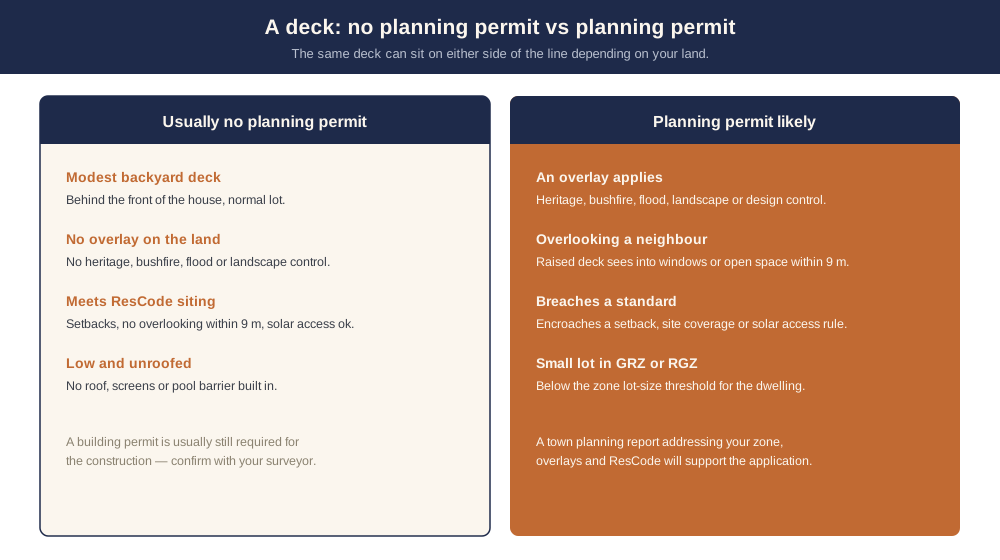
Figure 2: The same deck can sit on either side of the line depending on your land and design.
The first and most common trigger is an overlay. Overlays sit on top of your zone and frequently carry a "permit required for buildings and works" control, which captures a deck. A Heritage Overlay commonly requires a permit for external works including decks; a Bushfire Management Overlay captures buildings and works associated with a dwelling; flood overlays such as the Land Subject to Inundation Overlay and Special Building Overlay require a permit for works on flood-affected land; and Significant Landscape and Design and Development overlays add their own built-form triggers.
A second trigger is the lot itself. The state's common planning questions flag that land in a General Residential Zone under 300 square metres, or a Residential Growth Zone under 200 square metres, can require a planning permit for the dwelling and its associated works. On those small lots, a substantial deck may need a permit even with no overlay.
How a raised deck can trip ResCode
Even without an overlay, a raised deck can run into the residential development standards — ResCode, in Clause 54 for one dwelling and Clause 55 for two or more. The standard that catches decks most often is overlooking: a deck, balcony or terrace should be located and designed to avoid direct views into the secluded private open space and habitable room windows of an existing dwelling within 9 metres. Where there is a direct view, the deck typically needs to be offset, screened to 1.7 metres, or otherwise treated.
A roofed or screened deck can also engage the overshadowing standard if it reduces a neighbour's solar access, and a deck close to a boundary can engage the side and rear setback rules. None of this necessarily means a permit — but a design that breaches a standard usually does, and it is the reason a raised deck deserves a closer look than a ground-level one.
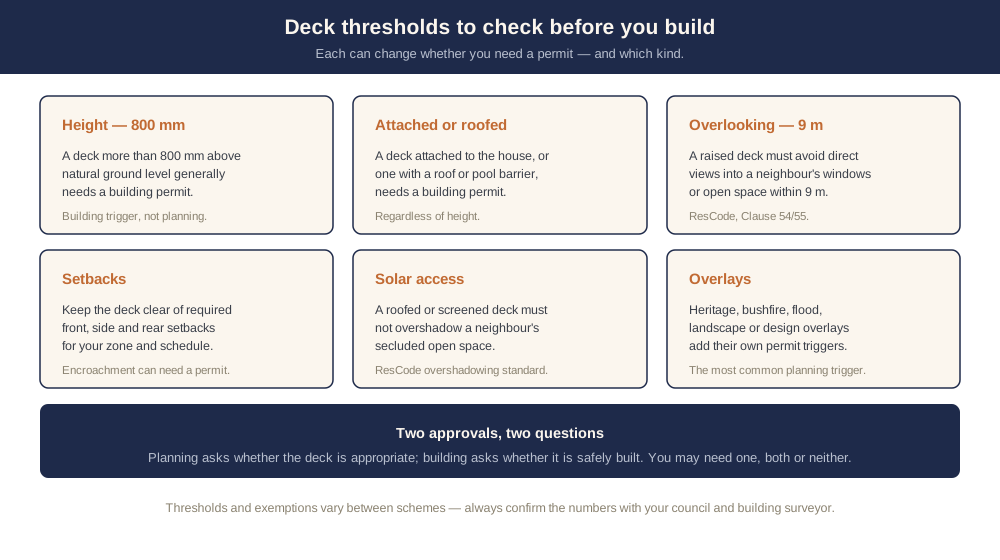
Figure 3: The numbers worth checking before you build — confirm the exact figures with your council.
How to check your own property
You can confirm the controls on your land for free. Look up your address on VicPlan, the state planning map, or generate a planning property report — it lists your zone and every overlay. Note your zone code and any overlays, then read what those controls say about buildings and works in your planning scheme. Because thresholds and exemptions vary between schemes, the final word always rests with your council as the responsible authority under the Planning and Environment Act 1987.
If your deck does need a permit — what's next
If an overlay applies or your design needs a planning permit, your application is far stronger — and far less likely to be returned or hit a Request for Further Information — when it is supported by a town planning report that addresses your zone, overlays and the relevant ResCode standards. Hiring a town planner can take weeks. instantplanning builds the same council-ready report from current Victorian planning scheme data in minutes — you review it before you lodge. Start with what's exempt from a planning permit, or just generate your report.
Frequently asked questions
Do I need a planning permit for a deck in Victoria?
Do I need a building permit for a deck in Victoria?
Does a low ground-level deck need any approval?
Will an overlay mean my deck needs a planning permit?
Can a raised deck need a permit because of overlooking?
How do I check what my deck needs?
Ready to generate your report?
Skip the writing. Get a council-ready town planning report in 5 minutes.
Get your report