Key takeaways
- ✓A verandah with no overlay usually needs no planning permit
- ✓A building permit is almost always required
- ✓An overlay is the most common verandah permit trigger
- ✓Clause 54 siting standards can also trigger one
Do I Need a Planning Permit for a Verandah? (VIC)
For most homeowners adding a verandah to an existing house, the answer in Victoria is no planning permit — provided you're in a standard residential zone and no overlay applies. A verandah serving a single dwelling is treated as buildings and works normal to a dwelling, so the planning scheme generally doesn't require a permit. The twist with a verandah is the roof: because it's a roofed structure, a building permit is almost always required even when no planning permit is.
Get a council-ready town planning report in 5 minutes — no town planner, no waiting.
Get your report →- ✓When a verandah is exempt from a planning permit in Victoria
- ✓Why a verandah almost always needs a building permit anyway
- ✓How a verandah differs from a pergola — and why the roof changes everything
- ✓Which overlays and ResCode siting rules can trigger a planning permit
- ✓How to check the controls on your own property
The short answer
A verandah usually does not need a planning permit in Victoria. A roofed verandah for an existing single dwelling in a general residential zone with no overlay is treated as buildings and works normal to a dwelling, so the scheme doesn't require one. A building permit, however, is almost always required because a verandah is roofed.
A verandah raises two separate approvals: the planning permit (does the scheme allow it?) and the building permit (is it built safely?). For a verandah these usually land in opposite columns — no planning permit, but a building permit yes.
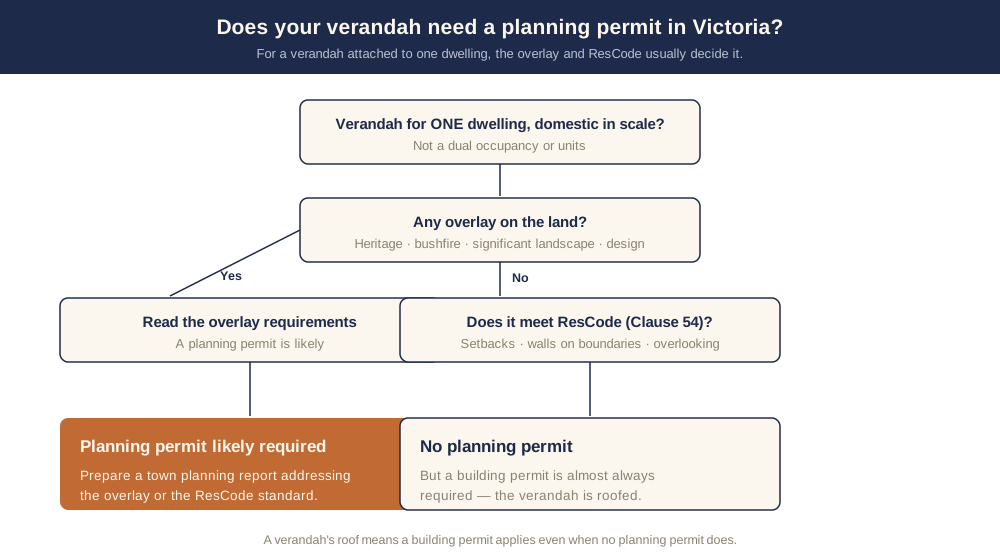
Figure 1: For a single-dwelling verandah, the overlay and ResCode siting are what usually decide whether a planning permit is required.
Do I need a planning permit for a verandah in Victoria?
In a General Residential Zone (and other standard residential zones), the scheme does not require a planning permit to construct or alter one dwelling on a lot and the ordinary domestic structures attached to it. Councils and VCAT treat a verandah, like a deck or carport, as buildings and works normal to a dwelling under the relevant provisions of the Victoria Planning Provisions.
That exemption holds when three things are true: there is only one dwelling on the lot (not a dual occupancy or units), the verandah is domestic in scale and purpose, and no overlay sits over the land. Meet all three and the Planning and Environment Act 1987 scheme generally has nothing to assess — which is why no town planning report is needed for a straightforward attached verandah.
The wording of zone schedules can vary slightly between councils, so the safe step is always to confirm against your own planning scheme. Where an overlay applies, or where the verandah's siting runs into a ResCode standard, the answer can flip — both are covered below.
Do I need a building permit for a verandah?
Spend 5 minutes, not 3 weeks
instantplanning generates a council-ready town planning report for Victorian permits. No town planner. No waiting.
Get your report →This is where a verandah differs sharply from an open pergola. A planning permit and a building permit are different approvals, and even when no planning permit is needed, a verandah almost always needs a building permit.
The Victorian Building Authority's guidance is clear that a roofed structure attached to a house is treated as an extension of the dwelling. The small exemptions in Schedule 3 of the Building Regulations 2018 are aimed at minor open or freestanding structures — a pergola, a small shed — and a typical attached, roofed verandah falls outside those exemption settings. Because the roof changes its classification, a verandah generally requires a building permit regardless of its size.
A registered building surveyor issues the building permit; it's a separate process from any planning approval. So the common pattern for a backyard verandah is: no planning permit, but yes a building permit. Confirm the position with your council or a building surveyor before you start, because how a structure is classified can hinge on the roof and the way it attaches to the house.
Pergola vs verandah — why the roof matters
The single biggest factor in how your structure is treated is the roof. This is also where many homeowners get caught: what they call a "pergola" the council may classify as a verandah the moment a solid roof goes on.
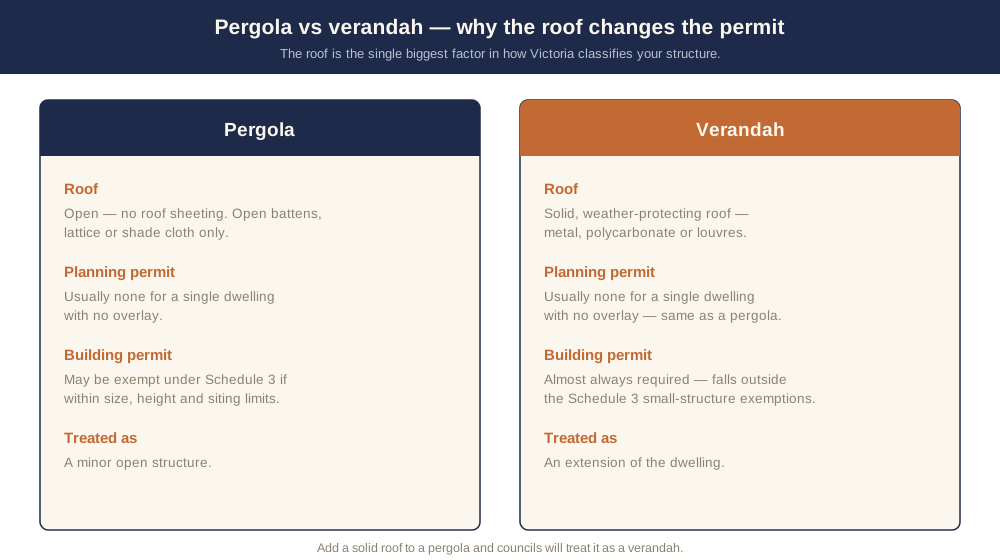
Figure 2: A pergola is open and can be building-permit exempt; add a solid roof and it becomes a verandah, which almost always needs a building permit.
An open pergola (no roof sheeting, permeable covering only such as open battens, lattice or shade cloth) can fall within the Schedule 3 building-permit exemption when it stays within the size, height and siting limits. A verandah has a solid, weather-protecting roof and is treated as an extension of the dwelling, so it almost always needs a building permit regardless of size. Add polycarbonate, metal sheeting or closing louvres that form a waterproof roof, and councils will treat your "pergola" as a verandah.
If you're leaning the other way toward an open structure, read our companion guide on whether a pergola needs a planning permit in Victoria.
When does an overlay or ResCode trigger a planning permit?
This is the part that overrides everything above. An overlay sits on top of your zone and can require a planning permit for buildings and works even when the structure is normal to a dwelling. Separately, the ResCode siting standards in Clause 54 can pull a verandah into planning assessment if it breaches a standard. The triggers that most often catch a verandah are shown below.
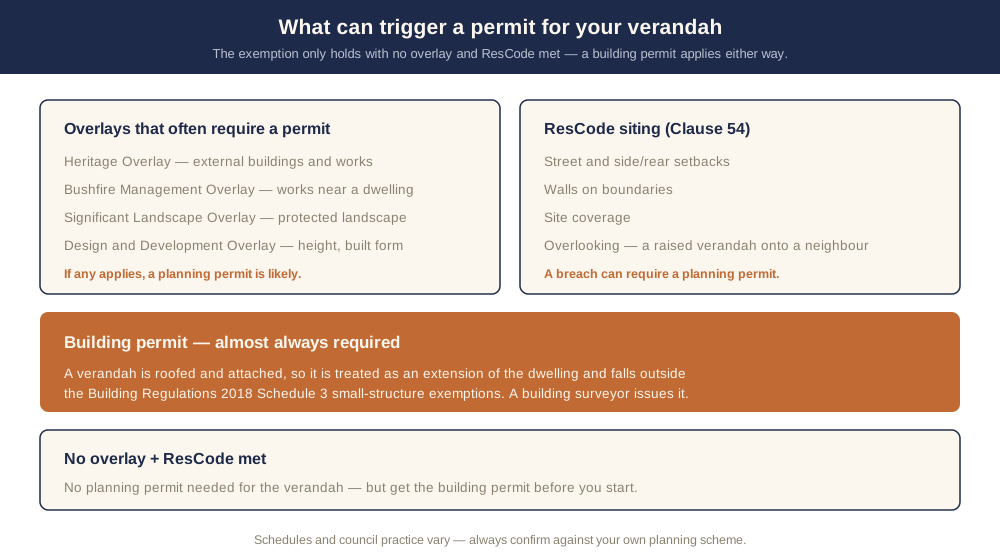
Figure 3: The exemption only holds when no overlay applies and the verandah meets the ResCode siting standards — a building permit applies either way.
A Heritage Overlay commonly requires a planning permit for external buildings and works, and many schedules name verandahs specifically — especially anything visible from the street. A Bushfire Management Overlay can require a permit for buildings and works associated with a dwelling, depending on the schedule. A Significant Landscape Overlay or Design and Development Overlay can require a permit where a structure affects the protected landscape, height or built form. Even with no overlay, the Clause 54 standards on street and side/rear setbacks, walls on boundaries, site coverage and overlooking can require a permit if your verandah doesn't meet them — for instance, a raised verandah that overlooks a neighbour's private open space. If any of these applies, assume a planning permit is likely and read the requirements — or confirm with your council.
How to check your own property
You can confirm the controls on your land for free before you build:
- ✓Look up your address on VicPlan or generate a planning property report — it lists your zone and every overlay.
- ✓Note your zone and any overlays (HO, BMO, SLO, DDO).
- ✓If an overlay applies, or the verandah's siting is tight against a boundary, read what the controls and Clause 54 say — or have it checked for you.
If your verandah does need a permit — what's next
If an overlay or a ResCode siting issue means your verandah needs a planning permit, the application is far stronger — and far less likely to be returned or hit a Request for Further Information — when it's backed by a town planning report that addresses your zone, the overlay and the relevant Clause 54 standards.
Hiring a town planner can take weeks. instantplanning builds the same council-ready report from current Victorian planning scheme data in minutes — you review it before you lodge. Not sure a verandah even triggers a permit? Start with what's exempt from a planning permit in Victoria, or just generate your report.
Frequently asked questions
Do I need a planning permit for a verandah in Victoria?
Do I need a building permit for a verandah in Victoria?
What's the difference between a verandah and a pergola for permits?
Does a verandah in a Heritage Overlay need a planning permit?
Can a verandah trigger a planning permit even without an overlay?
Can I prepare and lodge the planning report myself?
Ready to generate your report?
Skip the writing. Get a council-ready town planning report in 5 minutes.
Get your report