Key takeaways
- ✓A Vegetation Protection Overlay sits at Clause 42.02 and triggers a permit to remove, destroy or lop vegetation specified in its schedule.
- ✓The schedule decides which vegetation is protected — it is not always every tree on the land.
- ✓Common exemptions cover emergency works, fire protection, declared noxious weeds and anything the schedule lists.
- ✓Removing one tree often runs on the VicSmart fast track with a 10 business-day decision, but check the schedule.
Do I Need a Permit to Remove Vegetation (VPO)?
If your land carries a Vegetation Protection Overlay (VPO) in Victoria, you usually need a planning permit to remove, destroy or lop the vegetation the overlay protects. The overlay sits at Clause 42.02 of the Victoria Planning Provisions, and the detail that matters most is in its schedule — which spells out exactly which vegetation is covered and which works are exempt. So the answer is rarely a flat yes; it depends on what you want to do and what your schedule says.
Get a council-ready town planning report in 5 minutes — no town planner, no waiting.
Get your report →- ✓When a Vegetation Protection Overlay triggers a planning permit
- ✓What the schedule controls, and why it is the document that decides
- ✓The common exemptions — emergency works, fire protection, noxious weeds
- ✓When tree removal can use the VicSmart fast track
- ✓How to check the controls on your own property
The short answer
In a Vegetation Protection Overlay you need a planning permit to remove, destroy or lop any vegetation specified in the schedule to Clause 42.02. The schedule defines the protected vegetation and any exemptions. Emergency works, fire protection, declared noxious weeds and schedule-listed cases are generally exempt, and removing a single tree often qualifies for the VicSmart fast track.
The figure below shows how to work through it.
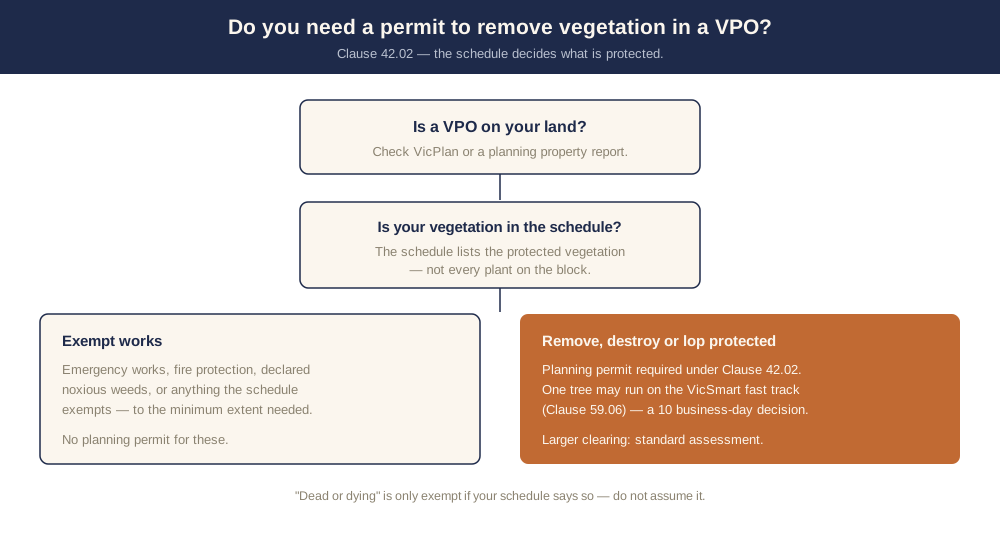
Figure 1: Start with the schedule — it tells you which vegetation is protected and which works are exempt.
So two neighbouring blocks under the same VPO number can still get different answers, because the schedule may protect remnant native vegetation on one and a specific stand of canopy trees on the other.
What a Vegetation Protection Overlay does
A Vegetation Protection Overlay protects vegetation for its environmental, landscape or habitat value — for example remnant bushland, significant tree stands, or vegetation along a ridgeline. It sits on top of your zone, so it adds its own permit trigger regardless of what the zone allows. Under Clause 42.02-2, a permit is required to remove, destroy or lop any vegetation specified in a schedule to the overlay.
The word "specified" is the key. The base clause does not protect every plant on your land — it protects what the schedule identifies. That might be all native vegetation, vegetation over a certain height or trunk size, or particular species. Read the schedule first; it is the document that decides.
When a permit is triggered
Spend 5 minutes, not 3 weeks
instantplanning generates a council-ready town planning report for Victorian permits. No town planner. No waiting.
Get your report →The trigger under Clause 42.02 is broad: remove, destroy or lop. Lopping matters because pruning beyond the schedule's limits can need a permit even when you are not removing the tree at all. The works that most often require a permit are compared below.
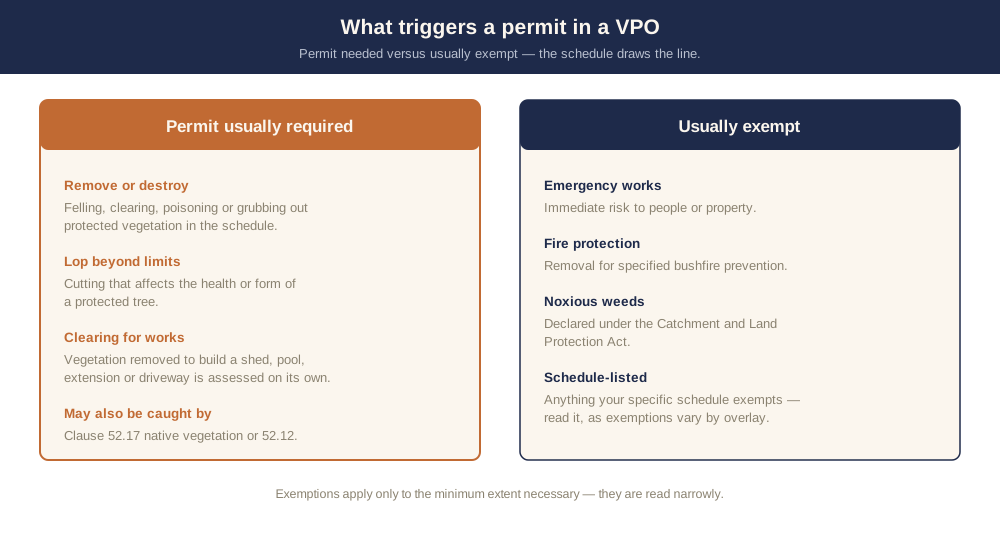
Figure 2: The same overlay can require a permit for one job and exempt another — the schedule draws the line.
Removing or destroying protected vegetation. Felling a protected tree, clearing a stand, poisoning vegetation or grubbing out roots are all "remove or destroy" and need a permit where the schedule covers that vegetation.
Lopping beyond limits. Cutting back branches or canopy can count as lopping. Many schedules allow minor pruning but require a permit for anything that affects the health or form of a protected tree, so confirm the threshold before you start.
Buildings or works that need vegetation cleared. If you are building an extension, shed, pool or driveway and that work means removing protected vegetation, the VPO trigger applies to the vegetation even though the structure itself might be exempt. The vegetation is assessed on its own.
A VPO is one of several vegetation controls in Victoria. Separate provisions — Clause 52.17 for native vegetation and Clause 52.12 — can also apply, and a tree might be caught by more than one control at once. Our guide to tree and vegetation removal in Victoria walks through how the controls overlap.
Common exemptions
The standard Clause 42.02 carries a set of exemptions, and the schedule can add more. No permit is generally needed to remove, destroy or lop vegetation to the minimum extent necessary in these situations:
- ✓Emergency works where vegetation is an immediate risk to people or property
- ✓Fire protection — removal to comply with specified bushfire prevention requirements
- ✓Declared noxious weeds under the Catchment and Land Protection Act
- ✓Vegetation planted or grown for crop raising or extensive animal husbandry
- ✓Anything the schedule to your VPO specifically exempts
Two cautions. First, "dead or dying" vegetation is not automatically exempt under the base VPO clause — unlike some other overlays, that exemption depends on your schedule, so do not assume it. Second, every exemption is read narrowly: "minimum extent necessary" means exactly that. When in doubt, treat the work as needing a permit and confirm with your council, the responsible authority under the Planning and Environment Act 1987.
VicSmart: the fast track for one tree
If you do need a permit but the job is small, it may run on VicSmart — a streamlined assessment with a 10 business-day statutory decision timeframe, set application requirements and no public notice. Removing, destroying or lopping a single tree is a recognised VicSmart class under Clause 59.06, and many VPO-triggered tree removals fit it where the schedule and thresholds are met.
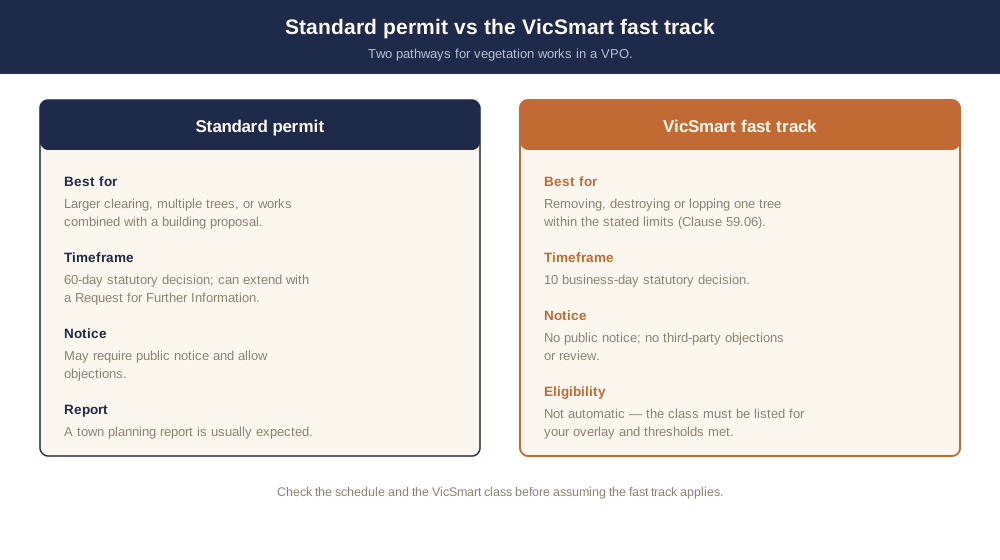
Figure 3: Where the works qualify, VicSmart is faster and lighter — but eligibility is set by the schedule, not by you.
VicSmart is not automatic. The class has to be listed for your overlay and your works have to meet every threshold — typically a single tree, within stated limits. Larger clearing, multiple trees, or works combined with a building proposal usually fall back to a standard assessment. You can read more on the pathway at VicSmart vs a standard planning permit.
How to check your own property
You can confirm the controls on your land for free:
- ✓Look up your address on VicPlan or generate a planning property report — it lists your zone and every overlay, including any VPO and its number.
- ✓Open the schedule to that VPO in your planning scheme and read what vegetation it protects and which works it exempts.
- ✓Match your proposed works against the trigger and the exemptions — then check whether the VicSmart class applies.
If you do need a permit — what's next
When a Vegetation Protection Overlay triggers a permit, your application is far stronger — and far less likely to be returned or hit a Request for Further Information — when it is backed by a town planning report that addresses Clause 42.02, your specific schedule, and the environmental value of the vegetation.
Hiring a town planner can take weeks. instantplanning builds the same council-ready report from current Victorian planning scheme data in minutes — you review it before you lodge. Start with our explainer on the Vegetation Protection Overlay, or just generate your report.
Frequently asked questions
Do I need a planning permit to remove a tree in a Vegetation Protection Overlay?
What does a Vegetation Protection Overlay protect?
Is lopping or pruning allowed without a permit in a VPO?
What is exempt from a permit in a Vegetation Protection Overlay?
Can tree removal in a VPO use the VicSmart fast track?
How do I find out if a Vegetation Protection Overlay applies to my land?
Ready to generate your report?
Skip the writing. Get a council-ready town planning report in 5 minutes.
Get your report