Key takeaways
- ✓No statewide rule; it depends on your controls
- ✓Overlays are the most common tree-removal trigger
- ✓Clauses 52.17 and 52.37 protect native and canopy trees
- ✓Council local laws can protect trees separately
Do I Need a Permit to Remove a Tree? (VIC)
Whether you need a planning permit to remove a tree in Victoria depends almost entirely on the planning controls over your land — the overlays that apply, and a handful of statewide particular provisions. There is no single rule that every tree needs a permit, and there is no rule that none do. The tree itself rarely decides it; the controls on the title do.
Get a council-ready town planning report in 5 minutes — no town planner, no waiting.
Get your report →- ✓When tree removal needs a planning permit, and when it doesn't
- ✓Which overlays most often protect trees and vegetation
- ✓What the native vegetation and canopy tree clauses require
- ✓How the bushfire clearing exemptions work
- ✓Why council local laws are a separate check you can't skip
The short answer
You need a planning permit to remove a tree in Victoria when a control over your land requires one — most commonly a vegetation, landscape, environmental or heritage overlay, the native vegetation provision (Clause 52.17), or the new canopy tree provision (Clause 52.37) in residential zones. With no such control, removal is often permit-free.
The controls — not the chainsaw — decide it. The figure below shows the order to check them.
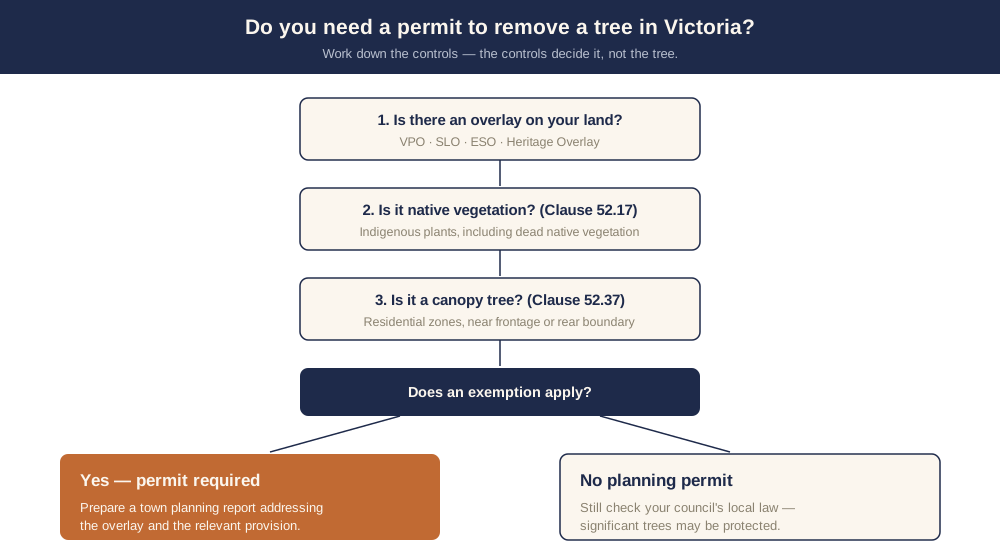
Figure 1: Work down the controls — an overlay or a particular provision is what turns a permit-free removal into one that needs approval.
So two identical gum trees can have different answers: one in a plain residential street with no overlays and outside the canopy tree triggers may need no planning permit, while the same tree in a Significant Landscape Overlay or within the protected setbacks of the canopy tree provision will.
Which overlays protect trees in Victoria
Overlays are the most common reason tree removal needs a permit. Each sits on top of your zone and adds its own trigger, and each has a schedule that sets the exact rules — so the detail varies by council. The overlays that catch homeowners most often are compared below.
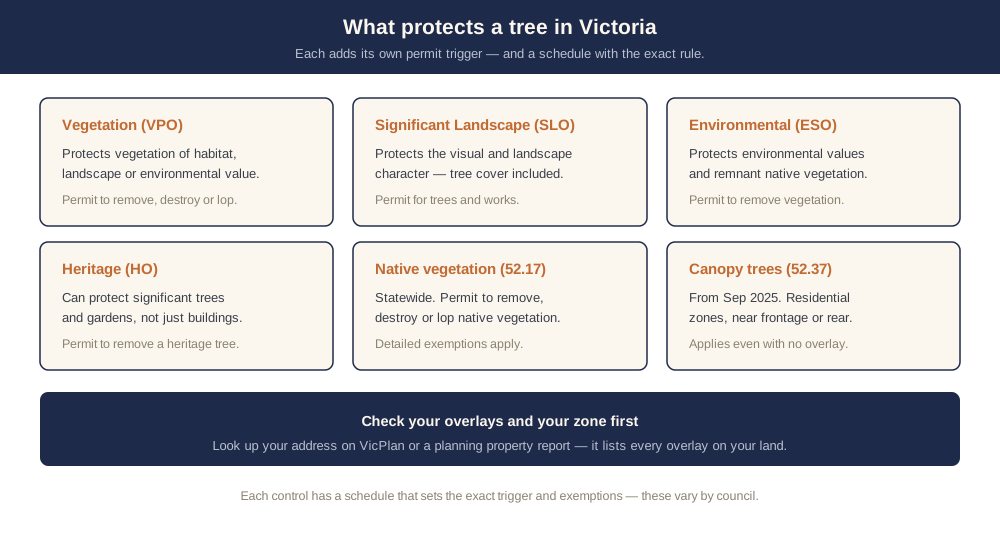
Figure 2: The controls that most often require a permit to remove, lop or prune a tree. Check the schedule — it sets the exact trigger.
A Vegetation Protection Overlay (VPO) protects vegetation identified as significant for habitat, landscape or environmental value, and typically requires a permit to remove, destroy or lop the protected vegetation. A Significant Landscape Overlay (SLO) protects the visual and landscape character of an area, where tree cover is often part of what's valued. An Environmental Significance Overlay (ESO) protects environmental values and remnant native vegetation. A Heritage Overlay (HO) can protect significant trees and gardens as part of a heritage place, not just buildings. If any of these is on your land, assume a permit is likely and read that overlay's schedule.
Native vegetation: Clause 52.17
Spend 5 minutes, not 3 weeks
instantplanning generates a council-ready town planning report for Victorian permits. No town planner. No waiting.
Get your report →Separate from the overlays, Clause 52.17 of the Victoria Planning Provisions applies across the state and requires a planning permit to remove, destroy or lop native vegetation, including dead native vegetation — subject to a long list of exemptions. "Native vegetation" means indigenous plants; a planted exotic ornamental in a suburban yard usually isn't caught by 52.17 (though it may still be caught by an overlay or by Clause 52.37).
The exemptions in Clause 52.17 are detailed and condition-based. They commonly cover removal to the minimum extent necessary for bushfire protection, removal to build or maintain a fence within set limits, limited clearance around existing buildings, declared weeds, and certain utility, road-safety and emergency works. Because the thresholds are technical and change by amendment, read the clause for your own scheme rather than relying on a rule of thumb.
Clause 52.37: the canopy tree rule
From 15 September 2025, a new statewide provision — Clause 52.37 (Canopy trees) — applies in specified residential zones (including the General Residential, Neighbourhood Residential, Residential Growth, Mixed Use, Township and Housing Choice and Transport zones). It can require a planning permit to remove, destroy or lop a canopy tree even where no overlay applies and the tree is not native.
A permit is generally triggered for a canopy tree within 6 metres of the narrowest street frontage or 4.5 metres of the rear boundary on land with a dwelling, with broader triggers on vacant residential land. There are exemptions — including dead trees, declared noxious weeds, emergency works, light routine pruning and fire-protection activities. This provision means many ordinary backyard trees now sit inside a permit trigger that didn't exist before, so it's worth confirming against the current clause for your zone.
The bushfire clearing exemptions
If your land is in a designated bushfire-prone area, the bushfire protection exemptions can let you clear vegetation around an existing home without a permit — the rules often called the "10/30" and "10/50". The figure below maps the common triggers and the main exemptions side by side.
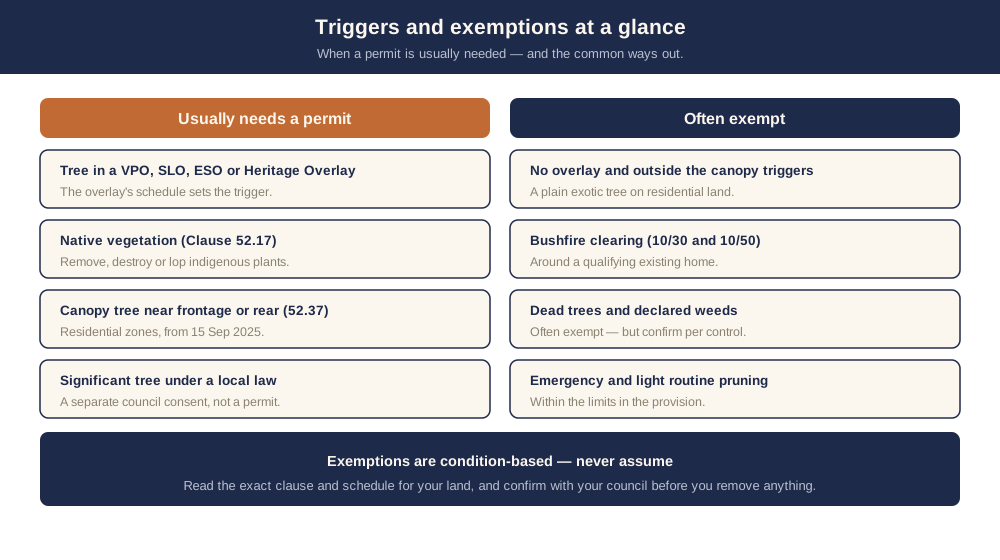
Figure 3: Triggers on the left, exemptions on the right. The bushfire and dead-tree exemptions are the ones homeowners rely on most.
Under the 10/30 rule you can generally clear any vegetation within 10 metres of an existing home, and vegetation other than trees within 30 metres; the 10/50 rule extends the "other than trees" distance to 50 metres in higher-risk areas. These only apply to qualifying buildings — typically a dwelling used for accommodation, in a bushfire-prone area, built or approved before 10 September 2009. If your building doesn't meet the criteria, the exemption doesn't apply, so confirm it before clearing.
Council local laws are a separate check
This is where people get caught out: even when the planning scheme needs no permit, many councils run a local law that protects significant trees on private land — a significant-tree register, or a tree-protection local law tied to trunk size or species. A tree can be completely exempt under the planning scheme and still require local-law consent to remove.
The planning permit and the local law are two different approvals from the same council. Always check both before you remove anything — and when in doubt, confirm directly with your council's planning department.
How to check your own tree
You can confirm the controls on your land for free:
- ✓Look up your address on VicPlan or generate a planning property report — it lists your zone and every overlay.
- ✓Note any vegetation, landscape, environmental or heritage overlay, and check whether your zone brings Clause 52.37 into play.
- ✓Read what those controls say about removing a tree in the planning scheme — then call your council to confirm both the permit position and any local law.
If you do need a permit — what's next
If removing your tree needs a planning permit, your application is far stronger — and far less likely to be returned or hit a Request for Further Information — when it's accompanied by a town planning report that addresses your zone, the relevant overlay and the applicable provisions. Some single-tree removals also qualify for the streamlined VicSmart pathway, with a 10 business-day decision; see do I need a permit for vegetation in a VPO for how that works.
Hiring a town planner can take weeks. instantplanning builds the same council-ready report from current Victorian planning scheme data in minutes — you review it before you lodge. Start by checking what triggers a planning permit in Victoria, or just generate your report.
Frequently asked questions
Do I need a planning permit to remove a tree in Victoria?
Do I need a permit to remove a tree in my own backyard?
How do I know if my tree is protected?
Can I remove trees for bushfire protection without a permit?
Is a dead tree exempt from a permit?
What's the difference between a planning permit and a council local law for trees?
Ready to generate your report?
Skip the writing. Get a council-ready town planning report in 5 minutes.
Get your report