Key takeaways
- ✓The Significant Landscape Overlay is Clause 42.03, and it commonly requires a permit for buildings, works, fences and vegetation removal.
- ✓The SLO is entirely schedule-specific — your schedule sets the exact triggers, exemptions and objectives.
- ✓Vegetation and tree removal is one of the most common SLO permit triggers.
- ✓Some straightforward SLO vegetation removal can run on the faster VicSmart pathway.
Do I Need a Permit in an SLO?
If your land carries a Significant Landscape Overlay, then buildings, works, fences and — very often — removing vegetation will usually need a planning permit. The Significant Landscape Overlay, known as Clause 42.03 of the Victoria Planning Provisions, protects landscapes the community values: a treed neighbourhood character, a ridgeline, a coastal edge or a leafy hillside. Its defining feature is that it is schedule-specific — what needs a permit on your land is set by the particular schedule mapped over it, so two SLOs can work very differently.
Get a council-ready town planning report in 5 minutes — no town planner, no waiting.
Get your report →- ✓What the Significant Landscape Overlay protects and how to check it
- ✓What buildings, works and vegetation removal trigger a permit
- ✓Why the schedule is the part that really matters
- ✓The landscape character objectives your design must meet
- ✓When vegetation removal can use VicSmart
The short answer
In a Significant Landscape Overlay you usually need a planning permit to construct a building, carry out works, build a fence, or remove, destroy or lop vegetation — under Clause 42.03. But the overlay is entirely schedule-specific: your schedule sets the exact triggers, exemptions and objectives, so always read it for your land.
The overlay turns the usual "is this exempt?" question on its head, because the answer lives in your schedule rather than in a single statewide rule. The diagram shows the common triggers and where the schedule fits.
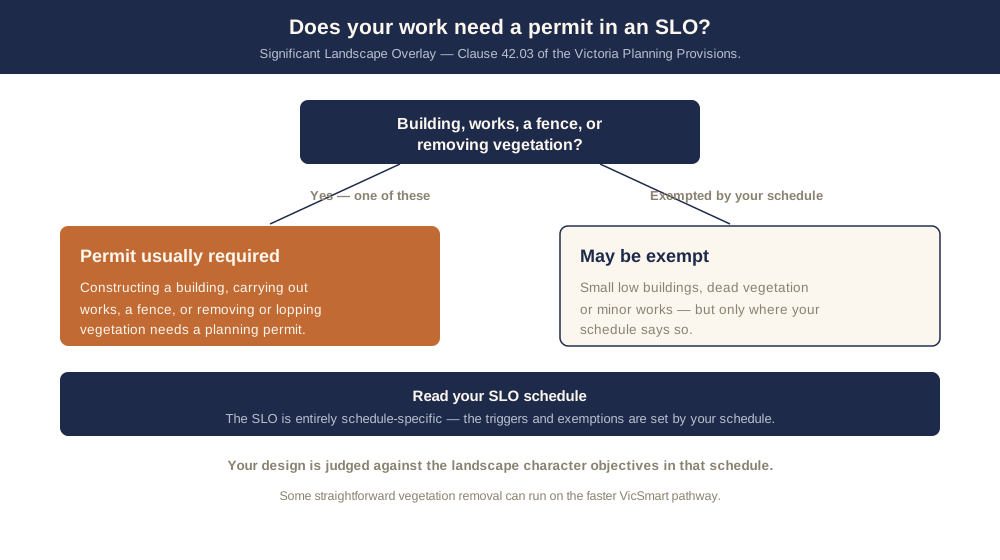
Figure 1: The common SLO triggers — buildings, works, fences and vegetation removal — all read against your schedule.
What does the Significant Landscape Overlay protect?
The overlay applies to land where the landscape itself is significant — for its trees, its views, its natural features or its contribution to the character of an area. The aim is to keep new development subordinate to the landscape: in scale, siting, materials and the vegetation it retains.
Check your address on VicPlan or pull a planning property report. If a Significant Landscape Overlay applies, it shows as SLO followed by a number — and that number is the key, because it points to the specific schedule that governs your land.
What triggers a planning permit in an SLO?
Spend 5 minutes, not 3 weeks
instantplanning generates a council-ready town planning report for Victorian permits. No town planner. No waiting.
Get your report →Under Clause 42.03 and a typical schedule, a planning permit is commonly required to:
- ✓Construct a building or extend an existing one
- ✓Construct or carry out works — earthworks, hardstand, some structures
- ✓Remove, destroy or lop vegetation, often including specified trees
- ✓Construct a fence
Vegetation is the trigger that catches homeowners most often. In a treed SLO, taking out a single large tree can need a permit even when the same job would be unremarkable elsewhere. The council is your responsible authority under the Planning and Environment Act 1987, and it assesses whether the work respects the landscape the overlay is there to protect.
Why the schedule is the part that really matters
Here is the single most important thing to understand about the SLO: it is entirely schedule-specific. Each SLO schedule sets its own permit requirements, its own exemptions, its own landscape character objectives and its own decision guidelines. One schedule might exempt buildings under a certain height; another might require a permit for almost any works; a third might only control vegetation above a set size.
That means you cannot answer "do I need a permit?" from the overlay code alone. You have to read your SLO schedule.
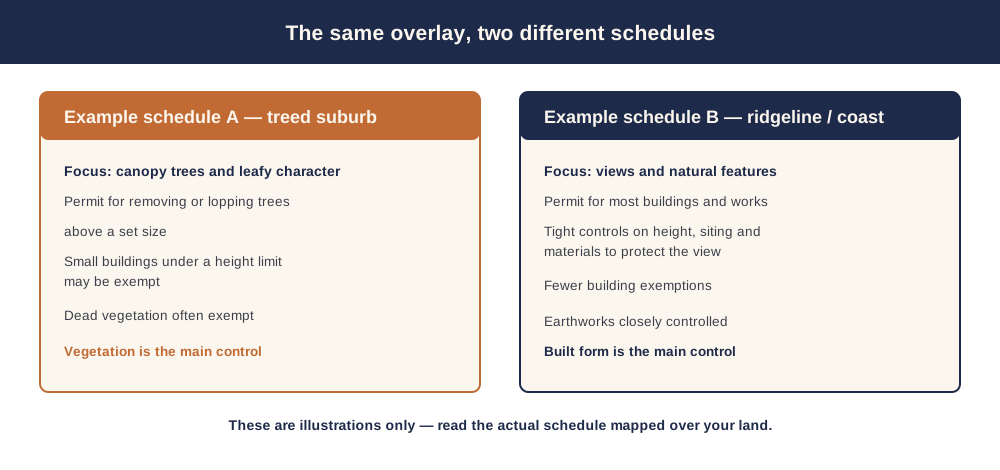
Figure 2: Two SLO schedules over different land can require very different things — always read your own.
Common exemptions you might find in a schedule — though never assume yours has them — include small or low buildings under set limits, removing dead vegetation, taking out some non-native trees under a size threshold, minor works for access or services, and certain low fences. The exact wording and thresholds vary schedule by schedule.
What are the landscape character objectives?
Every SLO schedule includes landscape character objectives to be achieved — the outcomes your proposal is judged against. They generally aim to:
- ✓Protect and enhance the significant landscape and its key views
- ✓Retain important vegetation, especially canopy and indigenous trees
- ✓Keep built form subordinate to the landscape in scale, siting and materials
- ✓Maintain natural features such as ridgelines, watercourses or a coastal or rural edge
When you apply, you are not just describing your build — you are showing how it meets these objectives. An application that ignores them, or that proposes a bulky form on a sensitive site, is the kind that attracts a Request for Further Information or a refusal.
Can SLO vegetation removal use VicSmart?
Sometimes, yes. Certain straightforward vegetation-removal proposals affected by overlays — including some SLOs — can be eligible for VicSmart, the streamlined pathway with a 10 business-day decision timeframe and set application requirements. Whether yours qualifies depends on the VicSmart classes in the scheme and the wording of your SLO schedule, so confirm both before assuming the fast track applies. You can read about the pathway at VicSmart and in VicSmart vs a standard planning permit. If you are mainly dealing with tree removal, also read do I need a planning permit for tree removal.
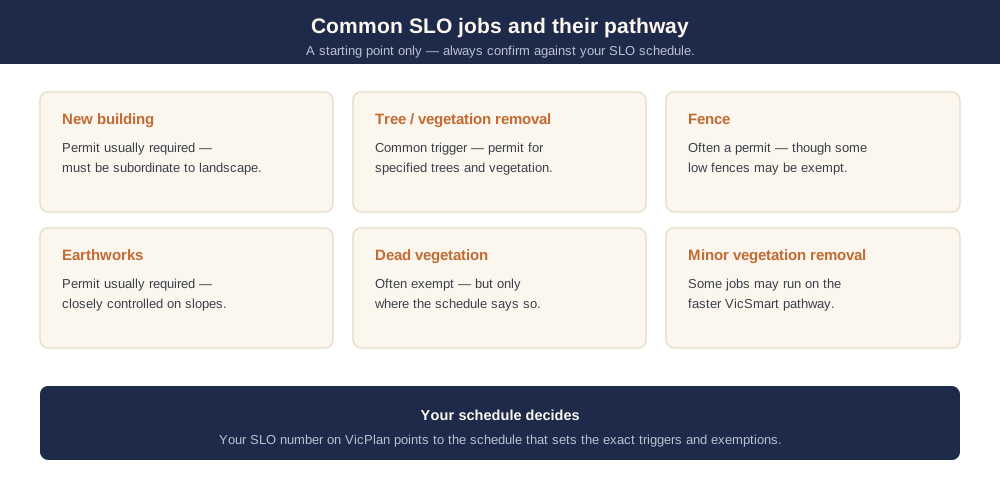
Figure 3: Common SLO jobs and the pathway each usually follows — always confirmed against your schedule.
Working in an SLO? Build the application around the landscape
A Significant Landscape Overlay application turns on how well it meets the landscape character objectives in your schedule — and on getting the vegetation and built-form detail right. A town planning report that reads your specific SLO schedule and frames the design around its objectives is far more likely to clear assessment without delay. Hiring a town planner can take weeks. instantplanning builds the same council-ready report from current Victorian planning scheme data in minutes — you review it before you lodge. Start with the Significant Landscape Overlay explained, compare with the Vegetation Protection Overlay, or just generate your report.
Frequently asked questions
Do I need a planning permit in a Significant Landscape Overlay in Victoria?
Do I need a permit to remove a tree in an SLO?
Why does the SLO schedule matter so much?
What are landscape character objectives?
Can SLO vegetation removal be fast-tracked?
Ready to generate your report?
Skip the writing. Get a council-ready town planning report in 5 minutes.
Get your report