Key takeaways
- ✓An Environmental Significance Overlay sits at Clause 42.01 and can trigger a permit for buildings and works, subdivision, fences and vegetation removal.
- ✓The schedule sets the detail — many limit the trigger to native vegetation near a waterway or to certain works.
- ✓Applications are often referred to a catchment management authority or water corporation, which can object or set conditions.
- ✓Dead vegetation is covered by the base clause, unlike a Vegetation Protection Overlay — always read the schedule.
Do I Need a Permit in an ESO?
If your land carries an Environmental Significance Overlay (ESO) in Victoria, there is a good chance your project needs a planning permit — the overlay can be triggered by buildings and works, subdivision, fences and vegetation removal alike. It sits at Clause 42.01 of the Victoria Planning Provisions, and the schedule behind your overlay number sets how far the trigger reaches. An ESO often comes with a twist standard overlays don't: your application may be referred to an external authority such as a catchment management authority.
Get a council-ready town planning report in 5 minutes — no town planner, no waiting.
Get your report →- ✓What an Environmental Significance Overlay protects, and why it is broad
- ✓The permit triggers under Clause 42.01 — buildings, works, subdivision, vegetation
- ✓How the schedule narrows or widens those triggers
- ✓When your application gets referred to an external authority
- ✓How to check the controls on your own property
The short answer
An Environmental Significance Overlay usually triggers a planning permit to construct a building or carry out works, subdivide land, or remove, destroy or lop vegetation — under Clause 42.01. The schedule sets the exact reach and any exemptions. Many applications are referred to a catchment management authority or water corporation, which can object or impose conditions.
The figure below shows the main triggers.
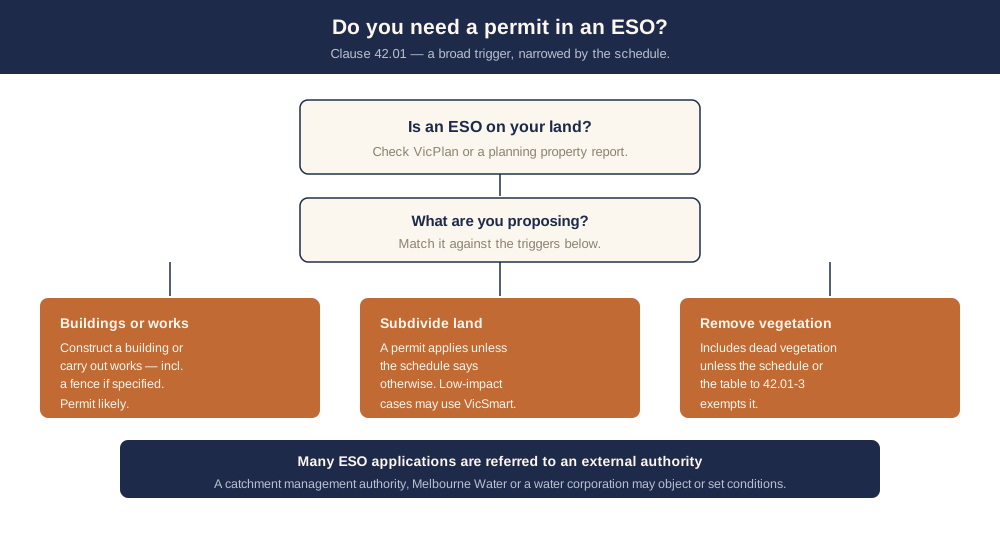
Figure 1: Buildings and works, subdivision, fences and vegetation can each trigger an Environmental Significance Overlay — the schedule sets the detail.
So an ESO is wider than a vegetation-only overlay: it can catch your extension or your driveway as readily as it catches tree removal, because "construct a building or construct or carry out works" is one of its core triggers.
What an Environmental Significance Overlay protects
An Environmental Significance Overlay identifies land where the environment or a particular environmental feature is significant — for example a waterway and its buffer, a wetland, groundwater recharge land, a water supply catchment, or a coastal area. The overlay's job is to make sure development does not damage that value. Because the value being protected is broad, the trigger is broad too: it reaches development generally, not just vegetation.
Like every overlay, an ESO sits on top of your zone and adds its own permit trigger. What the zone allows does not switch the overlay off.
The permit triggers under Clause 42.01
Spend 5 minutes, not 3 weeks
instantplanning generates a council-ready town planning report for Victorian permits. No town planner. No waiting.
Get your report →Under Clause 42.01-2, a permit is required to do any of the following — subject to what your schedule says:
- ✓Construct a building or construct or carry out works
- ✓Construct a fence, if the schedule specifies it
- ✓Construct bicycle pathways and trails
- ✓Subdivide land
- ✓Remove, destroy or lop any vegetation, including dead vegetation
Note the last line: unlike a Vegetation Protection Overlay, the base ESO clause covers dead vegetation as well as living. That single difference catches people who assume a dead tree is always fair game.
Each trigger has built-in relief. For buildings, works and subdivision, no permit is required if a schedule specifically states so. For vegetation, no permit is needed where the schedule says so, where the table to Clause 42.01-3 says so, or where removal follows a native vegetation precinct plan under Clause 52.16. This is why two ESO schedules can behave very differently — one might limit the vegetation trigger to native vegetation within 30 metres of a waterway, while another captures all works on the lot.
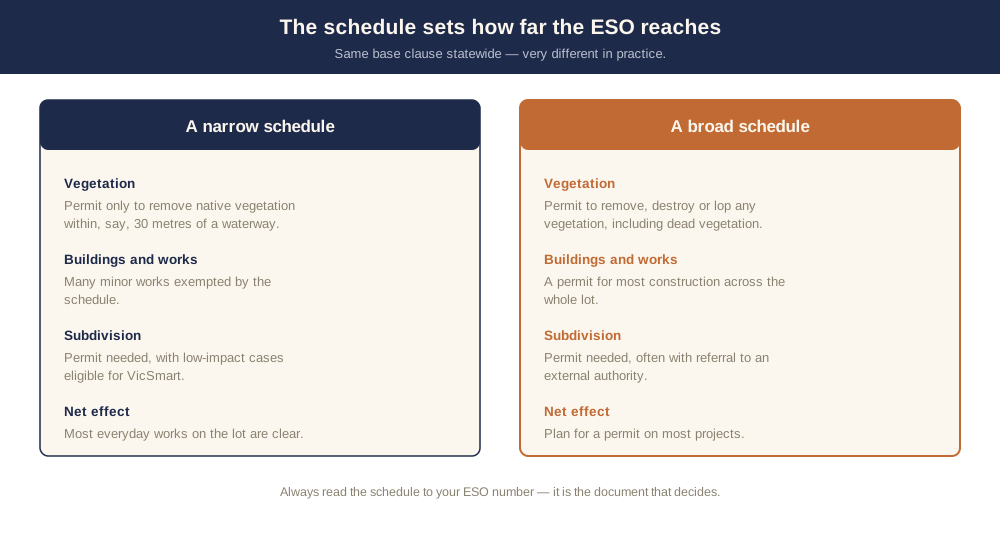
Figure 2: The base clause is the same statewide; the schedule is what makes one ESO broad and another narrow.
If your works are minor — a small fence, a single tree, a low-impact subdivision, or buildings associated with a dwelling — the application may run on the VicSmart fast track (Clauses 59.05 and 59.06), with a 10 business-day decision and no public notice. Eligibility depends on the class being listed and the thresholds being met. See VicSmart vs a standard planning permit.
When your application gets referred
This is what sets an ESO apart from most overlays. Applications affecting waterways, drainage, flooding, water supply or native vegetation are frequently referred to an external authority before council decides. The referral provisions live in Clause 66 of the planning scheme, not in Clause 42.01 itself, but an ESO is one of the controls that most often pulls them in.
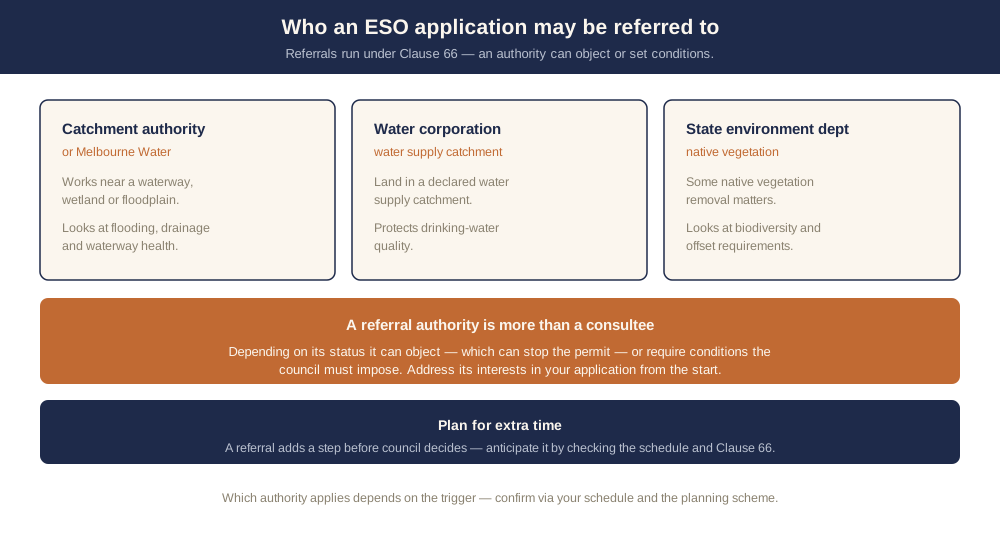
Figure 3: A referral authority can object outright or set conditions the council must include — plan for the extra time.
A catchment management authority or Melbourne Water is commonly the referral authority for works near a waterway or floodplain; a water corporation for water supply catchment land; and the state environment department for some native vegetation matters. A referral authority is not just consulted — depending on its status it can object (which can stop the permit) or require conditions the council must impose. Build the extra time into your expectations, and address the authority's interests in your application from the start.
The whole assessment is run by your council as the responsible authority under the Planning and Environment Act 1987, with the referral authority advising or directing on its area of interest.
How to check your own property
You can confirm the controls on your land for free:
- ✓Look up your address on VicPlan or generate a planning property report — it lists your zone and every overlay, including any ESO and its number.
- ✓Read the schedule to that ESO: it states which triggers apply, any exemptions, and the decision guidelines.
- ✓Check whether your works fall within a referral trigger so you can anticipate the external authority and address its concerns early.
If you do need a permit — what's next
When an Environmental Significance Overlay triggers a permit — especially with a referral in play — your application is far stronger, and far less likely to be returned or hit a Request for Further Information, when it is backed by a town planning report that addresses Clause 42.01, your schedule, and the referral authority's interests.
Hiring a town planner can take weeks. instantplanning builds the same council-ready report from current Victorian planning scheme data in minutes — you review it before you lodge. Start with our explainer on the Environmental Significance Overlay, or just generate your report.
Frequently asked questions
Do I need a planning permit for an extension in an Environmental Significance Overlay?
What does an Environmental Significance Overlay protect?
Do I need a permit to remove a dead tree in an ESO?
Will my ESO application be referred to another authority?
What is exempt from a permit in an Environmental Significance Overlay?
How do I find out if an ESO applies to my land?
Ready to generate your report?
Skip the writing. Get a council-ready town planning report in 5 minutes.
Get your report