Key takeaways
- ✓The Environmental Significance Overlay sits at Clause 42.01 and protects mapped areas of environmental value such as native vegetation, waterways, wetlands and habitat.
- ✓A planning permit is generally required to construct a building, carry out works, subdivide land or remove, destroy or lop vegetation, unless the schedule exempts it.
- ✓Each numbered schedule (ESO1, ESO2, and so on) sets its own statement of significance, objectives, triggers and exemptions, so two ESOs can work very differently.
- ✓Referral to an environmental or water authority can be triggered through the schedule or the scheme's general referral provisions, not by Clause 42.01 itself.
- ✓Check whether your land carries an ESO and read the exact schedule on VicPlan before you design anything.
What is the Environmental Significance Overlay (ESO) in Victoria?
The Environmental Significance Overlay (ESO), found at Clause 42.01 of every Victorian planning scheme, is a control that flags land where development could affect identified environmental values. If your property carries an ESO, the council is telling you that something on or near your site, such as native vegetation, a waterway, a wetland or important habitat, needs to be protected, and that many building, works and vegetation activities will need a planning permit first.
Get a council-ready town planning report in 5 minutes — no town planner, no waiting.
Get your report →- ✓What the ESO actually protects and why your land was mapped
- ✓Which activities trigger a planning permit under Clause 42.01
- ✓The role of referral authorities and the most common exemptions
- ✓How each numbered schedule changes the rules, and how to check your own property
The short answer
The Environmental Significance Overlay (Clause 42.01) protects mapped areas of environmental value. On ESO land you generally need a planning permit to construct a building, carry out works, subdivide, or remove, destroy or lop vegetation. Each numbered schedule sets the precise triggers, objectives and exemptions, so always read yours.
The ESO is not a blanket ban. It is a "check first" control. The overlay identifies where environmental constraints exist and asks the council to make sure your proposal is compatible with the environmental values described in the schedule. Some proposals sail through with conditions; others are reshaped to protect a tree line or a creek frontage. The decisive document is the schedule attached to your specific ESO, because that is where the council records exactly what it is protecting and how.
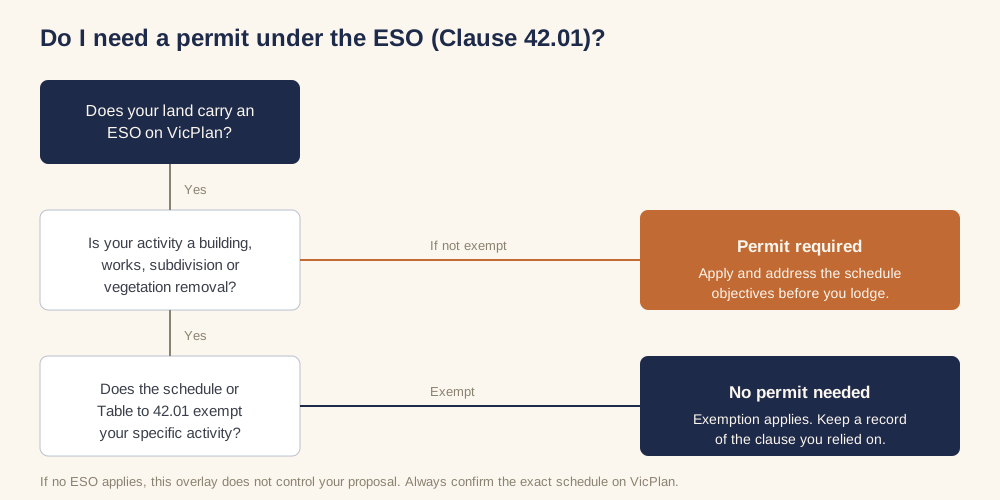 Figure 1: How to work out whether your activity needs a planning permit under Clause 42.01.
What the ESO protects
Clause 42.01 is used to identify areas where development may be affected by environmental constraints and to ensure that development is compatible with the identified environmental values. In practice, the values protected are set out in the schedule and commonly include native vegetation, waterways and their banks, wetlands, significant habitat, groundwater recharge areas and similar features.
Every schedule must contain two things: a statement of environmental significance that explains what makes the area important, and the environmental objectives the council wants to achieve. Reading those two sections tells you almost everything about why your land was mapped and what the council will be looking for when it assesses an application.
What triggers a planning permit
Spend 5 minutes, not 3 weeks
instantplanning generates a council-ready town planning report for Victorian permits. No town planner. No waiting.
Get your report →Unless the schedule states otherwise, Clause 42.01 requires a planning permit for a defined set of activities. The most common triggers are construction and works, subdivision, and any disturbance of vegetation.
- ✓Construct a building, or construct or carry out works
- ✓Subdivide land
- ✓Remove, destroy or lop any vegetation, including dead vegetation
- ✓Construct a fence, where the schedule says a permit is required
- ✓Construct bicycle pathways and trails
The vegetation trigger is the one that catches most owners by surprise. Because it can extend to lopping and even to dead vegetation, routine pruning or tree removal that you would never normally think of as "development" can require a permit on ESO land. The wording in your schedule, and the Table to Clause 42.01, decides where the line falls.
Clause 42.01 itself does not name a referral authority. Instead, referral requirements arise in two ways: from notice or referral provisions written into the schedule to your ESO, and from the planning scheme's general referral provisions where they apply to the type of proposal you are making.
What this means in practice is that an application on ESO land is often referred to an environmental or water authority, such as a catchment management authority or the relevant water authority, depending on what the schedule and the general provisions say. That authority can object, can ask for conditions, or can support the proposal. Because the referral comes from the schedule plus the general provisions rather than the parent clause, you need to read both to know who, if anyone, your council must consult.
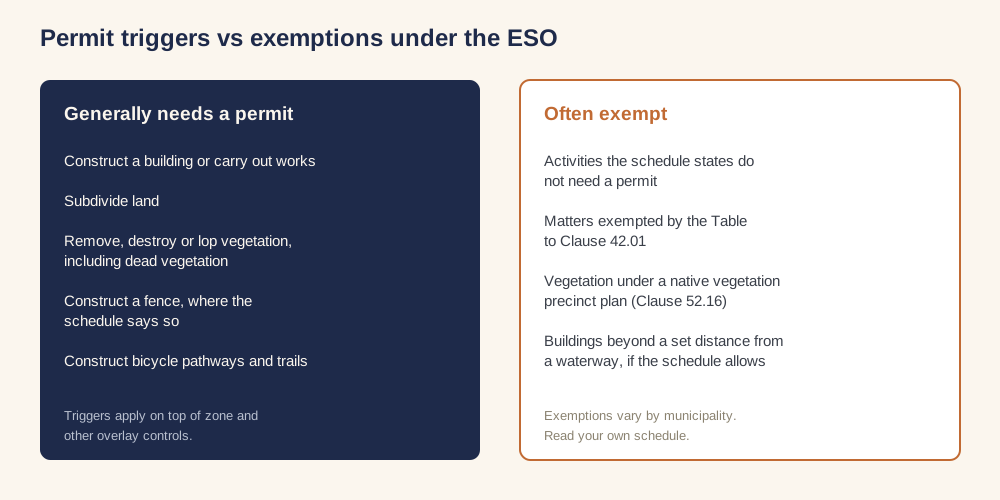 Figure 2: Typical permit triggers under Clause 42.01 set against the exemptions a schedule can provide.
Key exemptions
The ESO is full of exemptions, and they are where careful reading pays off. The broad categories are consistent across schemes even though the detail varies by municipality.
A permit is not required where the schedule specifically states it is not, for the buildings, works, subdivision or vegetation removal it lists. The Table to Clause 42.01 also sets out exemptions, including limited matters such as emergency works and certain minor utility works, each subject to caps on area or extent. Vegetation removed in accordance with a native vegetation precinct plan identified in the schedule to Clause 52.16 does not need an ESO permit for that removal.
Schedules frequently add their own exemptions, for example exempting buildings beyond a set distance from a waterway, buildings connected to reticulated services, or particular subdivision scenarios such as subdividing around existing buildings. Because these exemptions differ from one municipality to the next, the only safe approach is to read your schedule line by line rather than assume a neighbouring council's rules apply.
How schedules vary the ESO
The number after the letters, ESO1, ESO2, ESO3 and so on, points to a separate schedule, and the schedule is where the real controls live. Each schedule tailors Clause 42.01 to a particular environmental issue or area. It can specify which buildings and works need a permit and which are exempt, which vegetation removal is caught, what subdivision exemptions apply, what application material the council wants, such as an ecological assessment, a landscape plan or a hydrology report, and what decision guidelines apply to that specific value.
This is why two ESOs in the same scheme can behave very differently. An ESO protecting a narrow waterway buffer may only catch vegetation within a defined strip, while an ESO covering a whole catchment may catch almost everything. Treat the schedule, not the overlay letters, as your source of truth.
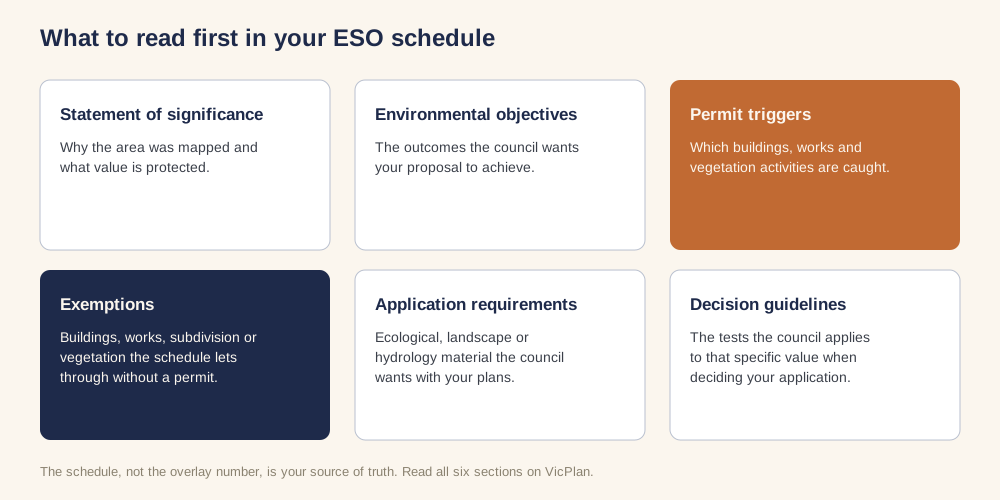 Figure 3: The schedule elements to read first when an ESO applies to your land.
How to check your property
You can confirm whether an ESO applies and read the exact schedule yourself, free, using the state mapping tool.
- ✓Open VicPlan at mapshare.vic.gov.au/vicplan.
- ✓Enter your address or parcel details.
- ✓In the results panel, look under "Overlays" for an entry such as "Environmental Significance Overlay, ESO1".
- ✓Select the overlay name to open the planning property report and the link to the planning scheme ordinance.
- ✓Read Clause 42.01 plus your specific schedule to confirm the triggers, objectives and exemptions for your land.
From there you will know the overlay number, exactly what it protects, and which of your plans will need a permit. You can cross-check the parent clause on planning.vic.gov.au and the underlying legislation on legislation.vic.gov.au/in-force/acts/planning-and-environment-act-1987.
Before you commission detailed drawings, it is worth understanding your overlay obligations in a single document. You can read what a town planning report covers to see how the ESO, its schedule and your proposal are pulled together. Hiring a town planner can take weeks. instantplanning builds the same council-ready report from current Victorian planning scheme data in minutes, and you review it before you lodge. When you are ready, generate your report.
Ready to generate your report?
Skip the writing. Get a council-ready town planning report in 5 minutes.
Get your report