Key takeaways
- ✓A Built Form Overlay is a newer statewide control at Clause 43.06, introduced through the 2025 activity centre reforms.
- ✓It is applied only to the cores of designated activity centres — most homes and suburbs do not carry one.
- ✓Built form across Victoria is still most often delivered through the Design and Development Overlay.
- ✓Where a Built Form Overlay applies, a proposal that is deemed to comply with its standards cannot be refused on those standards.
Do I Need a Permit in a Built Form Overlay?
A Built Form Overlay (BFO) is a relatively new control in Victoria — and for most homeowners the honest answer is that you probably don't have one. It was introduced through the state's 2025 activity centre reforms and applies only to the cores of designated activity centres, not to ordinary residential streets. Where it does apply, it sits at Clause 43.06 of the Victoria Planning Provisions and generally triggers a planning permit to construct a building or carry out works. If your land isn't in an activity centre core, the overlay that shapes built form is far more likely to be a Design and Development Overlay (DDO).
Get a council-ready town planning report in 5 minutes — no town planner, no waiting.
Get your report →- ✓What a Built Form Overlay is and where it came from
- ✓Why most properties in Victoria do not carry one
- ✓The permit triggers and the "deemed to comply" pathway
- ✓How built form is delivered through the Design and Development Overlay instead
- ✓How to check what actually applies to your property
The short answer
A Built Form Overlay is a newer Victorian control at Clause 43.06, applied only to the cores of designated activity centres, that triggers a planning permit to construct a building or carry out works. Most homes do not have one. For everyday land, built form is delivered through the Design and Development Overlay. Always check VicPlan for the overlay that actually applies.
The figure below shows where a Built Form Overlay fits.
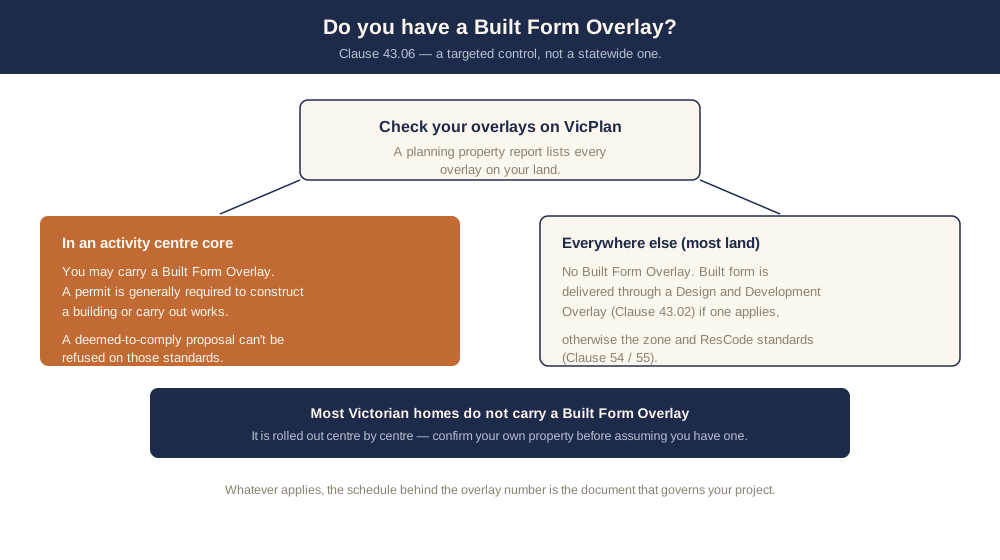
Figure 1: For most properties the built-form control is a DDO; a Built Form Overlay applies only in designated activity centre cores.
So before anything else: check your own property. The single most useful step here is confirming whether you actually have a Built Form Overlay at all — because the great majority of Victorian land does not.
What a Built Form Overlay is
A Built Form Overlay was created through the Victorian Government's activity centre planning reforms, introduced into the planning provisions in early 2025. Its job is to make the built-form rules in the cores of designated activity centres — typically the higher-density land around major train and tram nodes — clearer and more consistent. It sits among the heritage and built-form overlays at Clause 43.06, and councils apply it through a schedule for each centre.
The overlay is being rolled out centre by centre, starting with a set of pilot activity centres and expanding through the broader activity centres program. It was not switched on across Victoria all at once, and it was never intended to cover suburban housing generally. If you are renovating a house on a typical residential block, the odds you carry a Built Form Overlay are low.
Why most properties don't have one
Spend 5 minutes, not 3 weeks
instantplanning generates a council-ready town planning report for Victorian permits. No town planner. No waiting.
Get your report →This is the part worth being clear about, because it is easy to assume every area has a dedicated "built form" control. It doesn't. Built form in Victoria — height, bulk, setbacks, the way a building meets the street — has long been delivered through other tools, and still is for the vast majority of land:
- ✓The Design and Development Overlay (Clause 43.02) — the main statewide built-form tool
- ✓The residential zones and the ResCode standards in Clause 54 and Clause 55
- ✓The Neighbourhood Character Overlay for area character
- ✓The Heritage Overlay for places of significance
A Built Form Overlay adds a purpose-built control for activity centre cores on top of that long-standing framework — it does not replace it everywhere. So unless your property is in the core of a designated activity centre, the control to read is most likely your DDO, not a BFO. Our guide to the Design and Development Overlay covers that pathway in full.
The permit triggers and the "deemed to comply" pathway
Where a Built Form Overlay does apply, the trigger works like other built-form overlays: a permit is generally required to construct a building and often to construct or carry out works, with the schedule setting the precise triggers (some schedules also address subdivision). The substance — the actual built-form rules — is in the schedule for your centre.
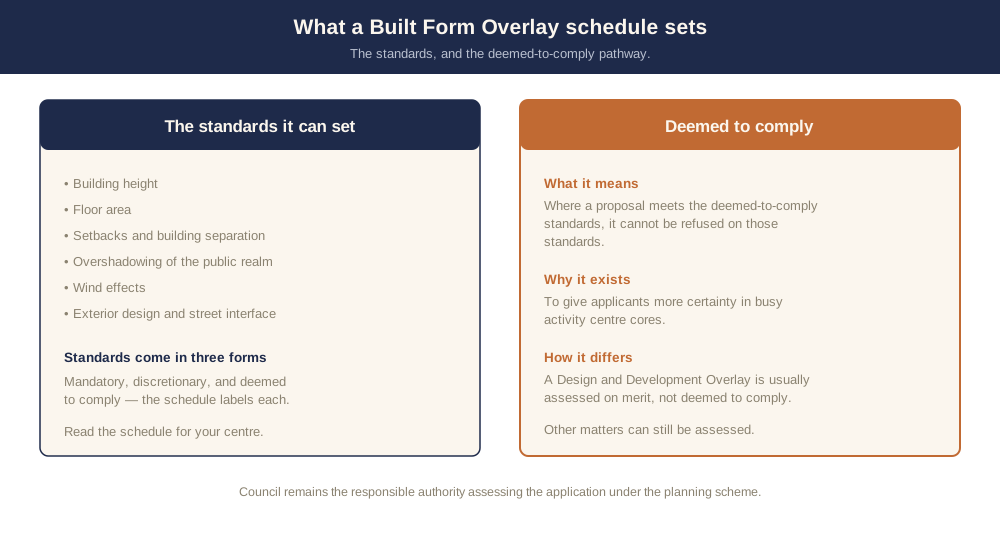
Figure 2: A Built Form Overlay schedule sets the rules; a deemed-to-comply proposal cannot be refused on those standards.
A Built Form Overlay schedule can set standards for building height, floor area, setbacks, building separation, overshadowing, wind and exterior design, and it can mix mandatory, discretionary and deemed to comply standards. The deemed-to-comply mechanism is the headline feature: where a proposal meets the deemed-to-comply standards, it cannot be refused on the basis of those standards. That is designed to give applicants more certainty in activity centre cores — a different approach from the merits-based assessment a DDO usually applies. Your council remains the responsible authority assessing the application under the Planning and Environment Act 1987.
How built form is delivered through a DDO instead
For everyone outside an activity centre core, the Design and Development Overlay is the control doing the built-form work. A DDO schedule can set the same kinds of rules — height, setbacks, siting, overshadowing, design — and has done so for decades, including the detailed built-form controls that shape Melbourne's central city.
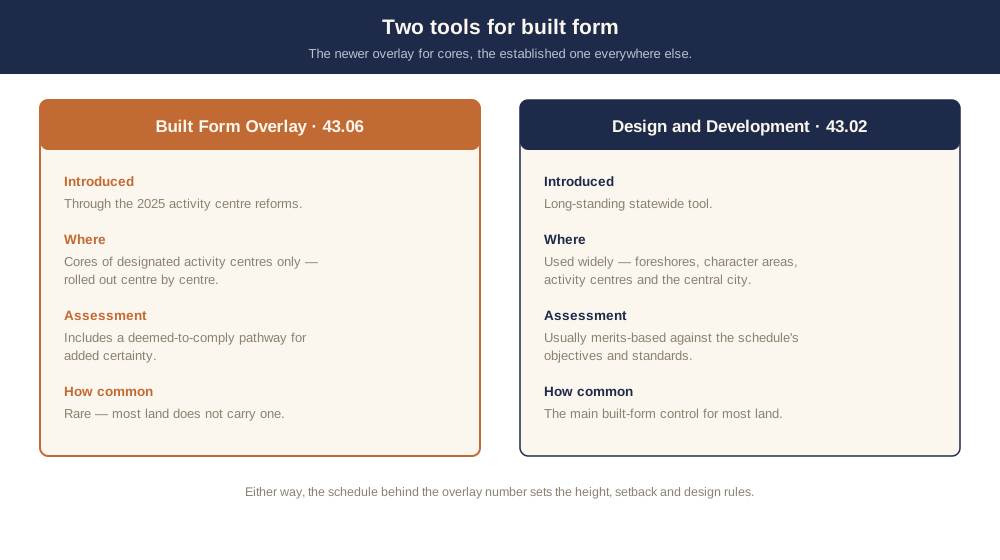
Figure 3: Two tools for built form — the newer Built Form Overlay for activity centre cores, the established Design and Development Overlay everywhere else.
The practical takeaway is the same either way: the schedule is what governs your project. Whether your land carries a Built Form Overlay, a Design and Development Overlay, or both, the height limits, setbacks and design standards live in the schedule behind the overlay number — and that is the document to read before you design. Where works are minor, some applications can run on the VicSmart fast track; eligibility depends on the class being listed. See VicSmart vs a standard planning permit.
How to check your own property
You can confirm the controls on your land for free:
- ✓Look up your address on VicPlan or generate a planning property report — it lists your zone and every overlay, so you can see whether a Built Form Overlay or a Design and Development Overlay applies.
- ✓If an overlay shows, open its schedule in your planning scheme and read the height, setback and design standards, and whether they are mandatory, discretionary or deemed to comply.
- ✓If neither applies, your built-form rules come from the zone and the ResCode standards — Clause 54 for one dwelling, Clause 55 for two or more.
If you do need a permit — what's next
When a Built Form Overlay or a Design and Development Overlay triggers a permit, your application is far stronger — and far less likely to be returned or hit a Request for Further Information — when it is backed by a town planning report that addresses the overlay clause, your schedule's standards, and how the building responds to them.
Hiring a town planner can take weeks. instantplanning builds the same council-ready report from current Victorian planning scheme data in minutes — you review it before you lodge. Start with our explainer on the Design and Development Overlay, or just generate your report.
Frequently asked questions
Is there a Built Form Overlay in Victoria?
Do I need a planning permit in a Built Form Overlay?
What does the "deemed to comply" pathway mean?
How is a Built Form Overlay different from a Design and Development Overlay?
How do I know if a Built Form Overlay applies to my property?
If I don't have a Built Form Overlay, what controls my building's height and setbacks?
Ready to generate your report?
Skip the writing. Get a council-ready town planning report in 5 minutes.
Get your report