Key takeaways
- ✓The Design and Development Overlay sits at Clause 43.02 and controls the design and built form of new development, such as height, setbacks, materials and overshadowing.
- ✓A planning permit is generally required to construct a building, carry out works or subdivide land, unless the relevant schedule says otherwise.
- ✓The numbered schedule (DDO1, DDO2 and so on) sets the actual figures, so two sites in the same suburb can have very different rules.
- ✓Some schedules state that minor works or a single dwelling are exempt, and an outdoor swimming pool is not triggered unless the schedule says so.
- ✓Check VicPlan at mapshare.vic.gov.au/vicplan to confirm your overlay and schedule number before you design anything.
What does a Design and Development Overlay (DDO) mean for my property in Victoria?
If your property is covered by a Design and Development Overlay (DDO) under Clause 43.02 of the Victoria Planning Provisions, your local council has identified the land as an area where the design and built form of new development matters. The overlay sets expectations about how buildings should look and sit on the land, and in most cases it means you will need a planning permit before you build.
Get a council-ready town planning report in 5 minutes — no town planner, no waiting.
Get your report →- ✓What a Design and Development Overlay controls and why councils apply it
- ✓When a DDO triggers a planning permit
- ✓The exemptions that may apply to minor works
- ✓How numbered schedules change the rules from site to site
- ✓How to check your own property in minutes
The short answer
A Design and Development Overlay (DDO) is a built-form control at Clause 43.02 that lets councils set design objectives and requirements for new development, such as height, setbacks, materials and overshadowing. You generally need a planning permit to construct a building, carry out works or subdivide land in a DDO unless the schedule exempts it.
The overlay itself is a framework. The detail that applies to your land lives in the numbered schedule, such as DDO1 or DDO2. Each schedule must include design objectives for its area and may set specific requirements for matters like maximum building height, street and upper-level setbacks, building bulk, landscaping, materials and protection of sunlight to public spaces.
Councils most often use a DDO to guide activity centres, shopping strips and prominent streetscapes, where they want new buildings to respect a preferred height, scale and character.
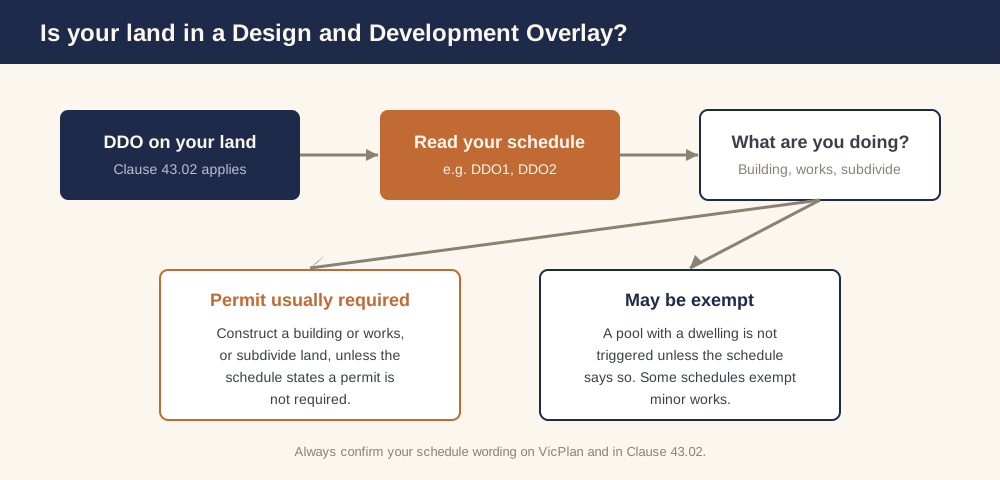 Figure 1: How a Design and Development Overlay leads to a permit decision.
What does a Design and Development Overlay protect or control?
A DDO is about how development looks and fits its surroundings, not about land use. Clause 43.02 provides the mechanism, and the schedule sets the controls for a particular area.
A schedule must state design objectives, and it may include requirements covering building height, street, side and rear setbacks, upper-level setbacks, plot ratio and building bulk, landscaping, the appearance and articulation of facades, materials, and overshadowing of streets, parks or adjoining properties. In inner-city and activity-centre schedules you may also see controls on wind, microclimate and pedestrian amenity.
Importantly, a schedule can be written as mandatory (a figure you must meet) or preferred (a figure you can vary if you still meet the objectives). It can also tighten, relax or override the built-form expectations of the underlying zone.
When do I need a planning permit under a DDO?
Spend 5 minutes, not 3 weeks
instantplanning generates a council-ready town planning report for Victorian permits. No town planner. No waiting.
Get your report →Under Clause 43.02, a permit is required to construct a building, construct or carry out works, or subdivide land, unless the relevant schedule specifically states a permit is not required. In practice, most urban schedules require a permit for new buildings, extensions and substantial alterations.
- ✓Constructing a new building or extension
- ✓Carrying out works that change height, bulk or setbacks
- ✓Subdividing land
- ✓A fence, where the schedule specifically requires a permit for one
Because the trigger depends on the wording of your schedule, you should always read the schedule that applies to your land rather than assume. A town planning report sets out exactly which triggers apply to your site and what the schedule requires.
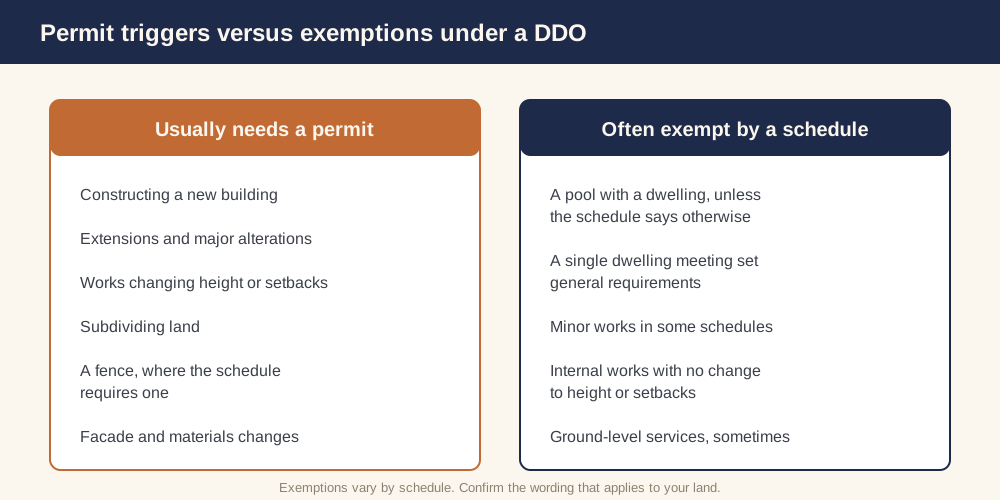 Figure 2: Works that typically need a permit versus works often exempt under a schedule.
What is exempt from a DDO permit?
Clause 43.02 includes standard positions that a schedule can vary. An outdoor swimming pool associated with a dwelling does not require a permit under the overlay unless the schedule introduces a specific requirement for it. A fence is not automatically triggered by Clause 43.02 unless the schedule says so.
Beyond that, individual schedules add their own exemptions. Some schedules exempt a single dwelling or minor works where specified general requirements are met. Some central-city schedules exempt ground-level works, services or internal works that do not change height or setbacks. Because exemptions vary, the specific schedule must always be checked.
Can I use the VicSmart fast-track in a DDO?
VicSmart is a state-wide fast-track process for specified classes of application, with a shorter assessment timeframe. DDO land can still be eligible for VicSmart, but only where the proposal falls into a defined VicSmart class and satisfies every eligibility criterion. For example, recent reforms allow some two-lot subdivisions to be processed through VicSmart even where a Design and Development Overlay is a permit trigger, provided all the criteria are met.
VicSmart eligibility is set out in the planning scheme's VicSmart provisions and local council guidance, not in Clause 43.02 itself, so confirm it for your specific proposal before relying on the faster pathway.
How do numbered schedules (DDO1, DDO2) change the rules?
The overlay is shown on planning scheme maps as DDO with a number. Each schedule applies to a defined area, states design objectives, and sets built-form controls that can differ dramatically from one schedule to the next, even within the same municipality.
One schedule might set a mandatory maximum height and strict upper-level setbacks for an activity centre, while another might set preferred controls for a waterfront or a transition to a quiet residential street. Heights, setbacks, materials requirements, permit exemptions and decision guidelines can all change with the number. This is why your schedule number is the single most useful piece of information about your DDO.
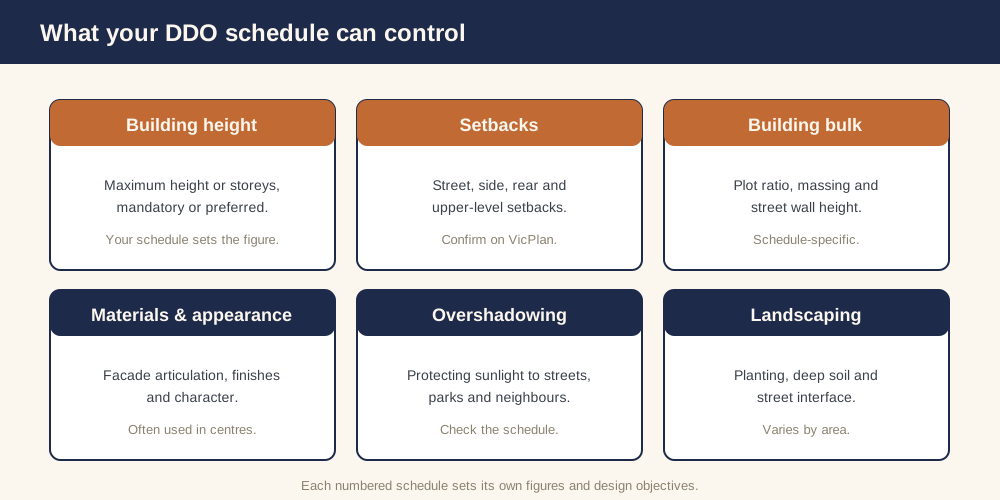 Figure 3: Common controls a DDO schedule can set for your area.
How do I check whether my property has a DDO?
You can confirm the overlay yourself in a few minutes:
- ✓Open VicPlan at mapshare.vic.gov.au/vicplan and search your address.
- ✓Generate the planning property report, which lists every zone and overlay, including any Design and Development Overlay and its schedule number.
- ✓On planning.vic.gov.au, open Clause 43.02 and the exact schedule (for example DDO1) that applies to your land.
- ✓Read the schedule's design objectives, permit triggers and any exemptions.
Together, Clause 43.02, your specific schedule, your zone and the VicSmart tables give you the full picture of what you can build and what approval you need.
Hiring a town planner can take weeks. instantplanning builds the same council-ready report from current Victorian planning scheme data in minutes — and you review it before you lodge. When you are ready, generate your report.
Ready to generate your report?
Skip the writing. Get a council-ready town planning report in 5 minutes.
Get your report