Key takeaways
- ✓A Neighbourhood Character Overlay sits at Clause 43.05 and triggers a permit to construct a building or carry out works.
- ✓Demolition and tree removal are triggers only where the schedule specifically adds them.
- ✓The schedule sets the character objectives your design has to respond to.
- ✓Outdoor pools and outbuildings normal to a dwelling are exempt under the base clause unless the schedule says otherwise.
Do I Need a Permit in an NCO?
If your land carries a Neighbourhood Character Overlay (NCO) in Victoria, you generally need a planning permit to construct a building or construct or carry out works. The overlay sits at Clause 43.05 of the Victoria Planning Provisions, and it exists to protect the look and feel of an established area — its setbacks, its rhythm, its garden character. Whether demolition or tree removal also needs a permit comes down to your schedule, which is where the character objectives and any extra triggers are written.
Get a council-ready town planning report in 5 minutes — no town planner, no waiting.
Get your report →- ✓What a Neighbourhood Character Overlay protects, and why it focuses on design
- ✓The permit triggers under Clause 43.05
- ✓When demolition and tree removal are caught
- ✓What is exempt under the base clause
- ✓How to check the controls on your own property
The short answer
A Neighbourhood Character Overlay triggers a planning permit to construct a building or construct or carry out works under Clause 43.05. Demolishing a building and removing trees are triggers only where the schedule specifies them. The schedule sets the character objectives a proposal must respond to, so the same clause produces different rules from one area to the next.
The figure below shows how to read it.
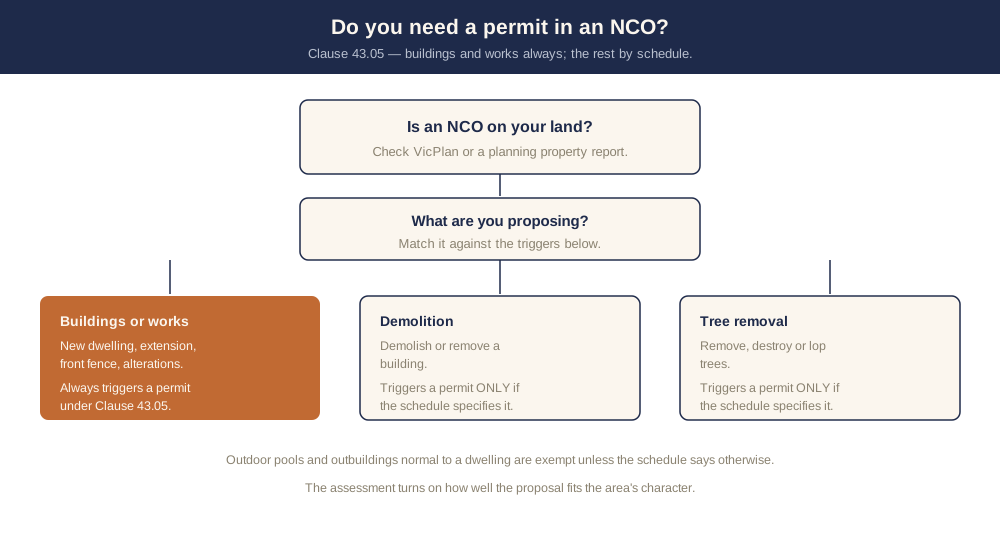
Figure 1: Buildings and works trigger a permit; demolition and tree removal trigger only where the schedule says so.
So an NCO is, at heart, a design control. For most new building work it requires a permit, and the assessment turns on how well your proposal fits the established character the overlay sets out to protect.
What a Neighbourhood Character Overlay protects
A Neighbourhood Character Overlay identifies areas with an existing or preferred neighbourhood character worth protecting — for example a street of interwar homes with consistent setbacks and garden frontages, or a precinct with a distinctive roof form, materials or landscape setting. The overlay's purpose is to ensure new development respects and reinforces that character rather than eroding it.
Like every overlay, an NCO sits on top of your zone and adds its own permit trigger and its own assessment criteria. The character objectives live in the schedule behind your overlay number — NCO1, NCO2 and so on — and they are what your design has to answer to.
The permit triggers under Clause 43.05
Spend 5 minutes, not 3 weeks
instantplanning generates a council-ready town planning report for Victorian permits. No town planner. No waiting.
Get your report →Under Clause 43.05-2, the core trigger is the construction one. A permit is required to:
- ✓Construct a building or construct or carry out works
- ✓Demolish or remove a building, if the schedule specifies it
- ✓Remove, destroy or lop trees, if the schedule specifies it
The first line catches most projects: a new dwelling, an extension, a front fence rebuild, even some external alterations can be "buildings and works." The second and third lines are conditional — demolition and tree removal are only caught where your schedule expressly brings them in. This is a common point of confusion, because people assume a character overlay automatically protects every old building and tree. It only does so where the schedule says.
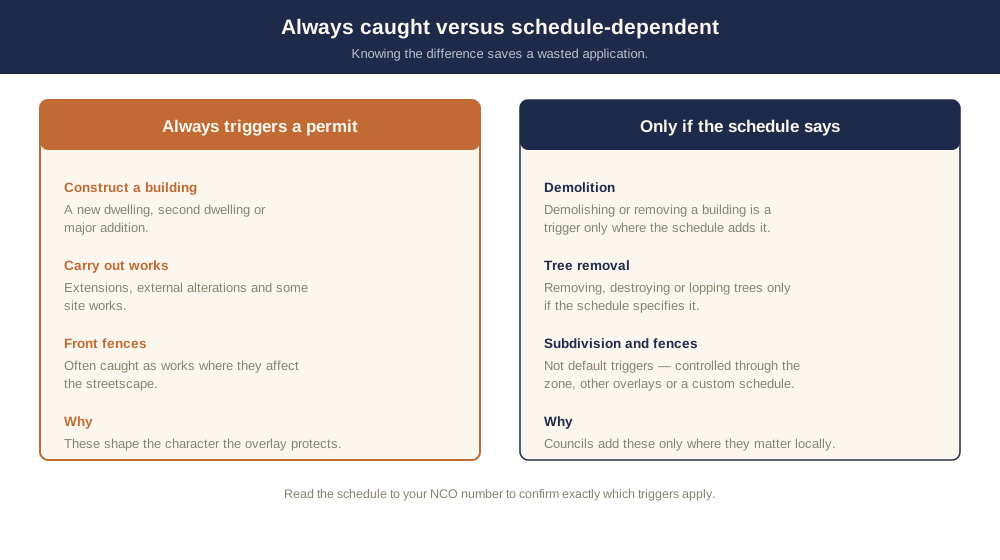
Figure 2: Buildings and works are always caught; demolition and tree removal depend entirely on the schedule.
Because the assessment is about character, even a permitted proposal can attract conditions on setbacks, height, materials, roof form or front-garden landscaping. The standards the overlay applies can sit alongside or vary the ResCode provisions — Clause 54 for a single dwelling and Clause 55 for two or more. Our guide to neighbourhood character in Victoria explains how character is assessed in practice.
What is exempt
The base Clause 43.05 carries a small set of exemptions that apply unless the schedule overrides them:
- ✓An outdoor swimming pool associated with a dwelling, unless a schedule says otherwise
- ✓An outbuilding normal to a dwelling, unless a schedule says otherwise
- ✓Certain small second dwellings that meet specified height and design criteria
These are narrow. The headline remains that most new building work in an NCO needs a permit, and a schedule can switch any exemption off. Your council is the responsible authority that assesses the application under the Planning and Environment Act 1987.
How an NCO compares to other character controls
An NCO is not the only way Victoria manages character. The residential zones carry their own neighbourhood character provisions, a Design and Development Overlay can set built-form and design rules, and a Heritage Overlay protects places of heritage significance specifically. An NCO is the tool used where the value is the collective character of an area rather than the heritage of an individual building.
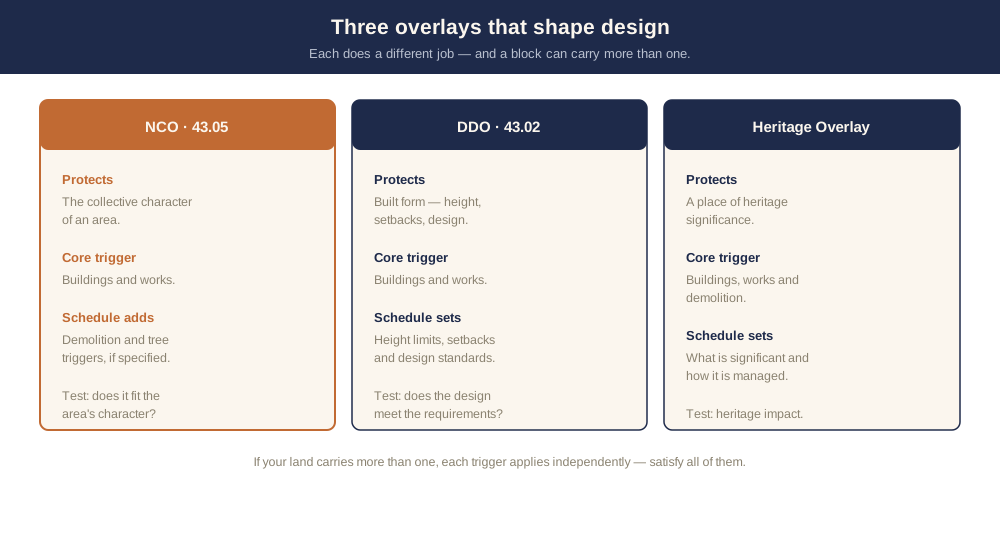
Figure 3: Three overlays that shape design — each does a different job, and a block can carry more than one.
If your land carries more than one of these overlays, each trigger applies independently, and your application has to satisfy all of them. Where the works are minor, some applications can run on the VicSmart fast track; eligibility depends on the class being listed. See VicSmart vs a standard planning permit and the Design and Development Overlay.
How to check your own property
You can confirm the controls on your land for free:
- ✓Look up your address on VicPlan or generate a planning property report — it lists your zone and every overlay, including any NCO and its number.
- ✓Open the schedule to that NCO and read its character objectives and whether it adds demolition or tree triggers.
- ✓Test your design against the character objectives before you finalise plans — that is where an NCO application is won or lost.
If you do need a permit — what's next
When a Neighbourhood Character Overlay triggers a permit, your application is far stronger — and far less likely to be returned or hit a Request for Further Information — when it is backed by a town planning report that addresses Clause 43.05, your schedule's character objectives, and how the proposal responds to them.
Hiring a town planner can take weeks. instantplanning builds the same council-ready report from current Victorian planning scheme data in minutes — you review it before you lodge. Start with our explainer on neighbourhood character, or just generate your report.
Frequently asked questions
Do I need a planning permit for an extension in a Neighbourhood Character Overlay?
Do I need a permit to demolish in a Neighbourhood Character Overlay?
Does a Neighbourhood Character Overlay protect trees?
What is exempt from a permit in a Neighbourhood Character Overlay?
How is a Neighbourhood Character Overlay different from a Heritage Overlay?
How do I find out if an NCO applies to my land?
Ready to generate your report?
Skip the writing. Get a council-ready town planning report in 5 minutes.
Get your report