Key takeaways
- ✓The scheme triggers a permit, not your plans
- ✓Three layers of triggers: zone, overlays, provisions
- ✓Common triggers: 2+ dwellings, subdivision, change of use
- ✓Overlays are the most common single trigger
What Triggers a Planning Permit in Victoria?
A planning permit in Victoria is triggered by your planning scheme — specifically the zone your land sits in, any overlays mapped over it, and the particular provisions that apply to your proposal. It is the scheme, not the drawings you commission, that decides whether a permit is required.
Get a council-ready town planning report in 5 minutes — no town planner, no waiting.
Get your report →- ✓The three layers of the planning scheme that create permit triggers
- ✓The most common zone triggers, from two dwellings to a change of use
- ✓Which overlays add their own triggers — and why they catch people out
- ✓How particular provisions like car parking can trigger a permit
- ✓How to check exactly what is triggered on your own land
The short answer
A planning permit in Victoria is triggered whenever the planning scheme says one is required for your proposal — through the zone clause, an overlay clause, or a particular provision. If any single layer requires a permit for what you are building or doing, a permit is triggered, even if the others would not.
The plans you draw never trigger a permit on their own. The scheme reads your land and your proposal against three layers, and any one of them can be the trigger.
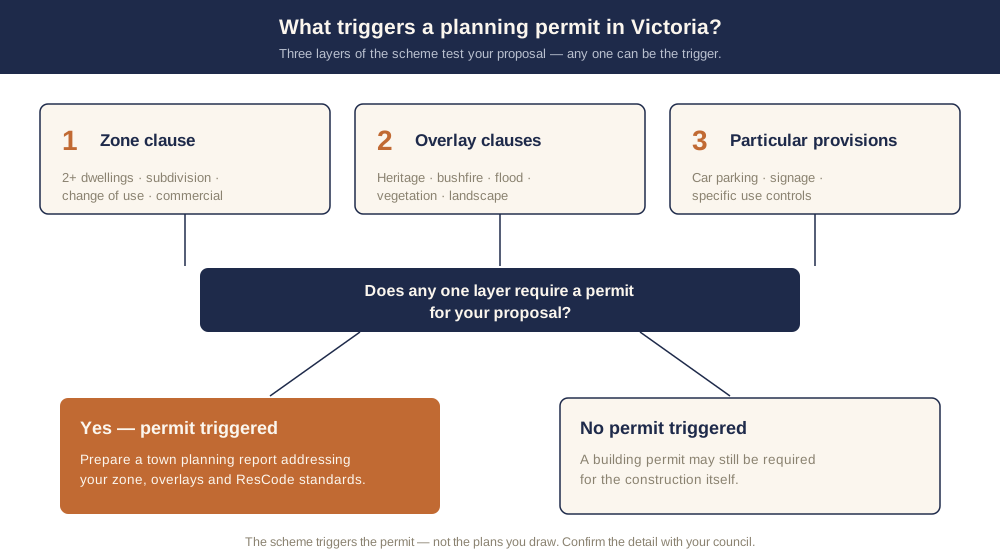
Figure 1: A permit is triggered if the zone, an overlay, or a particular provision says one is required — any single layer is enough.
This is why two identical projects can have different answers. The same extension is permit-free on a plain residential block, yet triggers a permit next door because a Heritage Overlay sits over that land.
The three layers that trigger a permit
Every property in Victoria is read against three parts of the Victoria Planning Provisions, and a trigger can come from any of them.
The zone (Clauses 32 to 37) sets what you can do with the land. Each zone lists uses in three sections: Section 1 needs no permit, Section 2 needs a permit, and Section 3 is prohibited. The zone also controls buildings and works such as a second dwelling.
The overlays (Clauses 42 to 45) sit on top of the zone and address specific issues like heritage, bushfire, flood and landscape. An overlay can require a permit even where the zone would not.
The particular provisions (Clauses 52 to 53) apply state-wide to specific matters — car parking, signage, certain industries — and can add their own permit requirement on top of the zone and overlays.
Because any one layer is enough, you have to check all three. Confirm the detail with your responsible authority (the council), because schedules vary scheme to scheme.
Common zone triggers
Spend 5 minutes, not 3 weeks
instantplanning generates a council-ready town planning report for Victorian permits. No town planner. No waiting.
Get your report →The zone is the first place a permit is usually triggered. Across Victoria's residential, commercial, industrial and rural zones, the recurring triggers are consistent even though the exact wording differs by zone and schedule.
- ✓Constructing two or more dwellings on a lot (dual occupancy, townhouses, units)
- ✓Subdividing land into separate titles
- ✓A change of use — for example dwelling to office, or shop to restaurant
- ✓Most new buildings and works for non-dwelling uses in a residential zone
- ✓Most commercial and industrial development under the Commercial and Industrial Zones
- ✓Certain rural uses such as accommodation or intensive animal husbandry
A single new dwelling on its own lot in a standard residential zone is commonly a Section 1 use, so the zone alone often does not trigger a permit for it — which is why an overlay so often becomes the deciding factor instead. We cover the permit-free cases in what's exempt from a planning permit in Victoria.
Overlay triggers
Overlays are the most common reason an otherwise-exempt project suddenly needs a permit. They are mapped over the zone, and each carries its own trigger for buildings, works, demolition or vegetation removal.
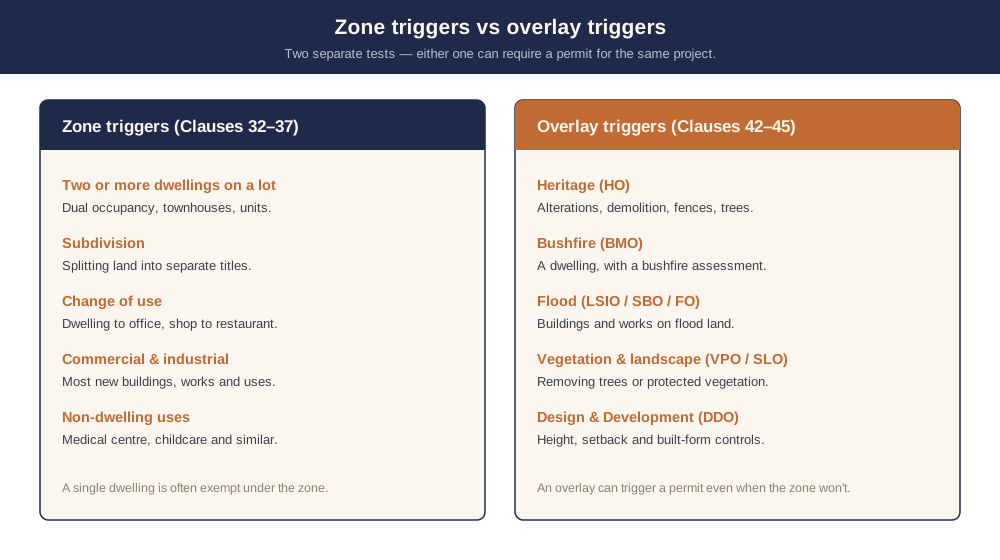
Figure 2: Zone triggers and overlay triggers are separate tests. Either one can require a permit for the same project.
The overlays that catch homeowners most often are the Heritage Overlay (alterations, demolition, often fences and trees), the Bushfire Management Overlay (a dwelling, with a bushfire assessment), flood overlays such as the Land Subject to Inundation Overlay and Special Building Overlay (buildings and works on flood-affected land), the Vegetation Protection Overlay and Significant Landscape Overlay (removing trees or vegetation), and the Design and Development Overlay (height, setback and built-form controls).
An overlay can require a permit even when a single dwelling or a small structure would be exempt under the zone. That is why checking your overlays is the real test of whether a permit is triggered.
Particular provisions that trigger a permit
The third layer is easy to overlook. The particular provisions apply across Victoria regardless of zone, and several can trigger a permit in their own right.
The most common is Clause 52.06 (car parking), where reducing or waiving the required number of spaces triggers a permit. Other provisions in the Clause 52 series cover matters such as signage and specific facilities, and the Clause 53 series sets controls for defined development types. Where a provision describes your proposal and says a permit is required, that becomes an additional trigger on top of the zone and overlays.
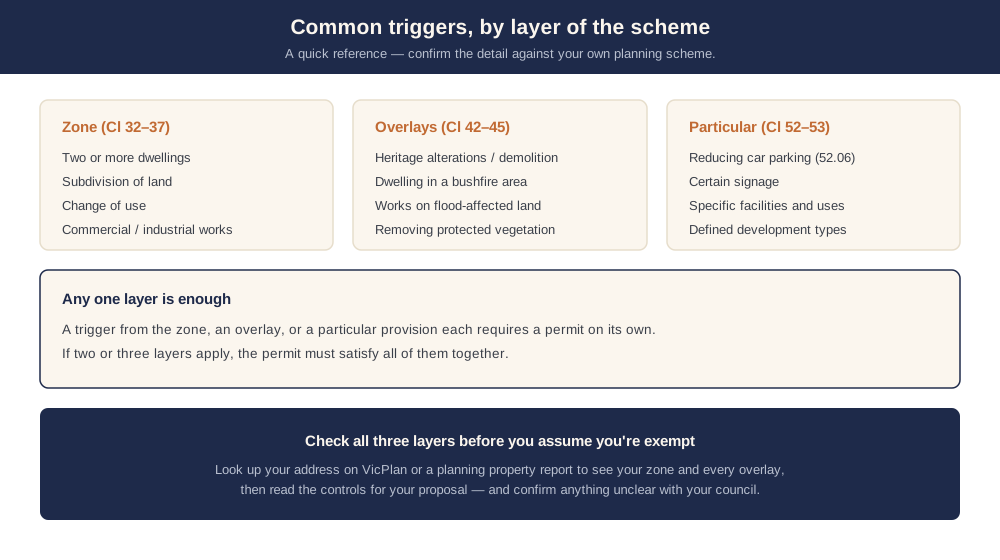
Figure 3: A quick reference to the triggers that appear most often — grouped by the layer of the scheme they come from.
How to check what is triggered on your land
You can confirm the triggers on your own property for free:
- ✓Look up your address on VicPlan or generate a planning property report — it lists your zone and every overlay.
- ✓Read the zone clause and each overlay clause for what they say about your proposed use, buildings and works.
- ✓Check any relevant particular provisions, such as car parking, for your proposal type.
If any one of those says a permit is required, a permit is triggered. When the answer is uncertain, confirm it with your council before you commit to plans.
If a permit is triggered — what's next
If the scheme triggers a permit, your application is far stronger when it is supported by a town planning report that addresses your zone, your overlays and the relevant ResCode standards (Clause 54 for one dwelling, Clause 55 for two or more). A complete report is the single biggest factor in avoiding a Request for Further Information.
Hiring a town planner can take weeks. instantplanning builds the same council-ready report from current Victorian planning scheme data in minutes — you review it before you lodge. Start by confirming the basics in do I need a planning permit in Victoria, or just generate your report.
Frequently asked questions
What actually triggers a planning permit in Victoria?
Can an overlay trigger a permit when the zone does not?
Does building two dwellings on one lot always trigger a permit?
Do the particular provisions trigger permits too?
How do I find out what is triggered on my property?
Does a change of use trigger a planning permit?
Ready to generate your report?
Skip the writing. Get a council-ready town planning report in 5 minutes.
Get your report