Key takeaways
- ✓A shed up to 10 m² and 3 m is generally permit-exempt
- ✓Planning and building permits are separate approvals
- ✓Overlays are the most common reason a shed loses exemption
- ✓Rural sheds turn on use, siting and setbacks
- ✓Always check your zone and overlays first
Do I Need a Planning Permit for a Shed? (VIC)
For most homeowners, a small garden shed in Victoria needs no planning permit — the standard residential zones exempt a modest outbuilding outright. The catch is that this exemption only holds when no overlay sits on your land, and a shed can still need a separate building permit even when no planning permit is required.
Get a council-ready town planning report in 5 minutes — no town planner, no waiting.
Get your report →- ✓The exact size and height limits that keep a shed planning-permit-exempt
- ✓Why a planning permit and a building permit are two different approvals
- ✓How overlays like heritage, flood and bushfire change the answer
- ✓How rural zones treat sheds differently from suburban blocks
- ✓How to check the controls on your own property before you build
The short answer
In the General Residential, Neighbourhood Residential and Township Zones, no planning permit is needed to build an outbuilding — other than a garage or carport — where its gross floor area is no more than 10 square metres and its height is no more than 3 metres above ground level. A bigger shed, or any shed under an overlay, may need one.
The exemption comes from your planning scheme, not from how the shed looks. The decision a homeowner actually works through is shown below.
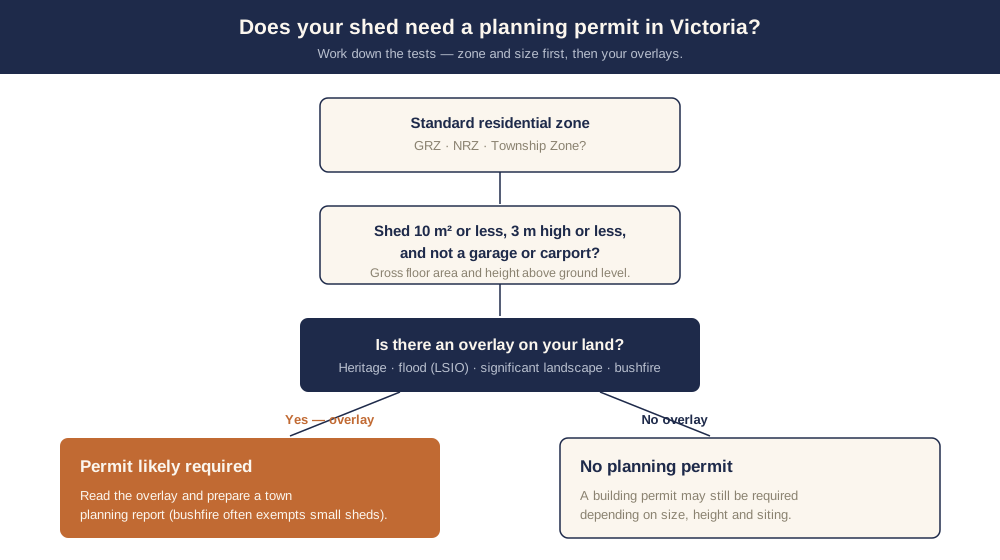
Figure 1: Work down the tests — zone and size first, then overlays. An overlay is what most often tips a shed into needing a permit.
What size shed is exempt from a planning permit in Victoria?
The headline figure Victorians rely on sits in the residential zone clauses themselves. In the General Residential Zone (Clause 32.08), Neighbourhood Residential Zone (Clause 32.09) and Township Zone, the scheme states that no permit is required to construct or extend an outbuilding — other than a garage or carport — where the gross floor area is no more than 10 square metres and the maximum building height is no more than 3 metres above ground level.
That is the explicit threshold a typical garden shed leans on. It also sits inside a broader pattern: in these same zones, building or extending one dwelling on a lot of 300 square metres or more generally needs no planning permit either, so a shed on such a block in a plain residential zone is usually the easy case. The permit trigger bites on smaller lots and where another control applies.
The reference figures most people need are gathered together below.
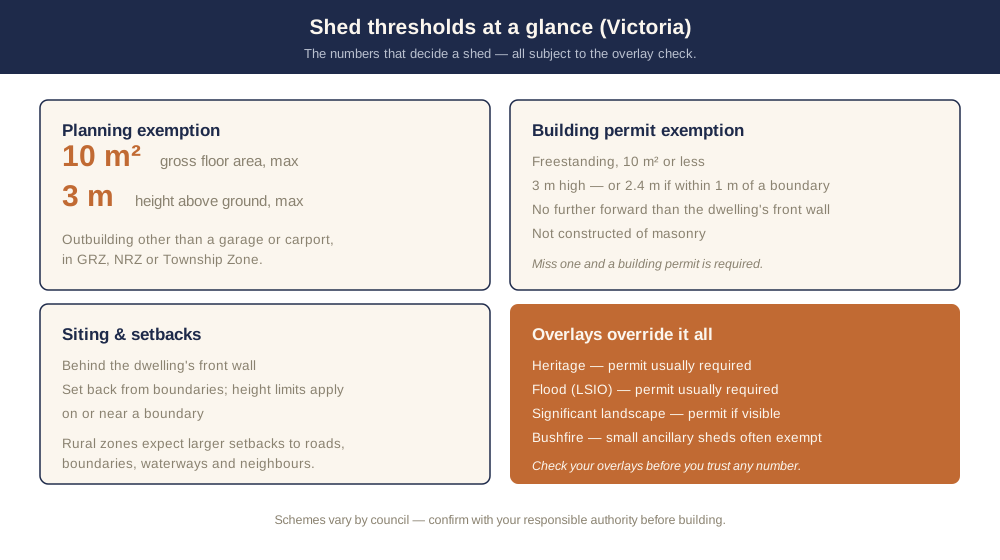
Figure 2: The numbers that decide a shed — planning exemption, building permit conditions, siting, and the overlay check that overrides them all.
Planning permit or building permit — which does a shed need?
Spend 5 minutes, not 3 weeks
instantplanning generates a council-ready town planning report for Victorian permits. No town planner. No waiting.
Get your report →These are two separate approvals, and a shed can need one, both, or neither. A planning permit asks whether the structure is appropriate for the land — its zone, any overlays, the streetscape. A building permit asks whether the construction itself is sound and properly sited under the Building Regulations.
Under the Victorian Building Authority's guidance (Building Practice Note BP-01), a freestanding Class 10a shed is exempt from a building permit only when it meets every one of a short list of conditions: a floor area no greater than 10 square metres; a height no more than 3 metres, or no more than 2.4 metres if it sits within 1 metre of a boundary; positioned no further forward than the front wall of the dwelling it serves; and not built of masonry. Miss any one of those and a building permit is required even where the planning exemption still applies.
- ✓Floor area 10 m² or less
- ✓Height 3 m or less, or 2.4 m within 1 m of a boundary
- ✓Not forward of the dwelling's front wall
- ✓Not constructed of masonry
- ✓No overlay on the land
So the common real-world result for a small suburban shed is no planning permit and no building permit — provided it stays inside those limits and no overlay applies. Push past 10 square metres and you typically pick up a building permit first; an overlay is what adds the planning permit.
How overlays change the answer
This is the part that catches people. Every exemption above carries one silent condition: no overlay applies. An overlay sits on top of your zone and adds its own permit triggers, and it overrides the zone's shed exemption.
A Heritage Overlay usually requires a planning permit for external buildings and works, so even a 10-square-metre shed will often need one — particularly if it is visible from the street. Flood-related overlays such as the Land Subject to Inundation Overlay typically require a permit for most buildings and works, because even a small structure can affect flood behaviour, so a shed rarely escapes. A Significant Landscape Overlay can trigger a permit where the shed is visible within a protected landscape.
The Bushfire Management Overlay is the kinder exception: it generally does not require a planning permit for a non-habitable outbuilding under 100 square metres that is ancillary to a dwelling on the land — so a small domestic shed usually clears it, though bushfire construction standards may still apply to the build.
The same shed can sit on either side of the line depending only on what overlay is on the land, as the comparison below shows.
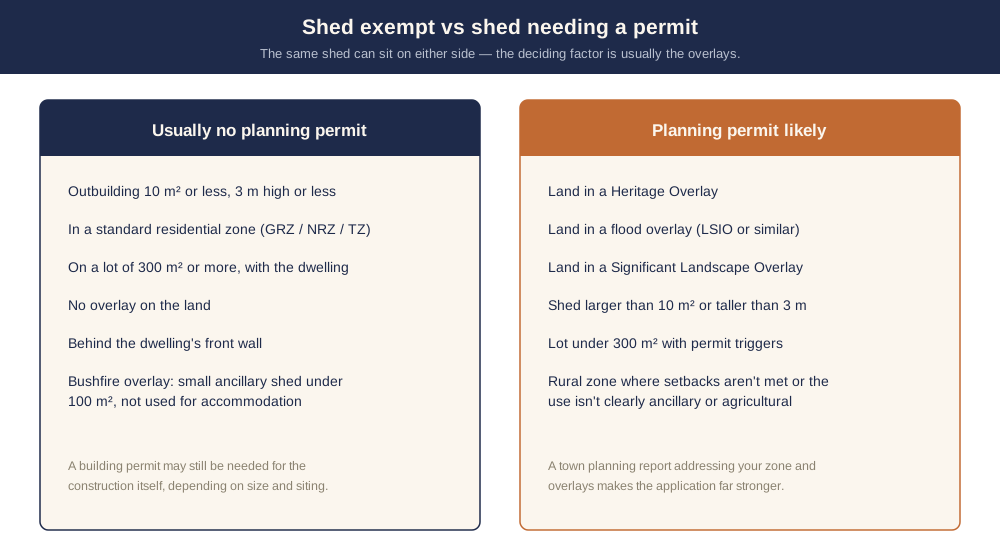
Figure 3: The deciding factor is rarely the shed itself — it is usually the zone, the size, and above all the overlays on your land.
Sheds in rural zones are different
On rural land the rules shift from size to use and siting. In the Farming Zone and Rural Living Zone, a shed is assessed more on what it is for and how far it sits from roads, boundaries, waterways and neighbouring dwellings than on a simple square-metre limit. Sheds used genuinely in conjunction with agriculture are often consistent with the zone, but a planning permit is commonly triggered where standard setbacks cannot be met or an overlay applies. Almost any substantial rural shed will also need a building permit regardless of zone. If your land is rural, confirm the expected setbacks with your responsible authority before you commit to a location.
How to check your own property
You can confirm the controls on your land for free, then read the scheme against your shed. Look up your address on VicPlan or generate a planning property report — both list your zone and every overlay. Note the zone code and any overlays, then read what each says about buildings and works. If you clear it — within the limits, no overlay — you may have nothing to lodge. Because schemes and schedules vary between councils, treat the figures here as a guide and confirm with your council before building.
If your shed does need a permit
If an overlay or size tips your shed into needing a planning permit, your application is far stronger — and far less likely to be returned or hit a Request for Further Information — when it is backed by a town planning report that addresses your zone, overlays and the relevant scheme controls.
Hiring a town planner can take weeks. instantplanning builds the same council-ready report from current Victorian planning scheme data in minutes — you review it before you lodge. For the wider picture, see what's exempt from a planning permit in Victoria, or when you've confirmed a permit is needed, generate your report.
Frequently asked questions
Do I need a planning permit for a shed in Victoria?
What size shed can I build without a permit in Victoria?
Do I need a building permit for a shed in Victoria?
Do I need a planning permit for a shed in a Heritage Overlay?
Do I need a planning permit for a shed in a Bushfire Management Overlay?
Do sheds need a permit in a Farming Zone?
Ready to generate your report?
Skip the writing. Get a council-ready town planning report in 5 minutes.
Get your report