Key takeaways
- ✓A planning permit is a legal document issued under the Planning and Environment Act 1987 that allows a use or development of land.
- ✓It is issued by the responsible authority, which is usually your local council.
- ✓A permit names the land, states what it allows, lists conditions and includes endorsed plans.
- ✓A planning permit is not a building permit — they are different approvals under different Acts.
- ✓Without other dates on it, a permit gives you 2 years to start and 4 years to complete.
What Is a Planning Permit? (VIC)
A planning permit is the legal document that says yes to your project. In Victoria it is issued under the Planning and Environment Act 1987, and it gives you formal consent to use or develop a parcel of land in a particular way — build a second dwelling, run a business, subdivide, work in an overlay. It is not the plans you draw, not a building permit, and not a council letter of comfort. It is a permit, with a number, conditions and endorsed plans, that you can rely on and that the council can enforce.
Get a council-ready town planning report in 5 minutes — no town planner, no waiting.
Get your report →- ✓What a planning permit legally is and what it authorises
- ✓What a permit document actually contains
- ✓Who issues it and why
- ✓How a planning permit differs from a building permit
- ✓How long a permit lasts before it expires
The short answer
A planning permit is a legal document issued under the Planning and Environment Act 1987 that authorises a specific use and/or development of a particular parcel of land. It is granted by the responsible authority — usually your local council — names the land, states what it allows, attaches conditions and endorsed plans, and has an expiry date.
A permit is the consent itself, not the approval process. The diagram below shows where it sits between your proposal and the work on the ground.
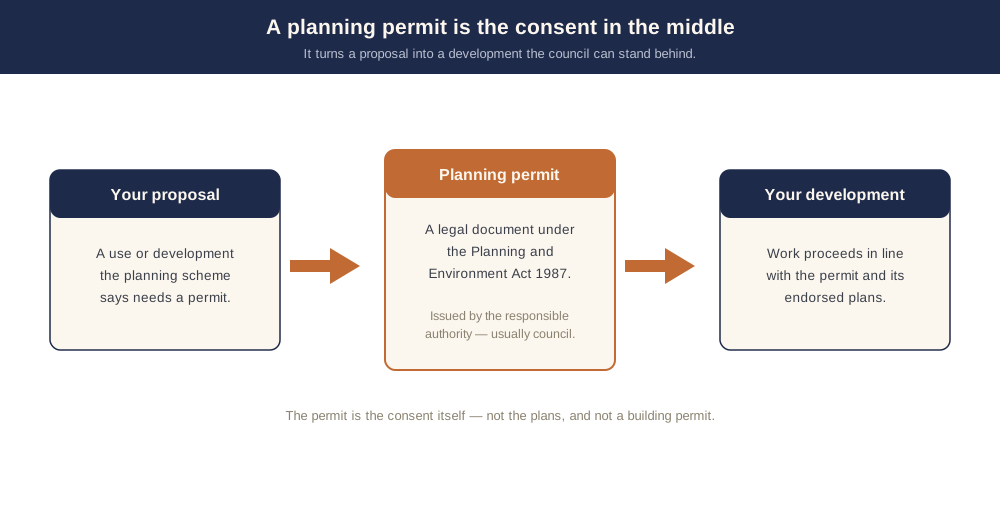
Figure 1: A planning permit is the formal consent that lets a proposal become a development.
The Act defines a permit in section 3(1) simply as "a permit issued under this Act." Its force comes from what it lets you do: a planning permit authorises a use of land, a development of land, or both — the two key terms also defined in section 3(1).
A use is what the land is for: a dwelling, a shop, a child-care centre, a short-stay accommodation. A development is the physical side: constructing or altering a building, carrying out works, subdividing land, or displaying a sign. Where a planning scheme requires a permit for that use or development, section 47 says an application is made to the responsible authority, and a permit may then be granted under sections 60–61.
The permit only authorises what it says it authorises. If your permit allows two dwellings, it does not allow three. If it allows a café, it does not allow a bar. This is why reading the permit — not just celebrating it — matters.
What a planning permit contains
Spend 5 minutes, not 3 weeks
instantplanning generates a council-ready town planning report for Victorian permits. No town planner. No waiting.
Get your report →The Act does not set a fixed template, but every permit carries the same building blocks. Knowing them helps you read your own permit with confidence.
- ✓A permit number and the date it was issued
- ✓The land it applies to, by address and title
- ✓A clear statement of what the permit allows (the use and/or development)
- ✓Conditions the responsible authority imposes under section 62
- ✓Endorsed plans and documents that form part of the permit
- ✓Expiry timeframes for starting and completing the work
The two parts people overlook are conditions and endorsed plans. Under section 62(1) the responsible authority may "include any condition it thinks fit" — setting hours, requiring landscaping, capping heights, demanding a management plan. Under section 62 it can also require plans to be submitted, approved and endorsed, after which those plans "form part of the permit." Build to a different set of drawings and you are building without a permit, even if you hold one.
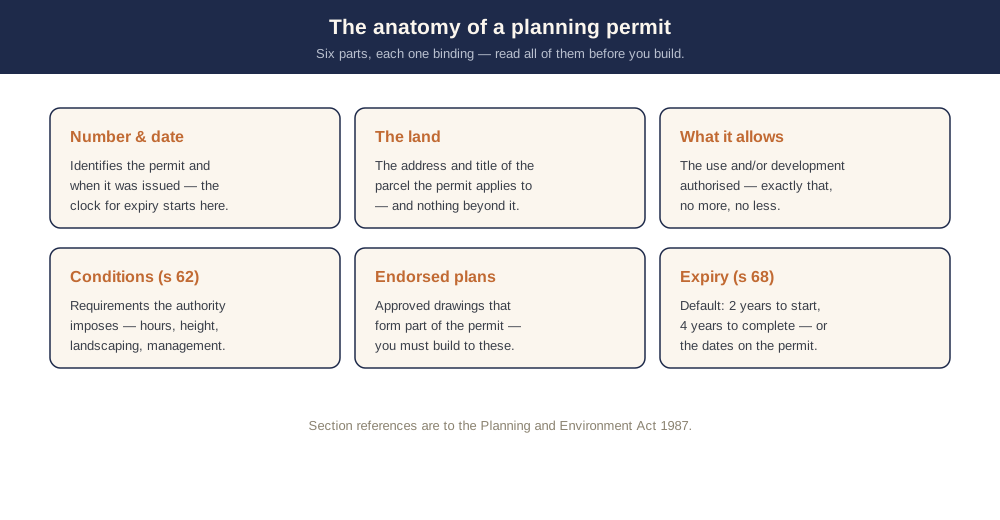
Figure 2: The anatomy of a permit — read every part, because each one binds you.
Who issues a planning permit
A planning permit is issued by the responsible authority. That term is defined in section 3(1), and section 13 requires every planning scheme to specify who the responsible authority is for that scheme. In the overwhelming majority of cases it is your local council.
The council is not doing you a favour or expressing an opinion; it is administering the planning scheme on the public's behalf. Under section 60 it must weigh the scheme, any objections, referral authority views and the significant effects of the proposal before it decides under section 61. For some matters — major projects, certain state-significant proposals — the Minister for Planning can be the responsible authority instead, but for everyday applications it is the council. We unpack the role in what is a responsible authority.
Planning permit vs building permit
This is the single most common confusion in Victorian development, so it is worth being precise. A planning permit and a building permit are different documents, under different Acts, issued by different people, answering different questions.
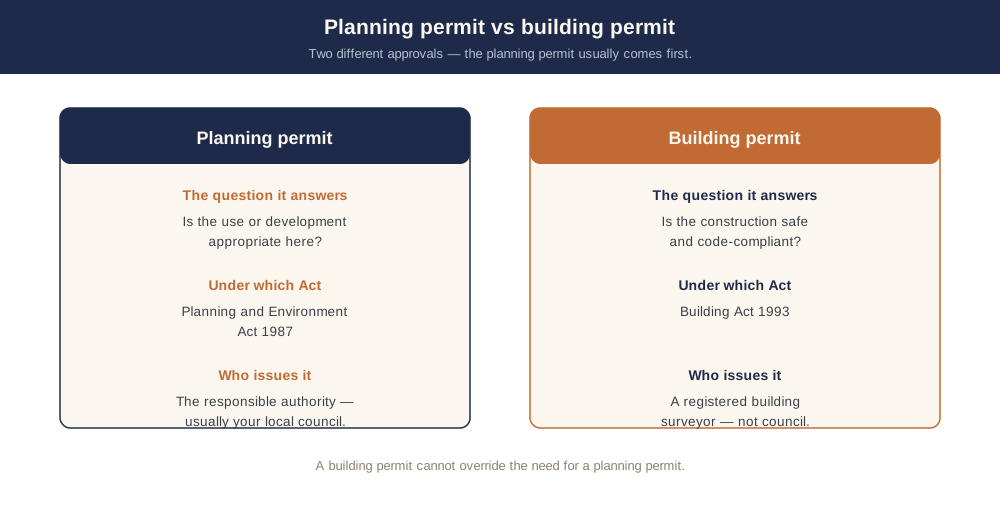
Figure 3: Two separate approvals — a typical project needs the planning permit first, then the building permit.
A planning permit, under the Planning and Environment Act 1987, decides whether the use or development is appropriate — the right thing, in the right place, at the right scale, with acceptable effects on neighbours and character. A building permit, under the Building Act 1993, decides whether the construction is safe and compliant with the Building Code, and it is issued by a registered building surveyor, not the council planning department.
A building permit cannot override the need for a planning permit. If your project needs both, the planning permit comes first, the building surveyor then checks the building work against the endorsed plans. We cover the sequence and the traps in planning permit vs building permit.
How long a planning permit lasts
A permit does not last forever. The default expiry rules are in section 68. Where the permit does not specify its own dates, a permit for development (or development and use) expires if the development is not started within 2 years of issue, or not completed within 4 years of issue. A permit for use only expires if the use is not started within 2 years, and a use permit can also expire if the use is discontinued for a continuous 2-year period.
If you are running out of time, section 69 lets the responsible authority extend the time to start or complete — but you generally have to ask before, or shortly after, the permit would otherwise expire. Leave it too late and the permit is gone, and you are back to a fresh application. So treat the expiry dates on your permit as live deadlines, not fine print.
Hiring a town planner can take weeks. Start with do I need a planning permit, or generate your report. For a complex or contested proposal, engage an experienced human planner.
You can confirm the current section wording in the Planning and Environment Act 1987.
Frequently asked questions
What is a planning permit in Victoria?
Who issues a planning permit?
What does a planning permit contain?
Is a planning permit the same as a building permit?
How long does a planning permit last in Victoria?
Can I prepare my own planning permit application?
Ready to generate your report?
Skip the writing. Get a council-ready town planning report in 5 minutes.
Get your report